

P0776 on 2010-2016 Buick LaCrosse: Pressure Control Solenoid 'B' Failure Causes and Fixes
On a 2010-2016 Buick LaCrosse, code P0776 often indicates a serious internal transmission failure, not just a bad solenoid. The most common causes are a broken 3-5-R wave plate or other internal mechanical faults, typically requiring a transmission rebuild or replacement costing $2,500-$4,500+. Ignoring this code can lead to catastrophic transmission damage.
- P0776 on a 2010-2016 LaCrosse is a severe code that strongly suggests a major internal transmission failure, not just a simple solenoid issue.
- The most likely cause varies by year: a broken wave plate for early models (2010-2011) and a dislodged sensor ring for later models (2016).
- Do not drive the vehicle. Continued operation will lead to more severe damage and higher repair costs.
- Diagnosis must include a review of GM's Technical Service Bulletins for this code. Simply replacing the solenoid will not fix the underlying mechanical problem.
- Repair requires a transmission rebuild or replacement by a qualified professional and is not a DIY job.
What's Unique About the 2010-2016 Buick LaCrosse
The 2010-2016 Buick LaCrosse uses GM's 6-speed automatic transmissions (like the 6T40/6T45/6T50 family), which have well-documented failure patterns associated with this code. Unlike many other vehicles where P0776 might just be a faulty solenoid, on the LaCrosse it is very often a symptom of a broken 3-5-R wave plate (especially 2010-2012 models) or a dislodged input speed sensor reluctor ring (especially 2016 models). These issues generate metallic debris and cause a sudden loss of hydraulic pressure that the TCM interprets as a solenoid performance problem, leading to a misdiagnosis if a technician only focuses on the solenoid itself.
Symptoms You May Notice
- Harsh, jerky, or slamming shifts, especially into 3rd or 5th gear.
- Complete loss of Reverse gear.
- Transmission slipping, where engine RPMs flare up without an increase in speed.
- Vehicle enters 'limp mode,' often stuck in 2nd or 3rd gear.
- Check Engine Light is illuminated.
- Inability to engage gears from Park (vehicle won't move).
- Delayed engagement when shifting from Park to Drive or Reverse.
- Replacing only the Pressure Control Solenoid 'B'. This rarely fixes the issue on this platform, as the solenoid code is usually a symptom of a larger mechanical failure that must be addressed. The new solenoid will quickly become contaminated 🎬 Watch: How to fix your 6T45 transmission for cheap. or will not be able to overcome the internal pressure loss.
Most Likely Causes
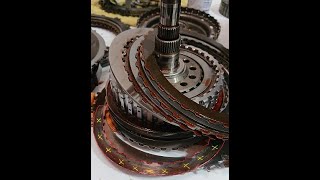
- Broken 3-5-R Wave Plate 🔴 High Probability This is a widely documented failure on the GM 6T-series transmissions, particularly in models built before mid-2011. The original wave plate was prone to fatigue, breaking into pieces that contaminate the entire transmission with metal debris.
How to confirm: A technician must disassemble the transmission to visually inspect the 3-5-R clutch pack and find the broken plate pieces. Dropping the transmission pan and finding significant metal debris is a strong indicator.
Typical fix: Requires a complete transmission rebuild to replace the broken wave plate with the updated part, replace the 3-5-R piston, and thoroughly clean all metal debris from the valve body, solenoids, and case, as outlined in TSB PI0780A.
Est. part cost: $150-$300 for the rebuild kit including the updated plate and seals. - Dislodged Input Speed Sensor (ISS) Reluctor Ring 🔴 High Probability A specific issue noted in TSB 16-NA-013, primarily affecting 2016 models. The retainer ring for the ISS reluctor wheel can pop out of its groove, causing the reluctor wheel to move freely. This leads to erratic input speed sensor readings and triggers pressure control faults like P0776, often accompanied by P0716/P0717.
How to confirm: Diagnosis involves observing erratic or zero input speed sensor data on a scan tool, followed by transmission disassembly for visual confirmation of the dislodged ring. 🎬 Watch: A complete tear down of the 6T40 transmission.
Typical fix: The transmission must be opened to replace the retainer ring, reluctor wheel, and the 3-5-Reverse clutch piston and housing assembly as a set, per the TSB.
Est. part cost: $200-$400 for the required internal hard parts. - Failed Control Solenoid or Valve Body (TEHCM) ⚪ Low Probability → Shop Transmission Valve Body While possible, this is less common than the mechanical failures listed above. The solenoid itself can fail electrically, or more likely, the passages in the valve body become clogged with debris from a wave plate failure, causing the solenoid to stick.
How to confirm: A technician can command the solenoid on and off with a high-end scan tool and check its resistance. However, this doesn't rule out a blockage. If the transmission fluid is full of metal, the TEHCM is likely contaminated.
Typical fix: Replacement of the entire control solenoid valve assembly (TEHCM), which is located inside the transmission side cover. The new part must be programmed to the vehicle's VIN.
Est. part cost: $300-$600 for the TEHCM assembly (e.g., ACDelco 24256524). - Low or Contaminated Transmission Fluid ⚪ Low Probability → Shop Transmission Assembly Fluid doesn't typically go low without a leak. More often, the fluid is heavily contaminated with metallic shavings from a failing wave plate, which then causes secondary problems with solenoids and the valve body.
How to confirm: Check the transmission fluid level and condition. Dark, burnt fluid with glittery metal particles is a clear sign of internal mechanical damage.
Typical fix: If caught early with no damage, a fluid and filter change. If metal is present, the transmission requires a rebuild.
Est. part cost: $100-$200 for fluid and filter.
Diagnosis Steps
- Check the transmission fluid level and condition. Pull the dipstick and wipe it on a clean white towel. Look for a low level or fluid that is dark, burnt, or contains shiny metallic particles. The presence of metal strongly indicates a severe internal failure (likely a broken wave plate).
- Scan for all diagnostic trouble codes. Note if P0716, P0717, or P0796 are present alongside P0776, as this can help pinpoint the cause (e.g., ISS codes point to the reluctor ring).
- With a professional scan tool, monitor the live data for Input Speed Sensor (ISS) and Output Speed Sensor (OSS) while driving (if possible). Watch for the ISS reading to become erratic or drop to zero, which points to the reluctor ring issue described in TSB 16-NA-013.
- A professional technician should perform a transmission line pressure test to check for a faulty pump or major internal leaks. Very low pressure in Reverse or 3rd gear is another symptom of the wave plate failure.
- Given the known issues, diagnosis should assume an internal mechanical fault as described in TSB PI0780A (wave plate) or 16-NA-013 (reluctor ring) until proven otherwise.
- Final confirmation requires removing and disassembling the transmission for visual inspection of the wave plates, clutch housings, and reluctor rings.
Parts You'll Likely Need
- 3-5-R Apply (Waved) Plate
(OEM #24254103)— This is the updated, stronger wave plate that replaces the original failure-prone part for the 2010-2011 models as identified in TSB PI0780A and other service documents.
Trusted brands: ACDelco
OEM price range: $15-$30
Aftermarket price range: $10-$25 - Transmission Overhaul Kit — Required for any transmission rebuild to replace all seals, gaskets, and clutches that were disturbed during disassembly or contaminated by metal debris. 🎬 See this step-by-step 6T45 transmission rebuild walkthrough.
Trusted brands: ACDelco, Transtar, Precision International
OEM price range: $300-$500
Aftermarket price range: $200-$400 - Control Solenoid Valve Assembly (TEHCM)
(OEM #24256524)— Replaced if diagnostics confirm an electrical fault with the solenoid pack itself, or if it has been heavily contaminated with metal debris from a wave plate failure. Requires programming.
Trusted brands: ACDelco
OEM price range: $400-$600
Aftermarket price range: $300-$500 - 3-5-R and 4-5-6 Clutch Housing Assembly — This housing can be scored or damaged by the broken wave plate. TSB 16-NA-013 also requires its replacement when fixing the ISS reluctor ring issue.
Trusted brands: ACDelco
OEM price range: $150-$250
Aftermarket price range: $100-$200
Related Codes That Often Appear With This One
- P0716 — Input/Turbine Speed Sensor 'A' Circuit Range/Performance. Often appears with P0776 when the ISS reluctor ring is the cause.
- P0717 — Input/Turbine Speed Sensor 'A' Circuit No Signal. Also directly related to the ISS reluctor ring failure.
- P0796 — Pressure Control Solenoid 'C' Performance or Stuck Off. Can be set along with P0776 when there is a systemic pressure loss from a failed pump or major internal leak caused by the wave plate failure.
- P0722 / P0723 — Output Speed Sensor Circuit No Signal / Intermittent. Can sometimes appear with other transmission codes when a major internal failure causes erratic operation.
Technical Service Bulletins (TSBs) & Recalls
- PI0780A: Addresses a slip or no reverse/3rd gear condition with DTC P0776 on 2010-2011 models, caused by a broken 3-5-R wave plate.
- 16-NA-013: Addresses a no reverse/3rd gear condition with DTCs P0716/P0717 on 2016 models, caused by a dislodged input speed sensor reluctor ring.
- Bulletin #A202301230: While specifically for CVT transmissions in other Buick models like the Encore, this bulletin notes that a priming delay in the main pump can set DTC P0776 and P0746, leading to reduced launch performance.
Platform-Specific Known Issues
- A broken 3-5-R wave plate is a very common cause of P0776 and eventual transmission failure in 2010-2012 models, as detailed in TSB PI0780A.
- A dislodged input speed sensor reluctor ring is a known cause for P0776 on 2016 models, per TSB 16-NA-013.
Mechanic-Grade Diagnostic Values
- Pressure Control Solenoid Resistance — expected: 5.0 to 6.0 Ohms at 68°F (20°C) for most solenoids in the TEHCM.. Failure: A reading outside this range, or infinite resistance (open circuit), indicates a failed solenoid coil.
- Input Speed Sensor (ISS) / Output Speed Sensor (OSS) Supply Voltage — expected: 8.3 - 9.3 volts from the TCM.. Failure: Voltage outside this range could indicate a problem with the TCM or the wiring harness, affecting sensor readings and potentially triggering other codes.
- Solenoid Command Voltage (Live Data) — expected: Voltage should fluctuate between ~0.5V and 12V as the TCM commands pressure changes during shifts.. Failure: A constant 0V when a shift is commanded indicates the solenoid is stuck off or there is a circuit fault.
Scan Tool Commands That Help
- GDS2 (GM Global Diagnostic System 2): Solenoid Valve State Control / Output Controls — This bidirectional function allows a technician to command each pressure control solenoid on or off while the vehicle is stationary (engine on, in park). This helps determine if the solenoid is electrically functional and can click, isolating a bad solenoid from a wiring or mechanical blockage issue. It's a critical step before condemning the TEHCM or internal components.
- GDS2 (GM Global Diagnostic System 2): Transmission Fluid Pressure (TFP) Switch Data — While monitoring live data, a technician can observe the status of the multiple TFP switches within the TEHCM. When P0776 occurs due to a wave plate failure, the TFP switch data for the 3-5-R circuit will not match the commanded state, confirming an internal hydraulic leak/pressure loss.
Wiring & Ground Locations
- Transmission Harness Connector (14-way) — The main engine harness connects to the TEHCM (Transmission Electro-Hydraulic Control Module) at a 14-pin connector on the outside of the transmission case. The TEHCM itself is located inside the transmission, bolted to the valve body.. All power, ground, and data communication between the vehicle and the transmission solenoids pass through this single connector. Corrosion or damage at this point can cause a wide range of transmission codes, including P0776. Checking for power, ground, and CAN bus signals at this connector is a key diagnostic step.
- TEHCM Internal Lead Frame — Inside the transmission, the solenoids are connected to the TCM via a lead frame, which is a system of fixed electrical conductors, rather than traditional wires.. Because there are no serviceable wires between the internal TCM and the solenoids, a failure of an individual solenoid (like PCS 'B') or the lead frame itself necessitates the replacement of the entire TEHCM assembly.
Real Owner Repair Stories
- BAT Auto Technical Forum (Vauxhall Astra with 6T40 Gen 1 (European equivalent of Chevy Cruze/Buick LaCrosse)) — Initially, hard/jerky shifts from 2-3 and 3-4 when warm. This escalated to a Check Engine Light, flashing gear selector, and complete loss of Reverse, 3rd, and 5th gears. Codes P0776 and P0843 were stored.
❌ Tried (didn't work) The user initially suspected solenoids but noted the problem was intermittent; after sitting overnight, all gears worked again temporarily before failing completely.
✅ What actually fixed it The confirmed fix for this set of symptoms is almost always the broken 3-5-R wave plate. The intermittent nature occurs as the broken pieces temporarily move out of the way, only to get jammed again, causing pressure loss. The final repair requires a transmission rebuild to replace the wave plate and clean out all debris. - NHTSA ODI #10669272: An owner reported that their vehicle was diagnosed with wave plate failure (P0776) at 80,000 miles, noting that this was not an isolated event and requested the manufacturer cover the repair due to a faulty part.
- NHTSA ODI #11251879: A report describes a vehicle requiring transmission replacement where codes P0776, P0796, and P0700 were present; the owner noted multiple other vehicles from the same manufacturer were at the shop for the same issue.
OEM Part Supersession History
24252357, 24253557, 24256524→24287420, 24291304 (latest as of recent data)— GM has released multiple revisions of the TEHCM (Control Solenoid Valve Assembly) to improve reliability and address failure points in the solenoids and internal pressure switches.
Heads up: It is critical to use a TEHCM that is correct for the specific model year and vehicle. After installation, the new TEHCM must be programmed to the vehicle's VIN using a GM diagnostic tool (GDS2) to function correctly. Failure to program will result in a no-start or no-shift condition.
Model Year Variations Within This Range
- 2010 - Mid-2011 (Gen 1 6T40): These models are highly prone to the 3-5-R wave plate breaking due to a faulty original design. TSB PI0780A applies directly to these years. The repair involves using an updated, stronger wave plate.
- Mid-2011 - 2015 (Gen 2 6T40): These models received an updated wave plate from the factory, making the specific P0776 failure less common, though still possible. Other internal failures or TEHCM issues are more likely culprits in these years.
- 2016 (Gen 2/3 transition): 2016 models are specifically called out in TSB 16-NA-013 for the input speed sensor (ISS) reluctor ring retainer coming loose, which causes erratic ISS signals and can trigger P0776 along with P0716/P0717.
Diagnostic Flowchart
Other Known Issues on This Vehicle
Issues unrelated to this code that are worth knowing about as an owner of this generation:
- Premature Timing Chain Stretch (3.6L V6) 🔴 High — Very common, often occurs between 40,000 and 120,000 miles. Triggers codes like P0008, P0009, P0017, P0018. (Ref: TSB #12-06-01-009F, Special Coverage Adjustment #11340C (expired).)
- Water Pump Failure (3.6L V6) 🔴 High — Common failure item. Since it is driven by the timing chain, replacement is labor-intensive and expensive. Often replaced preventatively during a timing chain service.
- Clogged or Detached Sunroof Drains 🟠 Medium — A frequent issue where drain tubes clog with debris or detach, causing water to leak into the cabin, headliner, or trunk, potentially damaging electrical modules.
- Failing Underhood Fuse Box (UBEC) 🟠 Medium — Can cause a wide array of bizarre, unrelated electrical problems, including no-start conditions, stalling, and communication (U-series) error codes. Often damaged by water intrusion.
- Throttle Body Assembly Failure 🟡 Low — Internal sensor failures in the throttle body can cause reduced engine power warnings, stalling, and check engine lights. Cleaning the throttle body does not fix this internal electrical issue.
- Balance Chain Wear (2.4L 4-Cylinder) 🔴 High — Affects 2010-2011 models with the 2.4L engine. The balance chain can stretch, causing noise and potentially breaking, leading to engine damage. (Ref: Special Coverage Adjustment #12313B extended warranty coverage to 10 years/120,000 miles.)
Used vs. New Parts: Buying Guide for This Vehicle
When a used part is the smart pick: For a P0776 code on this platform, purchasing a complete used transmission is extremely risky and generally not recommended. The high prevalence of the wave plate failure means many junkyard units are either already failed or on the verge of failing. A used TEHCM could be considered IF the failure is confirmed to be electrical within the module and not due to contamination from a mechanical failure.
Donor-vehicle mileage cap: roughly under 60000 miles for the part to have meaningful remaining life.
What to inspect on the donor part:
- For a complete transmission: Ask for proof of mileage and warranty. Look for a unit from a vehicle with a documented rear-end collision, as this is less likely to have been driven with a failing transmission.
- For a TEHCM: Inspect the connector pins for corrosion. Ask the seller if they can confirm the fluid from the donor transmission was clean and free of metal.
- Check the fluid in the donor unit if possible. If it is dark, burnt, or contains any metallic sparkle, reject the part immediately.
OEM-only on this vehicle (don't cheap out):
- Transmission Overhaul Kit (Seals, Gaskets)
- 3-5-R Wave Plate (use the updated OEM design)
- TEHCM (Control Solenoid Valve Assembly)
Aftermarket brands forum-validated for this vehicle:
- Sonnax: Offers highly-regarded 'Drum Saver Kits' and valve body repair kits that address known wear points and are often considered an upgrade over OEM for rebuilt transmissions.
- Transtar, Raybestos, Exedy: Reputable brands for transmission rebuild kits (clutches, steels, seals).
Brands owners have reported issues with on this vehicle:
- Unbranded, low-cost TEHCM units from online marketplaces. These often use inferior solenoids, lack proper testing, and can fail quickly. Programming issues are also common.
Real Owner Stories
Aggregated from forums and TSBs cited above. Mileages and costs reflect what owners reported in those sources.
2011 Buick LaCrosse
Symptoms: The transmission started slipping, and then I completely lost Reverse and 3rd gear. The Check Engine Light came on with code P0776.
What fixed it: The transmission had to be completely rebuilt to replace a broken 3-5-R wave plate with an updated part and to clean all the resulting metal debris out of the system.
Source hint: TSB PI0780A
2016 Buick LaCrosse
Symptoms: I had no Reverse or 3rd gear, and the Check Engine Light was on. The scan showed codes P0776, P0716, and P0717.
What fixed it: A technician had to open the transmission to replace a dislodged input speed sensor reluctor ring, its retainer, and the 3-5-Reverse clutch piston and housing assembly as a set.
Source hint: TSB 16-NA-013
Related OBD-II Codes
Frequently Asked Questions
I have a 2011 LaCrosse with no reverse and harsh shifting. Is there a TSB for this issue?
My 2016 Buick LaCrosse has code P0776 along with P0716. What's the likely cause?
The mechanic found a lot of metal shavings in my transmission fluid. What does this mean for my LaCrosse?
Can I just replace the control solenoid (TEHCM) to fix a P0776 code?
My Chevy Equinox has the same P0776 symptoms. Could it be the same problem as the LaCrosse?
What is the proper fix for the common wave plate failure in a 2010 LaCrosse?
Helpful Videos


We Have This Part in Stock


The information in this article is provided for general reference and educational purposes only. Vehicle specifications, procedures, and part compatibility can vary by production date, trim level, and region. Always consult your vehicle's factory service manual and verify part numbers before purchasing or performing repairs. Safety-critical components such as airbags, seat belts, and braking systems should be installed by a qualified professional.
- Buick LaCrosse:
- 🧭 Diagnostic Flowchart
- 🎬 Helpful Videos
- 🛍️ Shop This Part
- What's Unique About the 2010-2016 Buick LaCrosse
- Symptoms You May Notice
- Most Likely Causes
- Diagnosis Steps
- Parts You'll Likely Need
- Related Codes That Often Appear With This One
- Technical Service Bulletins (TSBs) & Recalls
- Platform-Specific Known Issues
- Mechanic-Grade Diagnostic Values
- Scan Tool Commands That Help
- Wiring & Ground Locations
- Real Owner Repair Stories
- OEM Part Supersession History
- Model Year Variations Within This Range
- Other Known Issues on This Vehicle
- Used vs. New Parts: Buying Guide for This Vehicle
- Real Owner Stories
- 2011 Buick LaCrosse
- 2016 Buick LaCrosse
- Related OBD-II Codes
- Frequently Asked Questions
- 🎟️ Get 5% Off