

P0776 on 2011-2017 Buick Regal: Pressure Control Solenoid 'B' Causes and Fixes
On a 2011-2017 Buick Regal, code P0776 is most often caused by an internal mechanical failure of the 3-5-R waved plate inside the 6T40/6T45 transmission. This is a known pattern failure documented in GM TSB PI0780A and requires a full transmission rebuild to fix. Less common causes include a faulty solenoid assembly (TEHCM) or low/contaminated fluid, which is often a symptom of the waved plate breaking.
- P0776 on a 2011-2017 Regal is a critical code that should be addressed immediately to prevent catastrophic transmission failure.
- The most likely cause is not the solenoid itself, but a broken internal part called the 3-5-R waved plate, a known issue with these transmissions.
- A proper fix requires removing and disassembling the entire transmission for cleaning and parts replacement; simply replacing the solenoid assembly often results in a repeat failure.
- Diagnosis requires advanced tools and knowledge; this is not a recommended DIY repair due to its complexity.
What's Unique About the 2011-2017 Buick Regal
The 2011-2017 Buick Regal uses a GM 6-speed automatic transmission (6T40/6T45/6T50 family) with a known, well-documented failure point that directly causes the P0776 code. A specific internal component, the 3-5-R clutch waved plate, is prone to breaking, especially in transmissions built before mid-January 2011. When it fails, metal fragments contaminate the transmission fluid and lodge in the valve body, leading to pressure control problems that the computer flags as a solenoid performance issue. While the code points to an electronic solenoid, the root cause is very often this specific mechanical part failure, a crucial distinction for this vehicle that prevents misdiagnosis.
Symptoms You May Notice
- Harsh, jerky, or delayed shifts, particularly into 3rd, 5th, and Reverse.
- Complete loss of Reverse, 3rd, or 5th gears.
- Transmission slipping, where the engine RPM increases but the car doesn't accelerate properly.
- Vehicle enters 'limp mode,' limiting speed and available gears.
- Illuminated Check Engine Light or Transmission Warning Light.
- Slipping or flaring during the 2-3 upshift.
- Replacing only the TEHCM/solenoid assembly without disassembling the transmission to check for a broken waved plate. If the plate is the true cause, debris will quickly destroy the new TEHCM, leading to a repeat failure within a short period.
Most Likely Causes
- Broken 3-5-R Clutch Waved Plate 🔴 High Probability This is a documented pattern failure in the GM 6T40/6T45 transmissions used in the Regal, particularly those built before January 15, 2011. GM issued Technical Service Bulletin (TSB) PI0780A specifically identifying this as the cause for P0776 and related symptoms. The original plate design was prone to fatigue and fracture.
How to confirm: Definitive confirmation requires transmission disassembly and visual inspection of the 3-5-R clutch pack components. TSBs warn that air pressure tests are not reliable for diagnosing this specific failure. Finding metallic debris in the transmission pan is a strong indicator.
Typical fix: The transmission must be removed and completely disassembled. The broken waved plate and the 3-5-R piston must be replaced with updated parts. The entire transmission, valve body, and cooler lines must be thoroughly cleaned of metal debris. The pump fluid filter and control solenoid filter plate must also be replaced.
Est. part cost: $100-$300 for the updated plate, piston, seals, and filters. - Faulty Transmission Electro-Hydraulic Control Module (TEHCM) 🟡 Medium Probability → Shop Transmission Assembly The pressure control solenoids are integrated into the TEHCM (also called the control solenoid valve assembly). The entire unit can fail electrically or become clogged with debris from the waved plate failure. TSB PI0670B suggests this as a possible cause if internal hard parts are intact.
How to confirm: A technician can use a GM-specific scan tool to run the 'Control Solenoid Valve and Transmission Control Module Assembly Solenoid (TEHCM) Performance Test' (for 2012+ Gen 2 models). If the test fails and wiring is confirmed good, the TEHCM is likely faulty.
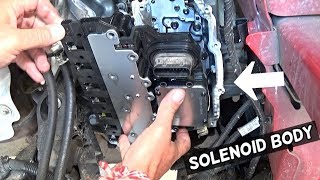
Typical fix: The transmission side cover is removed to access and replace the entire TEHCM assembly. 🎬 See this walkthrough on how to remove and replace the TEHCM. The new module must be programmed to the vehicle's VIN.
Est. part cost: $300-$600 - Low or Contaminated Transmission Fluid 🟡 Medium Probability → Shop Transmission Assembly This is often a *symptom* of the waved plate breaking and shedding metallic debris into the fluid. If the fluid is low from a leak or extremely dirty, it can cause the solenoid to stick or not build pressure correctly, triggering the code.
How to confirm: Check the transmission fluid level and condition. The fluid should be red and clear. If it is dark, burnt-smelling, or contains visible metallic particles on the dipstick or in the pan, it indicates a severe internal problem.
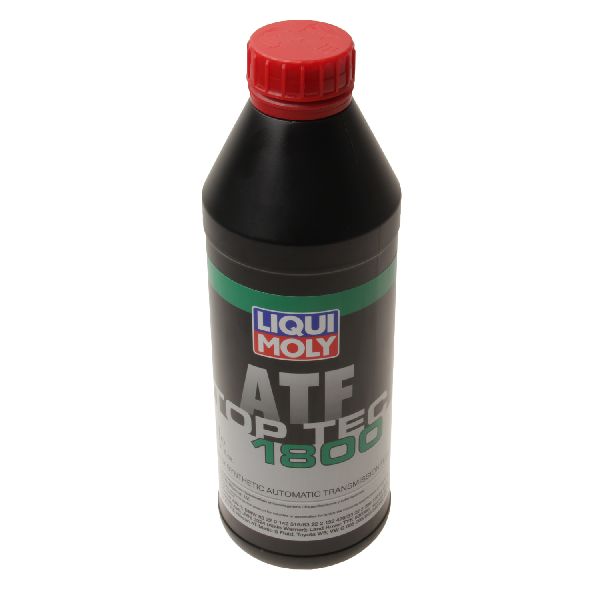
Typical fix: If the fluid is simply low, a top-off may temporarily resolve the issue. If it is contaminated, a fluid and filter change is necessary, but this will not fix the underlying mechanical damage that caused the contamination.
Est. part cost: $75-$150 for fluid and a filter.
Rare But Worth Checking
- Wiring Harness or Connector Damage: The wiring harness leading to the transmission can become damaged from road debris or heat, causing an open or short in the solenoid circuit. This should be ruled out before condemning internal components.
- CVT Pump Priming Issues (Cross-Model Reference): While the Regal uses a traditional automatic, manufacturer records for other Buick models like the Encore (Bulletin #A202301230) note that P0776 can sometimes be triggered by a main pump priming delay in CVT transmissions during quick exits from stop/start events, requiring a software reprogram.
Diagnosis Steps
- Check and record any and all Diagnostic Trouble Codes (DTCs). Note any other transmission codes like P0796 or P2714.
- Inspect the transmission fluid level and condition. If the fluid is dark, burnt, or contains metallic particles, suspect a significant internal mechanical failure, likely the waved plate.
- Visually inspect the transmission wiring harness and connectors for any signs of damage, corrosion, or loose connections.
- If the vehicle is a 2012 model or newer with Gen 2 controls, use a compatible scan tool to perform the 'TEHCM Performance Test' as recommended by TSB PI0670B.
- Drop the transmission pan and inspect for debris. A significant amount of metallic shavings is a strong confirmation of waved plate failure.
- If fluid is clean and electrical tests pass, the next step is internal inspection. Per TSB PI0780A, the most likely cause is a broken 3-5-R waved plate, which requires transmission removal and disassembly for a definitive diagnosis.
Parts You'll Likely Need
- 3-5-Reverse Clutch Waved Plate
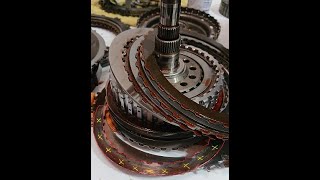
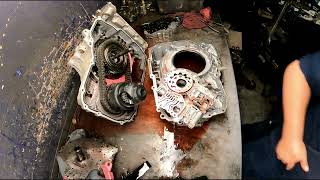
(OEM #24264033 (Supersedes older part numbers))— This is the most common point of failure on this transmission that leads to a P0776 code, as documented in GM TSB PI0780A. The original must be replaced with the updated design. 🎬 Watch: A full 6T45 rebuild showing how these parts fit together.
Trusted brands: ACDelco (GM Genuine)
OEM price range: $20-$40
Aftermarket price range: $15-$30 - Transmission Electro-Hydraulic Control Module (TEHCM)
(OEM #24256861 (Verify with VIN))— This assembly contains the pressure control solenoids. It can fail electrically or become clogged with debris from the failed waved plate. Replacement requires programming.
Trusted brands: ACDelco (GM Genuine)
OEM price range: $400-$600
Aftermarket price range: $300-$500 - Transmission Overhaul Gasket & Seal Kit — Required for reassembling the transmission after replacing internal components like the waved plate. TSB PI0780A notes that the solenoid filter plate and pump fluid filter are included in the seal kit and must be replaced.
Trusted brands: ACDelco, Transtar
OEM price range: $150-$250
Aftermarket price range: $100-$200 - 3-5-R Apply Piston
(OEM #24254909 (Verify with VIN))— TSB PI0780A recommends replacing the piston along with the waved plate, as the original design had notches that were later removed.
Trusted brands: ACDelco (GM Genuine)
OEM price range: $30-$50
Aftermarket price range: $20-$40
Related Codes That Often Appear With This One
- P0796 — This code relates to Pressure Control Solenoid 'C'. Debris from a single component failure (like the waved plate) can affect multiple solenoids and hydraulic circuits within the valve body.
- P2714 — This code relates to Pressure Control Solenoid 'D'. Like P0796, it can be triggered by widespread contamination from a mechanical failure.
- P0777 — This code is for 'Pressure Control Solenoid B Stuck On'. It can appear alongside P0776 as the broken waved plate debris can cause erratic solenoid behavior.
- P0700 — This is a general Transmission Control System Malfunction code that often accompanies P0776 and P0796 when a failure is detected, as noted in NHTSA ODI #11251879.
Technical Service Bulletins (TSBs) & Recalls
- PI0780A: Addresses DTC P0776 and symptoms of no/slipping 3rd, 5th, or Reverse gears caused by a broken 3-5-R apply (waved) plate. It recommends replacing the plate and piston, and thoroughly cleaning all transmission components of debris. This bulletin provides repair information to correct concerns of slip, no reverse, or no forward movement.
- PI0670B: Provides diagnostic tips for P0776 on 2012 models, emphasizing the use of the TEHCM performance test for Gen 2 control systems and warning that air checks of the clutch pack are not a reliable diagnostic method.
- 14-07-30-001: Provides information on transmission adaptive learn procedures, which may be necessary after a major repair like a transmission rebuild or TEHCM replacement to ensure smoo
Platform-Specific Known Issues
- A known pattern failure of the 3-5-R waved plate in the 6T40/6T45 transmission is the primary vehicle-specific issue tied to this code, affecting models built before mid-January 2011 most severely.
Mechanic-Grade Diagnostic Values
- Pressure Control Solenoid (PCS) Resistance — expected: 3-5 Ohms at 70°F (21°C). Failure: A reading outside this range (open or shorted) indicates a failed solenoid. The solenoid must be removed from the TEHCM for an accurate test.
- Shift Solenoid Resistance — expected: 16-20 Ohms at 70°F (21°C). Failure: A reading outside this range indicates a failed shift solenoid. This is a separate component from the pressure control solenoids.
Scan Tool Commands That Help
- GDS2 / Tech2: Solenoid Cleaning Procedure — This is an automated test that instructs the TEHCM to cycle the solenoids while the system is pressurized, which can dislodge minor debris. It should be performed as an initial diagnostic step before condemning the TEHCM, especially if the fluid is only slightly dirty.
- GDS2 / Tech2 with Kent-Moore DT-47825 or DT-48616 tool kit: Solenoid Performance Test / Air Check — This is a more advanced functional test used when the solenoid cleaning procedure fails. It requires removing the TEHCM and attaching a special test plate. The scan tool is used to command each solenoid on and off while applying shop air, and a gauge measures the response. This definitively confirms if a specific solenoid is mechanically stuck or leaking.
- GDS2 / Tech2: Fast Learn / Reset Transmission Adapts — This procedure is mandatory after replacing the TEHCM or rebuilding the transmission. It resets the adaptive learning values and allows the TCM to quickly learn the hydraulic and mechanical characteristics of the new/rebuilt components to ensure proper shift quality.
Wiring & Ground Locations
- Transmission Harness Connector (X181 on some models) — The main 23-way electrical connector on the outside of the transmission case, where the vehicle harness connects to the internal TEHCM wiring.. This is the primary point for checking power and ground to the TEHCM from an external source. Verifying battery voltage, ground, and CAN bus communication at this connector's pins is the first step before assuming an internal transmission fault.
- G110 — Located on the right rear of the engine, mounted to the back of the cylinder head.. This is a critical engine and control module ground point. A loose or corroded G110 ground can cause a wide range of electronic issues, including erratic behavior from the TEHCM, leading to false solenoid codes. The TEHCM ground circuit often terminates here.
Real Owner Repair Stories
- BAT Auto Technical forum user (Vauxhall Astra with 6T40 Gen 1 (European equivalent of a Regal/Cruze)) — Initially, harsh/jerky shifts when warm. Progressed to a check engine light, flashing gear selector, and complete loss of 3rd, 5th, and Reverse gears, triggering code P0776.
❌ Tried (didn't work) Replacing the TEHCM solenoids., Replacing the valve body.
✅ What actually fixed it The user ultimately gave up on the repair after multiple failed attempts with new solenoids and a valve body. However, during the process, they noted finding "a lot of extremely fine metal sludge" and "shimmery" fluid, which are classic signs of the waved plate failure. This strongly suggests the root cause was the mechanical waved plate, and the electronic parts replacements were misdiagnoses. - Reddit user on r/transmissionbuilding (2013 Chevrolet Cruze with 6T40 Gen 2) — Intermittent loss of reverse, slipping and then banging into 3rd and 5th gears. No codes were set, but symptoms are identical to the P0776 failure pattern.
❌ Tried (didn't work) N/A - went straight for disassembly.
✅ What actually fixed it The user disassembled the transmission and inspected the 3-5-R clutch pack. A professional technician commented that the ability to remove the snap ring without a compressor tool was a definitive sign that either the waved plate had lost its 'wave' (flattened) or the clutch frictions were completely worn out, both of which would cause the symptoms reported and eventually set a P0776 code due to excessive clutch clearance.
Documented NHTSA Reports
- NHTSA ODI #10669272: An owner reported that their vehicle was diagnosed with wave plate failure (P0776) at 80,000 miles, noting that this is not an isolated event and is due to a faulty part.
- NHTSA ODI #11251879: A report describes a vehicle requiring transmission replacement where the codes P0776, P0796, and P0700 were present. The owner noted other vehicles of the same make were waiting for the same repair.
OEM Part Supersession History
Various older part numbers for the 3-5-R waved plate→24264033— The original waved plate design was prone to fatigue and fracture. The updated part is a stronger design to prevent this common failure.
Heads up: When replacing the waved plate, it is critical to also replace the 3-5-R apply piston if it is the old design with 'notches' on its outer diameter. The new, stronger waved plate must be paired with the updated, smooth-sided piston (PN 24254909) to prevent a repeat failure.
Model Year Variations Within This Range
- 2011 (Gen 1) vs. 2012-2017 (Gen 2): The 6T40/45 transmission underwent a significant update around 2012, moving from 'Gen 1' to 'Gen 2' controls. Gen 1 TEHCMs (often identified by a number as the 8th digit on the module) have pressure switches, while Gen 2 TEHCMs (letter as 8th digit) do not. The solenoids are in different locations and operate differently between generations. For P0776, PC Solenoid 2 on Gen 1 is 'normally high,' while on Gen 2 it is 'normally low.' This makes parts incompatible between generations.
Diagnostic Flowchart
Other Known Issues on This Vehicle
Issues unrelated to this code that are worth knowing about as an owner of this generation:
- Timing Chain Stretch / Tensioner Failure (2.0L Turbo & 2.4L Ecotec) 🔴 High — Common, especially on vehicles with over 70,000 miles or those with poor oil change history. Can lead to catastrophic engine failure if ignored.
- Excessive Oil Consumption (2.4L Ecotec) 🟠 Medium — A well-documented issue where oil consumption exceeds 1 quart per 2,000 miles, often due to piston ring design. (Ref: TSB 13-06-01-003I outlines the oil consumption test and piston/ring replacement procedure.)
- Clogged PCV Orifice in Intake Manifold (2.4L Ecotec) 🟠 Medium — Common in cold weather climates, this blockage increases crankcase pressure and can cause the rear main seal to fail and leak oil. (Ref: Special Coverage Adjustment 14882 was issued by GM to cover this repair for 10 years/120,000 miles.)
- Carbon Buildup on Intake Valves (2.0L Turbo LHU/LTG) 🟡 Low — As a direct-injection engine, fuel does not wash over the intake valves, leading to carbon accumulation over time, which can cause misfires and reduced performance.
- Turbocharger Failure (2.0L Turbo) 🟠 Medium — Failures of the turbocharger unit can occur, often linked to oil starvation or contamination issues. Symptoms include whining noises, smoke from the exhaust, and significant loss of power.
Used vs. New Parts: Buying Guide for This Vehicle
When a used part is the smart pick: For this specific P0776 failure, buying a complete used transmission is a viable option *only if* it is from a 2012 or newer donor vehicle. This ensures it is a Gen 2 unit, which is less susceptible to the original waved plate design flaw. A used transmission from a 2011 or older vehicle is highly likely to have the same defect or will fail soon after installation.
Donor-vehicle mileage cap: roughly under 80000 miles for the part to have meaningful remaining life.
What to inspect on the donor part:
- Verify the donor vehicle's year is 2012 or newer.
- Ask the seller for the donor vehicle's mileage. Lower is always better.
- Inspect the fluid on the dipstick or from the cooler lines before purchase. If it's dark, burnt, or contains metallic shimmer, reject the transmission immediately.
- Check for a warranty, even if it's only 30-90 days. This protects against a part that is dead on arrival.
OEM-only on this vehicle (don't cheap out):
- Transmission Electro-Hydraulic Control Module (TEHCM): A used TEHCM cannot be easily reprogrammed to a different vehicle's VIN. While some specialist services can 'clone' the data from your old module to a used one, it is a complex process. For guaranteed compatibility and reliability, a new, programmable ACDelco TEHCM is the only recommended path.
Aftermarket brands forum-validated for this vehicle:
- Sonnax: For internal rebuild components like upgraded valve body parts or their 'Sure Cure' kits, which address multiple known wear points in the valve body.
Brands owners have reported issues with on this vehicle:
- Unbranded 'Chinese' Solenoid Kits/Valve Bodies: As seen in forum posts, these parts can be a gamble, sometimes failing to work correctly out of the box and causing more diagnostic headaches.
Real Owner Stories
Aggregated from forums and TSBs cited above. Mileages and costs reflect what owners reported in those sources.
2011 Regal CXL Turbo — 105000 miles
Symptoms: Check Engine Light with code P0776.
What fixed it: The issue was diagnosed as a waved plate failure which required a complete transmission rebuild.
Cost: $3,800
Source hint: buickforums.com - Thread titled '2011 Regal CXL Turbo - Transmission Failure P0776'
Related OBD-II Codes
Frequently Asked Questions
My 2012 Buick Regal has a P0776 code. Is it still likely the known waved plate failure?
What does TSB PI0780A say about the P0776 code on my Regal?
I found metal shavings in my transmission pan. What does this mean for my Buick Regal?
Is an air pressure test a reliable way to diagnose the cause of P0776?
I've lost Reverse and 3rd gear. Is this a symptom of P0776?
If the TEHCM (transmission control module) needs to be replaced, is it a simple swap?
Helpful Videos

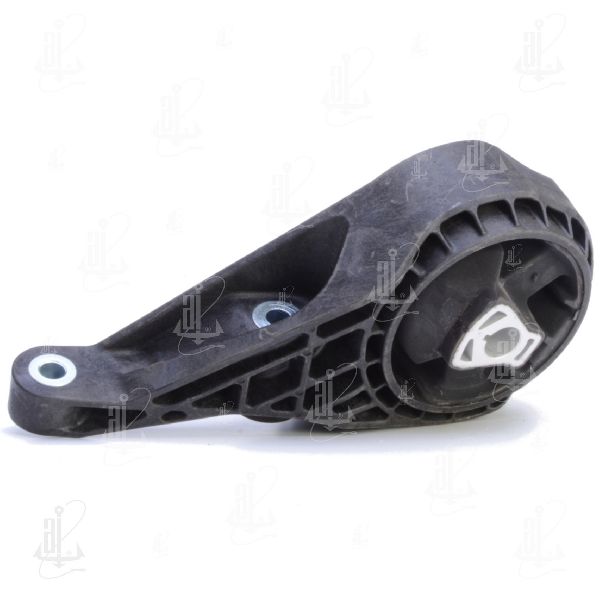
We Have This Part in Stock

The information in this article is provided for general reference and educational purposes only. Vehicle specifications, procedures, and part compatibility can vary by production date, trim level, and region. Always consult your vehicle's factory service manual and verify part numbers before purchasing or performing repairs. Safety-critical components such as airbags, seat belts, and braking systems should be installed by a qualified professional.
- Buick Regal:
- 🧭 Diagnostic Flowchart
- 🎬 Helpful Videos
- 🛍️ Shop This Part
- What's Unique About the 2011-2017 Buick Regal
- Symptoms You May Notice
- Most Likely Causes
- Rare But Worth Checking
- Diagnosis Steps
- Parts You'll Likely Need
- Related Codes That Often Appear With This One
- Technical Service Bulletins (TSBs) & Recalls
- Platform-Specific Known Issues
- Mechanic-Grade Diagnostic Values
- Scan Tool Commands That Help
- Wiring & Ground Locations
- Real Owner Repair Stories
- Documented NHTSA Reports
- OEM Part Supersession History
- Model Year Variations Within This Range
- Other Known Issues on This Vehicle
- Used vs. New Parts: Buying Guide for This Vehicle
- Real Owner Stories
- 2011 Regal CXL Turbo — 105000 miles
- Related OBD-II Codes
- Frequently Asked Questions
- 🎟️ Get 5% Off