

P0776 on 2002-2003 Chevrolet Silverado 1500 HD: Pressure Control Solenoid 'B' Fixes
On a 2002-2003 Silverado 1500 HD, code P0776 almost always points to a faulty Pressure Control Solenoid 'B' (also known as the EPC solenoid) inside the 4L80E transmission. The fix typically involves dropping the transmission pan to replace the solenoid and changing the fluid and filter. This is a common failure point. Expect a shop cost of $350-$600 for the solenoid replacement.
- P0776 on your Silverado 1500 HD indicates a problem with the Pressure Control Solenoid 'B' in your 4L80E transmission.
- The most common symptoms are harsh shifting, transmission slipping, and potentially getting stuck in one gear.
- Always check the transmission fluid level and condition first, as low or dirty fluid can cause this code.
- The most likely fix is to replace the solenoid itself, which is located inside the transmission oil pan.
- Due to the complexity and risk of further damage, this repair is recommended for experienced DIYers or a professional shop.
What's Unique About the 2002-2003 Chevrolet SILVERADO 1500 HD
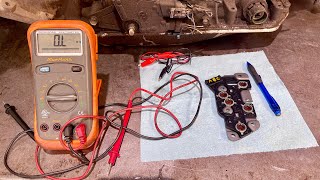
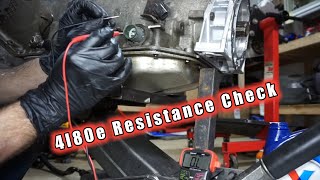
The 2002-2003 Silverado 1500 HD is equipped with the robust 4L80E 4-speed automatic transmission, a heavy-duty unit derived from the legendary TH400. While durable, its solenoids are a known failure point over time due to heat and age. A key advantage for diagnosis on this specific transmission is the ability to test the resistance of the internal solenoids, including the Pressure Control Solenoid (EPC), from the large round electrical connector 🎬 Watch: How to test solenoid resistance without dropping the pan. on the outside of the transmission case. This can potentially confirm a bad solenoid without needing to drop the pan for initial diagnosis. A specific real-world symptom noted by owners is the code triggering after a cold start, where the 3-4 shift fails, locking the transmission in 3rd gear until the truck is shut off and restarted.
Diagnostic Flowchart
Tap your situation to follow the diagnostic path that matches what you're seeing on this vehicle.
Symptoms You May Notice
- Harsh, abrupt, or jerky shifts, particularly between 2nd and 3rd gear.
- Delayed gear engagement when shifting from Park to Drive or Reverse.
- Transmission slipping, where the engine RPMs increase without a corresponding increase in vehicle speed.
- Vehicle enters "limp mode," getting stuck in a single gear (often 2nd or 3rd).
- Failure to shift into higher gears, especially the 3-4 shift, which may trigger the code.
- Illuminated Check Engine Light or a dedicated transmission warning light.
- Noticeably reduced fuel economy.
- Transmission overheating due to slipping and incorrect pressures.
- Replacing the entire transmission when only a single solenoid and fluid service was needed.
- Assuming the TCM is faulty before thoroughly testing the solenoid and its wiring circuit.
- Replacing shift solenoids 'A' or 'B' when P0776 specifically refers to the Pressure Control (EPC) solenoid 'B'.
Most Likely Causes
- Failed Pressure Control Solenoid 'B' (EPC Solenoid) 🔴 High Probability → Shop Transmission Valve Body Solenoids are electro-mechanical parts with a finite lifespan; they can fail electrically (coil burnout) or mechanically (valve sticking) from age, heat cycles, and contamination in the fluid. It is one of the most common failure points in the 4L80E.
How to confirm: Command the solenoid with a bi-directional scan tool and watch for a pressure change. If no scan tool is available, test the solenoid's resistance at the transmission case connector. For the 4L80E, this is the EPC solenoid, and you should measure across pins C and D. The resistance should be between 3.5 and 5.5 ohms. A reading outside this range, or an open circuit, confirms a bad solenoid.
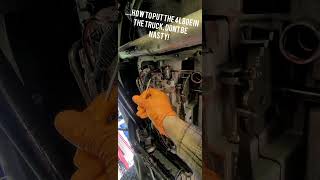
Typical fix: Drop the transmission pan, disconnect the wiring harness, and replace the Pressure Control Solenoid. 🎬 See this walkthrough for replacing solenoids and upgrading your pan. A fluid and filter change is performed at the same time. It is also wise to inspect the internal harness for brittleness or damage while the pan is off.
Est. part cost: $40-$80 - Low or Dirty Transmission Fluid 🟡 Medium Probability → Shop Transmission Assembly Over time, transmission fluid breaks down and collects clutch material and metal shavings. This contaminated fluid can clog the fine passages in the valve body and cause solenoids to stick or malfunction. Towing and heavy use, common for the 1500 HD, accelerates this breakdown.
How to confirm: Check the transmission fluid dipstick with the engine running and transmission warm. The fluid should be at the correct level, bright red, and not smell burnt. Dark, brown, or burnt-smelling fluid indicates a problem.
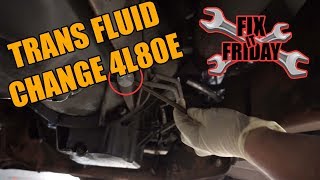
Typical fix: Perform a transmission fluid and filter change using DEXRON-VI fluid. 🎬 Watch: Step-by-step guide for a 4L80E transmission fluid change. If the fluid is extremely dirty or contains metal, this may be a temporary fix or could indicate a more serious internal problem requiring a rebuild.
Est. part cost: $60-$120 - Damaged Internal/External Wiring ⚪ Low Probability The internal transmission wiring harness is submerged in hot fluid, which can make the plastic connector and wires brittle and prone to cracking over time. The external connector can also suffer from corrosion or damage from road debris.
How to confirm: Inspect the main transmission electrical connector for corrosion, pushed-out pins, or fluid intrusion. If the solenoid tests good from the external connector, but the problem persists, the internal harness should be inspected for cracks or breaks when the pan is removed.
Typical fix: Repair the damaged section of the harness or replace the entire internal wiring harness assembly. Aftermarket internal harnesses are readily available.
Est. part cost: $50-$150
Rare But Worth Checking
- Faulty Transmission Control Module (TCM): → Shop Transmission Assembly This is an uncommon cause. The TCM is the computer that controls the transmission. It should only be considered after all other possibilities, like the solenoid, fluid, and wiring, have been ruled out.
- Mechanical Failure in Valve Body: → Shop Transmission Valve Body Debris can score the bores within the valve body, causing valves to stick and preventing proper pressure regulation even with a good solenoid. This usually requires a professional diagnosis and either cleaning or replacement of the valve body.
- Defective Torque Converter Sealing Rings: In some cases, especially with cold weather symptoms, defective sealing rings can cause the torque converter to drain back fluid when the truck is off. On startup, this causes a delay in filling the system, which can trigger a 'tie-up' (two gears engaging at once) and set a P0776 code.
Diagnosis Steps
- Check the transmission fluid level and condition using the dipstick. Note if it is low, dark, or smells burnt.
- Use an OBD-II scanner to confirm P0776 and check for any other transmission-related codes. Note any codes like P0700, P0751, or P0894.
- If you have a bi-directional scanner, command the Pressure Control Solenoid 'B' on and off while monitoring transmission line pressure to see if it responds.
- Test the resistance of the Pressure Control Solenoid from the external transmission connector. For the 4L80E, measure between pins C and D. The reading should be between 3.5 and 5.5 ohms. A reading of 0 or infinity indicates a failed solenoid.
- If the resistance is out of specification, the solenoid is faulty. If it is within spec, the problem may be wiring, the TCM, or a mechanical issue in the valve body.
- Drain the transmission fluid and remove the transmission pan. Inspect the pan magnet for excessive metal debris ('glitter'), which indicates serious internal wear. A small amount of fine, grey paste is normal.
- Visually inspect the Pressure Control Solenoid and its wiring harness for any signs of damage, such as cracked plastic or broken wires.
- Replace the Pressure Control Solenoid, transmission filter, and pan gasket. It is often recommended to replace the entire internal harness at the same time due to age and heat exposure.
- Refill with the correct type and amount of transmission fluid (DEXRON-VI is the recommended replacement for older fluids). A pan drop requires approximately 7-8 quarts.
Parts You'll Likely Need
- Pressure Control Solenoid (EPC)
(OEM #24229853)— This is the component that most commonly fails, either electrically or mechanically, causing the P0776 code. It is also referred to as a 'force motor'.
Trusted brands: ACDelco, BorgWarner, Rostra
OEM price range: $60-$90
Aftermarket price range: $30-$50 - Transmission Filter and Gasket Kit — Must be replaced whenever the transmission pan is removed for service. A clogged filter can also contribute to the code.
Trusted brands: ACDelco, Wix, ATP
OEM price range: $30-$50
Aftermarket price range: $15-$30 - DEXRON-VI Automatic Transmission Fluid — The correct fluid is required to refill the transmission after service. A 4L80E pan drop requires approximately 7-8 quarts. DEXRON-VI is fully backward-compatible
Related Codes That Often Appear With This One
- P0700 — This is a general transmission fault code that indicates the TCM has stored a specific code, like P0776. It almost always appears alongside other transmission codes.
- P0751 — Shift Solenoid 'A' Performance/Stuck Off. Often appears with other solenoid codes when there is a widespread electrical or fluid pressure issue.
- P0756 — Shift Solenoid 'B' Performance/Stuck Off. Similar to P0751, it points to a potential systemic issue.
- P0894 — Transmission Component Slipping. This code can be triggered as a direct result of the incorrect pressure regulation caused by the P0776 fault.
Technical Service Bulletins (TSBs) & Recalls
- PIP4379M: Mentions P0776 as one of many possible DTCs when diagnosing a no-reverse or range inhibit condition.
Platform-Specific Known Issues
- The provided NHTSA Technical Service Bulletin (TSB) #PIP4379M lists P0776 along with over a dozen other transmission codes that can occur in relation to a vehicle that won't go into reverse or has a range inhibit message, suggesting it can be part of a complex failure. [⭐ MANUFACTURER TSB — highest authority]
- A common owner-reported failure pattern for the 4L80E involves a cold start, followed by a failed 3-4 shift that triggers the P0776 code and forces limp mode. A restart often temporarily clears the issue, pointing strongly to a solenoid or hydraulic issue that is sensitive to fluid temperature/viscosity.
Mechanic-Grade Diagnostic Values
- Pressure Control (EPC) Solenoid Resistance — expected: 3.5 to 5.5 Ohms. Failure: A reading of 0 Ohms (short) or infinite/OL (open circuit).
- Shift Solenoid A & B Resistance — expected: 20 to 22 Ohms. Failure: A reading significantly outside this range.
- Line Pressure at Hot Idle (in Park or Drive) — expected: ~75 PSI. Failure: Significantly lower or higher pressure at idle can indicate a pump, regulator, or EPC solenoid issue.
- Line Pressure in Reverse (light throttle) — expected: ~200 PSI. Failure: Low pressure in reverse can indicate cross-leaks or a failing pump/solenoid.
Scan Tool Commands That Help
- Tech2 or similar bi-directional scanner: Pressure Control Solenoid (PCS) Control — This function allows a technician to manually command the EPC solenoid on and off or to specific duty cycles while monitoring line pressure with a mechanical gauge. This directly tests if the solenoid is mechanically and electrically responding to commands from the PCM, which is the most definitive way to diagnose a faulty solenoid versus a wiring or PCM driver issue.
Wiring & Ground Locations
- Main Transmission Connector (C2) — On the passenger side of the 4L80E transmission case, it is a large, round multi-pin connector.. This is the primary interface for all electronic controls of the transmission. Testing can be performed here without dropping the pan. Pins C and D are for the Pressure Control (EPC) Solenoid.
- G103 — On the right rear of the engine block. Some sources indicate it is on the front of the passenger side cylinder head on later models.. This is a primary engine and PCM ground. A poor connection at G103 can cause erratic sensor readings and incorrect command signals from the PCM to the transmission solenoids, potentially mimicking a solenoid failure.
- G104 — On the left rear of the engine block.. Similar to G103, this is another critical engine ground. Ensuring all engine-to-chassis grounds are clean and tight is a crucial step in diagnosing any electronic control issue, including transmission codes.
Real Owner Repair Stories
- CK5 Forum User (1997 C2500 with 4L80E) — After sitting for a few days, a delayed engagement into reverse with no initial torque, but not a harsh slam.
❌ Tried (didn't work) The user suspected an issue and was considering additives, but the primary diagnosis pointed elsewhere.
✅ What actually fixed it The issue was identified as torque converter drain-back, where fluid drains out of the converter when the vehicle sits. This requires the pump to refill the converter upon startup, causing a delay. The root cause is often excessive clearance in the transmission's front pump, a worn pump bushing, or a bad converter seal, allowing air to enter and displace the fluid. A GM TSB also notes that shifting into gear too quickly after a cold start before the system has time to prime can set codes like P1810 due to this phenomenon.
OEM Part Supersession History
24229853→Not directly superseded, but is often cross-referenced with shift solenoid part number 24230298 in catalogs.— Part cataloging overlaps.
Heads up: Be cautious. While some catalogs may group them, P0776 refers to the EPC solenoid (force motor), which is physically different from the 1-2 or 2-3 shift solenoids (part 24230298). Ordering by the specific function (Pressure Control Solenoid) rather than just the part number is critical to get the correct component.Bosch-style EPC (pre-1994)→Holley-style EPC (1994+)— Design update to eliminate a cleaning pulse and improve reliability.
Heads up: The earlier silver Bosch EPC solenoid cannot be used in a 1994-and-later 4L80E designed for the black Holley solenoid, as it will cause high line pressure. The resistance and internal design are different.
Helpful Videos
We Have This Part in Stock

The information in this article is provided for general reference and educational purposes only. Vehicle specifications, procedures, and part compatibility can vary by production date, trim level, and region. Always consult your vehicle's factory service manual and verify part numbers before purchasing or performing repairs. Safety-critical components such as airbags, seat belts, and braking systems should be installed by a qualified professional.
- Chevrolet SILVERADO 1500 HD:
- 🧭 Diagnostic Flowchart
- 🎬 Helpful Videos
- 🛍️ Shop This Part
- What's Unique About the 2002-2003 Chevrolet SILVERADO 1500 HD
- Symptoms You May Notice
- Most Likely Causes
- Rare But Worth Checking
- Diagnosis Steps
- Parts You'll Likely Need
- Related Codes That Often Appear With This One
- Technical Service Bulletins (TSBs) & Recalls
- Platform-Specific Known Issues
- Mechanic-Grade Diagnostic Values
- Scan Tool Commands That Help
- Wiring & Ground Locations
- Real Owner Repair Stories
- OEM Part Supersession History
- 🎟️ Get 5% Off