

P0776 on 2001-2005 GMC Sierra: Pressure Control Solenoid 'B' Causes and Fixes
On a 2001-2005 GMC Sierra, code P0776 almost always points to a faulty Pressure Control (PC) Solenoid 'B' inside the transmission. The most common fix is to replace the solenoid, which requires dropping the transmission pan. Always check the transmission fluid level and condition first, as low or dirty fluid can cause the same symptoms. The correct fluid is DEXRON-VI.
- P0776 on a 2001-2005 Sierra indicates a problem with Pressure Control Solenoid 'B' in the transmission.
- Always check the transmission fluid level and condition first; low or dirty fluid is a common cause of solenoid problems.
- The most likely failed part is the solenoid itself, which is located inside the transmission pan and is a replaceable component.
- Driving with this code can cause poor performance and may lead to more expensive internal transmission damage.
- Due to the need to work inside the transmission, professional service is recommended for this repair.
What's Unique About the 2001-2005 Gmc SIERRA
The 2001-2005 GMC Sierra (GMT800 platform) primarily uses the 4L60-E or heavy-duty 4L80-E automatic transmissions. In these specific units, the P0776 code is very commonly associated with an individual, replaceable solenoid within the valve body. Unlike later models (post-2007) that integrate solenoids into a single expensive control module (TEHCM), a fix on these trucks is often more straightforward and affordable, typically involving a single solenoid replacement.
Diagnostic Flowchart
Tap your situation to follow the diagnostic path that matches what you're seeing on this vehicle.
Symptoms You May Notice
- Harsh, jerky, or 'slamming' shifts, especially between 1-2 and 2-3.
- Transmission slipping between gears, where engine RPMs flare up without an increase in speed.
- Vehicle gets stuck in one gear (limp mode), often 3rd gear.
- Inability to shift into higher gears or a delay in downshifting.
- Check Engine Light is on.
- A noticeable 'jolt' or 'bump' felt shortly after coming to a complete stop.
- Replacing the entire transmission when only a single solenoid and a fluid change are necessary.
- Replacing the wrong solenoid. In a 4L60-E/4L80-E, there are multiple solenoids on the valve body (e.g., Shift Solenoid A/B, TCC solenoid, EPC solenoid). P0776 specifically refers to the Pressure Control (EPC) solenoid, not a shift solenoid.
Most Likely Causes
- Faulty Pressure Control Solenoid 'B' 🔴 High Probability → Shop Transmission Valve Body Solenoids in the 4L60-E/4L80-E are submerged in hot fluid and are a common wear item that fails electrically (internal coil shorts) or mechanically (plunger sticks) over time.
How to confirm: After confirming fluid is clean and full, a mechanic can test the solenoid's resistance with a multimeter (should be 3.5-4.6 ohms for a 2003+ 4L60E EPC solenoid) or command it on/off with a bi-directional scan tool to check for a response and corresponding pressure change.
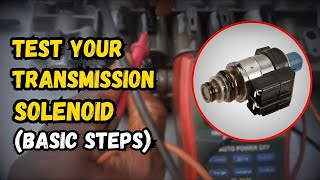
Typical fix: Replace the faulty solenoid. This is located inside the transmission oil pan, attached to the valve body. 🎬 Watch: Step-by-step DIY repair for the P0776 pressure control solenoid.
Est. part cost: $40-$100 - Low, Dirty, or Burnt Transmission Fluid 🟡 Medium Probability → Shop Transmission Assembly High-mileage trucks or those used for towing can experience fluid breakdown. Contaminated fluid with clutch material can clog the small passages and screens in the solenoids, causing them to stick.
How to confirm: Check the transmission fluid dipstick. The fluid should be at the correct level, pinkish-red, and not smell burnt. Dark, brown, or debris-filled fluid indicates a problem.
Typical fix: Perform a transmission fluid and filter change. Use the correct fluid type, which is DEXRON-VI, as it is fully backward-compatible and the recommended service fluid for these transmissions.
Est. part cost: $50-$150 - Damaged Wiring or Connectors ⚪ Low Probability
How to confirm: Visually inspect the wiring harness leading to the transmission for any signs of damage, corrosion, or loose pins at the main connector. A wiggle test on the harness while monitoring solenoid data can reveal intermittent faults.
Typical fix: Repair or replace the damaged section of the wiring harness or the connector.
Est. part cost: $20-$200 - Internal Valve Body Issue ⚪ Low Probability → Shop Transmission Valve Body
How to confirm: This is typically diagnosed after a new solenoid does not resolve the issue. A mechanic may need to check for sticking valves or worn bores within the valve body itself, which can be scored by debris in the fluid.
Typical fix: The valve body may need to be professionally cleaned, rebuilt with oversized valves, or replaced.
Est. part cost: $250-$700
Rare But Worth Checking
- Faulty Transmission Control Module (TCM) or Powertrain Control Module (PCM): → Shop Transmission Assembly This is an uncommon cause. The module's internal driver circuit for the solenoid can fail, but all other possibilities should be exhausted first.
- Failing Transmission Fluid Pump: → Shop Transmission Assembly A weak or failing pump can cause low line pressure throughout the transmission, which can trigger a performance code like P0776 for a pressure control solenoid, even if the solenoid itself is functional.
Diagnosis Steps
- Check the transmission fluid level and condition using the dipstick. The fluid should be full and clean.
- If the fluid is low, top it off and check for leaks. If it's dark, burnt, or contains debris, perform a fluid and filter change using DEXRON-VI fluid.
- Scan the computer for any other transmission-related codes to see if the problem is isolated or part of a larger issue.
- Inspect the external transmission wiring harness and main connector for any visible damage, corrosion, or loose connections.
- If the fluid and wiring are good, the next step is to drop the transmission pan to access the solenoids.
- Identify the Pressure Control (EPC) Solenoid. Its location can be confirmed with a service manual for your specific transmission (4L60-E or 4L80-E).
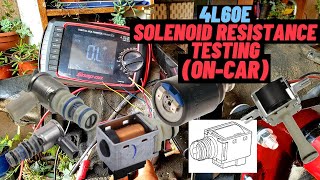
- Test the solenoid's resistance with a multimeter. Compare the reading to the manufacturer's specification (typically 3.5-4.6 ohms for a 2003+ 4L60-E EPC solenoid). 🎬 See how to perform a solenoid resistance test on the vehicle. An open or shorted reading indicates a bad solenoid.
- For advanced diagnosis, a technician can use a scan tool to command the solenoid on and off while monitoring transmission line pressure with a pressure gauge to see if the solenoid is functioning mechanically.
- If the solenoid tests good electrically and pressure tests fail, the issue may be in the valve body or, rarely, the TCM itself.
Parts You'll Likely Need
- Pressure Control Solenoid 'B' (EPC Solenoid)
(OEM #ACDelco 24227792 (replaces 24212690) for 4L60-E; ACDelco 34435C for 2004+ 4L80-E)— This solenoid is the most common part to fail mechanically or electrically, directly causing the P0776 code. Note that part numbers can vary by year, so always verify with VIN.
Trusted brands: ACDelco, BorgWarner
OEM price range: $60-$120
Aftermarket price range: $40-$80 - Transmission Filter and Pan Gasket Kit
(OEM #ACDelco 24208576 (for 4L60-E deep pan))— Required for any repair that involves dropping the transmission pan. It's essential to replace the filter and gasket at the same time to ensure clean fluid and a leak-free seal.
Trusted brands: ACDelco, Wix, ATP
OEM price range: $30-$60
Aftermarket price range: $20-$40 - Automatic Transmission Fluid
(OEM #ACDelco 10-9395 (DEXRON-VI))— The transmission fluid must be drained to access the solenoid and should be replaced with the correct type (DEXRON-VI) to ensure proper transmission function and longevity.
Trusted brands: ACDelco, Valvoline, Castrol
OEM price range: $10-$15 per quart
Aftermarket price range: $7-$12 per quart
Related Codes That Often Appear With This One
- P0700 — This is a general transmission fault code. It simply means the TCM has detected a problem and has requested the main computer to turn on the check engine light. It will almost always appear with a more specific code like P0776.
- P0751, P0756, P0761 — These codes relate to other shift solenoids. If they appear with P0776, it could point to a widespread electrical issue, severe fluid contamination affecting multiple solenoids, or a failing TCM. TSB PIP4379K lists these codes together as part of a common diagnostic path.
Technical Service Bulletins (TSBs) & Recalls
- PIP4379K: Mentions P0776 as part of a group of diagnostic trouble codes related to transmission range inhibit or no reverse conditions, indicating a known area for service diagnostics. [⭐ MANUFACTURER TSB — highest authority]
- 22-NA-258: Although for 2021-2022 models, this TSB is notable as it links P0776 to a 'No Reverse when cold' condition cau
Platform-Specific Known Issues
- The provided NHTSA Technical Service Bulletin (TSB) #PIP4379K confirms that P0776 is one of several codes that can be set related to transmission shifting issues, often pointing towards a common diagnostic path starting with code P0701. [⭐ MANUFACTURER TSB — highest authority]
- While for a later model year, TSB #22-NA-258 highlights how extreme cold weather can cause related issues like 'No Reverse' and set a P0776 code due to a torn screen on the valve body spacer plate, showing the system's sensitivity to environmental factors and debris.
Mechanic-Grade Diagnostic Values
- Pressure Control (EPC) Solenoid Resistance (4L60-E) — expected: 3.5 - 4.6 Ohms (for 2003+ models). Failure: A reading outside this range, or an open/short circuit, indicates a failed solenoid coil.
- Pressure Control (EPC) Solenoid Resistance (4L80-E) — expected: 4.0 - 5.5 Ohms (for Holley-style, 1994+). Failure: Readings outside this range suggest a faulty solenoid.
- Transmission Line Pressure at Idle (In Park or Drive) — expected: ~70 PSI. Failure: Significantly lower pressure can indicate a worn pump, clogged EPC filter, or a leaking boost valve.
- Transmission Line Pressure at Wide Open Throttle (WOT) — expected: 190 - 225 PSI. Failure: Low max pressure points directly to a failing EPC solenoid or a significant leak in the pressure control circuit.
Scan Tool Commands That Help
- Tech 2 / High-End Bidirectional Scanner: Pressure Control Solenoid B - Actuation Test or Output Control — This command allows a technician to manually cycle the EPC solenoid while the engine is running and the pan is off. A clicking sound should be heard, and a change in fluid flow may be visible. This confirms the solenoid is mechanically capable of moving, helping to isolate a mechanical jam from an electrical failure.
Wiring & Ground Locations
- Transmission Case Connector (4L60-E) — The main round connector on the passenger side of the transmission case.. Pins C & D are for the Pressure Control (EPC) Solenoid. Resistance should be tested across these pins to verify the solenoid's electrical integrity without dropping the pan first.
- Transmission Case Connector (4L80-E, 1994+) — The main round connector on the driver's side of the transmission case.. The two middle pins on the top row are for the EPC solenoid (High and Low). Testing resistance here can quickly identify an electrical fault with the solenoid.
- Engine Block to Firewall Ground Straps — Typically located on the back of the cylinder heads, connecting to the firewall.. These are the main grounds for the PCM and other engine electronics. A corroded or loose strap can cause erratic sensor readings and incorrect command signals to the transmission, potentially mimicking a solenoid failure.
- Frame Grounds — Multiple points along the frame, especially near the fuel pump and under the A-pillar.. Poor frame grounds can cause electrical noise and voltage drops throughout the vehicle, affecting the PCM's ability to accurately control the transmission solenoids.
Real Owner Repair Stories
- LS1Tech Forum User (Vehicle with a rebuilt 4L60-E) — Low line pressure in all gears (35-40 psi), delayed and harsh engagement, TCC cycling in and out at highway speeds.
❌ Tried (didn't work) Replacing all solenoids in the valve body (three times)., Installing a Transgo boost valve., Installing an oversized pressure regulator valve., Replacing the wiring harness and pressure manifold switch.
✅ What actually fixed it The user disassembled the transmission and found the separator plate was severely worn from the checkballs, causing major cross-leaks. Replacing the separator plate and gaskets resolved the low pressure and shifting issues.
OEM Part Supersession History
GM 8677314 (Bosch)→GM 8684216 (Holley/BorgWarner)— The design was changed to be more robust, adding a regulating spring and eliminating the need for a 10-second cleaning pulse from the PCM.
Heads up: The earlier Bosch (silver) solenoid cannot be used in a transmission designed for the later Holley (black) solenoid, as it will cause excessively high line pressure. The valve body oil channels are different.
Model Year Variations Within This Range
- 2003-2005: Around 2003, the 4L60-E EPC solenoid was updated, which also changed the required resistance specification. Pre-2003 solenoids have a different resistance range. Using the wrong year solenoid can cause incorrect line pressure and shifting problems. The internal wiring harness connector for the EPC also changed.
- 2005: In 2005, the main case connector color changed from green to black to denote an internal wiring harness change for an additional input shaft speed sensor, which was added in some models. While the P0776 cause is the same, this helps identify the specific harness if replacement is needed.
Helpful Videos


We Have This Part in Stock


The information in this article is provided for general reference and educational purposes only. Vehicle specifications, procedures, and part compatibility can vary by production date, trim level, and region. Always consult your vehicle's factory service manual and verify part numbers before purchasing or performing repairs. Safety-critical components such as airbags, seat belts, and braking systems should be installed by a qualified professional.
- Gmc SIERRA:
- 🧭 Diagnostic Flowchart
- 🎬 Helpful Videos
- 🛍️ Shop This Part
- What's Unique About the 2001-2005 Gmc SIERRA
- Symptoms You May Notice
- Most Likely Causes
- Rare But Worth Checking
- Diagnosis Steps
- Parts You'll Likely Need
- Related Codes That Often Appear With This One
- Technical Service Bulletins (TSBs) & Recalls
- Platform-Specific Known Issues
- Mechanic-Grade Diagnostic Values
- Scan Tool Commands That Help
- Wiring & Ground Locations
- Real Owner Repair Stories
- OEM Part Supersession History
- Model Year Variations Within This Range
- 🎟️ Get 5% Off