

P0776 on 2006-2010 GMC Sierra: Causes and Fixes for Pressure Control Solenoid 'B' Issues
On a 2006-2010 GMC Sierra, P0776 indicates a problem with the Pressure Control Solenoid 'B' inside the transmission. For 2007-2010 models with the 6-speed 6L80, this often requires replacing the entire control module (TEHCM), a costly repair. For 2006 models with a 4-speed, it's typically a more accessible individual solenoid. Always check transmission fluid first, as low or dirty fluid is a primary cause.
- P0776 points to a pressure control solenoid issue inside the transmission.
- The first and easiest step is to check the transmission fluid level and condition.
- The repair procedure is completely different depending on your truck's transmission. 2007-2010 models with the 6-speed 6L80 are more complex and expensive to fix (TEHCM replacement) than 2006 models with a 4-speed.
- This is a serious code that can lead to significant transmission damage if ignored. Professional diagnosis is highly recommended.
What's Unique About the 2006-2010 Gmc SIERRA
The 2006-2010 GMC Sierra spans two generations with different primary transmissions, making the diagnosis for P0776 very different. The 2006 and 2007 'Classic' (GMT800 platform) typically use a 4-speed automatic (like the 4L60-E/4L65-E) where the solenoid is an individual, replaceable part. In contrast, the 2007 'New Body Style' through 2010 models (GMT900 platform) primarily use the 6-speed 6L80 transmission. In the 6L80, the solenoids are integrated into the Transmission Electro-Hydraulic Control Module (TEHCM), meaning a single solenoid failure often requires replacing the entire expensive module, which must then be programmed to the truck.
Diagnostic Flowchart
Tap your situation to follow the diagnostic path that matches what you're seeing on this vehicle.
Generation note: This range covers the end of the GMT800 platform (2006 and '07 'Classic') and the start of the GMT900 platform (late 2007-2010). The GMT800s typically use a 4-speed automatic (4L60-E/4L65-E) where solenoids are individually serviceable. The GMT900s use the 6-speed 6L80 where the solenoids are part of the TEHCM assembly, making the repair more complex and costly. The heavy-duty 2500/3500 models could also be equipped with a 4L80-E or an Allison 1000, which have their own unique failure points for this code.
Symptoms You May Notice
- Harsh, jerky, or delayed shifts, sometimes feeling like a 'slam' into gear.
- Transmission slipping between gears, where the engine revs up without an increase in speed.
- Vehicle enters 'limp mode,' often getting stuck in one gear (like 3rd).
- Inability to shift into higher gears or access Reverse.
- Check Engine Light is illuminated.
- Transmission overheating.
- Delayed engagement when shifting from Park to Drive or Reverse.
- Replacing only the solenoid on a 6L80 transmission when the entire TEHCM is the required service part.
- Assuming a full transmission rebuild is needed before properly diagnosing the fluid, TEHCM, and valve body.
- Replacing the external TCM when the fault lies with the internal TEHCM (on 6L80 models).
- On Allison transmissions, overlooking a clogged or incorrect aftermarket spin-on filter as the cause.
Most Likely Causes
- Low or Contaminated Transmission Fluid 🔴 High Probability → Shop Transmission Assembly Fluid is the lifeblood of the transmission; leaks or lack of service can lead to low levels or fluid breakdown. Debris from normal wear or a failing torque converter can clog passages and solenoids. Burnt or chunky fluid is a clear indicator of a problem.
How to confirm: Check the transmission fluid level and condition on the dipstick (if equipped). The fluid should be at the correct level, bright red, and not smell burnt. Dark, dirty, or metallic-flecked fluid indicates a problem requiring service.
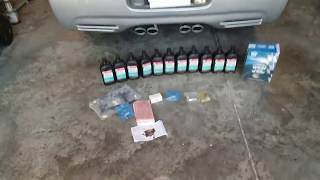
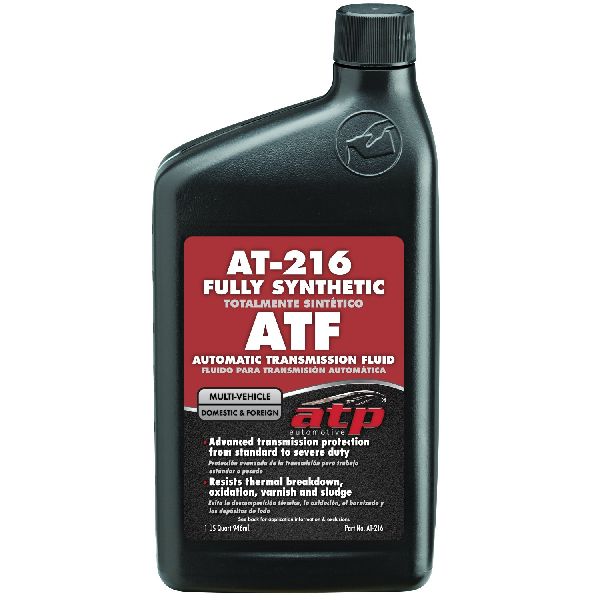
Typical fix: Perform a transmission fluid and filter change using the correct fluid (DEXRON-VI for the 6L80). This is the first and most crucial diagnostic step.
Est. part cost: $75-$150 - Failed Pressure Control Solenoid / TEHCM Assembly (6L80 Models) 🔴 High Probability → Shop Transmission Clutch Pressure Control Solenoid In the 6L80 transmission (2007-2010), the solenoids are integrated into the TEHCM, which is a known failure point. Debris, heat, and electronic failure within the sealed module cause this code. This is the most common repair for P0776 on these models.
How to confirm: After confirming fluid is good, a professional will use a bi-directional scan tool to command the solenoid on and off to check its response. If it fails the test, the TEHCM is the likely culprit.
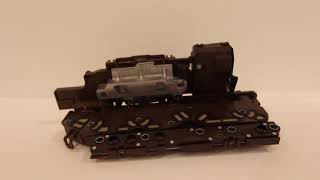
Typical fix: Replace the entire TEHCM assembly located inside the transmission oil pan. The new module must be programmed to the vehicle's VIN using GM-specific software.
Est. part cost: $400-$900 - Failed Pressure Control Solenoid (4-Speed Models) 🟡 Medium Probability → Shop Transmission Clutch Pressure Control Solenoid On 4L60-E/4L65-E transmissions (common in 2006 models), individual solenoids can fail electronically or mechanically over time due to heat and contamination.
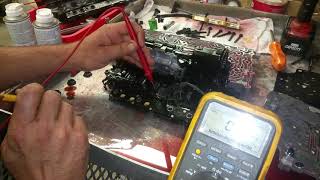
How to confirm: A technician will test the solenoid's resistance with a multimeter and check for proper operation via a scan tool. The solenoid is located inside the transmission pan on the valve body.
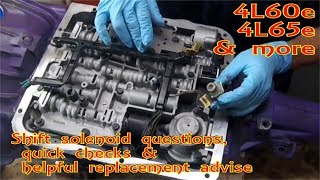
Typical fix: Drop the transmission pan and replace the specific faulty solenoid. 🎬 See this walkthrough on replacing 4L60E solenoids and the TCC. It is often recommended to replace them in sets (e.g., Shift Solenoid A & B together).
Est. part cost: $50-$100 - Clogged or Defective Valve Body ⚪ Low Probability → Shop Transmission Valve Body Metallic debris from normal wear or a failing torque converter can clog the small passages in the valve body, restricting fluid flow and preventing the solenoid from controlling pressure correctly. This is a known issue on 6L80 transmissions.
How to confirm: This requires dropping the transmission pan and visually inspecting the valve body for debris and scoring. The pan may contain a significant amount of metallic sludge.
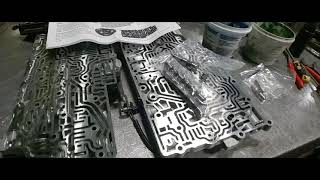
Typical fix: In some cases, the valve body can be removed and cleaned. If it is scored or damaged, it must be replaced.
Est. part cost: $300-$800
Rare But Worth Checking
- Cracked 1-2-3-4 / 3-5-R Clutch Housing: A known issue documented in GM TSB #09-07-30-004J 🎬 Watch: A specialist explains the real causes of 6L80 failure. for 6L80 transmissions. This causes internal pressure loss that can trigger P0776 along with other codes like P2715 and P2723, and symptoms like no reverse or slips in 3rd or 5th gear. This is a major internal repair requiring transmission removal and disassembly.
- Damaged Wiring or Connectors: While less common than internal failures, the wiring harness leading to the transmission can become damaged from road debris or heat, causing an open or short in the solenoid circuit.
- Faulty Transmission Control Module (TCM): → Shop Transmission Assembly It is rare for the external TCM (on models where it's separate, like some 4-speeds) or the PCM to fail in a way that isolates this single code, but it is possible. This is usually diagnosed after all other possibilities are eliminated.
- Failing Torque Converter: A known weak point on some 6L80-equipped trucks. The torque converter clutch can disintegrate, sending a large amount of metallic debris throughout the transmission. This debris quickly clogs the filter, valve body, and TEHCM solenoids, leading to P0776 and other codes.
Diagnosis Steps
- Check the transmission fluid level and condition. If low, top it off. If dark, burnt, or full of debris, a fluid and filter change is the first step.
- Use a professional OBD-II scanner to check for other transmission-related codes. Note all codes before clearing.
- If fluid is okay, the next step is to test the solenoid circuit. A technician will use a bi-directional scan tool to command the solenoid on and off to check its function.
- If the solenoid does not respond, drop the transmission pan for a visual inspection. Look for excessive metal shavings or clutch material in the pan and filter.
- Inspect the wiring inside the pan for any obvious damage.
- On 4-speed models (4L60-E/4L65-E), test the resistance of the individual solenoid with a multimeter. Replace if out of spec.
- On 6-speed (6L80) models, the TEHCM is the primary suspect. Inspect the valve body for debris before condemning the TEHCM.
- If codes P2715/P2723 are also present, and symptoms include no reverse or slipping, inspect for a cracked clutch housing per TSB #09-07-30-004J. This may require a transmission specialist.
Parts You'll Likely Need
- Transmission Electro-Hydraulic Control Module (TEHCM)
(OEM #24256861)— For 2007-2010 models with the 6L80 transmission, the solenoids are integrated into this module. It's the most common point of failure for this code on these model years. This part requires VIN programming after installation.
Trusted brands: ACDelco (OEM)
OEM price range: $400-$900
Aftermarket price range: $350-$700 - Pressure Control Solenoid
Related Codes That Often Appear With This One
- P0700 — This is a general transmission fault code. The TCM sends a request to the main engine computer (ECM) to turn on the Check Engine Light, and P0700 is the code the ECM stores to indicate the request was received.
- P0751, P0756, P0761 — These codes relate to other shift solenoids. Seeing them together with P0776 strongly suggests a widespread issue like severe fluid contamination, a failing TEHCM, or a major electrical problem. The NHTSA TSB #PIP4379K also lists these codes together.
- P2715, P2723 — These are other pressure control solenoid codes. GM TSB #09-07-30-004J specifically links these codes with P0776 as indicators of a possible cracked clutch housing in the 6L80 transmission.
Technical Service Bulletins (TSBs) & Recalls
- 09-07-30-004J: Addresses slips, delayed engagement, and DTCs P0776, P2715, and P2723 caused by a cracked 1-2-3-4 / 3-5-R clutch housing in 6L80/6L90 transmissions.
- PIP4379K: A general transmission diagnostic TSB that lists P0776 among many other codes that can be set during a range inhibit or no-reverse condition.
- 22-NA-258: Describes a torn screen on the valve body spacer plate causing valves to stick and set P0776, particularly in cold weather.
Platform-Specific Known Issues
- A known issue for 2007-2008 Sierra models with the 6L80 transmission is a cracked 1-2-3-4 / 3-5-R clutch housing, which can cause P0776. This is documented in TSB #09-07-30-004J.
Mechanic-Grade Diagnostic Values
- 6L80 Pressure Control (PWM) Solenoid Resistance — expected: 3.0 to 5.5 ohms at 70°F (21°C).. Failure: A reading outside this range indicates a failed solenoid coil, requiring TEHCM replacement.
- 4L60-E Electronic Pressure Control (EPC) Solenoid Resistance — expected: 3.5 to 8.0 ohms at 68°F.. Failure: An open circuit (infinite resistance) or a reading outside the specified range indicates a faulty solenoid.
- 6L80 Solenoid Commanded Voltage (Live Data) — expected: Voltage should fluctuate between approximately 0.5V and 12V as gears are commanded.. Failure: A constant 0V reading when a shift is commanded indicates the solenoid is 'stuck off' due to an electrical or mechanical fault.
Scan Tool Commands That Help
- GM Tech2 / GDS2: Solenoid Cleaning Process — This is an automated function to use when a solenoid performance code like P0776 is present. It cycles the solenoids to flush out potential debris, and may resolve the issue without parts replacement. It should be attempted before condemning the TEHCM.
- Professional Bi-Directional Scanner: Pressure Control Solenoid 'B' On/Off Command — Used to manually activate and deactivate the solenoid while monitoring transmission line pressure data. If the solenoid is commanded ON but pressure does not build as expected, it confirms a fault in the solenoid, its hydraulics, or the TEHCM.
- GM SPS2 / Techline Connect: Replace & Reprogram ECU / Fast Learn — This is mandatory after installing a new TEHCM. The module must be programmed with the vehicle's specific VIN and calibration file. Afterwards, a 'Fast Learn' or 'Reset Adapts' procedure must be performed to set the clutch volume indexes and ensure smooth shifting.
Wiring & Ground Locations
- Engine Block to Chassis Ground — A braided ground strap typically located on the passenger side, running from the rear of the engine block to the firewall/chassis.. These straps are known to corrode and break on GMT800/GMT900 trucks. A poor ground can cause a host of erratic electronic issues, including incorrect sensor readings and faulty module behavior, potentially contributing to false transmission codes.
- 4L60-E Case Connector Pins C & D — On the main round transmission case connector for 4-speed models.. These are the specific pins used to test the resistance of the Electronic Pressure Control (EPC) solenoid from outside the transmission, without dropping the pan.
When the Usual Fixes Don't Work
- While a failed TEHCM is a very common cause for P0776 on a 6L80 transmission, it is not the only cause. A technician should be aware of the known issue with cracked 3-5-R clutch drums, especially if codes P2715 or P2723 are also present. Replacing the TEHCM without air-checking the drum for leaks could result in the code returning, as the root cause is a mechanical pressure loss, not an electronic fault. The ultimate fix in that scenario is transmission removal and replacement of the cracked drum.
OEM Part Supersession History
Various early 6L80 TEHCMs (e.g., 24252363, 25798353)→24256861 (and others)— GM made several revisions to the TEHCM to improve solenoid performance, thermal tolerance, and pressure switch durability.
Heads up: TEHCMs must be matched by year and 'Tag ID' found on the module's sticker. Installing a TEHCM with the wrong Tag ID, even if it physically fits, can result in a no-start condition, immediate limp mode, or communication failure. VIN-specific programming after installation is always required.
Model Year Variations Within This Range
- 2007-2009: Models with the 6L80 transmission built before 2010 are more susceptible to a cracked 3-5-R clutch drum. GM updated the weld process on the drum in 2010 to improve its strength and reduce failures.
- 2010: The TEHCM used in 2010-2013 models (like part #24256861) featured improved solenoids and an updated pressure manifold gasket compared to earlier versions, making them slightly more reliable.
Helpful Videos




We Have This Part in Stock


The information in this article is provided for general reference and educational purposes only. Vehicle specifications, procedures, and part compatibility can vary by production date, trim level, and region. Always consult your vehicle's factory service manual and verify part numbers before purchasing or performing repairs. Safety-critical components such as airbags, seat belts, and braking systems should be installed by a qualified professional.
- Gmc SIERRA:
- 🧭 Diagnostic Flowchart
- 🎬 Helpful Videos
- 🛍️ Shop This Part
- What's Unique About the 2006-2010 Gmc SIERRA
- Symptoms You May Notice
- Most Likely Causes
- Rare But Worth Checking
- Diagnosis Steps
- Parts You'll Likely Need
- Related Codes That Often Appear With This One
- Technical Service Bulletins (TSBs) & Recalls
- Platform-Specific Known Issues
- Mechanic-Grade Diagnostic Values
- Scan Tool Commands That Help
- Wiring & Ground Locations
- When the Usual Fixes Don't Work
- OEM Part Supersession History
- Model Year Variations Within This Range
- 🎟️ Get 5% Off