

P0776 on 2009-2010 GMC Sierra 2500: Pressure Control Solenoid 'B' Causes and Fixes
On a 2009-2010 GMC Sierra 2500, code P0776 usually means the Pressure Control Solenoid 'B' (also called PC Solenoid 2) inside the 6L90 transmission has failed or is clogged. This solenoid is responsible for controlling the 3-5-R clutch. The issue is often due to metallic debris in the fluid or a failure of the solenoid itself. The most common fix is to replace the entire TEHCM (the integrated solenoid and control module assembly) inside the transmission pan, a job that requires programming and i
- P0776 on your Sierra 2500 points to a problem with Pressure Control Solenoid 'B' inside the transmission.
- The most common cause is a failure of the entire TEHCM (solenoid/computer pack), which must be replaced and programmed.
- Always check the transmission fluid level and condition first, as low or dirty fluid can cause these symptoms.
- This is not a simple DIY job; due to the complexity of internal transmission work and the need for programming, professional service is strongly recommended.
- Do not ignore this code. Driving with a P0776 can lead to severe and much more expensive transmission damage.
What's Unique About the 2009-2010 Gmc SIERRA 2500
The 2009-2010 Sierra 2500 typically uses a heavy-duty 6-speed 6L90 automatic transmission (RPO code MYD). In these units, the pressure control solenoids are not individual, easily-swapped parts. Instead, they are integrated into a single assembly called the TEHCM (Transmission Electro-Hydraulic Control Module), which also contains the TCM. This design means that a single solenoid failure often requires the replacement and programming of the entire expensive TEHCM unit. Furthermore, GM has issued service bulletins for these transmissions that point to issues like debris in the valve body (TSB #PIP4831E) and internal mechanical failures like a cracked clutch housing (TSB #09-07-30-004J) that can also cause this code.
Diagnostic Flowchart
Tap your situation to follow the diagnostic path that matches what you're seeing on this vehicle.
Symptoms You May Notice
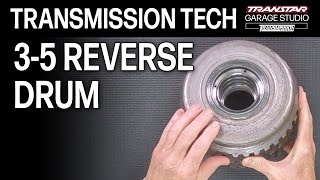
- Harsh, jerky, or delayed gear shifts, especially the 2-3 shift. 🎬 See why these transmissions slip in 3rd, 5th, and reverse.
- Vehicle gets stuck in one gear (limp mode), often 3rd gear.
- Inability to shift into higher gears or a delayed/no engagement into Reverse.
- Transmission slipping, where engine RPMs flare up without an increase in speed, particularly when 3rd, 5th, or Reverse are commanded.
- Illuminated Check Engine Light.
- Reduced fuel economy.
- Transmission overheating.
- Replacing only one solenoid, which is not possible on this transmission as they are part of the complete TEHCM assembly.
- Assuming the transmission is completely failed without first diagnosing the TEHCM and valve body, which are the most common points of failure for this code.
- Replacing the TEHCM/valve body when the actual cause is a cracked 1-2-3-4 / 3-5-R clutch housing, which requires a complete transmission teardown to fix.
Most Likely Causes
- Faulty TEHCM (Solenoid/TCM Assembly) 🔴 High Probability → Shop Transmission Valve Body In the 6L80/6L90 transmission, the solenoids are integrated into the TEHCM, which is a known failure point due to being constantly submerged in hot transmission fluid. An internal failure of the PC Solenoid 'B' circuit or valve is very common, often due to heat and vibration causing cracks in pressure switch membranes or solenoid failure.
How to confirm: A professional-grade scan tool can command the solenoid on and off to check its response and monitor transmission fluid pressure switch data. If the solenoid does not respond or pressure doesn't build, and the wiring is confirmed good, the TEHCM is faulty.
Typical fix: Replace the entire TEHCM assembly located inside the transmission. The new unit must be programmed to the vehicle's VIN using a dealer-level tool.
Est. part cost: $400-$900 - Low or Contaminated Transmission Fluid 🟡 Medium Probability → Shop Transmission Assembly Torque converter issues or normal wear can introduce metallic debris into the fluid. This debris can clog the fine passages in the valve body or cause solenoids to stick.
How to confirm: Check the transmission fluid level and condition. The fluid should be reddish and clear, not dark, burnt-smelling, or full of debris. A professional can drop the pan to inspect for excessive metal shavings on the magnet.
Typical fix: Perform a transmission fluid and filter change using the specified fluid (DEXRON-VI). If the fluid is heavily contaminated, this may be a symptom of a larger internal failure requiring a rebuild or replacement.
Est. part cost: $75-$150 - Debris in the Valve Body 🟡 Medium Probability → Shop Transmission Valve Body As highlighted in TSB #PIP4831E, debris is a known issue for these transmissions and can cause various solenoid performance codes, including P0776. The debris can cause the 3-5-R clutch regulator valve or clutch select valve 2 to stick, mimicking a solenoid failure.
How to confirm: This requires removing the valve body for a physical inspection of its channels and valves, a task for a transmission specialist.
Typical fix: The valve body may be professionally cleaned or, more commonly, replaced entirely. Sometimes just the filter plates on the valve body are clogged and can be replaced.
Est. part cost: $400-$900 - Wiring or Connector Issues ⚪ Low Probability
How to confirm: Visually inspect the transmission wiring harness and the main connector for corrosion, damage, or loose pins. A multimeter can be used to check for continuity and proper voltage at the TEHCM connector, though this is difficult as the fault is often internal to the transmission.
Typical fix: Repair the damaged section of the external wiring harness or clean/replace the affected connector. Internal wiring issues require TEHCM replacement.
Est. part cost: $20-$100
Rare But Worth Checking
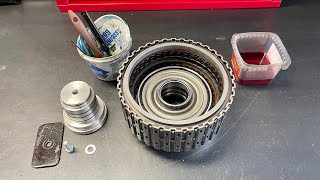
- Cracked 1-2-3-4 / 3-5-R Clutch Housing: A known, but less common, mechanical failure inside the transmission can cause a pressure leak that mimics a solenoid problem. GM TSB #09-07-30-004J specifically addresses this issue, where a crack in the drum's fusion weld causes a loss of hydraulic pressure in the 3-5-R clutch circuit, directly leading to P0776, no reverse, and slipping in 3rd/5th gear. This requires a full transmission teardown to inspect and replace the drum.
- Leaking Stator Support Sealing Rings: On early 6L80/90 units, the sealing rings on the back of the stator support were prone to leaking, especially when cold. This can cause delayed or slipping engagement into reverse and contribute to pressure control codes. GM later updated the ring design.
Diagnosis Steps
- Check the transmission fluid level and condition. If low, top it off. If dark, burnt, or full of debris, a fluid and filter change is the first step, but be aware this may be a symptom of a larger failure.
- Use a professional OBD-II scanner to confirm P0776 and check for any other related transmission codes. Observe freeze-frame data to understand the conditions when the code was set.
- With the scan tool, monitor the Transmission Fluid Pressure (TFP) switch status while shifting gears to see if the hydraulic circuit is responding correctly.
- Inspect the external transmission wiring harness and connectors for any visible signs of damage, corrosion, or loose connections.
- If tools are available, command the Pressure Control Solenoid 'B' (PC Solenoid 2) on and off with the scan tool to check for a response. No response points towards the TEHCM or wiring.
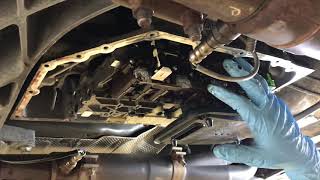
- Drop the transmission pan and inspect the fluid magnet for excessive metal shavings (a fine paste is normal, chunks are not), which would indicate a serious internal mechanical failure like a cracked drum or burnt clutches.
- If fluid and wiring are good, the next step is to test or replace the TEHCM/valve body assembly. This is best performed by a qualified technician. If the problem persists, an internal inspection for a cracked clutch housing as per TSB #09-07-30-004J is necessary.
Parts You'll Likely Need
- Transmission Electro-Hydraulic Control Module (TEHCM)
(OEM #24275873 (ACDelco part number for TEHCM with Valve Body, VIN programming required))— This is the most common point of failure for P0776 on a 6L90 transmission, as it contains the faulty, non-serviceable solenoid.
Trusted brands: ACDelco (OEM), Street Smart Transmission (Remanufactured)
Related Codes That Often Appear With This One
- P0700 — This is a general transmission fault code. It simply means the TCM has stored a more specific code (like P0776) and has requested the Check Engine Light to be turned on.
- P0751, P0756, P2714 — These are codes for other solenoids within the same transmission. TSB #PIP4831E groups these codes together, indicating a high likelihood of a common cause like a faulty TEHCM, contaminated fluid, or a valve body problem affecting multiple solenoids.
- P2723 — This code is for 'Pressure Control Solenoid E Performance/Stuck Off'. TSB #09-07-30-004J lists this code alongside P0776 as a potential result of a cracked 1-2-3-4 / 3-5-R clutch housing, pointing to a serious internal mechanical failure.
Technical Service Bulletins (TSBs) & Recalls
- PIP4831E: Advises technicians to inspect for debris in the valve body and check the TCM date code for multiple solenoid performance codes, including P0776.
- PIP4379N: Discusses delayed or no engagement conditions, especially when cold, that can trigger P0776 among many other codes.
- 09-07-30-004J: Details a cracked 1-2-3-4 / 3-5-R clutch housing as a specific mechanical cause for P0776, with symptoms like no reverse or slipping in 3rd/5th.
Platform-Specific Known Issues
- TSB #PIP4831E specifically calls out looking for debris in the valve body and checking the TCM date code for a range of solenoid performance codes, including P0776.
- TSB #PIP4379N groups P0776 with numerous other transmission codes that can result in a no-reverse or range inhibit condition, pointing towards a common electrical or control module fault, especially in cold weather.
- TSB #09-07-30-004J is critical for this code, as it details a known failure of a cracked 1-2-3-4 / 3-5-R clutch housing causing P0776, slipping, and no reverse. Diagnosis involves an air pressure test on the disassembled drum.
Mechanic-Grade Diagnostic Values
- Pressure Control (PWM) Solenoid Resistance — expected: 3.0 - 8.0 Ohms. Failure: A reading outside this range (open or shorted) points to a failed solenoid coil within the TEHCM.
- Shift Solenoid (On/Off) Resistance — expected: 20 - 40 Ohms. Failure: While not the direct cause of P0776, an incorrect reading on other solenoids points to a general TEHCM failure.
- Line Pressure at Idle (in Park/Neutral) — expected: 45 - 80 PSI. Failure: Pressure outside this range indicates a potential pump, valve body, or major leak issue, not just a solenoid problem.
- TCM Regulated Solenoid Feed Voltage — expected: 8.3 - 9.3 Volts. Failure: Voltage outside this range could indicate a problem with the TEHCM's internal power regulation rather than an individual solenoid.
Scan Tool Commands That Help
- GDS2 / Tech2: Control Solenoid Valve and Transmission Control Module Assembly Solenoid Performance Test — This is a guided diagnostic routine to automatically cycle the solenoids and check their hydraulic and electrical responses to isolate a stuck or failed solenoid.
- GDS2 / Tech2: Solenoid Valve Control (Manual) — To manually command a specific solenoid (like PC Solenoid 2) on and off while monitoring transmission data or listening for a physical click to confirm its basic electrical operation.
- GDS2 / Tech2: Garage Shift Adapts / Service Fast Learn — This procedure is required after replacing the TEHCM or valve body to relearn clutch fill volumes and ensure smooth shifting. Failure to perform this can cause harsh shifts even with new parts.
Wiring & Ground Locations
- Transmission 16-Pin Connector (X2) — The main round connector on the passenger side of the transmission case.. This is the primary external test point for power, ground, and communication to the internal TEHCM before dropping the pan.
- Pin 4 (Battery +) — On the 16-pin main transmission connector.. This pin supplies main battery power to the TEHCM. A voltage drop or loss here will cause multiple codes, including P0776.
- Pin 5 (Ground -) — On the 16-pin main transmission connector.. This is the main ground for the TEHCM. A poor ground connection can cause erratic solenoid operation and false codes.
- Pins 10 & 11 (CAN Hi/Low) — On the 16-pin main transmission connector.. These are the communication lines. While a fault here usually sets U-codes, intermittent communication issues can sometimes manifest as performance codes like P0776.
Real Owner Repair Stories
- YouTube user 'life with Derrick' (Vehicle with a 6L80/6L90 transmission) — Initially no codes, but a very loud noise from the transmission sounding like a stuck actuator or solenoid.
❌ Tried (didn't work) Replacing the torque converter., Changing the transmission fluid and filter.
✅ What actually fixed it The problem was ultimately solved by replacing the entire TEHCM and valve body assembly as a single unit.
When the Usual Fixes Don't Work
- While P0776 most often points to an electronic failure within the TEHCM, a significant number of cases are misdiagnosed. If the TEHCM is replaced and the code returns (especially with symptoms like no reverse or harsh 2-3 shifts), the root cause is likely a mechanical pressure loss. Per GM TSB #09-07-30-004J, the most probable culprit is a cracked 1-2-3-4 / 3-5-R clutch housing, which requires a complete transmission teardown to identify and fix.
OEM Part Supersession History
24041874, 24257213→24275873— Part has been updated by the manufacturer for improved reliability or to consolidate previous versions.
Heads up: Part 24275873 is the correct TEHCM and valve body assembly for this application. It requires VIN-specific programming upon installation.
Helpful Videos
We Have This Part in Stock

The information in this article is provided for general reference and educational purposes only. Vehicle specifications, procedures, and part compatibility can vary by production date, trim level, and region. Always consult your vehicle's factory service manual and verify part numbers before purchasing or performing repairs. Safety-critical components such as airbags, seat belts, and braking systems should be installed by a qualified professional.
- Gmc SIERRA 2500:
- 🧭 Diagnostic Flowchart
- 🎬 Helpful Videos
- 🛍️ Shop This Part
- What's Unique About the 2009-2010 Gmc SIERRA 2500
- Symptoms You May Notice
- Most Likely Causes
- Rare But Worth Checking
- Diagnosis Steps
- Parts You'll Likely Need
- Related Codes That Often Appear With This One
- Technical Service Bulletins (TSBs) & Recalls
- Platform-Specific Known Issues
- Mechanic-Grade Diagnostic Values
- Scan Tool Commands That Help
- Wiring & Ground Locations
- Real Owner Repair Stories
- When the Usual Fixes Don't Work
- OEM Part Supersession History
- 🎟️ Get 5% Off