

P0776 on 2013-2015 GMC Sierra Denali: Pressure Control Solenoid 'B' Causes and Fixes
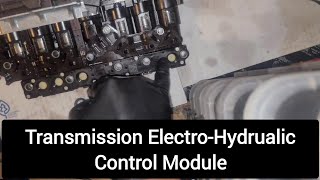
On a 2013-2015 Sierra Denali, P0776 is almost always caused by a failed Transmission Electro-Hydraulic Control Module (TEHCM). This requires replacing the entire module inside the transmission pan and programming it to your truck. Expect a shop cost of $800-$1500.
- P0776 on a 2013-2015 Sierra Denali indicates a problem with the Pressure Control Solenoid 'B'.
- The most common cause is a failure of the entire TEHCM (control module), as the solenoids are not sold separately.
- Always check transmission fluid level and condition first, as low or dirty fluid can cause shifting problems.
- This is not a simple DIY job; the repair requires dropping the transmission pan and valve body, and the new TEHCM must be professionally programmed.
- Driving with this code can lead to severe, expensive internal transmission damage.
What's Unique About the 2013-2015 Gmc SIERRA DENALI
The key issue for the 2013-2015 Sierra Denali is that the pressure control solenoids are not individual, serviceable parts. Instead, they are integrated directly into the Transmission Electro-Hydraulic Control Module (TEHCM), which also houses the TCM itself. This single, over-molded plastic unit contains the computer and all eight solenoids, submerged in hot transmission fluid. This design means that a failure of a single solenoid—a very common problem—requires the replacement of the entire, more expensive TEHCM assembly. The new module is located inside the transmission 🎬 Watch: How to remove the 6L80 TEHCM and TCM assembly and must be programmed to the vehicle's VIN after installation.
Diagnostic Flowchart
Tap your situation to follow the diagnostic path that matches what you're seeing on this vehicle.
Generation note: This range covers the end of the second generation (GMT900, 2013 model year) and the start of the third generation (K2XX, 2014-2015). However, both generations primarily used the 6L80/6L90 transmission, making the causes and fixes for P0776 very similar across this period.
Symptoms You May Notice
- Harsh or jerky shifting, especially into 3rd or 5th gear.
- Delayed engagement when shifting from Park to Drive or Reverse.
- Transmission slipping, where the engine RPMs flare up without an increase in speed.
- Vehicle enters "limp mode," often getting stuck in 3rd gear.
- Inability to use Reverse gear.
- Check Engine Light is illuminated.
- A feeling like hitting a large pothole or a loud bang during a downshift.
- Replacing the entire transmission when only the TEHCM is faulty.
- Attempting to replace an individual solenoid, which is not possible on the 6L80/6L90 as they are integrated into the TEHCM.
- Replacing the TEHCM without addressing the root cause of fluid contamination from a failing torque converter, leading to a repeat failure.
Most Likely Causes
- Faulty Transmission Electro-Hydraulic Control Module (TEHCM) 🔴 High Probability → Shop Transmission Assembly The solenoids are integrated into the TEHCM, which is submerged in hot transmission fluid, leading to a high rate of electronic and mechanical failure. This is a well-documented weak point on GM 6-speed transmissions and the most common cause of P0776.
How to confirm: After confirming fluid is clean and full, a diagnostic scan tool with bidirectional control can attempt to command the solenoid. If the command fails or pressure readings don't change, and wiring is intact, the TEHCM is the likely culprit. Resistance of the PC Solenoid should be 3-8 ohms when tested directly at the TEHCM. 🎬 See how to rebuild and test the TEHCM circuits
Typical fix: Replace the entire TEHCM assembly located on the valve body inside the transmission. The new module must be programmed to the vehicle's VIN using a GM-compatible tool and software like TIS2Web.
Est. part cost: $400-$900 - Low or Contaminated Transmission Fluid 🟡 Medium Probability → Shop Transmission Assembly Torque converter issues or normal wear can contaminate the fluid with clutch material and metal debris, clogging the small passages in the solenoids and valve body, leading to sticking. Infrequent fluid and filter changes exacerbate this, as debris accumulates and can lead to solenoid failure.
How to confirm: Check the transmission fluid level and condition. The fluid should be bright red and clear, not dark brown, black, or smelling burnt. Finding excessive metallic or clutch material in the pan magnet is a clear indicator of internal wear that has likely contaminated the TEHCM.
Typical fix: Perform a transmission fluid and filter change using only DEXRON-VI fluid. This may resolve the issue if it's caught early, but often the TEHCM is already damaged or internal components are worn.
Est. part cost: $75-$150 - Torn Valve Body Spacer Plate Screen ⚪ Low Probability → Shop Transmission Valve Body As documented in TSB 22-NA-258, the screen on the spacer plate can tear, allowing debris to cause a valve to stick. This is more common on vehicles that have experienced extreme cold weather (prolonged soaks at -13°F / -25°C or colder). The issue may not appear until months after the cold event.
How to confirm: This requires removing the transmission pan and valve body for visual inspection of the spacer plate.
Typical fix: The official GM procedure is to replace the entire control valve body assembly and update the TCM software to the latest calibration.
Est. part cost: $400-$900
Rare But Worth Checking
- Cracked 3-5-R Clutch Wave Plate or Housing: This is a known but less common mechanical failure documented in GM TSB #09-07-30-004J. It causes a loss of hydraulic pressure in the circuit controlled by Solenoid 'B', directly triggering P0776, P2715, or P2723. The fix requires inspecting the housing for cracks (often at a weld) and replacing it, which necessitates a full transmission teardown.
- Worn Valve Body Bores: → Shop Transmission Valve Body Over time, the bores within the aluminum valve body can wear down, causing hydraulic pressure leaks in critical circuits like the solenoid feed and clutch apply control. This prevents the solenoids from maintaining correct pressure even if they are electronically sound. Aftermarket solutions like the Sonnax Zip Kit (Part #6L45-6L90-ZIP) are designed to address this by providing oversized valves and re-sleeving the bores to restore hydraulic integrity.
Diagnosis Steps
- Check the transmission fluid level and condition. Ensure it is full and not burnt or contaminated.
- Use a professional scan tool to check for other transmission-related codes. Note if codes for multiple solenoids are present, as this points to a systemic issue.
- Inspect the transmission wiring harness and external connectors for any visible damage, corrosion, or loose connections.
- If possible, use the scan tool to command PC Solenoid 2 ('B') on and off while monitoring transmission pressure data to see if it responds.
- If the fluid is good, wiring is intact, and the solenoid does not respond correctly, the next step is to drop the transmission pan.
- Inspect the fluid in the pan and the magnet for excessive metal debris. A large amount of friction material or metal chunks indicates a serious mechanical failure, likely requiring a rebuild or replacement.
- If the fluid is relatively clean, the most likely cause is a failed TEHCM. Replace the TEHCM assembly.
- After replacement, the new TEHCM must be programmed to the vehicle's VIN using a GM-compatible programming tool (e.g., TIS2Web) and a J2534 pass-through device. 🎬 Watch: Step-by-step guide to programming the new module This step is mandatory and cannot be skipped.
Parts You'll Likely Need
- Transmission Electro-Hydraulic Control Module (TEHCM)
(OEM #24256939 (Note: This part has many superseded numbers including 24257213, 24259835, 24261870, 24264141, 24265259, 24275873, etc.))— This is the most common point of failure for code P0776 on this platform, as it contains the non-serviceable pressure control solenoids.
Trusted brands: ACDelco (OEM), Sonnax (Remanufactured), Dorman (Remanufactured)
OEM price range: $500-$900
Aftermarket price range: $400-$600 - Automatic Transmission Fluid
(OEM #19352619 (ACDelco DEXRON-VI))— Required when dropping the pan to replace the TEHCM. Only DEXRON-VI should be used.
Trusted brands: ACDelco DEXRON-VI
OEM price range: $8-$12 per quart
Aftermarket price range: $7-$10 per quart - Transmission Pan Gasket
(OEM #24224781)— Must be replaced anytime the transmission pan is removed to ensure a proper seal.
Trusted brands: ACDelco, Fel-Pro
OEM price range: $25-$40
Aftermarket price range: $15-$30 - TEHCM/Valve Body Seal Kit
(OEM #24236927)— Required when removing the valve body to access the TEHCM. Ensures proper sealing between the valve body, TEHCM, and transmission case.
Trusted brands: ACDelco
OEM price range: $30-$50
Aftermarket price range: $20-$40
Related Codes That Often Appear With This One
- P0700 — This is a generic code indicating the Transmission Control Module (TCM) has stored a fault. It almost always appears alongside more specific codes like P0776.
- P0751, P0756, P0761 — These are codes for other solenoids ('A', 'C', 'D'). When they appear with P0776, it strongly suggests a widespread electrical failure within the TEHCM or severe fluid contamination affecting multiple solenoids.
- P2715, P2723 — These are codes for other pressure control solenoids ('D' and 'E'). TSB 09-07-30-004J specifically groups these with P0776 as indicators of a possible cracked 3-5-R clutch housing.
Technical Service Bulletins (TSBs) & Recalls
- PIP4379M: Mentions P0776 in a long list of transmission codes that can occur, pointing to a potential range inhibit or no reverse condition.
- 22-NA-258: Describes a torn valve body spacer plate screen causing P0776 and/or no reverse, specifically after a cold soak below -13°F (-25°C). The fix is to replace the control valve body and update TCM software.
- 09-07-30-004J: Details a potential cracked 1-2-3-4 / 3-5-R clutch housing as a cause for P0776, P2715, and P2723, resulting in slips or no reverse. Requires transmission teardown to inspect and replace the housing.
Platform-Specific Known Issues
- The integration of the TCM and solenoids into a single TEHCM unit is the primary platform-specific issue leading to this repair.
- A cracked 3-5-R clutch housing is a known mechanical failure that can cause P0776, as noted in TSB 09-07-30-004J.
- A torn valve body spacer plate screen can cause P0776 and a 'No Reverse when cold' condition, as noted in TSB 22-NA-258.
Mechanic-Grade Diagnostic Values
- Pressure Control (PWM) Solenoid Resistance — expected: 3.0 - 8.0 Ohms at approx. 70°F. Failure: A reading outside this range (especially open circuit/OL or shorted/near zero) indicates a failed solenoid coil. This test must be done directly on the TEHCM terminals.
- Shift Solenoid (On/Off) Resistance — expected: 20 - 40 Ohms at approx. 70°F. Failure: While not the direct cause of P0776, an incorrect reading on the on/off shift solenoids points to a general TEHCM failure.
- Solenoid Feed Voltage from TCM — expected: 8.3 - 9.3 Volts. Failure: Incorrect feed voltage from the TCM section of the TEHCM indicates an internal power regulation fault within the module itself.
- Pressure Control (PWM) Solenoid Current Draw — expected: 1.5 - 4.0 Amps at 12V. Failure: Incorrect amperage when the solenoid is commanded on suggests a failed coil or internal short. This test should be performed quickly to avoid overheating the coil.
Scan Tool Commands That Help
- GDS2 / Professional Scan Tool: Solenoid Valve Diagnosis / Actuation Test — This bidirectional command allows a technician to manually command PC Solenoid 2 ('B') on and off while the engine is running. It's used to verify if the solenoid is mechanically stuck or electrically unresponsive by monitoring live transmission pressure data for a corresponding change.
- GDS2 / Professional Scan Tool: Transmission Cleaning Procedure — This is a GM-specific automated service function that cycles all solenoids in a specific sequence to dislodge and flush minor debris that may be causing a solenoid to stick. It can be attempted before deciding to replace the TEHCM if minor contamination is suspected.
Wiring & Ground Locations
- Transmission Case Connector (X1) — The main 16-pin circular connector on the passenger side of the transmission case.. This is the sole electrical interface between the vehicle's main harness and the internal TEHCM. Any corrosion or damage here can interrupt power, ground, or data communication to the TEHCM, causing various codes including P0776.
- G218 — Inside the cabin, under the dashboard, behind the driver's side kick panel.. This is a major body ground point for many interior modules on the K2XX platform (2014+). While not a direct ground for the TCM, a poor connection here is known to cause a cascade of seemingly unrelated electrical issues and communication faults across the vehicle, which can interfere with proper TCM operation.
- G102 / G103 — G102 is on the driver's side of the engine block above the pan rail. G103 is on the front of the passenger side cylinder head.. These are primary engine block grounds. A poor engine ground can create electrical noise and voltage discrepancies that may affect the performance and diagnostics of sensitive electronic modules like the TEHCM.
When the Usual Fixes Don't Work
- While the vast majority of P0776 codes are fixed by replacing the TEHCM, a repeat failure after replacement is almost always due to an unaddressed root cause. If a new TEHCM fails quickly, it strongly suggests that the original failure was caused by contaminated fluid from another failing component, such as the torque converter shedding debris. This debris then contaminates and destroys the new TEHCM. A second possibility is a worn valve body bore causing a pressure leak that the new solenoid cannot overcome, or a hairline crack in the 3-5-R clutch housing, both of which are mechanical failures not fixed by a TEHCM replacement.
OEM Part Supersession History
24256939→24257213, 24259835, 24261870, 24264141, 24265259, 24267576, 24270598, 24275873, 24276637— Revisions to improve reliability and address common failure modes of the integrated solenoids and pressure switches.
Heads up: All versions, new or remanufactured, are physically compatible but are NOT plug-and-play. The replacement TEHCM must be programmed to the vehicle's VIN using a J2534 pass-through device and a subscription to GM's Techline Connect (formerly TIS2Web). Failure to program will result in a no-start condition or the transmission being locked in limp mode.
Model Year Variations Within This Range
- 2014-2015: The 2014-2015 models are on the K2XX platform, which has different body ground locations (like the problematic G218) compared to the 2013 GMT900 platform. While the transmission internals are the same regarding this code, electrical troubleshooting should account for platform-specific wiring and ground points.
Helpful Videos



We Have This Part in Stock


The information in this article is provided for general reference and educational purposes only. Vehicle specifications, procedures, and part compatibility can vary by production date, trim level, and region. Always consult your vehicle's factory service manual and verify part numbers before purchasing or performing repairs. Safety-critical components such as airbags, seat belts, and braking systems should be installed by a qualified professional.
- Gmc SIERRA DENALI:
- 🧭 Diagnostic Flowchart
- 🎬 Helpful Videos
- 🛍️ Shop This Part
- What's Unique About the 2013-2015 Gmc SIERRA DENALI
- Symptoms You May Notice
- Most Likely Causes
- Rare But Worth Checking
- Diagnosis Steps
- Parts You'll Likely Need
- Related Codes That Often Appear With This One
- Technical Service Bulletins (TSBs) & Recalls
- Platform-Specific Known Issues
- Mechanic-Grade Diagnostic Values
- Scan Tool Commands That Help
- Wiring & Ground Locations
- When the Usual Fixes Don't Work
- OEM Part Supersession History
- Model Year Variations Within This Range
- 🎟️ Get 5% Off