

P0776 on 2012-2017 Honda Accord: Pressure Control Solenoid 'B' Causes and Fixes
On a 2012-2017 Honda Accord, code P0776 is most often caused by low or contaminated transmission fluid, or a failed pressure control solenoid 'B'. The most common fix is to replace the solenoid and perform a transmission fluid drain-and-fill.
- P0776 on a Honda Accord points to a problem with Pressure Control Solenoid 'B', which controls gear shifting.
- The most common causes are low/dirty transmission fluid or a failed solenoid.
- Always start diagnosis by checking the transmission fluid. Use only genuine Honda fluid for changes.
What's Unique About the 2012-2017 Honda Accord
The 2012-2017 Honda Accord spans two generations with different transmissions. The 2012 model (8th gen) uses a traditional 5-speed automatic, while the 2013-2017 models (9th gen) use a Continuously Variable Transmission (CVT) for 4-cylinder engines and a 6-speed automatic for the V6. While the P0776 code applies to all types, the specific solenoid location and repair procedure can differ. For all transmission types on this platform, the issue is frequently traced back to fluid condition or the solenoid itself, rather than more catastrophic internal failures seen in other brands. A simple fluid drain and fill can sometimes resolve the issue by cleaning out debris that may be causing the solenoid to stick.
Generation note: This range covers the end of the 8th generation (2012) and the full 9th generation (2013-2017). The 8th generation used a conventional 5-speed automatic transmission. The 9th generation introduced a CVT for 4-cylinder models and a 6-speed automatic for V6 models. The diagnostic approach is similar, but the specific parts and procedures will vary between the transmission types. It's crucial to identify the correct transmission to source the right parts and fluid.
Symptoms You May Notice
- Check Engine Light is on
- Harsh, jerky, or delayed shifts
- Transmission slipping between gears
- Vehicle enters 'limp mode,' often stuck in 2nd or 4th gear
- Inability to shift into higher gears
- Decreased fuel economy
- Transmission overheating
- Replacing the entire transmission when only a fluid change or solenoid replacement was needed.
Most Likely Causes
- Low, Dirty, or Contaminated Transmission Fluid 🔴 High Probability → Shop Transmission Assembly Over time, transmission fluid breaks down and collects clutch material and other debris. This contaminated fluid can clog the small passages in the solenoid and valve body, causing them to stick. Honda transmissions are known to be sensitive to fluid condition and type.
How to confirm: Check the transmission fluid level and condition. The fluid should be at the correct level, pinkish-red, and free of debris or a burnt smell. Dark, brown, or gritty fluid indicates a problem.
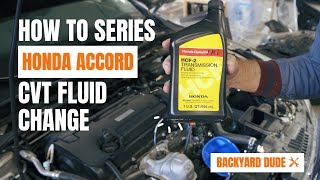
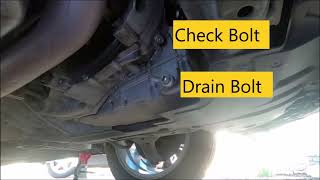
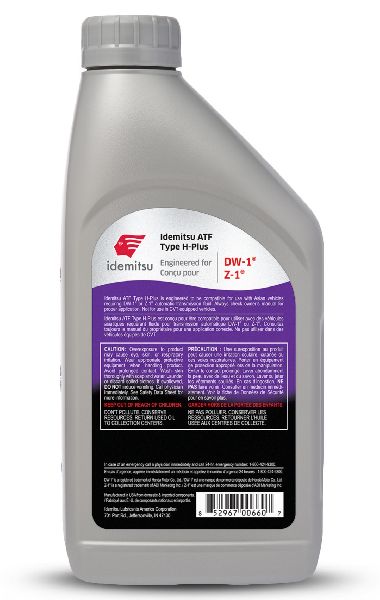
Typical fix: Perform a transmission fluid drain-and-fill. For Honda, it is critical to use the correct OEM fluid (DW-1 for automatics, HCF-2 for CVTs). A single drain-and-fill may not be enough; a 3x drain-and-fill is often recommended to replace a higher percentage of the old fluid. 🎬 Watch: Honda Accord CVT fluid and filter change
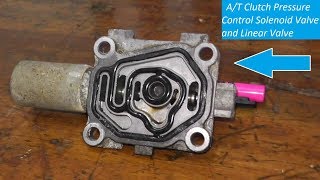
Est. part cost: $50-$150 for fluid - Faulty Pressure Control Solenoid 'B' 🔴 High Probability → Shop Transmission Valve Body The solenoid is an electro-mechanical part that can fail electrically (burnt coil) or mechanically (jammed from debris) after many cycles of operation.
How to confirm: A professional technician can use a scan tool to command the solenoid on and off while monitoring transmission pressure. The solenoid's resistance can also be tested with a multimeter to check for an open or shorted coil. The expected resistance is typically between 5.0 and 30.0 ohms. 🎬 Watch: Diagnostic steps for Honda Accord P0776
Typical fix: Replace the faulty pressure control solenoid. This often involves removing the transmission oil pan and sometimes the valve body to access the solenoid. 🎬 See how to test and replace the solenoid
Est. part cost: $100-$300 - Clogged Transmission Valve Body 🟡 Medium Probability → Shop Transmission Valve Body The same debris that clogs the solenoid can also block the intricate passages within the valve body, which is the hydraulic control center of the transmission.
How to confirm: This is typically diagnosed after fluid and solenoid replacement do not solve the issue. A technician may need to remove and inspect the valve body for blockages or stuck valves.
Typical fix: Clean or replace the transmission valve body.
Est. part cost: $500-$1200
Rare But Worth Checking
- Damaged Wiring or Connectors: The wiring harness to the transmission can be damaged by heat, road debris, or corrosion, leading to a loss of signal to the solenoid. It's worth a visual inspection before replacing internal parts.
- Faulty Transmission Control Module (TCM) or Powertrain Control Module (PCM): → Shop Transmission Assembly While rare, the control module itself can fail, sending incorrect signals. This should be the last item to consider after all other possibilities have been exhausted.
Diagnosis Steps
- Check the transmission fluid level and condition. Top off or replace if low, dirty, or burnt.
- Use an advanced OBD-II scanner to check for other transmission-related codes and review live data.
- Inspect the transmission wiring harness and connectors for any visible damage, corrosion, or loose connections.
- If the fluid and wiring are okay, test the operation of Pressure Control Solenoid 'B' using a bi-directional scan tool.
- Test the resistance of the solenoid coil with a multimeter to check for electrical failure. Compare the reading to the manufacturer's specification (often 5-30 ohms).
- If the solenoid tests faulty, replace it.
- If the solenoid is good, the issue may be with the valve body or, in rare cases, the TCM/PCM.
Parts You'll Likely Need
- Automatic Transmission Fluid
(OEM #08200-9008 (DW-1) or 08200-HCF2 (CVT))— Low or contaminated fluid is a primary cause. Using the correct OEM fluid is critical for Honda transmissions.
Trusted brands: Honda (OEM)
OEM price range: $10-$20 per quart
Aftermarket price range: Not Recommended - Pressure Control Solenoid 'B'
(OEM #28250-R90-003 (For 5/6-Speed Automatics), 28260-R90-004 (Often part of a pack for Automatics), 27200-5X9-013 (For CVT models))— This solenoid is the component identified by the code and is a frequent point of mechanical or electrical failure.
Trusted brands: Honda (OEM), Rostra
OEM price range: $150-$300
Aftermarket price range: $80-$150
Related Codes That Often Appear With This One
- P0746 — Pressure Control Solenoid 'A' Performance. If the root cause is contaminated fluid, it's common for multiple solenoids to be affected, triggering codes for Solenoid 'A' as well.
- P0796 — Pressure Control Solenoid 'C' Performance. Similar to P0746, this code can appear alongside P0776 if dirty fluid or a clogged valve body is affecting the entire hydraulic control system.
Technical Service Bulletins (TSBs) & Recalls
- While no TSB is directly for P0776 on this specific Accord range, Honda has issued related bulletins for other models with similar transmissions. TSBs 16-062 and 16-063 for the Acura MDX address a 'judder' from the torque converter caused by deteriorated transmission fluid, which can present with similar drivability issues. The fix involves a software update and a transmission fluid flush, highlighting the importance of fluid condition in these transmissions.
Platform-Specific Known Issues
- For the 9th generation (2013-2017) models with the CVT, juddering or hesitation can be a symptom related to fluid condition, which can precede or accompany solenoid codes. Honda has issued TSBs for similar models regarding torque converter judder caused by deteriorated fluid, which may have overlapping symptoms.
Mechanic-Grade Diagnostic Values
- A/T Clutch Pressure Control Solenoid 'B' Resistance — expected: 4.7 to 5.9 Ohms. Failure: A resistance reading outside of this range indicates a faulty solenoid coil.
- General Honda Shift Solenoid Resistance (for comparison) — expected: 12 to 25 Ohms. Failure: A reading outside this range suggests a faulty solenoid. This is a general spec and may not apply to the specific pressure control solenoid.
- Voltage at Solenoid Connector Power Pin — expected: ~12V (Battery Voltage) with key on. Failure: Low or no voltage points to a problem in the wiring harness or the TCM/PCM.
Scan Tool Commands That Help
- Honda Diagnostic System (HDS): Clutch Pressure Control (Linear) Solenoid Valve B Test — This bidirectional test is found in the 'Miscellaneous Test Menu' and allows a technician to command the solenoid on and off to listen for a physical click, confirming mechanical operation without removing the part.
Wiring & Ground Locations
- G101 — Typically located on or near the thermostat housing on the cylinder head.. G101 is a primary ground distribution point for the Powertrain Control Module (PCM). A loose or corroded connection here can cause a wide range of erratic electronic behaviors, including false solenoid codes or incorrect TCM/PCM operation.
- Transmission Main Harness Connector — On the top or side of the transmission case, connecting the main vehicle harness to the internal transmission harness.. This is the primary connector to inspect for corrosion, pushed-out pins, or damage. All power and signals for the solenoids pass through this connector, making it a critical point for electrical diagnosis.
Real Owner Repair Stories
- HopFam Media (YouTube) (Honda Ridgeline (with similar transmission architecture)) — P0776 code, transmission slipping in 3rd gear, eventually defaulting to limp mode.
❌ Tried (didn't work) Extensive live data monitoring with a scan tool could not pinpoint a specific component failure.
✅ What actually fixed it The valve body was replaced as a 'shot in the dark' diagnostic step, but it did NOT fix the issue. The video concludes that the problem was likely deeper internal mechanical failure within the transmission, requiring a full rebuild or replacement. This serves as a crucial counter-example to assuming a new valve body will always fix the code. - NHTSA ODI #11729071 — An owner of a vehicle with a similar Honda powertrain reported that the transmission failed at 120,000 miles with code P0776. The vehicle entered limp mode and shifted very harshly, but would not shift past 3rd gear.
- NHTSA ODI #11645682 — In another case involving a similar Honda platform, an owner reported that a transmission fluid flush and software update did not resolve the P0776 and P0777 codes, with the dealership eventually recommending a full transmission rebuild.
Documented NHTSA Reports
- NHTSA ODI #11549707: A report notes that the manufacturer may not always accept the owner's assessment of problems related to the Pressure Control Valve Code #P0776.
- NHTSA ODI #11270344: A service representative confirmed that a Honda computer code P0776 (Pressure Control Solenoid B Performance or Stuck Off) was present on a vehicle that had been purchased new.
- NHTSA ODI #11723321: A dealership advised replacing the entire transmission following a diagnostic code P0776 (A/T Clutch Pressure Control Solenoid Valve B Stuck Off).
When the Usual Fixes Don't Work
- In a documented repair on a similar Honda platform, a complete valve body replacement was performed to address a P0776 code and slipping symptoms. The repair did not resolve the issue, indicating that the root cause was a more severe internal mechanical failure of a clutch pack, not the hydraulic control system. This highlights that while fluid, solenoids, and the valve body are common culprits, they are not guaranteed fixes, and the code can also be a symptom of deeper transmission wear.
OEM Part Supersession History
27000-5X9-004→27000-5X9-014— Updated part from the manufacturer, likely for improved reliability or to address a known issue.
Heads up: This part number is for the valve body assembly on CVT models.06270-5C4-305→06270-5C4-315— Updated valve body kit for CVT models.
Model Year Variations Within This Range
- 2012 (8th Gen): Uses a 5-speed automatic transmission. The pressure control solenoid is typically part number 28250-R90-003.
- 2013-2017 (9th Gen V6): Uses a 6-speed automatic transmission. While it may use a similar solenoid design to the 5-speed, part numbers can differ. Always verify with VIN.
- 2013-2017 (9th Gen 4-Cylinder): Uses a Continuously Variable Transmission (CVT). The valve body and solenoid designs are completely different from the 5-speed and 6-speed automatics. The valve body assembly part number is 27000-5X9-014 (superseded).
Diagnostic Flowchart
Other Known Issues on This Vehicle
Issues unrelated to this code that are worth knowing about as an owner of this generation:
- Premature Starter Motor Failure 🔴 High — Common on 2013-2015 models, especially V6. Can fail with little warning, often just after the warranty expires. (Ref: Honda TSB 16-002 addresses a grinding noise and faulty starter on V6 models.)
- VTC Actuator Rattle on Cold Start 🟠 Medium — Very common on 4-cylinder engines across both 8th and 9th generations. Causes a brief, loud rattle upon starting the engine after it has sat for several hours. (Ref: Honda TSB 09-010 (multiple revisions) and TSB 16-012 address this issue by replacing the defective VTC actuator.)
- Prematurely Burnt-Out LED Daytime Running Lights (DRL) 🟡 Low — Widespread on 2016-2017 models. The LED strip in the headlight assembly fails, requiring a very expensive replacement of the entire headlight unit. (Ref: Honda issued a warranty extension (TSB 19-042) for the DRLs to 10 years/unlimited miles.)
- Excessive Oil Consumption 🟠 Medium — A known issue, particularly on the 4-cylinder engines from the 8th generation (2012) and carrying over to some 9th generation models. Can be caused by sticking piston rings.
- Weak or Failing Battery / Parasitic Drain 🟠 Medium — Common across 9th generation models. The stock battery is often cited as being undersized, and a faulty battery sensor can cause electrical issues. (Ref: A recall was issued for the 12-volt battery sensor on certain 2013-2016 models.)
Used vs. New Parts: Buying Guide for This Vehicle
When a used part is the smart pick: A used valve body from a low-mileage donor vehicle can be a cost-effective option, especially for the more expensive CVT valve bodies. Individual solenoids are also good candidates for used parts if they can be tested.
Donor-vehicle mileage cap: roughly under 80000 miles for the part to have meaningful remaining life.
What to inspect on the donor part:
- Verify the exact year and transmission type of the donor vehicle.
- Ask for the donor vehicle's VIN to check its history for accidents or flood damage.
- Inspect the part for any signs of external damage, corrosion, or stripped bolt threads.
- If possible, check the color and smell of the residual transmission fluid in the part; it should not be dark black or have a strong burnt odor.
OEM-only on this vehicle (don't cheap out):
- Transmission Fluid (Honda DW-1 or HCF-2)
Aftermarket brands forum-validated for this vehicle:
- Rostra (for solenoids)
Brands owners have reported issues with on this vehicle:
- Unbranded, 'white-box' solenoids and valve bodies from online marketplaces can have high failure rates and are generally not recommended.
Real Owner Stories
Aggregated from forums and TSBs cited above. Mileages and costs reflect what owners reported in those sources.
2017 Honda Accord EX-L 3.5 V6 — 75000 miles
Symptoms: The car shudders during the 2-3 shift. RPMs rise as it shifts out of second and drop slowly as it engages third, almost as if it is free-spinning instead of engaging the gear. The issue is worse in 'Sport' mode.
What fixed it: The context provided for this specific report ends before the fix is stated, but general recommendations for this symptom include a transmission fluid drain-and-fill or solenoid replacement.
Source hint: Reddit r/MechanicAdvice
2011-2017 Honda Odyssey
Symptoms: Owner experienced a sticking solenoid causing a P0776 code.
What fixed it: A simple drain-and-fill of the transmission fluid, allowing fresh detergents to clean the sticking solenoid.
Source hint: Honda Odyssey forum
Related OBD-II Codes
Frequently Asked Questions
What specific transmission fluid should I use for my 2013-2017 Honda Accord to avoid P0776?
Is there a TSB for the transmission judder I'm feeling alongside the P0776 code?
Can a simple fluid change fix a P0776 code on my Honda?
What is the correct resistance for Pressure Control Solenoid 'B' on this vehicle?
My 2016 Accord has failing LED daytime running lights; is this related to my transmission code?
Why is a '3x drain-and-fill' recommended for my Accord's transmission?
Helpful Videos
We Have This Part in Stock

The information in this article is provided for general reference and educational purposes only. Vehicle specifications, procedures, and part compatibility can vary by production date, trim level, and region. Always consult your vehicle's factory service manual and verify part numbers before purchasing or performing repairs. Safety-critical components such as airbags, seat belts, and braking systems should be installed by a qualified professional.
- Honda Accord:
- 🧭 Diagnostic Flowchart
- 🎬 Helpful Videos
- 🛍️ Shop This Part
- What's Unique About the 2012-2017 Honda Accord
- Symptoms You May Notice
- Most Likely Causes
- Rare But Worth Checking
- Diagnosis Steps
- Parts You'll Likely Need
- Related Codes That Often Appear With This One
- Technical Service Bulletins (TSBs) & Recalls
- Platform-Specific Known Issues
- Mechanic-Grade Diagnostic Values
- Scan Tool Commands That Help
- Wiring & Ground Locations
- Real Owner Repair Stories
- Documented NHTSA Reports
- When the Usual Fixes Don't Work
- OEM Part Supersession History
- Model Year Variations Within This Range
- Other Known Issues on This Vehicle
- Used vs. New Parts: Buying Guide for This Vehicle
- Real Owner Stories
- 2017 Honda Accord EX-L 3.5 V6 — 75000 miles
- 2011-2017 Honda Odyssey
- Related OBD-II Codes
- Frequently Asked Questions
- 🎟️ Get 5% Off