

P0776 on 2013-2018 Hyundai Santa Fe: Pressure Control Solenoid 'B' Causes and Fixes
This code indicates that the Pressure Control Solenoid 'B' inside the transmission is stuck off or not performing correctly. The most common fix is to replace the faulty solenoid, which is located inside the transmission oil pan. This often requires professional service due to the complexity.
- P0776 on a 2013-2018 Santa Fe points to a problem with the Pressure Control Solenoid 'B' inside the transmission.
- Symptoms are noticeable and affect drivability, including harsh shifting, slipping, or getting stuck in gear.
- The most common cause is a failed solenoid, followed by issues with low or dirty transmission fluid.
- This is not a simple DIY fix for most people. It requires removing the transmission pan and working on internal components, so professional service is strongly recommended.
- Do not continue to drive the vehicle with these symptoms, as it can lead to much more expensive transmission damage.
What's Unique About the 2013-2018 Hyundai Santa Fe
The 2013-2018 Hyundai Santa Fe uses a 6-speed automatic transmission (A6LF1/A6MF series). In these units, the pressure control solenoids are located on the valve body, accessible after removing the transmission oil pan. While the P0776 code itself is generic, the specific solenoid and its function are integral to this transmission's operation. There isn't a widespread, unique design flaw causing this specific code on the Santa Fe, but like any modern automatic transmission, solenoid failure can occur with age and mileage. Some Hyundai TSBs (like 18-AT-004) reference a "2-6/B solenoid" when analyzing shift times, suggesting Solenoid 'B' is involved in those gear changes. A significant issue with these transmissions is premature wear in the valve body bores, which can cause pressure regulation problems and trigger solenoid performance codes even if the solenoid itself is functional.
Symptoms You May Notice
- Harsh, jerky, or delayed shifts.
- Transmission slipping between gears.
- Inability to shift into higher gears (stuck in a low gear).
- Vehicle entering 'limp mode'.
- Check Engine Light is on.
- Increased fuel consumption.
- Transmission overheating.
- Replacing the entire transmission when only a single solenoid or the valve body was at fault.
- Condemning the TCM before thoroughly testing the solenoid, its circuit, and the transmission fluid condition.
- Replacing a pressure control solenoid when the actual root cause is a worn bore in the valve body, leading to a repeat failure.
Most Likely Causes
- Failed Pressure Control Solenoid 'B' 🔴 High Probability → Shop Transmission Valve Body Solenoids are electro-mechanical parts that can wear out or fail electrically over time due to heat cycles and constant use within the transmission. The internal coil can short or the mechanical valve can stick.
How to confirm: A professional technician can use a scan tool to command the solenoid on and off to check its response. They can also test the solenoid's electrical resistance with a multimeter after removing the transmission pan and compare it to OEM specifications.
Typical fix: Replace the faulty solenoid. It is often recommended to replace the entire solenoid pack or kit and the internal wire harness at the same time for long-term reliability. The OEM part number for the solenoid is often 46313-3B030.
Est. part cost: $50-$150 for a single solenoid, $200-$500 for a full kit. - Low or Contaminated Transmission Fluid 🟡 Medium Probability → Shop Transmission Assembly Neglecting transmission fluid service intervals can lead to fluid breakdown and contamination, which can clog the small passages in the valve body and cause solenoids to stick. Insufficient fluid level can also prevent the solenoid from creating the required hydraulic pressure.
How to confirm: Check the transmission fluid level and condition via the dipstick (if equipped) or service port. The fluid should be at the correct level, red in color, and not smell burnt or contain visible debris.
Typical fix: Perform a transmission fluid drain-and-fill or a complete fluid exchange using the correct Hyundai-specific fluid (SP-IV). If the fluid is very dirty, the transmission filter should also be replaced.
Est. part cost: $75-$200 for fluid and a filter. - Clogged Transmission Filter or Passages 🟡 Medium Probability → Shop Transmission Assembly Debris from normal clutch wear can accumulate over time and clog the filter or the intricate passages within the valve body, restricting fluid flow to the solenoids.
How to confirm: This is typically found during the process of replacing the solenoid. When the transmission pan is removed, the filter can be inspected, and the valve body can be checked for sludge or debris.
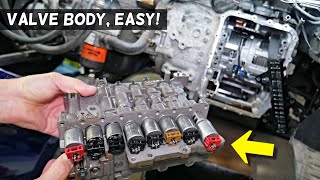
Typical fix: Replace the transmission filter and clean the valve body. In severe cases, the valve body may need to be removed 🎬 Watch: How to remove and replace the valve body for a more thorough cleaning or replacement.
Est. part cost: $30-$80 for a filter and pan gasket. - Faulty Wiring or Damaged Connector ⚪ Low Probability The wiring harness inside the transmission is submerged in hot fluid, which can make it brittle over time. External wiring can also be damaged by road debris. Corroded pins or loose connectors can interrupt the signal from the TCM.
How to confirm: Inspect the external wiring and connectors for any visible damage. The internal harness must be inspected after removing the transmission pan. A multimeter can be used to check for continuity and shorts in the circuit.
Typical fix: Repair the damaged section of the wire or replace the internal transmission wiring harness.
Est. part cost: $100-$250 for an internal harness.
Rare But Worth Checking
- Defective Transmission Control Module (TCM): → Shop Transmission Assembly This is rare, but the electronic driver circuit within the TCM that controls the solenoid can fail due to heat, moisture, or voltage spikes. All other possibilities, especially the solenoid and wiring, should be ruled out before condemning the TCM.
- Internal Mechanical Failure: A more serious internal issue, such as a failing clutch pack or a faulty transmission fluid pump, can create debris that clogs the system or cause pressure issues that trigger the code. This usually presents with more severe symptoms and may be accompanied by other trouble codes.
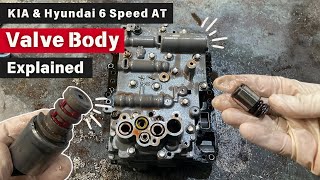
- Worn Valve Body Bores: → Shop Transmission Valve Body The aluminum bores within the valve body where regulator valves slide can wear out, even at low mileage (as low as 40k miles). This wear allows hydraulic pressure to leak, which can prevent the solenoid from controlling the circuit properly, setting a performance code even if the solenoid itself tests good. This is a known issue on the A6MF/A6LF series transmissions. 🎬 Watch: How these 6-speed valve bodies work and wear out
Diagnosis Steps
- Check the transmission fluid level and condition. Top off or replace if necessary with Hyundai-specific SP-IV fluid.
- Use a professional OBD-II scanner to check for other transmission-related codes. Note any codes for sensors or other solenoids.
- Use the scanner's live data function to monitor the commanded state and feedback from Pressure Control Solenoid 'B' during a test drive.
- If the fluid is okay, the next step is to inspect the components inside the transmission.
- Safely raise the vehicle and remove the transmission oil pan.
- Visually inspect the fluid in the pan for excessive metal shavings or clutch material, which would indicate a more severe internal failure.
- Locate Pressure Control Solenoid 'B' on the valve body (a service manual diagram is essential here).
- Test the solenoid's resistance with a multimeter. Compare the reading to the manufacturer's specifications. A reading outside the specified range indicates a faulty solenoid.
- If possible, apply 12V power to the solenoid to listen for an audible 'click', indicating mechanical function.
- Inspect the internal wiring harness for any signs of damage, brittleness, or corrosion on the connectors.
- If the solenoid and wiring test good, the issue may be a blockage in the valve body or a more significant internal mechanical problem.
Parts You'll Likely Need
- Transmission Pressure Control Solenoid
(OEM #46313-3B030)— This is the component directly identified by the trouble code and is the most frequent point of failure. This part number is widely listed for Hyundai/Kia 6-speed transmissions.
Trusted brands: Hyundai (OEM), Rostra
OEM price range: $90-$120
Aftermarket price range: $50-$150 - Automatic Transmission Fluid
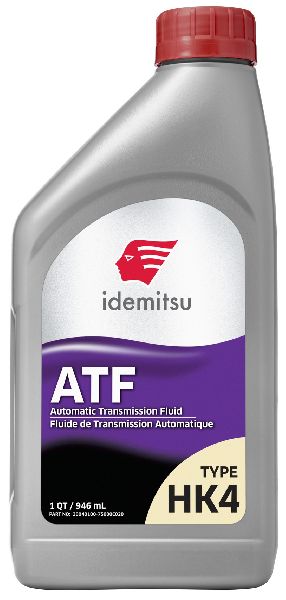
(OEM #SP-IV)— The transmission fluid must be drained to access the solenoid and should be replaced with the correct Hyundai-specific fluid (SP-IV) to ensure proper operation.
Trusted brands: Hyundai (OEM), Idemitsu, Valvoline (MaxLife)
OEM price range: $15-$25 per quart
Aftermarket price range: $10-$18 per quart - Transmission Filter and Pan Gasket — Whenever the transmission pan is removed, the filter and gasket should be replaced to ensure a clean system and proper seal.
Trusted brands: Hyundai (OEM), WIX, ATP
OEM price range: $40-$80
Aftermarket price range: $25-$50
Related Codes That Often Appear With This One
- P0775 (Pressure Control Solenoid B)
- P0777 (Pressure Control Solenoid B Stuck On)
- P0778 (Pressure Control Solenoid B Electrical)
Technical Service Bulletins (TSBs) & Recalls
- TSB 18-AT-004: Addresses harsh and/or delayed shifts on vehicles with the 6-speed automatic transmission. While not a direct fix for P0776, it provides diagnostic procedures for analyzing shift times related to specific solenoids, including the '2-6/B' solenoid.
- TSB 18-AT-005: A similar TSB for harsh/delayed shifts on a slightly different version of the 6-speed transmission, also emphasizing checking fluid levels and using the GDS scan tool for diagnosis.
- TSB 18-AT-006: Pertains to the automatic transaxle shift lever not shifting out of park, which is a different issue but relevant to the overall transmission system on these vehicles.
Mechanic-Grade Diagnostic Values
- Pressure Control Solenoid Resistance (Variable Force Solenoids) — expected: 5.1 Ohms. Failure: A reading significantly higher or lower than 5.1 Ohms, or an open circuit (infinite resistance), indicates a failed solenoid coil.
- Pressure Control Solenoid Resistance (On/Off Solenoids) — expected: 10-11 Ohms. Failure: A reading outside of this range indicates a failed on/off type solenoid.
Scan Tool Commands That Help
- Hyundai GDS (Global Diagnostic System): Actuation Test — The GDS can be used to command individual solenoids on and off while monitoring transmission data. This allows a technician to verify if the solenoid is responding to commands from the TCM and if the corresponding hydraulic circuit is building pressure, helping to isolate the fault between the solenoid, wiring, or TCM.
- Hyundai GDS (Global Diagnostic System): DTC Analysis — The GDS provides detailed fault code descriptions and step-by-step diagnostic procedures for specific codes, which can be more in-depth than generic OBD-II readers.
Wiring & Ground Locations
- Transmission Control Module (TCM) — On many 2013-2018 Santa Fe models, the TCM is a separate module located in the engine bay, underneath the battery and air cleaner assembly. Its location makes its connectors vulnerable to corrosion from moisture and battery fumes.. A poor connection at the TCM can interrupt the signal to the pressure control solenoid, mimicking a solenoid failure. Inspecting the TCM connector for corrosion is a critical step if electrical issues are suspected.
- GE01 / GE03 — Main engine compartment grounds located on the left side of the engine compartment.. A poor ground connection for the TCM or transmission sensors can cause erratic behavior and false trouble codes. Ensuring these grounds are clean and tight is essential for proper electrical diagnosis.
- GE05 / GC101 — Ground points located on the left rear of the engine compartment.. These grounds serve various components in the engine bay. Verifying their integrity is part of a thorough electrical system check when diagnosing communication or control module codes.
OEM Part Supersession History
46313-3B020→46313-3B030— Standard part revision by the manufacturer, likely for improved durability or material changes.
Model Year Variations Within This Range
- 2013-2018: The Santa Fe platform was available as the 5-passenger 'Sport' (with 2.4L or 2.0T engines, typically using the A6MF series transmission) and the 7-passenger LWB/XL (with the 3.3L V6, typically using the heavier-duty A6LF series). While the P0776 code applies to both, and the solenoids are often the same, internal components and torque capacities differ. Diagnosis remains the same, but it's crucial to order parts specific to the VIN.
Diagnostic Flowchart
Other Known Issues on This Vehicle
Issues unrelated to this code that are worth knowing about as an owner of this generation:
- Theta II Engine Seizure and Failure 🔴 High — Widespread across multiple model years, particularly with the 2.0L Turbo and 2.4L GDI engines. Can occur at various mileages, often under 100,000 miles. (Ref: Multiple recalls (e.g., NHTSA 15V568000) and a major class-action lawsuit settlement (In re: Hyundai and Kia Engine Litigation) which extended warranties.)
- MDPS Steering Coupler Wear 🟠 Medium — Very common. Owners report a distinct clicking or clunking noise from the steering column when turning the wheel. The flexible rubber coupler disintegrates over time. (Ref: TSB 17-ST-001 (supersedes 14-ST-002-1) describes the replacement procedure. The replacement part is 56315-2K000-FFF.)
- Peeling Exterior Paint 🟡 Low — Commonly reported, especially on white and other light-colored vehicles. Paint can delaminate and peel off in large sheets, often starting on the roof or hood.
- Crankshaft Position Sensor Failure 🟠 Medium — A frequently cited cause for engine stalling, especially when hot, or no-start conditions.
- Turbocharger Wastegate Actuator Failure 🟠 Medium — Affects 2.0T models. Failure leads to a significant loss of engine power and hesitation under acceleration.
Used vs. New Parts: Buying Guide for This Vehicle
When a used part is the smart pick: A complete used valve body from a low-mileage, verified-running donor vehicle can be a cost-effective alternative to buying individual new solenoids, especially if valve body bore wear is suspected. A complete used transmission is also an option if multiple codes are present or if there is evidence of significant internal debris.
Donor-vehicle mileage cap: roughly under 75000 miles for the part to have meaningful remaining life.
What to inspect on the donor part:
- Verify the donor vehicle's mileage and history if possible.
- Inspect the fluid from the donor transmission; it should not be dark black, burnt-smelling, or contain excessive metal particles.
- Look for any external damage to the transmission case or connectors.
- If buying a valve body, ensure all solenoids and the wiring harness are intact and connectors are not damaged.
OEM-only on this vehicle (don't cheap out):
- Internal Transmission Wiring Harness: Aftermarket harnesses can have issues with pin fitment and wire quality. Given the labor to access it, using an OEM harness is recommended for reliability.
Aftermarket brands forum-validated for this vehicle:
- Rostra: A well-known manufacturer of aftermarket transmission solenoids.
- TransGo / Sonnax: These brands produce valve body repair kits (Shift Kits) that can fix the underlying problem of worn valve body bores, which is a common issue in these transmissions.
Brands owners have reported issues with on this vehicle:
- Unbranded, no-name solenoids from online marketplaces can have high failure rates and inconsistent quality. It is generally better to use OEM or a reputable aftermarket brand.
Real Owner Stories
Aggregated from forums and TSBs cited above. Mileages and costs reflect what owners reported in those sources.
2013-2018 Hyundai Santa Fe (Jatco/A6 family transmission)
Symptoms: The vehicle experienced a possible transmission issue where a bad valve body was suspected rather than just a single solenoid.
What fixed it: Consideration of the entire valve body assembly during diagnosis, as the valve body itself is a common cause of failure due to material problems.
Source hint: NICOclub Forums - 'Help Needed with Possible Transmission Issue (code P0776)'
Related OBD-II Codes
Frequently Asked Questions
My 2013-2018 Santa Fe is shifting harshly; are there any Technical Service Bulletins for this?
What is the specific replacement part number for the Pressure Control Solenoid 'B' in my Santa Fe?
Can I use any transmission fluid to fix the P0776 code in my Hyundai?
Is the P0776 code related to the common steering clunk in the Santa Fe?
Could a faulty internal wiring harness be causing my P0776 code?
My Santa Fe won't shift out of Park; is this caused by the P0776 solenoid issue?
Helpful Videos


We Have This Part in Stock



The information in this article is provided for general reference and educational purposes only. Vehicle specifications, procedures, and part compatibility can vary by production date, trim level, and region. Always consult your vehicle's factory service manual and verify part numbers before purchasing or performing repairs. Safety-critical components such as airbags, seat belts, and braking systems should be installed by a qualified professional.
- Hyundai Santa Fe:
- 🧭 Diagnostic Flowchart
- 🎬 Helpful Videos
- 🛍️ Shop This Part
- What's Unique About the 2013-2018 Hyundai Santa Fe
- Symptoms You May Notice
- Most Likely Causes
- Rare But Worth Checking
- Diagnosis Steps
- Parts You'll Likely Need
- Related Codes That Often Appear With This One
- Technical Service Bulletins (TSBs) & Recalls
- Mechanic-Grade Diagnostic Values
- Scan Tool Commands That Help
- Wiring & Ground Locations
- OEM Part Supersession History
- Model Year Variations Within This Range
- Other Known Issues on This Vehicle
- Used vs. New Parts: Buying Guide for This Vehicle
- Real Owner Stories
- 2013-2018 Hyundai Santa Fe (Jatco/A6 family transmission)
- Related OBD-II Codes
- Frequently Asked Questions
- 🎟️ Get 5% Off