

P0776 on 2013-2020 Nissan Altima: Causes, Fixes, and CVT Failure Warning
On a 2013-2020 Nissan Altima, P0776 is a critical code indicating a 'Pressure Control Solenoid 'B' Performance/Stuck Off' issue. This rarely points to a simple solenoid fix; it's a strong indicator of a failing valve body or catastrophic internal CVT failure. A full transmission replacement is a very common outcome, and continuing to drive is not recommended.
- P0776 on a 2013-2020 Altima is a severe code that should be addressed immediately.
- Do not continue to drive the vehicle, as you risk catastrophic transmission failure.
- The most common causes are a failed valve body or, more likely, a damaged CVT belt requiring a full transmission replacement.
- A simple fluid change is not a viable fix for this code.
- Ensure your mechanic follows the official Nissan TSBs, which require a borescope inspection to determine the correct, and expensive, repair path.
What's Unique About the 2013-2020 Nissan ALTIMA

The Nissan Altima from this era uses a JATCO CVT (often the JF016E/RE0F10D model) that is notoriously prone to premature failure. Unlike on many other vehicles where a solenoid code might mean a simple, inexpensive part swap, on the Altima, 🎬 Watch: Understanding the P0776 code and repair info P0776 is a well-documented and ominous sign. Nissan has issued multiple Technical Service Bulletins (TSBs) for this exact code, which reveal that the solenoid fault is a symptom of a much larger problem, such as a contaminated valve body or a failing CVT push belt. Owner complaints and forum discussions frequently confirm that this code is the precursor to a dealership recommending a full, and very expensive, transmission replacement. One owner on the NICOclub forums with a 2016 Altima reported getting the P0776 code, trying a fluid and filter change, only for the issue to return, with one dealer quoting $5,500-$6,500 for a new transmission.
Diagnostic Flowchart

Tap your situation to follow the diagnostic path that matches what you're seeing on this vehicle.
Generation note: This issue affects both the fifth-generation (L33, 2013-2018) and the sixth-generation (L34, 2019-2020) Nissan Altima, as both utilize JATCO CVT transmissions (like the CVT8) with similar known failure points. TSBs and owner complaints exist for vehicles across this entire year range, confirming the systemic nature of the problem.
Symptoms You May Notice

- Hesitation or lack of power, especially when accelerating from a stop.
- Vehicle enters 'limp mode' with reduced speed.
- Harsh, jerky, or erratic shifting sensations.
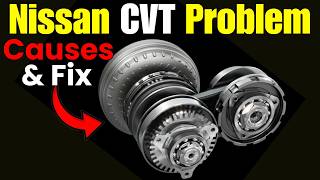
- Transmission slipping, where engine RPMs rise without an increase in speed. 🎬 Watch: Why these CVT problems happen and how to fix them
- Check Engine Light is illuminated.
- In some cases, the code may be stored without the Check Engine Light turning on, a condition noted by multiple owners.
- Performing a transmission fluid flush or change and expecting it to solve the problem. One owner on NICOclub forums reported trying a double drain-and-fill with new filters, but the P0776 code and limp mode returned shortly after.
- Replacing only the single Pressure Control Solenoid 'B'. The issue is almost always systemic to the valve body (clogged passages) or the entire transmission, so replacing a single solenoid is not an effective or recommended repair. Nissan does not service the solenoids individually; they are part of the valve body assembly.
Most Likely Causes

- Internal CVT Mechanical Failure 🔴 High Probability The JATCO CVTs in these Altimas are known for issues where the internal push belt can be damaged by contaminated fluid or incorrect hydraulic pressure, leading to slippage and scoring of the pulleys. The P0776 solenoid code is often a symptom of this catastrophic failure, not the root cause.
How to confirm: Nissan's official procedure per TSBs like NTB15-086c and NTB16-110c involves removing the valve body and inspecting the CVT belt and pulleys with a borescope for any scoring or damage. The TSBs provide reference images of what constitutes 'OK' versus 'Not OK' (damaged) belt surfaces.
Typical fix: If any damage is found on the belt or pulleys, the entire CVT assembly must be replaced. This is a very common outcome according to owner complaints and repair shop experiences.
Est. part cost: $3500-$5500 - Defective Transmission Valve Body 🟡 Medium Probability → Shop Transmission Valve Body The valve body contains the solenoids and a complex network of hydraulic passages. These passages can become clogged with metallic debris from wear, causing solenoids to stick or report incorrect pressures. A forum expert noted that '16 and early '17 models had a serious materials problem with the original valve bodies.
How to confirm: If the borescope inspection of the CVT belt shows no damage, the valve body is the next likely culprit. A technician 🎬 See this walkthrough on how to replace a valve body can monitor solenoid commands vs. actual pressure with an advanced scan tool, but replacement is often the only definitive test.
Typical fix: Replace the entire valve body assembly. This is only done if the CVT belt is confirmed to be in good condition. The replacement part often comes as a kit including the control valve and a CD-R with new calibration data to be written to the TCM.
Est. part cost: $800-$1500 - Low or Dirty Transmission Fluid ⚪ Low Probability → Shop Transmission Assembly While low or degraded fluid can cause a host of transmission problems, it is rarely the root cause of a P0776 code on this specific platform. It's more often a contributing factor or a sign of neglect that has already led to more severe internal damage. Many owners attempt a fluid change first, only for the code to return.
How to confirm: Check the level and condition of the CVT fluid. Nissan CVTs do not have a traditional dipstick, so this must be done by a technician via the fill/check plug at a specific fluid temperature (typically 98°F - 113°F). A scan tool is needed to monitor the fluid temperature.
Typical fix: Perform a CVT fluid drain and fill using only genuine Nissan NS-3 fluid. However, this is highly unlikely to be a permanent fix for an existing P0776 code and is often a wasted expense.
Est. part cost: $150-$250
Rare But Worth Checking
- Wiring or Connector Issue: Damage to the wiring harness leading to the transmission or within the transmission to the solenoid could cause a loss of signal. While possible, it's far less common than the mechanical and hydraulic failures within the CVT itself. TSBs instruct technicians to ensure the harness does not get pinched during reassembly.
- Faulty Transmission Control Module (TCM): → Shop Transmission Assembly In very rare cases, the computer that controls the transmission can fail. This should only be considered after all other possibilities, especially the valve body and CVT assembly, have been ruled out. Some TSBs do require a TCM reprogram after a valve body replacement.
Diagnosis Steps
- Verify the code with a professional OBD-II scanner like Nissan's CONSULT-III Plus.
- Check for any other stored transmission codes. If codes other than those listed in the TSBs (P0776, P1715, P0841, P17F0/F1, P2813, etc.) are present, the diagnostic path may differ.
- Using a scan tool, check the 'CVTF Deterioration Date' value. A high value (e.g., over 210,000) indicates the fluid has been subjected to high temperatures and severe use, increasing the likelihood of internal damage.
- Check the transmission fluid level and condition. This requires a shop lift and a scan tool to monitor fluid temperature, as there is no dipstick. Note if the fluid is dark, has a burnt smell, or contains excessive metallic particles.
- Follow the diagnostic flowchart in the relevant Nissan TSB (e.g., NTB15-086c, NTB16-110c).
- Remove the transmission oil pan and control valve (valve body). The bolts for the valve body are marked with a '7' on the head.
- Using a borescope (Nissan essential tool J-51951), inspect both sides of the CVT belt for any signs of scoring, scratching, or damage while an assistant rotates a front wheel.
- If the belt is damaged, the entire CVT assembly must be replaced.
- If the belt is NOT damaged, the recommended repair is to replace the valve body assembly.
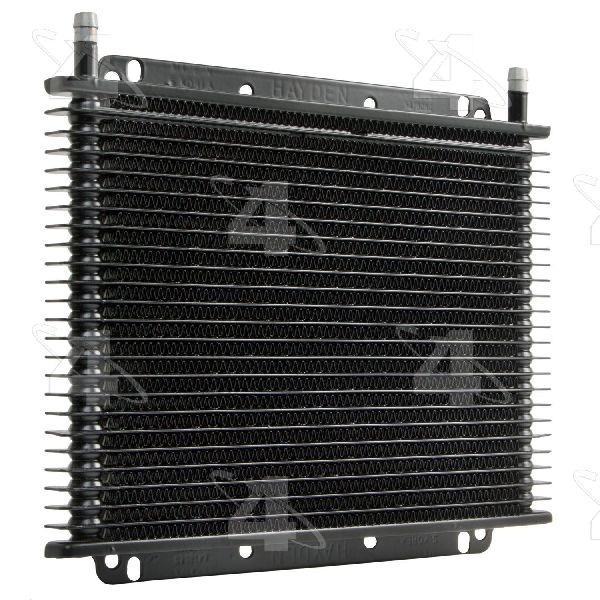
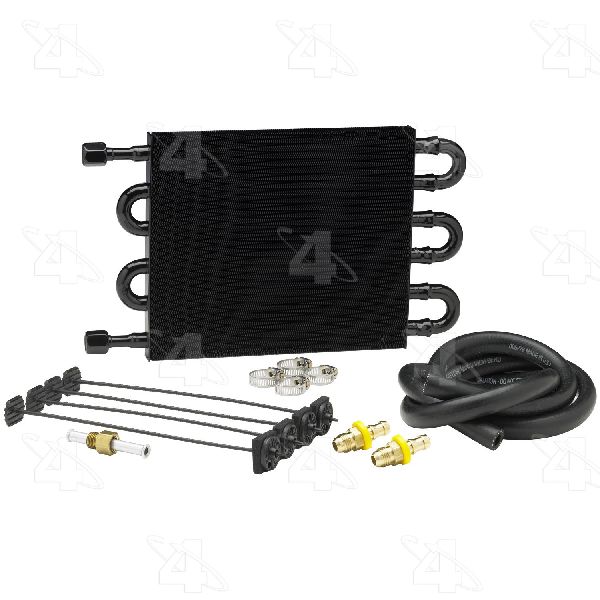
- After replacement of either the valve body or CVT, the CVT cooler must be flushed per TSB NTB15-013.
- After repair, new calibration data from the replacement part must be written to the TCM, and the CVTF Deterioration counter must be reset.
Parts You'll Likely Need
- CVT Assembly (Remanufactured)
(OEM #31020-3VX1D)— This is the most common final repair for a P0776 code on this vehicle, as the code often indicates irreparable internal mechanical damage to the CVT belt and pulleys.
Trusted brands: Nissan Genuine (Remanufactured)
OEM price range: $3500-$5500 - Control Valve Assembly (Valve Body)
(OEM #31705-28X0B / 3170E-28X0B)— If the internal CVT belt is inspected and found to be undamaged, replacing the valve body is the prescribed repair per Nissan TSBs. This part contains the solenoids and hydraulic control circuits.
Trusted brands: Nissan Genuine
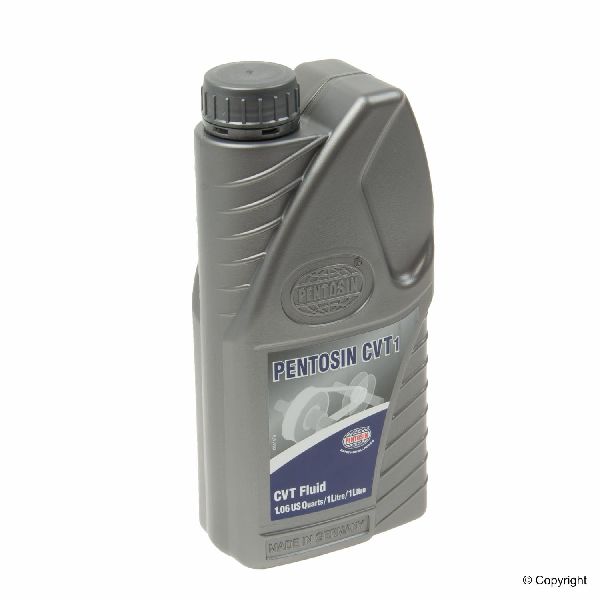
OEM price range: $800-$1200 - Nissan NS-3 CVT Fluid
(OEM #999MP-NS300P)— This specific fluid is required for any repair, whether it's a full CVT replacement, a valve body swap, or a fluid service. Using non-genuine fluid can cause damage.
Trusted brands: Nissan Genuine
OEM price range: $20-$25 per quart
Related Codes That Often Appear With This One
- P1715 — This code for the Input Speed Sensor is often stored with P0776. Nissan TSBs NTB16-110c and NTB15-086d explicitly mention these two codes appearing together as part of the same fault condition.
- P0841 — This code relates to the Transmission Fluid Pressure Sensor. It can be triggered alongside P0776 because the root cause is a failure in the hydraulic control system. TSB NTB21-083 groups these codes together.
- P17F0 / P17F1 — These codes indicate 'CVT Judder' and are addressed in the same TSBs as P0776, pointing to a systemic problem within the CVT assembly.
- P2813 — This is a code for Pressure Control Solenoid 'G'. It is listed in the same TSBs as P0776, indicating a related failure in the valve body.
- P0965 — This is a code for Pressure Control Solenoid 'B' Circuit Range/Performance. It was seen alongside P0776 in an owner complaint that resulted in a transmission replacement recommendation. TSB NTB22-018 also groups these codes together for other Nissan models.
Technical Service Bulletins (TSBs) & Recalls
- NTB15-086c: Covers 2013-2016 Altima and 2014-2016 Rogue for P0776, outlining the borescope inspection procedure to decide between valve body or full CVT replacement.
- NTB16-110c: Updates and expands on the previous TSB for 2015-2017 Altimas, often including P1715 with P0776. Provides detailed repair flowcharts.
- NTB21-083: Applies to 2019-2021 models and groups P0776 with other codes like P17F0, P17F1, P2813, and P0841, indicating a systemic issue.
- NTB19-076: Groups P0776 with other DTCs for 2018 Altima and Rogue, providing a detailed repair flowchart.
Platform-Specific Known Issues
- NHTSA owner complaints repeatedly link code P0776 directly to a diagnosis of complete transmission failure. One owner of a 2017 Altima was told the "belt is worn in the transmission" after this code appeared.
- Another owner of a 2013 Altima was informed by a Nissan dealership that the "whole transmission was no good" after code P0776 was diagnosed.
- A 2013 Altima with only 39,848 miles required a transmission replacement after codes P0776, P2813, and P0965 were found.
- For the 2019 model year, a P0776 code, along with P17F0, led to a CVT failure diagnosis and a recommendation for full replacement.
Mechanic-Grade Diagnostic Values
- Pressure Control Solenoid 'B' resistance — expected: 5 - 15 ohms. Failure: A reading outside this range, or an open circuit, suggests the solenoid's internal windings have failed.
- Scan tool live data: 'Line Pressure' — expected: Rises steadily from ~150 psi at idle to over 400 psi under acceleration.. Failure: Pressure that remains flat, fluctuates erratically, or does not respond to throttle input points to a pressure sensor or control system fault.
Hidden / Shadow Codes Worth Checking
- P1715: Input Speed Sensor. This code is not a 'shadow code' in the traditional sense, but Nissan TSBs NTB16-110c and NTB15-086d explicitly state that P1715 may be stored along with P0776 and should be treated as part of the same fault. Its presence reinforces the diagnosis rather than indicating a separate issue. (see via Standard OBD-II scanner capable of reading transmission codes.)
Scan Tool Commands That Help
- Nissan CONSULT-III Plus: Work Support > Active Test — A technician can use this function to command individual solenoids, like Pressure Control Solenoid 'B', to turn on and off while monitoring pressure sensors. This helps confirm if the solenoid is mechanically stuck or if the electrical circuit is intact without having to remove the valve body.
- Nissan CONSULT-III Plus: Work Support > WRITE IP CHARA - REPLACEMENT AT/CVT — This procedure is mandatory after replacing the CVT assembly or the valve body. It writes the unique calibration data from a CD-ROM (included with the new part) to the Transmission Control Module (TCM). Failure to perform this step will result in improper transmission operation, and potentially codes like P17F0 or P17F1 that cannot be cleared.
- Nissan CONSULT-III Plus: Work Support > CLUTCH POINT LEARNING — This relearn procedure is required after a valve body replacement (but not a full CVT replacement) to ensure smooth clutch engagement. If not performed correctly, the vehicle may not move when put into gear.
Wiring & Ground Locations
- TCM Wiring Harness Connector — Generally located near the driver-side firewall.. This is a primary connection point between the TCM and the transmission. Inspecting the pins for corrosion, moisture, or damage is a key step before condemning internal transmission components.
- Main Transmission Case Connector — A large, round, bayonet-style connector on the CVT case itself.. This is the main electrical interface for all internal transmission components, including the valve body solenoids. A poor connection here can cause a wide range of transmission codes, including P0776. The connector can be difficult to remove and reinstall, and care must be taken not to damage pins or the locking ring.
Real Owner Repair Stories
- AliExpress Technical Product Review/Guide (2016 Nissan Altima SV) — Intermittent P0776 code
❌ Tried (didn't work) Replacing the solenoid pack twice based on mechanic recommendations.
✅ What actually fixed it Scanning live data revealed the pressure sensor output spiked unpredictably. Replacing the full assembly that included both the solenoid pack and the pressure sensor resolved the issue permanently, highlighting that the components are interdependent.
Model Year Variations Within This Range
- 2013-2015 (Fifth Gen, L33): For the fifth generation, the CVT was redesigned to be more reliable and efficient compared to the previous generation. However, these are the models most frequently cited in early TSBs for P0776 failures.
- 2015-2017 (L33): Nissan TSB NTB16-110c applies specifically to these years and introduces a more complex repair path than earlier bulletins. If the CVT belt inspection is 'NG' (Not Good), the procedure involves replacing the CVT sub-assembly (pulleys and belt) and the valve body, a more involved in-vehicle repair than a simple valve body swap or full transmission replacement.
- 2019-2020 (Sixth Gen, L34): The sixth generation introduced a new body style and offered AWD as an option. While the underlying CVT8 technology is similar, the V6 engine option was dropped in favor of a 2.0L VC-Turbo. P0776 is still a known issue, as confirmed by NHTSA complaints for the 2019 model year.
Helpful Videos

We Have This Part in Stock

The information in this article is provided for general reference and educational purposes only. Vehicle specifications, procedures, and part compatibility can vary by production date, trim level, and region. Always consult your vehicle's factory service manual and verify part numbers before purchasing or performing repairs. Safety-critical components such as airbags, seat belts, and braking systems should be installed by a qualified professional.
- Nissan ALTIMA:
- 🧭 Diagnostic Flowchart
- 🎬 Helpful Videos
- 🛍️ Shop This Part
- What's Unique About the 2013-2020 Nissan ALTIMA
- Symptoms You May Notice
- Most Likely Causes
- Rare But Worth Checking
- Diagnosis Steps
- Parts You'll Likely Need
- Related Codes That Often Appear With This One
- Technical Service Bulletins (TSBs) & Recalls
- Platform-Specific Known Issues
- Mechanic-Grade Diagnostic Values
- Hidden / Shadow Codes Worth Checking
- Scan Tool Commands That Help
- Wiring & Ground Locations
- Real Owner Repair Stories
- Model Year Variations Within This Range
- 🎟️ Get 5% Off