

P0776 on 2015-2017 Nissan JUKE: Pressure Control Solenoid 'B' Causes and Fixes
On a 2015-2017 Nissan JUKE, code P0776 almost always points to a problem within the CVT automatic transmission, specifically the valve body or the pressure control solenoid 'B'. This is a known issue covered by Nissan Technical Service Bulletin NTB20-091A. The most common fix is replacing the entire CVT valve body, which is a costly, professional-level repair. In more severe cases, it indicates internal belt and pulley damage requiring a full transmission replacement.
- P0776 on a 2015-2017 JUKE is a serious transmission code with a well-documented cause.
- Do not ignore this code. It can lead to complete transmission failure.
- The official Nissan TSB (NTB20-091A) is the most important document for diagnosis.
- The most likely repair is a replacement of the entire CVT valve body, which is a job for a professional technician.
- If other codes like P17F0 or P17F1 are present, it increases the likelihood of needing a full CVT replacement.
What's Unique About the 2015-2017 Nissan JUKE
The 2015-2017 Nissan JUKE uses a Jatco RE0F10D CVT, a transmission known for specific failure patterns related to its valve body and internal belt. Nissan has issued Technical Service Bulletin NTB20-091A, which directly addresses code P0776 along with a cluster of other related codes (P17F0, P17F1, P2813, P0841). The issue is so common that the official diagnostic procedure often bypasses simple solenoid replacement and immediately directs technicians to inspect the CVT for internal belt slippage using a borescope. If the belt is undamaged, the TSB recommends replacing the entire control valve (valve body) assembly. A forum user on NICOclub, identified as a potential Nissan mechanic, noted that the valve bodies on 2016 and early 2017 models had a "serious materials problem," leading to frequent replacements. This makes P0776 on a Juke a strong indicator of a substantial, well-documented, and potentially very expensive transmission problem.
Diagnostic Flowchart
Tap your situation to follow the diagnostic path that matches what you're seeing on this vehicle.
Symptoms You May Notice
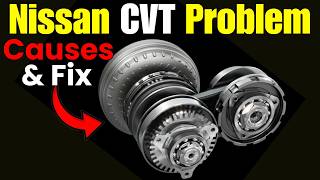
🎬 Watch: A breakdown of common Nissan CVT failure symptoms and causes.- Check Engine Light is on
- Vehicle enters limp mode (reduced power)
- Harsh or jerky shifting
- Delayed gear engagement
- Transmission slipping or flaring between ratios
- Inability to shift into higher 'gears' or feeling stuck in a low ratio
- Whining or juddering noise from the transmission
- Decreased fuel economy
- Sluggish or slow acceleration, especially from a stop
- Replacing only the single Pressure Control Solenoid 'B' instead of the entire valve body assembly. The issue is often with the valve body itself or debris within it, so a single solenoid swap may not fix the problem and is not the procedure recommended by Nissan.
- Replacing the Transmission Control Module (TCM) before thoroughly diagnosing the transmission's mechanical and hydraulic components.
- Performing a fluid flush on a high-mileage, poorly maintained transmission. This can sometimes dislodge debris and worsen the problem or cause new ones.
Most Likely Causes
- Defective CVT Control Valve Body 🔴 High Probability → Shop Transmission Valve Body This is a well-documented failure on this specific CVT model (RE0F10D). Nissan TSB NTB20-091A outlines a procedure that often leads to valve body replacement. Forum discussions confirm this is a common failure point, with some speculating about a materials defect in the original valve bodies for these model years. The solenoid itself is integrated into the valve body, and debris or internal wear often necessitates replacing the entire unit.
How to confirm: Follow the diagnostic procedure in TSB NTB20-091A, which involves inspecting the CVT belt for slippage via a borescope. If the belt is okay, the procedure points to replacing the valve body. A professional scan tool can also attempt to actuate the solenoid and monitor pressure readings, but the TSB is the definitive guide for this platform.
Typical fix: Replacement of the entire CVT control valve body assembly. After replacement, a precise fluid fill procedure and potential TCM reprogramming is required. The OEM part number for the valve body kit is 3170E-28X0B, which supersedes part number 31705-28X9B.
Est. part cost: $350-$550 for a new OEM valve body kit, though some dealer prices can be higher. Remanufactured units can be found for $200-$400. - Internal CVT Damage (Belt and Pulley Damage) 🟡 Medium Probability The same TSB that addresses the valve body also details how to check for belt slippage, indicating that the pressure control fault (P0776) is often a direct consequence of the belt losing grip and damaging the pulleys.
How to confirm: A technician must use a borescope to inspect the CVT belt and pulleys for scoring or damage, as detailed in TSB NTB20-091A. NG (No Good) conditions include visible scoring, scratches, or damage on the belt's contact surfaces.
Typical fix: Complete replacement of the CVT assembly. This is a very expensive repair.
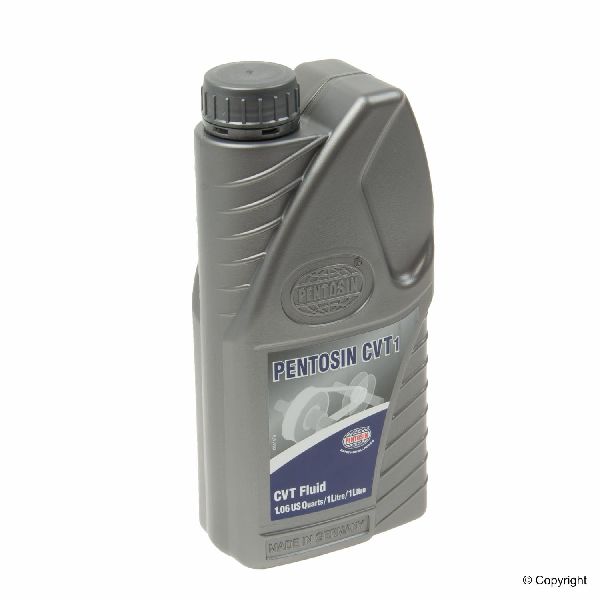
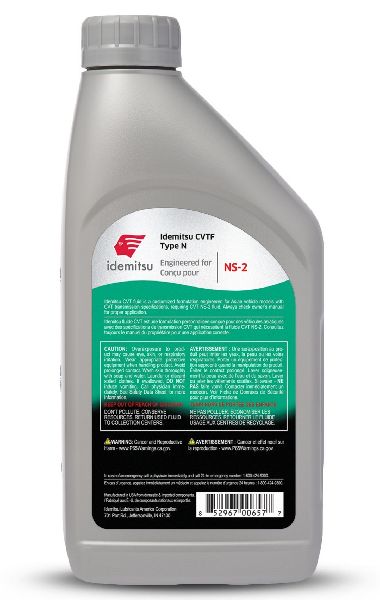
Est. part cost: $3000-$4500+ for a remanufactured CVT assembly from Nissan. - Low or Contaminated CVT Fluid ⚪ Low Probability While less common as the root cause for this specific code on this platform, low or degraded fluid can cause pressure issues that mimic a solenoid failure. The correct fluid for this transmission is Nissan CVT Fluid NS-3, which is blue. Using NS-2 (green) or a universal fluid that is not explicitly NS-3 compatible is strongly discouraged and can cause damage.
How to confirm: Check the CVT fluid level and condition. The fluid should be at the correct level and not appear dark, burnt, or contain metallic particles. Note: The JUKE does not have a traditional dipstick, so this check must be performed by a technician using a specific fill-port procedure at a designated temperature.
Typical fix: Perform a CVT fluid drain and fill using only Nissan CVT Fluid NS-3 or a fully compatible equivalent. If the fluid is heavily contaminated with metal debris, the valve body and/or the entire transmission is likely already damaged.
Est. part cost: $150-$300 for fluid and service.
Rare But Worth Checking
- Faulty Transmission Control Module (TCM): → Shop Transmission Assembly While possible, TCM failure is much less common than mechanical or hydraulic issues within the CVT. TSBs often require a TCM reprogram after parts replacement, but outright failure is rare.
- Wiring Harness Damage: Damage to the wiring between the TCM and the transmission valve body could cause this code, but it's unlikely unless the vehicle has been in an accident or had other underbody work performed.
Diagnosis Steps
- Verify the code with a professional OBD-II scanner. Check for any other accompanying codes, especially those listed in TSB NTB20-091A (P17F0, P17F1, P2813, P0841).
- Consult TSB NTB20-091A. This is the most critical step for this specific vehicle and code. The bulletin provides a detailed diagnostic flow chart.
- Have a technician inspect the CVT fluid level and condition. The fluid must be genuine Nissan NS-3 or a 100% compatible equivalent.
- Following the TSB, a technician will remove the control valve (valve body) and use a borescope (video scope) to inspect the CVT belt and pulleys for scoring or damage.
- If belt damage is found ('NG' result), the entire CVT assembly needs to be replaced.
- If the belt is OK, the recommended repair is to replace the control valve (valve body) assembly with the updated part.
- After parts replacement, perform a CVT fluid fill with the correct Nissan NS-3 fluid.
- If the valve body or CVT was replaced, the TCM may need to be reprogrammed by writing new characteristics data using a Nissan-specific scan tool (CONSULT-III plus).
- Clear all codes and perform a test drive to ensure the issue is resolved.
Parts You'll Likely Need
- CVT Control Valve Body Kit
(OEM #3170E-28X0B (supersedes 31705-28X9B))— This is the most common fix for P0776 on this vehicle when internal belt damage is not present, as recommended by Nissan's own service bulletin. The solenoids are integrated into the assembly.
Related Codes That Often Appear With This One
- P17F0 — Indicates a CVT judder/judgement issue. It is listed in the same TSB (NTB20-091A) as P0776 for this vehicle, pointing to a common root cause within the CVT.
- P17F1 — Also a CVT judder code, often stored with P0776 and P17F0, indicating a significant internal transmission problem. It is also mentioned in TSB NTB20-091A.
- P2813 — Pressure Control Solenoid 'G' Performance. This code appearing with P0776 strongly suggests a failure of the valve body assembly, as multiple solenoids are malfunctioning. It is listed in TSB NTB20-091A.
- P0841 — Transmission Fluid Pressure Sensor/Switch 'A' Circuit Range/Performance. This points to a hydraulic pressure sensing issue, directly related to the function of the pressure control solenoids. It is also listed in TSB NTB20-091A.
Technical Service Bulletins (TSBs) & Recalls
- NTB20-091A: The primary TSB for 2015-2017 Jukes with code P0776 and others. It provides the full diagnostic flow chart, from checking codes to inspecting the belt with a borescope and determining whether to replace the valve body or the entire CVT.
- NTB16-110o: An earlier, more general TSB covering multiple 4-cylinder Nissans with similar CVT codes. It also contains a detailed repair flow chart.
- NTB22-014: A TSB for other Nissan models (Kicks, Versa) that also references P0776, showing the widespread nature of this issue across Jatco CVTs.
Platform-Specific Known Issues
- Owner Experience: DIY Fluid Change Attempt: An owner of a 2016 Altima (platform mate) with code P0776 attempted to fix the issue by performing two drain-and-fills of the CVT fluid and replacing the filters. The issue persisted, leading them to seek professional diagnosis, which is the recommended path.
- Technician Insight: Valve Body vs. Full Replacement: → Shop Transmission Valve Body Technicians in online forums consistently advise that while a valve body replacement *might* fix the P0776 code, it's a significant risk if the transmission has higher mileage. The underlying cause is often belt slip that has already damaged the pulleys, meaning the only long-term, guaranteed fix is a full CVT replacement. The TSB's borescope inspection is the key step to determine which path to take.
Mechanic-Grade Diagnostic Values
- Pressure Control Solenoid 'B' resistance — expected: 5 - 15 ohms (Note: Sourced from Altima with similar CVT, verify with Juke-specific manual if possible). A more generic range is 10-30 ohms.. Failure: A reading outside the expected range, or an open/infinite reading, indicates a failed solenoid coil.
- Solenoid 'B' command voltage (Live Data) — expected: Should show a pulse-width modulated (PWM) signal that fluctuates from 0.5V up to 12V as the transmission shifts.. Failure: A constant 0V reading when a shift is commanded indicates the solenoid is stuck off or there is a circuit failure.
- Solenoid 'B' circuit continuity — expected: Less than 5 ohms between the solenoid's signal pin and the corresponding pin at the TCM connector.. Failure: High resistance suggests a frayed or corroded wire; 0 ohms (or very close) could indicate a short circuit.
Scan Tool Commands That Help
- Nissan CONSULT or professional equivalent: Write/Save/Upload Calibration Data — This function is required after replacing the CVT valve body or the entire transmission assembly to write the new component's specific characterization data to the TCM.
- Nissan CONSULT or professional equivalent: TCM Self-Test / Actuator Test — To command the Pressure Control Solenoid 'B' on and off while monitoring live data to see if the solenoid responds electrically and if there is a corresponding change in line pressure.
- None (Manual Procedure): TCM Adaptive Memory Reset ('Pedal Dance') — To clear the learned shift adaptations from the TCM after a repair or as a troubleshooting step for poor shift quality. The procedure is: 1) Ignition ON, engine OFF. 2) Wait 3 seconds. 3) Press and release the accelerator pedal fully 5 times within 5 seconds. 4) Wait 7 seconds. 5) Press and hold the accelerator pedal for ~10 seconds until the Check Engine Light begins to blink. 6) Release the pedal. 7) Turn ignition OFF.
Wiring & Ground Locations
- TCM (Transmission Control Module) — Under the dashboard, near the passenger side airbag. The glove box typically must be removed to gain access.. The TCM is the computer that controls the pressure control solenoids. All wiring for the solenoids originates here, making it a key location for checking power, grounds, and circuit continuity.
- Engine/Transaxle Grounds (e.g., F6, F9) — Various points on the engine and transaxle case. For a 2011 Juke, key grounds are at the top front (F6) and top rear (F9) of the engine compartment. There are also critical grounds behind the intake manifold that can become loose.. A poor ground connection for the TCM or the transmission sensors can cause erratic behavior, communication faults, and incorrect solenoid operation, potentially triggering a P0776 code.
- AWD Control Module — Under the driver's seat (Designator B57 for 2011 models).. On AWD models, this module communicates with the TCM. Water intrusion at this location has been documented to cause widespread network and communication issues on the Juke.
Real Owner Repair Stories
- NICOclub Forums user 'VStar650CL' (2016 Nissan Altima (uses a similar Jatco CVT)) — Vehicle entered limp mode, code P0776 was stored. Also reported random sluggish acceleration from a stop.
❌ Tried (didn't work) Draining the CVT fluid and replacing both internal and external filters.
✅ What actually fixed it A responding forum member, identified as a likely Nissan technician, stated that P0776 without judder codes (P17Fx) strongly points to a failed valve body. They noted that the valve bodies on 2016 and early 2017 models had a 'serious materials problem' and were frequently replaced under warranty, making valve body replacement the probable fix.
"I Checked Everything" — The Actual Cause
- While not a smoke test, a common pattern reported is performing a fluid and filter change, which is a standard first step, only for the P0776 code to return. In these cases, the root cause was not fluid condition but a known defect in the valve body assembly itself, requiring its complete replacement.
OEM Part Supersession History
31705-28X9B→3170E-28X0B— Likely an updated design to address the material defects and high failure rate of the original valve body.
Model Year Variations Within This Range
- 2016-2017: The original valve bodies in these models are reported to have a 'serious materials problem,' leading to a high failure rate and frequent replacement. This makes P0776 on these years an even stronger indicator of a primary valve body failure.
- 2016: There appears to be a narrow production window for compatible replacement CVT assemblies. One owner reported that only transmissions manufactured between August 2015 and August 2016 were compatible with their 2016 Juke, indicating mid-cycle hardware changes.
Helpful Videos
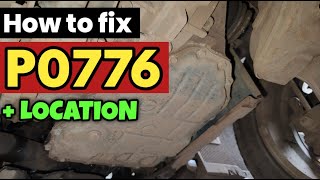

![How To Change CVT Transmission Fluid And Filters [Nissan Sentra/Juke/Versa 1.8L 2013-2019]](https://img.youtube.com/vi/6fUCxKcWkZI/mqdefault.jpg)
We Have This Part in Stock
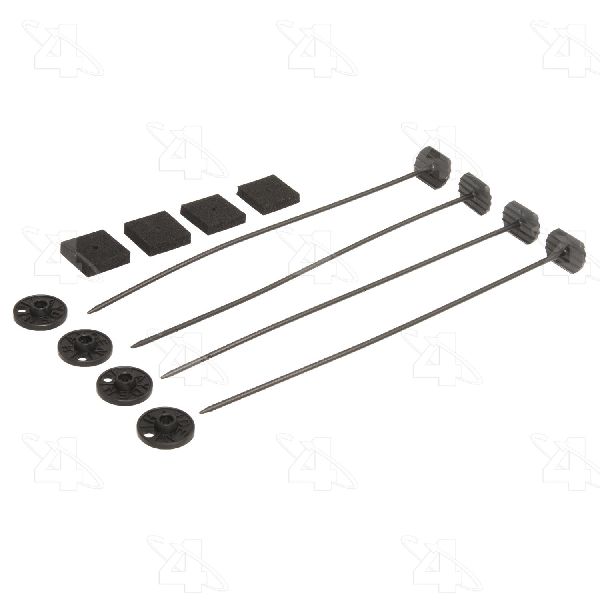
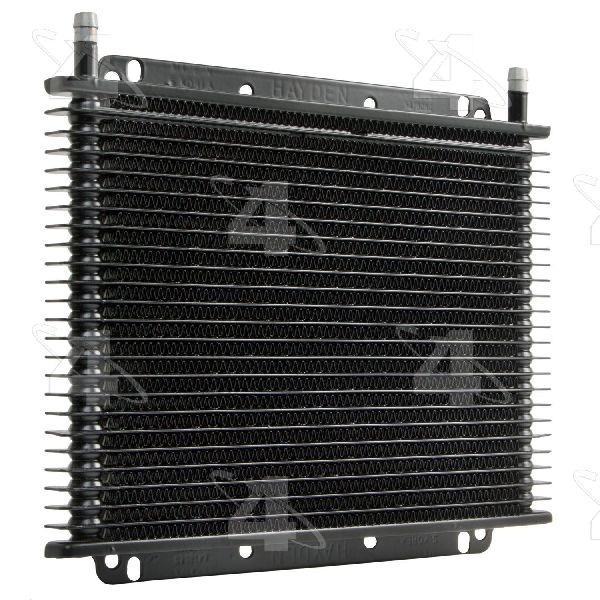

The information in this article is provided for general reference and educational purposes only. Vehicle specifications, procedures, and part compatibility can vary by production date, trim level, and region. Always consult your vehicle's factory service manual and verify part numbers before purchasing or performing repairs. Safety-critical components such as airbags, seat belts, and braking systems should be installed by a qualified professional.
- Nissan JUKE:
- 🧭 Diagnostic Flowchart
- 🎬 Helpful Videos
- 🛍️ Shop This Part
- What's Unique About the 2015-2017 Nissan JUKE
- Symptoms You May Notice
- Most Likely Causes
- Rare But Worth Checking
- Diagnosis Steps
- Parts You'll Likely Need
- Related Codes That Often Appear With This One
- Technical Service Bulletins (TSBs) & Recalls
- Platform-Specific Known Issues
- Mechanic-Grade Diagnostic Values
- Scan Tool Commands That Help
- Wiring & Ground Locations
- Real Owner Repair Stories
- "I Checked Everything" — The Actual Cause
- OEM Part Supersession History
- Model Year Variations Within This Range
- 🎟️ Get 5% Off