

P0776 on 2018-2022 Nissan KICKS: Pressure Control Solenoid 'B' Causes and Fixes
P0776 on a Nissan Kicks indicates a problem with the Pressure Control Solenoid 'B' in the CVT transmission. This is a known issue often requiring the replacement of the entire transmission valve body, an expensive repair. In many cases, per Nissan's own service bulletins, evidence of belt slippage found during the valve body inspection will escalate the repair to a full CVT replacement.
- P0776 on a Nissan Kicks is a serious transmission code pointing to a faulty pressure control solenoid.
- This is a known issue covered by multiple Nissan TSBs, and the most common fix is replacing the entire transmission valve body.
- Do not ignore this code. Driving with it can lead to being stranded or causing catastrophic failure of the CVT, a very expensive repair.
- This is not a DIY-friendly repair. Due to the complexity of the CVT, professional service is strongly recommended.
- Always check for metal debris in the transmission pan during diagnosis; its presence means the entire transmission needs to be replaced.
What's Unique About the 2018-2022 Nissan KICKS

The 2018-2022 Nissan Kicks uses a Jatco CVT8, a transmission with a well-documented history of issues across multiple Nissan models. Nissan has issued several Technical Service Bulletins (TSBs) that group P0776 with other transmission codes, indicating a common and recognized failure pattern. The diagnostic procedure outlined in these TSBs often involves inspecting the CVT's internal belt for damage. If evidence of slippage is found, a full CVT replacement is required. If the belt is undamaged, the fix is to replace the control valve assembly (valve body), making the repair more complex and costly than on vehicles where a single solenoid can be easily swapped.
Diagnostic Flowchart

Tap your situation to follow the diagnostic path that matches what you're seeing on this vehicle.
Symptoms You May Notice
- Hesitation and/or lack of power.
- Harsh, jerky, or delayed shifts.
- Transmission slipping, where the engine revs up but the car doesn't accelerate accordingly.
- Vehicle may enter 'limp mode' with severely limited power and speed.
- Check Engine Light is on.
- Transmission overheating.
- CVT judder or shuddering during acceleration. 🎬 See these 9 common signs your CVT is failing.
- Replacing only the single Pressure Control Solenoid 'B'. On this platform, the solenoid is integrated into the valve body assembly. The failure is often within the assembly's hydraulic passages or is a symptom of larger CVT damage, so replacing just one solenoid is not a viable repair.
- Performing only a CVT fluid and filter change. While low or dirty fluid can cause issues, with code P0776 on a Nissan Kicks, it is almost always indicative of a mechanical failure of the valve body or the CVT itself. A fluid change might temporarily improve symptoms but will not fix the underlying problem.
Most Likely Causes

- Faulty Transmission Control Valve (Valve Body) 🔴 High Probability → Shop Transmission Assembly Nissan TSBs NTB22-021A and NTB19-040H point to a pattern of failures where replacing the valve body is the prescribed fix for a group of codes including P0776, provided no internal belt damage is found. The solenoids are integrated into this assembly, and debris or wear in the valve body's hydraulic passages can cause the pressure control issue.
How to confirm: A technician will follow the diagnostic procedure in the relevant TSB. This involves checking for specific DTCs, then removing the oil pan and control valve to inspect the CVT belt with a borescope. If the belt is OK, the valve body is replaced.
Typical fix: Replacement of the entire control valve assembly (valve body).
Est. part cost: $550-$950 - Complete CVT Assembly Failure 🔴 High Probability In many cases, the root cause of the solenoid code is damage to the CVT's internal belt and pulleys from improper hydraulic pressure. Nissan's own TSBs direct technicians to check for belt slippage, and if any evidence is found, the only approved repair is to replace the entire CVT assembly. Jatco CVTs are known for premature failures of this nature.
How to confirm: During the TSB diagnostic procedure, after removing the valve body, a technician uses a borescope to inspect the CVT belt for scoring or damage. The presence of any debris or visible damage indicates a larger internal failure requiring transmission replacement.
Typical fix: Replacement of the entire CVT assembly.
Est. part cost: $4000-$7000 - Low or Degraded CVT Fluid ⚪ Low Probability CVTs are extremely sensitive to fluid condition and level. Old, contaminated, or low fluid can cause pressure regulation issues that trigger solenoid codes. However, for this specific platform and code, it is more often a symptom of a larger mechanical issue rather than the root cause. A fluid change alone is unlikely to be a permanent fix.
How to confirm: Check the transmission fluid level and condition. The fluid should be clean and at the proper level. Note: The Kicks does not have a traditional dipstick, requiring a technician to perform this check.
Typical fix: Perform a CVT fluid drain and fill using the correct Nissan-specific fluid (NS-3). This is often done as part of a larger repair and is not typically a standalone solution for P0776.
Est. part cost: $100-$200
Rare But Worth Checking
- Wiring or Connector Issues: Damage to the wiring harness leading to the transmission or the connector at the valve body can cause a loss of signal to the solenoid, triggering the code. This should be checked before replacing expensive components.
- Faulty Transmission Control Module (TCM): → Shop Transmission Assembly While rare, the TCM itself can fail and send incorrect signals or falsely report a solenoid issue. This is typically the last item to be considered after all other possibilities have been exhausted.
Diagnosis Steps

- Check for other stored DTCs. The presence of codes like P0746, P0965, P0841, or P17F0/P17F1 strongly suggests the known TSB-related issue.
- Inspect the transmission fluid level and condition. Ensure it is clean, full, and does not smell burnt. This requires putting the vehicle on a lift as there is no dipstick.
- Inspect the external wiring and connectors to the transmission for any visible damage, corrosion, or loose connections.
- Follow the diagnostic procedure in Nissan TSB NTB22-021A or NTB19-040H. This involves checking for abnormal noises and then removing the transmission oil pan.
- Inspect the oil pan and magnets for any metal debris. The presence of significant debris points to a catastrophic CVT failure requiring full replacement.
- If no significant debris is found, the TSB procedure directs the removal of the control valve (valve body) and inspection of the CVT belt using a borescope.
- If the belt shows ANY signs of slippage or damage, the CVT assembly must be replaced. If the belt is OK, the control valve assembly is replaced.
- After component replacement, perform a full fluid fill with Nissan CVT Fluid NS-3, reset control values, and perform any required relearn procedures.
- Clear all DTCs and perform a test drive to confirm the repair.
Parts You'll Likely Need
- Transmission Control Valve Assembly (Valve Body)
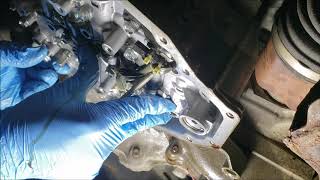
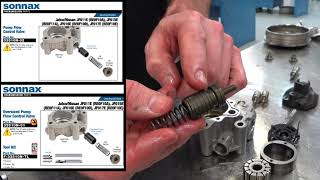
(OEM #31705-50X5C)— This is the most common repair specified by Nissan's own service bulletins for code P0776 if the CVT belt is found to be undamaged. This part number supersedes 31705-50X5B and 31705-50X5A. 🎬 Watch this walkthrough on installing a new valve body.
Trusted brands: Nissan Genuine
OEM price range: $560-$910
Aftermarket price range: $400-$700 - CVT Assembly — Required if significant metal debris is found in the transmission pan or if the CVT belt shows evidence of slippage during inspection, per Nissan TSBs. Owners on forums report quotes from $5,500 to over $6,500 for this repair.
Trusted brands: Nissan Genuine
OEM price range: $6000-$7500
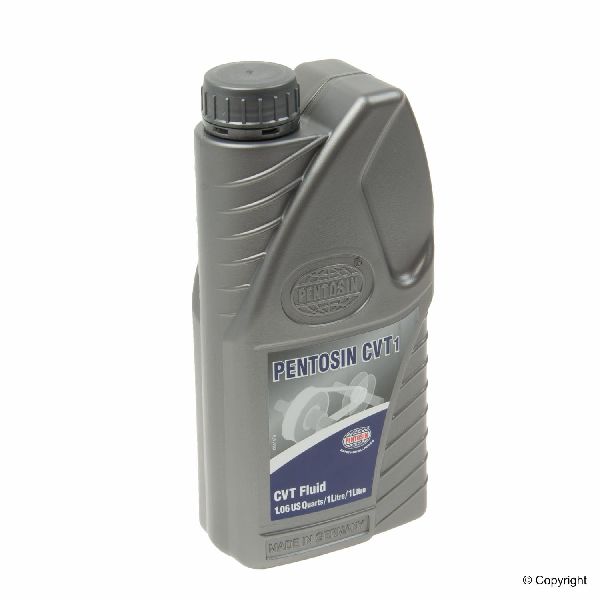
Aftermarket price range: $4000-$6000 - Nissan CVT Fluid NS-3
(OEM #999MP-NS300P)— The correct fluid is required any time the transmission is serviced. Using the wrong fluid can cause damage.
Trusted brands: Nissan Genuine, Idemitsu N3, ENEOS ECO CVT
OEM price range: $20-$25 per quart
Aftermarket price range: $15-$20 per quart
Related Codes That Often Appear With This One
- P0746 — Pressure Control Solenoid 'A' fault. Both are part of the same control system and are listed together in Nissan TSBs, pointing to a valve body or full CVT failure.
- P0965 — This is another code for Pressure Control Solenoid 'B' circuit range/performance, indicating a persistent electrical or mechanical fault with the same component. It is frequently cited alongside P0776 in the same TSBs.
- P0841 — Transmission Fluid Pressure Sensor/Switch 'A' Circuit Range/Performance. This indicates a problem with reading the fluid pressure that the solenoids are supposed to be controlling, reinforcing the diagnosis of a systemic hydraulic failure.
- P17F0 / P17F1 — These codes indicate a CVT Judder (shudder or vibration). They are often stored alongside solenoid codes when the transmission's ability to control pressure is compromised, leading to belt slippage and vibration.
Technical Service Bulletins (TSBs) & Recalls
- NTB22-021A: The most recent bulletin covering 2018-2023 Kicks & Versa models. It groups P0776 with other DTCs and provides a detailed repair overview, leading to valve body or CVT replacement.
- NTB19-040H: A superseded bulletin that also addresses P0776 with symptoms of hesitation and/or reduced power, pointing to a CVT repair. It directs technicians to refer to NTB22-021 for diagnosis.
- NTB19-040: An early TSB specifically for 2018-2019 Kicks with only DTC P0776. It outlines the same diagnostic flow of inspecting the CVT belt after removing the control valve.
- NTB22-021: Predecessor to NTB22-021A, outlining the same set of DTCs and issues for 2019+ models.
Platform-Specific Known Issues
- Nissan has released several Technical Service Bulletins (TSBs), including NTB22-021A, NTB19-040H, and NTB19-040, that directly address DTC P0776 along with a host of other transmission codes. These bulletins outline a specific diagnostic flow chart: inspect pan for debris, if clear, remove valve body, inspect CVT belt with a borescope, and replace either the valve body or the entire CVT based on that inspection.
Mechanic-Grade Diagnostic Values
- Resistance of Primary Pressure Solenoid 'B' — expected: 5.3 Ω at 20°C (68°F), 6.0 Ω at 50°C (122°F), 6.7 Ω at 80°C (176°F). Failure: A reading that is significantly higher (open circuit) or lower (short circuit) than the specified value for a given temperature.
Scan Tool Commands That Help
- Nissan CONSULT-III plus: Write IP CHARA - Replacement AT/CVT — This function is required after replacing the CVT assembly or the valve body. It writes the new component's specific calibration data (from a supplied CD or downloaded file) to the TCM.
- Nissan CONSULT-III plus: CLUTCH POINT LEARNING — This procedure is mandatory after replacing the valve body or TCM. It allows the TCM to learn the engagement points of the clutches. Failure to perform this correctly can result in a no-move condition.
- Nissan CONSULT-III plus: Select Learning — This procedure is required after replacing the CVT assembly, valve body, or TCM. It helps the TCM adapt to the new components during a specific drive cycle.
Wiring & Ground Locations
- Transmission Main Ground — There is a main ground cable that bolts directly to the top of the transmission case.. A loose or corroded ground connection at this point can cause a variety of electrical issues for the transmission, including erratic solenoid behavior and false sensor readings, potentially triggering a P0776 code.
OEM Part Supersession History
31705-50X5A→31705-50X5B— Part revision for improved reliability or manufacturing process change.31705-50X5B→31705-50X5C— Part revision for improved reliability or manufacturing process change. This is the currently specified part.
Heads up: Part 31705-50X5C is specified for vehicles manufactured from January 2019 onwards, suggesting a potential incompatibility or difference with earlier 2018 models.
Model Year Variations Within This Range
- 2018: May use an earlier version of the valve body (e.g., 31705-50X5A/B). The current replacement part 31705-50X5C is specified for models from 01/2019, so care must be taken to ensure part compatibility.
- 2018-2019: Nissan TSB NTB22-021A notes that for these model years, a separate TSB regarding CVT reprogramming (NTB20-060) may apply, indicating potential software differences compared to later models that could be relevant to diagnostics.
Helpful Videos


We Have This Part in Stock

The information in this article is provided for general reference and educational purposes only. Vehicle specifications, procedures, and part compatibility can vary by production date, trim level, and region. Always consult your vehicle's factory service manual and verify part numbers before purchasing or performing repairs. Safety-critical components such as airbags, seat belts, and braking systems should be installed by a qualified professional.
- Nissan KICKS:
- 🧭 Diagnostic Flowchart
- 🎬 Helpful Videos
- 🛍️ Shop This Part
- What's Unique About the 2018-2022 Nissan KICKS
- Symptoms You May Notice
- Most Likely Causes
- Rare But Worth Checking
- Diagnosis Steps
- Parts You'll Likely Need
- Related Codes That Often Appear With This One
- Technical Service Bulletins (TSBs) & Recalls
- Platform-Specific Known Issues
- Mechanic-Grade Diagnostic Values
- Scan Tool Commands That Help
- Wiring & Ground Locations
- OEM Part Supersession History
- Model Year Variations Within This Range
- 🎟️ Get 5% Off