

P0776 on 2020-2022 Nissan Versa: Pressure Control Solenoid 'B' Fault Guide
On a 2020-2022 Nissan Versa, code P0776 almost always indicates a significant internal problem with the CVT transmission, not a simple fix. The most common repair is replacing the entire valve body or the complete CVT assembly, which is a costly procedure. This is a known issue documented by Nissan in multiple Technical Service Bulletins (TSBs), such as NTB22-021A.
- P0776 on a 2020-2022 Versa is a serious code indicating an internal transmission problem, not a simple sensor fix.
- Do not ignore this code or its symptoms. Driving with this issue can lead to complete transmission failure.
- This is a known issue acknowledged by Nissan in multiple service bulletins. A Nissan dealer or a transmission specialist familiar with these TSBs is best equipped for diagnosis.
- The repair will be expensive, typically involving either a valve body replacement ($1,800+) or a full CVT replacement ($4,500+).
- Always use genuine Nissan NS-3 CVT fluid for any service.
What's Unique About the 2020-2022 Nissan VERSA
The 2020-2022 Nissan Versa uses a Jatco CVT8 (Nissan designation RE0F11H), a transmission type Nissan has extensive history with. For this specific generation, the P0776 code is frequently linked to a pattern of failures that Nissan has acknowledged through numerous Technical Service Bulletins (TSBs). Unlike some vehicles where a single solenoid can be replaced, on the Versa this code often points to a more complex failure of the entire control valve body or indicates 🎬 See this explanation of how pressure control valve issues work. internal mechanical wear (damaged belt/pulleys). This makes it a more serious and expensive repair than on other cars.
Diagnostic Flowchart
Tap your situation to follow the diagnostic path that matches what you're seeing on this vehicle.
Symptoms You May Notice
- Check Engine Light is on
- Vehicle hesitates or shudders during acceleration.
- Reduced engine power as the vehicle enters 'limp mode'.
- Harsh or jerky shifting.
- Transmission slipping or feeling like it's not engaging a gear correctly.
- Transmission overheating.
- Erratic RPM spikes during steady acceleration.
- A noticeable delay in acceleration from a stop.
- Replacing only the Pressure Control Solenoid 'B'. This solenoid is generally not sold as a separate part for this vehicle; it comes as part of the valve body assembly. Attempting to replace just the solenoid is not a viable repair.
- Performing a transmission fluid flush. If internal damage has occurred and created metal debris, a flush can circulate these particles and cause even more damage. The proper procedure is to drop the pan for inspection.
- Assuming a fluid change will fix it. While correct fluid level and condition are critical, P0776 on this platform usually signals a hard part failure that fluid alone cannot resolve.
Most Likely Causes
- Faulty CVT Control Valve Body 🔴 High Probability → Shop Transmission Valve Body The pressure control solenoid is integrated into the valve body and is not sold separately. Nissan's own TSBs (NTB22-021A, NTB19-040H) point to valve body issues as a primary cause, often recommending its replacement. The failure can be due to internal sticking of spool valves or contamination blocking hydraulic passages.
How to confirm: A technician will follow the diagnostic procedure outlined in the relevant Nissan TSB, which involves checking for other codes and inspecting for internal damage. An advanced scan tool can monitor solenoid performance and retrieve calibration data.
Typical fix: Replacement of the entire CVT control valve body assembly, followed by a fluid fill and mandatory TCM reprogramming with the new part's calibration data.
Est. part cost: $800-$1300 - Internal CVT Assembly Failure 🟡 Medium Probability A failing valve body causes incorrect hydraulic pressure, which can allow the CVT's steel belt to slip against the pulleys, causing scoring and damage. Once this damage occurs, simply replacing the valve body is not enough, and the entire transmission must be replaced. The TSBs include steps to inspect the belt for this specific damage.
How to confirm: A visual inspection of the CVT belt and pulleys for scoring or damage using a borescope, as detailed in Nissan TSBs. Significant metal debris found in the transmission pan upon removal is a strong indicator of this catastrophic failure.
Typical fix: Complete replacement of the CVT assembly.
Est. part cost: $3000-$5000 - Low or Contaminated Transmission Fluid ⚪ Low Probability → Shop Transmission Assembly While low or dirty fluid can cause solenoid performance issues, it's more often a symptom of a larger problem or neglect. By the time the P0776 code appears, damage to the valve body or other internal components has likely already occurred, making a simple fluid change an ineffective long-term solution.
How to confirm: Check the level and condition of the CVT fluid. The fluid should be honey-colored and clear. Dark, burnt-smelling fluid or fluid with metal particles indicates a serious internal problem.
Typical fix: A fluid and filter change can be attempted, but it is unlikely to solve the problem if the code is already present and symptoms are noticeable.
Est. part cost: $150-$300
Rare But Worth Checking
- Faulty Transmission Control Module (TCM): → Shop Transmission Assembly While possible, a faulty TCM is much less common than mechanical or hydraulic failures within the CVT. This should only be considered after all other possibilities are exhausted.
- Damaged Wiring Harness: Corrosion or damage to the wiring between the TCM and the transmission's internal harness can cause this code, but it's less frequent than component failure.
Diagnosis Steps
- Verify the code with an OBD-II scanner. Check for any other stored DTCs in the TCM.
- Consult the authoritative Nissan Technical Service Bulletins (TSBs) like NTB22-021A and NTB19-040H. These provide a specific diagnostic flow chart based on which codes are present.
- Check the transmission fluid level and condition. Look for a burnt smell or metallic particles, which indicate severe internal wear.
- If the TSB directs, a technician will remove the transmission oil pan to access the valve body.
- Perform a visual inspection of the CVT belt and pulleys for scoring or damage using a borescope, as instructed by the TSB.
- If the belt is damaged, the entire CVT assembly needs replacement.
- If the belt is not damaged, the recommended repair is to replace the control valve body assembly.
- After the repair, fill with the correct Nissan CVT Fluid (NS-3), and perform the mandatory TCM reprogramming and relearn procedures. The new valve body comes with calibration data that must be written to the TCM using a dealer-level scan tool.
Parts You'll Likely Need
- CVT Control Valve Body Assembly
(OEM #31705-X428C (Note: Part numbers can be superseded; always verify with VIN at a dealership. This is a common part number for the associated JF015E/RE0F11A transmission family but may not be exact for this specific year range).)— This is the most common repair when the P0776 code is present and the CVT belt is not damaged. The faulty solenoid is integrated into this assembly.
Trusted brands: Nissan (OEM)
OEM price range: $1000-$1500
Aftermarket price range: $700-$1100 - CVT Assembly (Transmission) — Required if the diagnostic inspection reveals damage to the CVT's internal belt or pulleys, which is a common consequence of the initial hydraulic fault.
Trusted brands: Nissan (OEM Remanufactured)
OEM price range: $4000-$6000
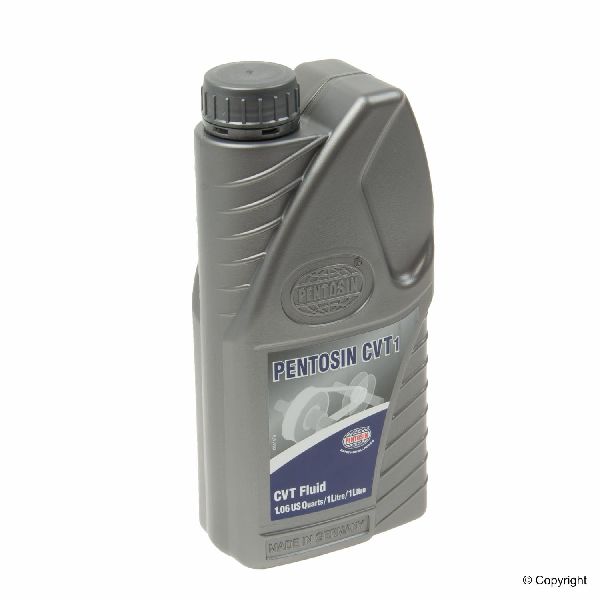
Aftermarket price range: $3500-$5000 - Nissan NS-3 CVT Fluid — This specific fluid is required any time the transmission is serviced. Using incorrect fluid will cause damage.
Trusted brands: Nissan
OEM price range: $20-$25 per quart
Related Codes That Often Appear With This One
- P0746 — For Pressure Control Solenoid 'A', indicating a wider hydraulic control issue within the same valve body.
- P0841 — For Transmission Fluid Pressure Sensor/Switch 'A', also related to hydraulic pressure monitoring and often grouped in the same TSBs.
- P0965 — Another code for the Pressure Control Solenoid 'B' circuit, reinforcing the diagnosis.
- P17F0 / P17F1 — These codes indicate 'CVT Judder' and are often stored alongside solenoid codes when mechanical wear (belt/pulley damage) has begun.
Technical Service Bulletins (TSBs) & Recalls
- NTB22-021A: DTC P0746, P0776, P0841, P0965, P17F0 AND/OR P17F1 STORED IN THE TCM
- NTB19-040H: DTC P0741/4/6, P0776, P0841, P0875, P0965, P2857/8/9, P17F0/1/2/4 AND/OR P285A STORED IN THE TCM, AND MAY HAVE HESITATION AND/OR REDUCED POWER
Platform-Specific Known Issues
- Nissan has issued multiple TSBs that cover the 2020-2022 Versa for code P0776, among others. Bulletins NTB22-021A and NTB19-040H are primary references.
- These TSBs provide a detailed diagnostic tree that often leads to one of two conclusions: replace the valve body or replace the entire CVT assembly.
- Owner forums, like Reddit, have threads where 2021 Versa owners discuss experiencing this exact code, which often results in a recommendation for a full transmission replacement, especially on vehicles with higher mileage (e.g., 80k miles).
Mechanic-Grade Diagnostic Values
- Main Line Pressure (for related JF015E/RE0F11A CVT) — expected: Park/Neutral at Idle: ~5 Bars (72.5 psi). Drive/Reverse at Idle: 5-13 Bars (72.5-200 psi).. Failure: Pressure readings significantly outside of these ranges, or erratic readings, indicate a hydraulic circuit problem.
- Main Line Pressure at Stall (for related JF015E/RE0F11A CVT) — expected: Drive/Reverse at Stall Speed: 41.8-46.8 Bars (607-680 psi).. Failure: Failure to build adequate pressure during a stall test points to a major leak, a weak pump, or a faulty pressure control circuit.
- Pressure Control Solenoid 'B' Resistance — expected: Approximately 5-15 ohms (measured on a similar Nissan platform).. Failure: A reading of infinite resistance (open circuit) or zero resistance (short circuit) indicates a failed solenoid coil.
Hidden / Shadow Codes Worth Checking
- P17F0 / P17F1: These codes for 'CVT Judder' are not generic OBD-II codes and are part of Nissan's enhanced diagnostics. When they appear with P0776, they strongly indicate the hydraulic pressure issue has caused mechanical damage (belt slipping on pulleys), resulting in a physical vibration. (see via A professional scan tool capable of reading manufacturer-specific codes from the TCM. These are often referred to as 'hard codes' that cannot be cleared until a specific recalibration procedure is performed.)
- P1715: This code for 'Input Speed Sensor' is frequently stored with P0776 according to Nissan TSBs. It signifies a mismatch between engine RPM and what the transmission's input speed sensor is reading, which is a classic sign of internal CVT belt slippage. (see via A professional scan tool capable of reading codes from the Transmission Control Module (TCM).)
Scan Tool Commands That Help
- Nissan CONSULT (or equivalent professional scanner): WRITE IP CHARA (Write IP Characteristics) — This function is mandatory after replacing the CVT assembly or the control valve body. It writes the unique calibration data (from a QR code or CD supplied with the new part) to the TCM. Failing to do this will result in persistent judder codes (P17F0/P17F1) and improper transmission operation.
- Nissan CONSULT (or equivalent professional scanner): Forward and Reverse Clutch Point Relearn — This procedure is required immediately after a successful 'WRITE IP CHARA' function. It allows the TCM to learn the engagement points of the clutches with the new hardware or calibration data.
- Nissan CONSULT (or equivalent professional scanner): CVT Belt Inspection — While not a command, TSBs direct technicians to use a borescope to visually inspect the CVT belt for scoring. This is a critical manual step in the diagnostic software's flowchart to determine if the valve body can be replaced or if the entire CVT is condemned.
Wiring & Ground Locations
- Transmission Control Solenoid Connector (at TCM/Valve Body) — On the transmission valve body assembly, inside the oil pan.. This is the main electrical connection point for all solenoids. A wiring diagram for a 2021 Versa shows pin assignments for various solenoids, such as Pin 37 (BRN) for High Clutch & Reverse and Pin 38 (GRN) for the Torque Converter Clutch Solenoid. Testing for continuity and voltage at the correct pins is essential for diagnosing a wiring fault versus a component fault.
- Main Interior Ground Points — On the large steel crossmember beam located behind the dashboard. Any bolt attached to this beam or the firewall serves as a primary ground.. While not the direct ground for the transmission solenoids (which are grounded through their harness), a poor body or chassis ground can cause floating voltages and erratic behavior in control modules like the TCM, potentially leading to false codes. Verifying main grounds is a fundamental step in any electrical diagnosis.
Real Owner Repair Stories
- Reddit user comments in r/Nissan (2021 Nissan Versa, 80k miles) — Vehicle threw code P0776, went into limp mode, and started shifting weirdly.
❌ Tried (didn't work) The original poster was seeking a solution that wasn't a full transmission replacement.
✅ What actually fixed it The thread did not have a final resolution from the owner. However, multiple experienced users, including one identifying as a technician, advised that at 80,000 miles, the appearance of P0776 almost certainly means the CVT belt has slipped and damaged the pulleys. They stated that while a valve body replacement is the initial cause, it's a gamble at this stage, and the proper, long-term repair recommended by Nissan would be a complete CVT assembly replacement.
When the Usual Fixes Don't Work
- While the overwhelming majority of cases and Nissan's own TSBs point towards replacing the valve body or the entire CVT, there are documented instances on similar Nissan models where a more granular repair was successful. In one case involving a Nissan Rogue with P0776, the owner dropped the pan, confirmed the CVT belt was visually okay, and then removed the valve body. They proceeded to individually remove, clean with electronic cleaner, and test each solenoid. After reassembly with fresh fluid and filters, the code was resolved without replacing any major components. This suggests that for out-of-warranty vehicles where cost is a major factor, a meticulous cleaning of the existing valve body may be a viable, though non-standard, last-ditch effort before committing to an expensive replacement.
OEM Part Supersession History
31020-50X1A→31020-50X5A— Part revision or update by the manufacturer.
Heads up: These part numbers are for the complete CVT Assembly for the 2020-2024 Nissan Versa. Using the superseded part number is not recommended.31705-50X5B→31705-50X5C— Part revision or update by the manufacturer.
Heads up: These part numbers are for the CVT Control Valve Body for the 2020+ Versa. The new part should be used for repair.
Helpful Videos

We Have This Part in Stock



The information in this article is provided for general reference and educational purposes only. Vehicle specifications, procedures, and part compatibility can vary by production date, trim level, and region. Always consult your vehicle's factory service manual and verify part numbers before purchasing or performing repairs. Safety-critical components such as airbags, seat belts, and braking systems should be installed by a qualified professional.
- Nissan VERSA:
- 🧭 Diagnostic Flowchart
- 🎬 Helpful Videos
- 🛍️ Shop This Part
- What's Unique About the 2020-2022 Nissan VERSA
- Symptoms You May Notice
- Most Likely Causes
- Rare But Worth Checking
- Diagnosis Steps
- Parts You'll Likely Need
- Related Codes That Often Appear With This One
- Technical Service Bulletins (TSBs) & Recalls
- Platform-Specific Known Issues
- Mechanic-Grade Diagnostic Values
- Hidden / Shadow Codes Worth Checking
- Scan Tool Commands That Help
- Wiring & Ground Locations
- Real Owner Repair Stories
- When the Usual Fixes Don't Work
- OEM Part Supersession History
- 🎟️ Get 5% Off