

P0776 on 2008-2015 Scion xB: Pressure Control Solenoid 'B' Causes and Fixes
On a 2008-2015 Scion xB, P0776 is almost always caused by either old, dirty transmission fluid or a failed shift solenoid (SL2). A fluid and filter change is the first step; if that fails, replacing the specific solenoid is the next most likely fix, costing around $150-$250 for the part. In rarer cases, the issue can be a clogged valve body or a failing ECM.
- P0776 on your Scion xB means the 'SL2' shift solenoid is malfunctioning.
- The first and most important step is to check the transmission fluid. If it's old, dark, or low, a fluid and filter change might fix the problem on its own.
- If new fluid doesn't help, the SL2 solenoid itself is the next most likely part to have failed and will need to be replaced.
- This is not a beginner-friendly DIY repair. If you are not comfortable working inside a transmission, seek professional help to avoid causing more damage.
- Do not immediately agree to a full transmission rebuild without first exploring the much cheaper options of a fluid change or solenoid replacement.
What's Unique About the 2008-2015 Scion xB
The Scion xB from this generation uses the Toyota U241E 4-speed automatic transmission. This transmission is known for its reliability, but like many, it is sensitive to fluid condition and electronic control. The P0776 code is very specifically tied to the 'SL2' shift solenoid in the Toyota diagnostic language, which provides a more precise starting point for diagnosis than the generic 'Solenoid B' definition. Owner experiences across multiple platforms using the U241E confirm that addressing fluid quality and the SL2 solenoid are the most common paths to a successful repair, though some cases have been traced to a faulty ECM requiring repair or replacement.
Symptoms You May Notice
- Harsh, abrupt, or delayed gear shifts, especially a 'thud' or 'slam' when shifting between lower gears or into Reverse.
- Transmission slipping between gears.
- Vehicle gets stuck in a lower gear (often 3rd) and will not shift up into 4th/overdrive.
- Check Engine Light is illuminated.
- Vehicle may enter 'limp mode' with reduced engine power.
- Noticeable decrease in fuel economy.
- Hesitation or binding when accelerating from a stop.
- Replacing the entire transmission without first diagnosing the fluid, solenoid, or valve body. A transmission shop may recommend a full rebuild when a much cheaper component-level repair is all that's needed.
- Assuming the solenoid is bad when the ECM is the actual cause. A user on Reddit with a platform-mate Camry replaced the valve body and solenoids, but the problem was ultimately a faulty ECM.
Most Likely Causes
- Low, Old, or Dirty Transmission Fluid 🔴 High Probability → Shop Transmission Assembly Transmission fluid breaks down over time, losing its hydraulic properties and collecting clutch material and metal shavings. This debris can cause solenoids to stick or clog fine passages in the valve body, a common issue in the U241E.
How to confirm: Check the transmission fluid dipstick (if equipped) or the fill plug. The fluid should be bright red and clear, not dark brown, black, or smell burnt. If the level is low, it indicates a leak that must be found.
Typical fix: Perform a transmission fluid and filter change. This is often called a 'drain and fill' and should be the first step in addressing this code. Ensure Toyota Type T-IV fluid or a compatible equivalent is used.
Est. part cost: $50-$100 for fluid and a filter kit. - Failed Shift Solenoid Valve (SL2) 🔴 High Probability → Shop Transmission Valve Body Solenoids are electro-mechanical valves that cycle thousands of times. Over time, the coil winding can fail, or the internal plunger can get stuck from debris or wear, which is a known issue in this transmission family.
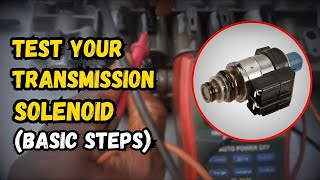
How to confirm: After dropping the transmission pan, the solenoid can be tested. A multimeter should show a resistance between 5.0 and 5.6 Ohms at 68°F (20°C). You can also apply 12V power to the solenoid to listen for a distinct 'click', indicating mechanical movement.
Typical fix: Replace the faulty SL2 solenoid. This requires removing the transmission pan and sometimes the valve body to access the part.
Est. part cost: $150-$250 for an OEM solenoid. - Clogged or Faulty Transmission Valve Body 🟡 Medium Probability → Shop Transmission Valve Body Debris from normal wear that is not captured by the filter can become embedded in the intricate passages of the aluminum valve body, causing valves to stick or pressure to be lost. Sonnax makes oversized valve and bore repair kits specifically for this issue in U140/U240 series transmissions.
How to confirm: This is a process-of-elimination diagnosis. If new fluid and a new solenoid do not fix the issue, the valve body is the next likely culprit. Visual inspection after removal may show scoring, blockages, or loose-fitting solenoids in their bores.
Typical fix: The valve body can be removed and cleaned, but it is often more effective to replace it with a remanufactured unit that includes tested solenoids and oversized valves to correct for wear.
Est. part cost: $250-$500 for a remanufactured valve body assembly.
Rare But Worth Checking
- Wiring Harness or Connector Issue: The wiring inside the transmission is constantly submerged in hot fluid, which can make insulation brittle over time. The external connector is also subject to corrosion. Always inspect the wiring before replacing major parts. A forum user reported that after replacing a transmission, the same code appeared, pointing to an external wiring or ECM issue.
- Faulty Engine Control Module (ECM/TCM): This is rare but documented for the U241E transmission. The ECM contains driver circuits that control the solenoids, and these can fail. Owners of platform-mate vehicles have fixed P0776 by having the ECM repaired or replaced after all other causes were ruled out. Symptoms can perfectly mimic a mechanical failure.
Diagnosis Steps
- Check the transmission fluid level and condition. Note if it is low, dark, or smells burnt.
- Scan for any other trouble codes. If other codes are present, address them first.
- If fluid is low or dirty, perform a transmission fluid and filter change using Toyota T-IV or equivalent fluid. Clear the codes and test drive to see if P0776 returns.
- If the code returns, use an advanced scan tool to perform an ACTIVE TEST, which can command individual gear shifts to help isolate the fault without disassembly.
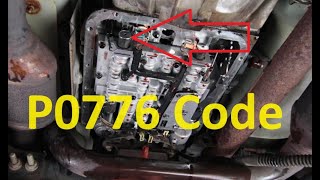
- If an active test is not possible, drop the transmission pan to access the valve body and solenoids.
- Locate the SL2 shift solenoid. Inspect the wiring and connector for any visible damage.
- Using a multimeter, measure the resistance of the SL2 solenoid. It should be between 5.0 and 5.6 Ohms at 68°F (20°C).
- If resistance is out of spec, replace the solenoid. If it is in spec, test its mechanical function by carefully applying 12V power and listening for a click.
- If the solenoid tests good electrically and mechanically, the issue is likely a blockage in the valve body or a faulty ECM.
- Inspect the valve body for debris when the solenoid is removed. If contaminated, consider replacing or rebuilding the valve body assembly.
- If all transmission components and wiring check out, the ECM becomes the primary suspect. This is a diagnosis of last resort.
Parts You'll Likely Need
- Shift Solenoid Valve SL2
(OEM #35220-21010)— This is the specific solenoid identified by the P0776 code on Toyota/Scion vehicles. It is a common failure point.
Trusted brands: Toyota (OEM), AISIN
OEM price range: $190-$250
Aftermarket price range: $70-$150 - Transmission Filter and Pan Gasket Kit — Must be replaced whenever the transmission pan is removed for service.
Trusted brands: Wix, ATP, Fram
OEM price range: $40-$60
Aftermarket price range: $20-$40 - Toyota Type T-IV Automatic Transmission Fluid
(OEM #00279-000T4)— This is the specified fluid for the U241E transmission. Using the correct fluid is critical for proper operation. A drain and fill requires approximately 4-5 quarts.
Trusted brands: Toyota (OEM), Idemitsu, Valvoline MaxLife
OEM price range: $10-$15 per quart
Aftermarket price range: $7-$12 per quart - Remanufactured Transmission Valve Body
(OEM #35410-33180)— If a new solenoid and fluid don't solve the problem, a clogged or warped valve body is the next likely cause. A remanufactured unit is a reliable and cost-effective solution.
Trusted brands: Sonnax (rebuild kits/complete units), Transtar
OEM price range: $900-$1400
Aftermarket price range: $250-$500
Platform-Specific Known Issues
- ECM Failure Mimicking Transmission Faults: → Shop Transmission Assembly On the related U241E-equipped Toyota RAV4 and Camry, there are multiple documented cases where P0776 and harsh shifting were caused by a failed ECM, not the transmission itself. After replacing solenoids and even the whole transmission with no success, a repaired or replaced ECM solved the problem. This should be considered a rare but possible cause for the Scion xB as well.
Mechanic-Grade Diagnostic Values
- Shift Solenoid SL2 Resistance — expected: 5.0 to 5.6 Ω at 20°C (68°F). Failure: Resistance outside of this range, or an open/short circuit.
- Shift Solenoid SL2 Circuit Resistance at ECM — expected: 5.0 to 5.6 Ω at 20°C (68°F). Failure: Resistance outside this range indicates a wiring harness issue between the ECM and the transmission.
- Shift Solenoid SL2 Circuit to Ground — expected: 1 MΩ or higher. Failure: Low resistance indicates a short to ground in the wiring harness or solenoid.
Scan Tool Commands That Help
- Toyota Techstream: ACTIVE TEST: SHIFT — This function allows the technician to command individual upshifts and downshifts while driving (under 31 mph / 50 km/h). By comparing the commanded gear on the scan tool to the actual gear the vehicle is in, you can confirm if the SL2 solenoid is failing to respond to ECM commands, helping to isolate a mechanical/hydraulic fault from a sensor or logic fault.
Wiring & Ground Locations
- ECM Connector B30, Pins 58 & 59 — At the Engine Control Module (ECM), which is typically located behind the glove box.. Pin 58 (SL2+) and Pin 59 (SL2-) are the specific terminals on the ECM that control the Shift Solenoid SL2. A technician can back-probe these pins to test for voltage commands from the ECM or test the entire circuit's resistance back to the transmission without having to access the transmission connector directly.
- Transmission Wire Connector B27 — The main electrical connector on the front of the transmission case, often behind the battery tray.. This is the primary connection point for all transmission solenoids. Unplugging it forces the transmission into a mechanical failsafe mode (limp mode). If the harsh shifting or binding stops with this unplugged, it strongly suggests the problem is electronic (solenoid, wiring, ECM) rather than a major internal mechanical failure. Pins 4 (SL2+) and 9 (SL2-) on this connector can be used to test the solenoid directly.
- Engine/Transmission Ground Cable — A primary ground strap connects from the negative battery terminal to a bolt on top of the transmission housing, located under the factory air box assembly, near the starter.. A poor ground connection at this point can cause a wide range of electrical issues, including erratic solenoid operation and incorrect sensor readings. While not a direct cause of P0776, ensuring this ground is clean and tight is a crucial preliminary step in any electrical diagnosis.
Real Owner Repair Stories
- Reddit user on r/MechanicAdvice (2004 Toyota Camry with U241E transmission (platform mate)) — Vehicle binding/braking at low speeds, followed by a slam forward. P0776 was set. Reverse was normal.
❌ Tried (didn't work) Replaced valve body with a remanufactured unit containing Sonnax oversized valves., Reset transmission adaptive memory using Techstream.
✅ What actually fixed it The root cause was a faulty ECM. Replacing the ECM and performing an immobilizer relearn completely resolved all symptoms.
When the Usual Fixes Don't Work
- While a faulty SL2 solenoid is a very common cause for P0776, it is not a guarantee. A Reddit user with a 2011 Scion xB replaced the SL2 solenoid, which did not solve the code and introduced new problems where the car would move forward in Neutral and Reverse. This indicates that either the replacement part was faulty, the wrong part was installed, or the issue was more complex, such as a stuck valve in the valve body or a major electronic fault. In another documented case on a platform-mate Camry, a full valve body replacement also failed to fix the issue, which was ultimately traced to a bad ECM. These cases highlight the importance of thorough electrical diagnosis before replacing parts.
Model Year Variations Within This Range
- 2008-2015: No significant mechanical variations have been identified for the U241E transmission or the P0776 code within this model year range. The diagnosis and common failure points remain consistent across the entire generation.
Diagnostic Flowchart
Other Known Issues on This Vehicle
Issues unrelated to this code that are worth knowing about as an owner of this generation:
- Excessive Engine Oil Consumption 🔴 High — Widespread on 2007-2011 models with the 2AZ-FE engine. Caused by defective piston ring design. Can begin as early as 60k miles, but often becomes severe after 100k miles. (Ref: Toyota TSB S-SB-0024-11 and Warranty Enhancement Program ZE7 addressed this, but have since expired.)
- Water Pump Failure 🟠 Medium — Prone to developing coolant leaks, often before 100,000 miles. A pink crusty residue under the hood is a tell-tale sign.
- Cracked/Peeling Paint 🟡 Low — Commonly reported issue, especially on the roof and hood panels.
- Noisy Rear Wheel Bearings 🟠 Medium — Rear wheel bearings are known to fail prematurely, causing a loud humming or grinding noise that increases with speed.
- Spontaneously Cracking Windshield 🟡 Low — Some owners report windshields cracking without any impact, possibly due to body flex or installation stress.
Used vs. New Parts: Buying Guide for This Vehicle
When a used part is the smart pick: A complete, low-mileage used transmission from a reputable JDM importer or a verified local salvage yard can be a cost-effective alternative to a full rebuild if major internal hard parts are damaged. A used valve body assembly from a low-mileage donor can also be a viable repair if the original is confirmed to be clogged or warped, but it carries the risk of having the same wear issues.
Donor-vehicle mileage cap: roughly under 80000 miles for the part to have meaningful remaining life.
What to inspect on the donor part:
- For a complete transmission, ask for video of the donor vehicle running and driving, if possible.
- Check the color and smell of the transmission fluid from the donor unit. It should not be dark brown, black, or have a burnt odor.
- When buying a valve body, inspect the bores for visible scoring or scratches where the solenoids mount.
- Ensure the seller offers a warranty (60-90 days is common for JDM importers).
OEM-only on this vehicle (don't cheap out):
- Engine Control Module (ECM): Due to the need for precise software matching and immobilizer programming, a new or professionally repaired OEM unit is the only reliable option.
Aftermarket brands forum-validated for this vehicle:
- AISIN: AISIN is the original equipment manufacturer for the transmission itself, making their branded solenoids equivalent to Toyota OEM parts.
- Sonnax: Known for high-quality valve body repair kits (oversized valves, end plugs) and complete remanufactured valve bodies that correct known wear issues.
- TransLab: Offers valve body upgrade kits designed to fix hydraulic issues and improve durability.
Brands owners have reported issues with on this vehicle:
- Generic, unbranded valve bodies and solenoids from online marketplaces (e.g., eBay, Amazon) are frequently cited as being poorly remanufactured or failing quickly. A forum user specifically warned against 'generic china / ebay scam valve body' units.
Real Owner Stories
Aggregated from forums and TSBs cited above. Mileages and costs reflect what owners reported in those sources.
2011 Scion xB 2.4L 2AZ-FE
Symptoms: Harsh shifting, especially when the transmission is warm, and a complete failure to shift up into 4th gear.
What fixed it: The owner's report pointed towards the cause being a faulty solenoid or other internal transmission issues, but did not state the final repair.
Source hint: Reddit r/MechanicAdvice
2011 Scion xB 2.4L 2AZ-FE
Symptoms: Vehicle had a P0776 code. After an attempted fix, new problems arose where the car would move forward when in Neutral or Reverse.
What fixed it: Replacing the SL2 solenoid did NOT fix the issue and introduced new symptoms, indicating a more complex hydraulic or electronic fault.
Source hint: Reddit r/MechanicAdvice
2002 Toyota RAV4 2.4L 2AZ-FE
Symptoms: Severe, hard shifts that ultimately destroyed the transmission, which was linked to a known TSB.
What fixed it: The problem was resolved by replacing both the transmission and the engine computer (ECM).
Source hint: Reddit r/Toyota
Related OBD-II Codes
Frequently Asked Questions
What type of transmission fluid should I use for my 2008-2015 Scion xB when addressing a P0776 code?
My Scion xB is shifting very harshly. Could the problem be the computer (ECM) and not the transmission itself?
How can I test the SL2 shift solenoid in my Scion xB's transmission?
I replaced the SL2 solenoid but the P0776 code came back. What's the next likely culprit?
My 2010 Scion xB is burning a lot of oil. Is this related to the P0776 transmission code?
Are other vehicles with the 2.4L 2AZ-FE engine also known to have this P0776 problem?
Helpful Videos
We Have This Part in Stock




The information in this article is provided for general reference and educational purposes only. Vehicle specifications, procedures, and part compatibility can vary by production date, trim level, and region. Always consult your vehicle's factory service manual and verify part numbers before purchasing or performing repairs. Safety-critical components such as airbags, seat belts, and braking systems should be installed by a qualified professional.
- Scion xB:
- 🧭 Diagnostic Flowchart
- 🎬 Helpful Videos
- 🛍️ Shop This Part
- What's Unique About the 2008-2015 Scion xB
- Symptoms You May Notice
- Most Likely Causes
- Rare But Worth Checking
- Diagnosis Steps
- Parts You'll Likely Need
- Platform-Specific Known Issues
- Mechanic-Grade Diagnostic Values
- Scan Tool Commands That Help
- Wiring & Ground Locations
- Real Owner Repair Stories
- When the Usual Fixes Don't Work
- Model Year Variations Within This Range
- Other Known Issues on This Vehicle
- Used vs. New Parts: Buying Guide for This Vehicle
- Real Owner Stories
- 2011 Scion xB 2.4L 2AZ-FE
- 2011 Scion xB 2.4L 2AZ-FE
- 2002 Toyota RAV4 2.4L 2AZ-FE
- Related OBD-II Codes
- Frequently Asked Questions
- 🎟️ Get 5% Off