

P0776 on 2004-2010 Toyota Sienna: Pressure Control Solenoid 'B' Causes and Fixes
P0776 on a 2004-2010 Toyota Sienna most often indicates a failed Pressure Control Solenoid 'B' (also known as Shift Solenoid SL2) inside the transmission. The fix typically involves replacing the solenoid, which requires dropping the transmission pan. The OEM part number for the SL2 solenoid is generally 35240-33030. Expect to pay $50-$100 for an aftermarket part and 2-4 hours of labor.
- P0776 on a 2004-2010 Sienna points to a problem with the Pressure Control Solenoid 'B', which Toyota calls Shift Solenoid SL2.
- The most likely cause is a failed SL2 solenoid itself, followed by low or dirty transmission fluid.
- Symptoms include harsh shifting, getting stuck in gear, and a lit Check Engine Light.
- Repair involves dropping the transmission pan to access and replace the solenoid, making it a moderately difficult DIY job for which professional service is recommended.
What's Unique About the 2004-2010 Toyota Sienna
The 2004-2010 Toyota Sienna uses the U151E (FWD) or U151F (AWD) 5-speed automatic transmission. For this specific transmission, Toyota designates the Pressure Control Solenoid 'B' as the 'SL2' shift solenoid. This distinction is important, as service information and parts diagrams will refer to it as SL2. The diagnostic procedure is well-documented in Toyota's service manuals, which involve specific resistance checks and active tests using a capable scan tool. The SL1, SL2, and SL3 solenoids are known points of failure on this transmission as they age.
Generation note: This range covers the second generation (XL20) of the Toyota Sienna. The 2004-2006 models used a 3.3L 3MZ-FE V6, while the 2007-2010 models used a 3.5L 2GR-FE V6. However, both use the same U151E/F 5-speed automatic transmission, so the causes and fixes for P0776 are consistent across this year range.
Symptoms You May Notice
- Check Engine Light is on
- Harsh, jerky, or delayed shifts
- Transmission slipping between gears
- Vehicle stuck in a single gear (limp mode)
- Inability to shift into higher gears
- Decreased fuel economy
- Transmission overheating
- Replacing the entire transmission when only a single, accessible solenoid has failed.
- Replacing the ECM/TCM without first thoroughly testing the solenoid, wiring, and valve body.
- Assuming the solenoid is bad when the root cause is old, contaminated fluid and a clogged filter.
Most Likely Causes
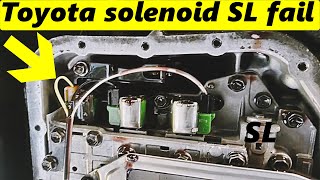
- Failed Pressure Control Solenoid 'B' (Shift Solenoid SL2) 🔴 High Probability → Shop Transmission Valve Body Solenoids are electro-mechanical parts that wear out over time from heat and constant use, eventually failing electrically or mechanically (sticking). The SL solenoids on the U151E are a known failure point. 🎬 Watch: Common failure points on the U151 transmission
How to confirm: The solenoid's resistance can be tested with a multimeter after removing the transmission pan. The specified resistance for the SL2 solenoid is 5.0 to 5.6 Ohms at 68°F (20°C). Some sources state a wider range of 4.5-6.0 Ohms. It can also be tested for mechanical operation by applying 12V power and listening for a click.
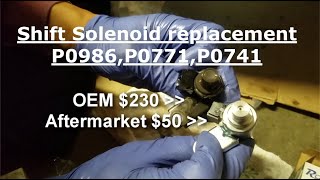
Typical fix: Replace the faulty SL2 solenoid. This requires draining the fluid, removing the transmission pan, and unbolting the solenoid from the valve body. It is often recommended to replace the other linear solenoids (SL1, SL3, SLT) at the same time as a preventative measure. 🎬 Watch: Step-by-step Sienna transmission solenoid replacement walkthrough
Est. part cost: $50 - $150 for an aftermarket solenoid, OEM can be higher. - Low or Dirty Transmission Fluid 🟡 Medium Probability → Shop Transmission Assembly Neglected fluid changes lead to fluid breakdown and contamination. Debris can clog solenoid passages and the valve body, preventing proper operation. This transmission is sensitive to fluid condition.
How to confirm: Check the transmission fluid level and condition using the dipstick. The fluid should be at the correct level, pink/red in color, and not smell burnt. Dark, brown, or burnt-smelling fluid indicates a problem. The correct fluid is Toyota Type T-IV or an equivalent certified fluid.
Typical fix: Perform a transmission fluid and filter change. If the fluid is very dirty, multiple drain-and-fills or a professional fluid exchange may be necessary to replace most of the old fluid.
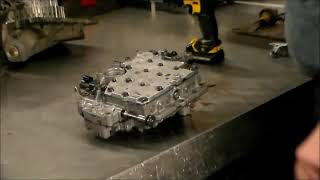
Est. part cost: $40 - $100 for fluid and filter - Clogged Transmission Valve Body ⚪ Low Probability → Shop Transmission Valve Body Sludge and metallic debris from normal wear can accumulate in the small passages of the valve body, restricting fluid flow to and from the solenoids.
How to confirm: This is typically diagnosed after replacing the solenoid does not fix the issue. The valve body must be removed and inspected for blockages or stuck valves. Sometimes, debris will be visible in the pan upon removal.
Typical fix: The valve body can sometimes be cleaned and serviced with a kit (e.g., Sonnax Zip Kit), but replacement is often more reliable if it is heavily contaminated or warped.
Est. part cost: $300 - $800 for a remanufactured valve body. - Wiring or Connector Issues ⚪ Low Probability The wiring harness inside the transmission is submerged in hot fluid, which can make insulation brittle over time. External wiring can also be damaged by road debris or corrosion.
How to confirm: Visually inspect the wiring harness and connectors leading to the transmission and inside the pan for any signs of damage, corrosion, or loose connections. A continuity test can be performed on the wires from the TCM connector to the solenoid connector.
Typical fix: Repair or replace the damaged section of the wiring harness.
Est. part cost: $20 - $200
Rare But Worth Checking
- Failing Transmission Control Module (TCM) or Engine Control Module (ECM): → Shop Transmission Assembly This is very uncommon and should only be considered after all other possibilities, including mechanical transmission failure, have been exhaustively ruled out by a professional.
- Internal Mechanical Transmission Failure: → Shop Transmission Assembly If other transmission codes are present or the fluid contains a significant amount of clutch material or metal debris, it could indicate a more severe internal problem with clutches, brakes, or the torque converter, requiring a rebuild or replacement.
Diagnosis Steps
- Check the transmission fluid level and condition. Ensure it is full and clean. Use only Toyota Type T-IV or compatible fluid.
- Use an advanced scan tool to check for other transmission-related trouble codes. If other solenoid codes (like P0746) are present, it may point to a more systemic issue.
- Use the scan tool's 'Active Test' function to command the SL2 solenoid on and off while monitoring the transmission's gear state to see if it responds.
- If the fluid is okay and the solenoid appears unresponsive, drain the transmission fluid and remove the transmission pan.
- Locate the SL2 shift solenoid on the valve body. It is held in by a small locking plate and a single bolt.
- Disconnect the solenoid and measure its resistance with a multimeter. It should be between 5.0 and 5.6 Ohms. If resistance is out of spec, replace the solenoid.
- If resistance is in spec, test for mechanical operation by carefully applying 12V power to the solenoid terminals. It should make an audible click. A lack of a click indicates it is mechanically stuck.
- If the solenoid tests good, inspect the internal wiring harness for damage. If the wiring is good, the issue may be a blocked valve body or a more complex internal transmission problem requiring professional diagnosis.
Parts You'll Likely Need
- Automatic Transmission Shift Solenoid (SL2)
(OEM #35240-33030)— This is the most common component to fail, causing the P0776 code.
Trusted brands: Toyota (OEM), Rostra, Denso
OEM price range: $150-$250
Aftermarket price range: $50-$100 - Automatic Transmission Filter Kit (with Pan Gasket)
(OEM #35330-0W020 (Filter), 35168-21020 (Gasket))— The filter and pan gasket must be replaced whenever the transmission pan is removed to service the solenoids.
Trusted brands: Wix, ATP, Fram, Toyota (OEM)
OEM price range: $40-$60
Aftermarket price range: $20-$40 - Toyota Type T-IV Automatic Transmission Fluid
(OEM #00279-000T4)— Required to refill the transmission after dropping the pan. A typical pan drop requires 4-5 quarts.
Trusted brands: Toyota (OEM), Idemitsu TLS, Aisin ATF-0T4
OEM price range: $8-$12 per quart
Aftermarket price range: $6-$9 per quart
Related Codes That Often Appear With This One
- P0746 - Pressure Control Solenoid 'A' Performance/Stuck Off
- P0796 - Pressure Control Solenoid 'C' Performance/Stuck Off
Platform-Specific Known Issues
- A user on SiennaChat.com with a 2004 Sienna reported resolving a P0776 code along with a P0746 by replacing the SL1 and SL2 solenoids. They noted the importance of getting the correct part numbers as they can vary slightly.
- Another owner of a 2005 Sienna on Toyota Nation forums confirmed that replacing the SL2 solenoid fixed their harsh shifting and cleared the P0776 code. They emphasized the importance of also replacing the filter and using the correct T-IV fluid.
Mechanic-Grade Diagnostic Values
- Shift Solenoid SL2 Resistance — expected: 5.0 - 5.6 Ohms at 20°C (68°F). Some aftermarket sources cite 5.1 Ohms as the standard.. Failure: A reading outside this range (open circuit or short) indicates a failed solenoid coil.
- SL2 Solenoid Circuit to Ground — expected: 1 MΩ or higher.. Failure: A low resistance reading indicates a short to ground in the wiring harness or solenoid.
- SL2 Solenoid Signal Voltage at ECM — expected: Pulse generation (Pulse Width Modulated signal) visible on an oscilloscope.. Failure: No pulse or a flat line voltage indicates a problem with the ECM driver or the wiring.
Scan Tool Commands That Help
- Toyota Techstream: Active Test: SHIFT — This function allows the technician to command individual gear shifts while driving (under 31 mph) to confirm if the SL2 solenoid is mechanically responding to electrical commands. Comparing the commanded gear on the scan tool to the actual gear engaged can isolate the fault to the solenoid or valve body.
- Advanced Scan Tool (e.g., Techstream): Reset Memory / Transmission Adaptation Reset — After replacing solenoids or the valve body, it is critical to perform a 'Reset Memory' function. This clears the old learned shift adaptations from the ECM/TCM. Failure to do so can result in continued harsh shifting as the computer tries to use old values with new parts.
Wiring & Ground Locations
- ECM Connector (SL2 Pins) — The ECM is located behind the glove box. On a 2005 Sienna, the SL2+ and SL2- signals are at terminals B30-12 and B30-13. Another forum post for a similar model suggests Pin #9 on connector E7 for a solenoid circuit. Always verify with the specific wiring diagram for the vehicle's year.. Allows for testing the entire solenoid circuit, including wiring, from the ECM connector without dropping the transmission pan. Resistance can be measured here to quickly rule out or confirm an electrical fault.
- Internal Transmission Harness — Inside the transmission oil pan, connecting the solenoids on the valve body to the main transmission case connector.. This harness can become brittle from heat and fluid exposure. It is also susceptible to being pinched or damaged during a transmission filter replacement, which can cause a short to ground and trigger the P0776 code.
- Transmission Ground — The main transmission case is grounded to the chassis via a ground strap. Specific ground points for a 2005 Sienna are detailed in wiring diagrams, often designated with codes like 'EA' or 'EB' in the engine bay.. While a bad main ground would likely cause multiple transmission codes, ensuring it is clean and tight is a fundamental step in diagnosing any electrical transmission issue.
Real Owner Repair Stories
- BobIsTheOilGuy.com forum user 'i6pwr' (2005 Toyota Sienna) — Check Engine Light with a solenoid-related code appeared immediately after a transmission fluid and filter change.
❌ Tried (didn't work) Initial diagnosis pointed towards a bad solenoid.
✅ What actually fixed it The user suspected, based on advice, that the internal wiring harness was pinched during the reinstallation of the transmission pan and filter. The timing of the fault (immediately after service) was the key clue. The fix was to drop the pan again and correctly position the wiring harness.
Model Year Variations Within This Range
- 2007-2010: The engine was upgraded from the 3.3L 3MZ-FE to the more powerful 3.5L 2GR-FE in 2007. While both use the U151E/F transmission, some anecdotal reports suggest the increased power of the 3.5L engine puts more strain on the transmission, which was originally paired with the less powerful engine. However, the P0776 fault, causes, and repair procedures for the SL2 solenoid remain the same across the 2004-2010 range.
Diagnostic Flowchart
Other Known Issues on This Vehicle
Issues unrelated to this code that are worth knowing about as an owner of this generation:
- Rupturing VVT-i Oil Line (2GR-FE Engine) 🔴 High — Common on 2007-2010 models with the 3.5L V6. The original rubber hose section degrades and can burst, causing rapid oil loss and catastrophic engine failure. (Ref: Toyota issued a Limited Service Campaign (LSC) to replace the rubber line with an all-metal one (Part No. 15772-31030).)
- Cracked or Sticky Dashboard 🟡 Low — Very common across the entire 2004-2010 model range, especially in hot climates. The dashboard material degrades under sun exposure. (Ref: Toyota issued a Warranty Enhancement Program (ZE6) to cover replacement, though this program has likely expired for most vehicles.)
- Power Sliding Door Cable Failure 🟠 Medium — Common issue where the cable that pulls the door open and closed frays and eventually snaps, rendering the power function inoperative. (Ref: No specific recall for this generation, but it's a widely documented problem. Later generations had recalls for similar issues.)
- Shift Lock Solenoid Failure 🟠 Medium — A defect could allow the shifter to be moved out of Park without depressing the brake pedal, creating a rollaway risk. (Ref: NHTSA recall 13V-429 covered 2004-2005 and 2007-2009 models to replace the shift lock solenoid.)
Used vs. New Parts: Buying Guide for This Vehicle
When a used part is the smart pick: For this repair, a used solenoid is generally not recommended due to the high labor cost of accessing it. If the entire transmission needs replacement, a low-mileage used unit from a reputable salvage yard can be a cost-effective option.
Donor-vehicle mileage cap: roughly under 100000 miles for the part to have meaningful remaining life.
What to inspect on the donor part:
- Verify the donor vehicle's mileage.
- Ask for a vehicle history report to check for accidents or maintenance records.
- If possible, inspect the transmission fluid from the donor unit; it should be reddish and not smell burnt.
- Ensure the salvage yard offers a warranty (typically 30-90 days) on the part.
OEM-only on this vehicle (don't cheap out):
- Transmission Control Module (TCM/ECM) - Requires specific programming and is a very rare failure; aftermarket units are not advisable.
Aftermarket brands forum-validated for this vehicle:
- Solenoids: Denso (often the OEM supplier), Rostra, Aisin.
Brands owners have reported issues with on this vehicle:
- Unnamed, no-brand solenoids from online marketplaces can have high failure rates and incorrect resistance specifications.
Real Owner Stories
Aggregated from forums and TSBs cited above. Mileages and costs reflect what owners reported in those sources.
2004 Toyota Sienna
Symptoms: P0776 code appearing along with P0746.
What fixed it: Replacing the SL1 and SL2 solenoids. The owner noted the importance of verifying specific part numbers during the repair.
Source hint: SiennaChat.com user report cited in vehicle_specific_issues
2005 Toyota Sienna
Symptoms: Harsh shifting and a P0776 trouble code.
What fixed it: Replacing the SL2 solenoid and the transmission filter, followed by a refill with T-IV fluid.
Source hint: Toyota Nation forum owner report cited in vehicle_specific_issues
Related OBD-II Codes
Frequently Asked Questions
What is the specific resistance I should look for when testing the SL2 solenoid on my 2004-2010 Sienna?
Which transmission fluid should I use for my Sienna to avoid P0776 issues?
Is there a recall for the shift lock solenoid on my 2004-2009 Sienna?
My 2008 Sienna has a P0776 code; should I be worried about the VVT-i oil line too?
Can I replace just the SL2 solenoid, or do I need to replace others?
Is the P0776 code common on other vehicles similar to the Sienna?
Helpful Videos
We Have This Part in Stock

The information in this article is provided for general reference and educational purposes only. Vehicle specifications, procedures, and part compatibility can vary by production date, trim level, and region. Always consult your vehicle's factory service manual and verify part numbers before purchasing or performing repairs. Safety-critical components such as airbags, seat belts, and braking systems should be installed by a qualified professional.
- Toyota Sienna:
- 🧭 Diagnostic Flowchart
- 🎬 Helpful Videos
- 🛍️ Shop This Part
- What's Unique About the 2004-2010 Toyota Sienna
- Symptoms You May Notice
- Most Likely Causes
- Rare But Worth Checking
- Diagnosis Steps
- Parts You'll Likely Need
- Related Codes That Often Appear With This One
- Platform-Specific Known Issues
- Mechanic-Grade Diagnostic Values
- Scan Tool Commands That Help
- Wiring & Ground Locations
- Real Owner Repair Stories
- Model Year Variations Within This Range
- Other Known Issues on This Vehicle
- Used vs. New Parts: Buying Guide for This Vehicle
- Real Owner Stories
- 2004 Toyota Sienna
- 2005 Toyota Sienna
- Related OBD-II Codes
- Frequently Asked Questions
- 🎟️ Get 5% Off