

P0780 on 2009-2015 Jaguar XF: Shift Malfunction Causes and Fixes
On a 2009-2015 Jaguar XF, code P0780 is often caused by a software glitch in the transmission control module (TCM). A dealer software update, per TSB SSM70018, is the most likely fix. If that doesn't solve it, suspect low transmission fluid from a leak (commonly the pan gasket or mechatronic sleeve) or, less commonly, failing internal shift solenoids.
- P0780 on a 2009-2015 Jaguar XF is a critical fault that can leave you stranded; do not continue to drive.
- Before attempting any physical repairs, have a Jaguar dealer check if TSB SSM70018 (a software update) applies to your vehicle. This is a highly probable and simple fix.
- If software is not the issue, the most likely cause is low transmission fluid from a leaking plastic oil pan or mechatronic connector sleeve.
- This is not a beginner-friendly DIY repair. Diagnosis and repair require specialized knowledge for checking fluid on a sealed transmission and may involve software tools.
What's Unique About the 2009-2015 Jaguar XF
While P0780 on many vehicles points to mechanical or hydraulic failures, the Jaguar XF platform (specifically 2012-2015 model years) is unique due to a well-documented software issue. Jaguar issued TSB SSM70018 for this code, stating that a software functionality error is a primary cause. The TSB explicitly advises against replacing hardware like the Gear Shift Module until the software fix has been explored. This makes a trip to the dealer for a software check a critical first diagnostic step, potentially saving hundreds in unnecessary parts replacements. The other major issue shared with many European cars of the era is the high failure rate of plastic transmission components (pan, sleeve) leading to fluid loss.
Diagnostic Flowchart
Tap your situation to follow the diagnostic path that matches what you're seeing on this vehicle.
Symptoms You May Notice
- Transmission fails to engage Drive or Reverse
- Transmission gets stuck in one gear (limp mode)
- "Gearbox Fault" message on the instrument cluster
- Harsh, jerky, or delayed shifting, sometimes with a loud 'clunk'
- Check Engine Light is on
- Transmission slipping (engine RPMs rise without an increase in speed)
- Car moves forward slowly when in Neutral
- Whining noise from the transmission
- Replacing shift solenoids or the entire transmission before checking for the software update outlined in TSB SSM70018.
- Replacing a shift solenoid when the actual problem is a low fluid level caused by a leaking pan or connector sleeve.
- Condemning the transmission without first checking fluid level and condition, which is the root cause of many shifting issues.
Most Likely Causes
- Transmission Control Module (TCM) Software Error 🔴 High Probability → Shop Transmission Assembly Jaguar explicitly identified a software bug as the cause for this code on 2012-2015 XF models, as detailed in TSB SSM70018.
How to confirm: Contact a Jaguar dealership with your vehicle's VIN. They can verify if TSB SSM70018 is applicable and if the software update has already been performed. This is the first and most important check.
Typical fix: The dealer will perform a software update (reflash) on the Transmission Control Module using their proprietary diagnostic tools.
Est. part cost: $0 - Low Transmission Fluid Level 🟡 Medium Probability → Shop Transmission Assembly The ZF 6HP26/28 transmissions in these vehicles use a plastic oil pan with an integrated filter and a mechatronic connector sleeve with rubber O-rings. Both are extremely common points for leaks over time due to heat and age, leading to fluid loss.
How to confirm: The vehicle must be lifted and level to check the fluid via the fill plug while the engine is running at a specific temperature. This is not a simple dipstick check. Look for signs of reddish or brownish fluid leaks on the transmission pan and around the round electrical connector on the side of the transmission.
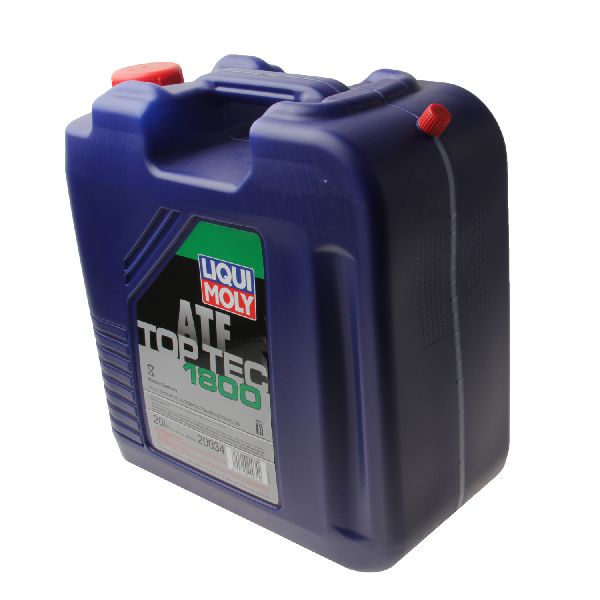
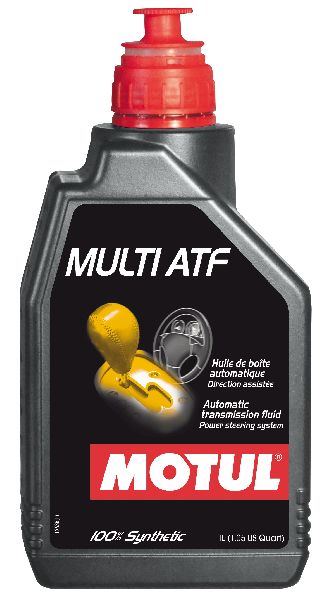
Typical fix: Identify and repair the source of the leak (e.g., replace the pan/filter assembly and/or the mechatronic connector sleeve) and refill the transmission with the correct specification fluid (ZF Lifeguard 6).
Est. part cost: $150-$300 - Failing Shift Solenoid(s) 🟡 Medium Probability → Shop Transmission Valve Body Shift solenoids are electromechanical parts inside the transmission's valve body that wear out over time. Contaminated or old fluid can accelerate this wear, causing them to stick or fail electrically.
How to confirm: After confirming the fluid level is correct and software is up-to-date, a technician can use an advanced scan tool to check for solenoid-specific codes (e.g., P0781-P0784). A resistance test on the solenoids can also be performed, which requires removing the transmission oil pan and mechatronic unit.
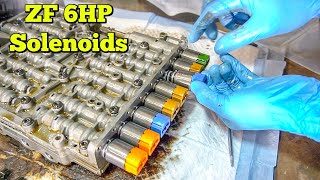
Typical fix: Replace the faulty shift solenoid or the entire solenoid pack. 🎬 See this walkthrough on replacing ZF 6HP transmission solenoids. This is a complex job that involves removing the valve body from the transmission.
Est. part cost: $70-$650 - Dirty or Degraded Transmission Fluid ⚪ Low Probability → Shop Transmission Assembly Although marketed as 'sealed for life', the fluid does break down over many miles (ZF now recommends changes around 60k miles), and contamination can cause valves and solenoids to stick.
How to confirm: When checking the fluid level, a sample is taken to inspect its color and smell. Dark, burnt-smelling fluid or fluid with metal particles indicates a problem.
Typical fix: Perform a transmission fluid and filter (sump) change. 🎬 Watch: Step-by-step Jaguar XF transmission oil and filter service. This is often done in conjunction with fixing a leak.
Est. part cost: $200-$400
Rare But Worth Checking
- Mechatronic Unit / Valve Body Failure: → Shop Transmission Valve Body This is the hydraulic and electronic control center of the transmission. A failure here, such as a crack in the valve body or failure of the integrated TCM, is less common than a single solenoid but is a possibility if other causes are ruled out. It is a very expensive repair.
- Internal Wiring Harness Damage: The wiring inside the transmission can become brittle from heat cycles. A short or open circuit in the harness connecting the TCM to the solenoids can mimic solenoid failure.
- Mechatronic Bridge Seal and Tube Seals Failure: Inside the transmission, there are several small rubber seals between the valve body and the transmission case (a 'bridge' seal and four tube seals). These can harden and crack, causing internal pressure loss that leads to shifting problems. They are often replaced whenever the mechatronic unit is removed.
Diagnosis Steps
- Scan the vehicle for all diagnostic trouble codes. Note any other transmission-related codes, especially solenoid-specific ones (P0781-P0784).
- Contact a Jaguar dealer with the VIN to check for open campaigns and to see if TSB SSM70018 ('P0780-94') has been performed. If not, this is the first recommended action.
- If the software is up-to-date, perform a thorough visual inspection for transmission fluid leaks. Pay close attention to the plastic oil pan gasket and the round mechatronic connector sleeve on the passenger side of the transmission.
- Following the manufacturer's procedure, safely raise the vehicle and check the transmission fluid level and condition. The engine must be running and the transmission fluid at a specific temperature (typically 30-50°C). Fluid is added until it trickles out of the fill hole.
- If the fluid level is low, top it off, clear the codes, and test drive. If the code returns, the source of the leak must be fixed. A common owner experience is that fixing the leak and restoring the correct fluid level resolves the issue.
- If the fluid level and condition are good, the next step is to test the shift solenoids. This requires draining the fluid, removing the pan, and removing the mechatronic unit. The resistance of each solenoid can be checked with a multimeter and compared to specifications.
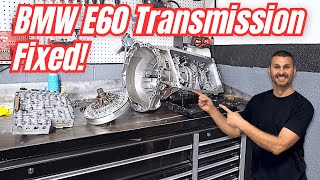
- While the mechatronic unit is off, it is highly recommended to also replace the mechatronic sealing sleeve, the bridge seal, and the four small tube seals, 🎬 Watch: How to replace internal transmission seals and solenoids. as these are common failure points.
- If all solenoids and internal seals are good, the fault may be with the mechatronic unit itself (cracked valve body or faulty TCM), which may require professional replacement and programming.
Parts You'll Likely Need
- Transmission Pan and Filter Assembly (Plastic)
(OEM #C2C38963, JDE36541)— The original plastic pans are prone to warping and leaking from the gasket, causing low fluid levels that trigger this code. The filter is integrated into the pan and is not separately replaceable.
Trusted brands: ZF (OEM), Vaico
OEM price range: $150-$250
Aftermarket price range: $100-$180 - Mechatronic Sealing Sleeve
(OEM #ZF 0501 216 272)— This sleeve, where the main wiring harness connects to the transmission, contains O-rings that flatten and leak over time. This is a very common and well-documented issue on all ZF 6HP transmissions.
Trusted brands: ZF (OEM), Febi Bilstein
OEM price range: $20-$40
Aftermarket price range: $15-$30 - Shift Solenoid Kit (7 solenoids)
(OEM #ZF 1068 298 044)— If the code is not due to software or low fluid, a specific shift solenoid is often the culprit. It is common practice to replace them as a set when the valve body is removed, as they have similar wear characteristics.
Related Codes That Often Appear With This One
- P0781-P0784 — These codes specify an error in a particular gear shift (e.g., 1-2 shift, 2-3 shift) and can help pinpoint which solenoid or hydraulic circuit is malfunctioning.
- P0730 — This code means 'Incorrect Gear Ratio' and often appears with P0780, as the failure to shift correctly results in a gear ratio that doesn't match what the computer expects.
- P0700 — This is a general 'Transmission Control System Malfunction' code that often accompanies more specific transmission codes like P0780, indicating a fault has been registered by the TCM.
Technical Service Bulletins (TSBs) & Recalls
- SSM70018 — Transmission DTC P0780-94 — Advises that a customer may report the transmission is locked or fails to engage Drive/Reverse, accompanied by DTC P0780-94. States the cause is a software functionality error and that a software fix is being worked on. Explicitly tells technicians not to replace the Gear Shift Module unit as it will not resolve the issue. Affects XF (MY12-15), XJ (MY13-14), and F-Type (MY14-15). (2014-03-25)
Platform-Specific Known Issues
- A software error is a documented primary cause of P0780 on 2012-2015 model year XFs, requiring a dealer reflash as per TSB SSM70018.
- The plastic transmission oil pan/filter assembly is a very common failure point, leading to fluid leaks that can cause various shifting faults including P0780.
- The mechatronic connector sealing sleeve is another extremely common leak point on the ZF 6HP transmission, often leaking fluid onto the pan and making it seem like the pan gasket is the sole culprit.
Mechanic-Grade Diagnostic Values
- ZF 6HP26 EDS Solenoid Resistance — expected: ~5 Ohms. Failure: A reading of 1 (open circuit) or a value significantly different from 5 Ohms indicates a failed solenoid.
- ZF 6HP26 MV Solenoid Resistance (MV1, MV2) — expected: 10-12 Ohms. Failure: A reading of 1 (open circuit) or a value significantly outside this range indicates failure.
- ZF 6HP26 MV Solenoid Resistance (MV3) — expected: 24-26 Ohms. Failure: A reading of 1 (open circuit) or a value significantly outside this range indicates failure.
Hidden / Shadow Codes Worth Checking
- P0780-94: This is the manufacturer-specific variant of P0780 that Jaguar uses to denote the shift malfunction caused by a software error. (see via This code is explicitly mentioned in Jaguar's Technical Service Bulletin SSM70018 and would be visible on dealer-level diagnostic tools like JLR SDD or Pathfinder.)
Scan Tool Commands That Help
- JLR SDD (Symptom Driven Diagnostics): Clear transmission adaptations — This function must be performed after replacing transmission fluid, solenoids, or the mechatronic unit. It resets the TCM's learned values for clutch fill times and pressures, forcing it to relearn with the new components or fluid. Failure to do so can result in harsh or incorrect shifting even after the repair.
- JLR SDD (Symptom Driven Diagnostics): Read all stored DTCs — Used to pull manufacturer-specific codes (like P0780-94) and codes from all modules, which may provide more context than a generic OBD-II scanner.
- JLR SDD (Symptom Driven Diagnostics): Transmission Control Module (TCM) Re-flash/Update — This is the specific fix for the software issue described in TSB SSM70018. It updates the TCM's firmware to the latest version, correcting the logic error that causes the P0780-94 code.
Wiring & Ground Locations
- Main Battery Ground Connection — The main negative battery cable connects to a stud on the vehicle body in the trunk, near the battery.. A poor main ground can cause a host of unpredictable electronic issues across the vehicle, including erratic behavior from control modules like the TCM. Ensuring this connection is clean and tight (torqued to 9Nm) is a fundamental step in diagnosing any electronic fault.
- Electrical Box in Wheel Arch — Behind the passenger-side (US) front wheel arch liner, there is an electrical box housing a stud where the alternator cable passes through the bulkhead.. This box is known to fill with road debris and, in salt-belt regions, conductive salty slush. This can cause a short to ground, leading to significant battery drain and widespread electrical problems that could potentially affect TCM operation.
OEM Part Supersession History
C2C6715→C2C38963— This is the standard part number evolution for the ZF 6-speed automatic transmission pan/filter assembly.
Heads up: The parts are interchangeable. C2C38963 is the later and more commonly available part number for service.
Model Year Variations Within This Range
- 2009-2012: Early XF models primarily used the 6-speed ZF 6HP26 or the uprated 6HP28 automatic transmission across various engines.
- 2012-2015: Following the 2011 facelift, Jaguar began phasing in the 8-speed ZF 8HP70 automatic transmission, starting with the new 2.2L diesel and then expanding to other engines. The software-related TSB SSM70018 specifically lists the XF from the 2012 to 2015 model years.
Helpful Videos
![[EN] Jaguar XF Automatic Transmission oil and filter service](https://img.youtube.com/vi/B_U7qjubdYQ/mqdefault.jpg)
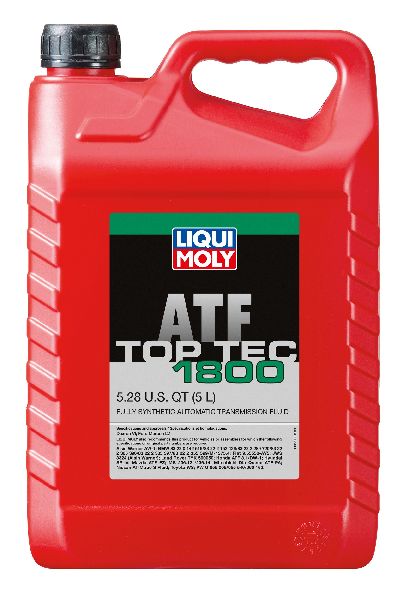
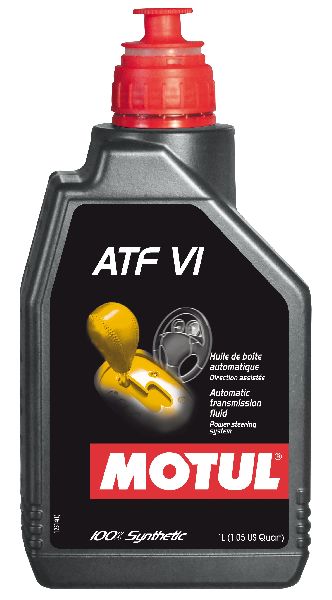
We Have This Part in Stock



The information in this article is provided for general reference and educational purposes only. Vehicle specifications, procedures, and part compatibility can vary by production date, trim level, and region. Always consult your vehicle's factory service manual and verify part numbers before purchasing or performing repairs. Safety-critical components such as airbags, seat belts, and braking systems should be installed by a qualified professional.
- Jaguar XF:
- 🧭 Diagnostic Flowchart
- 🎬 Helpful Videos
- 🛍️ Shop This Part
- What's Unique About the 2009-2015 Jaguar XF
- Symptoms You May Notice
- Most Likely Causes
- Rare But Worth Checking
- Diagnosis Steps
- Parts You'll Likely Need
- Related Codes That Often Appear With This One
- Technical Service Bulletins (TSBs) & Recalls
- Platform-Specific Known Issues
- Mechanic-Grade Diagnostic Values
- Hidden / Shadow Codes Worth Checking
- Scan Tool Commands That Help
- Wiring & Ground Locations
- OEM Part Supersession History
- Model Year Variations Within This Range
- 🎟️ Get 5% Off