

P0780 on 2019 Jeep Renegade: Gear Shift Malfunction Causes and Fixes
On a 2019 Jeep Renegade, the P0780 code is most often caused by a software issue in the Transmission Control Module (TCM). The fix is typically a software update performed by a Jeep dealer, as outlined in Technical Service Bulletins (TSBs) #21-026-20 and #21-028-19. Before suspecting costly hardware failure, checking for this software update is the first and most critical step.
- For a 2019 Jeep Renegade, P0780 is most likely a software glitch in the Transmission Control Module (TCM), not a mechanical failure.
- Always check for and perform the software update specified in Jeep TSBs #21-026-20 or #21-028-19 before attempting any other repairs.
- The code is often paired with P1DD2-00, which further points to a software/communication problem.
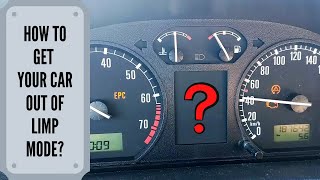
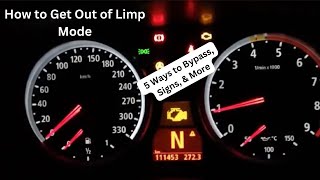
- Driving with this code is risky as the vehicle can unexpectedly enter 'limp mode,' getting stuck in a single gear.
- If a software update does not fix the issue, the next logical step is a professional check of the transmission fluid level and condition.
What's Unique About the 2019-2019 Jeep RENEGADE
The 2019 Jeep Renegade uses a ZF 9-speed automatic transmission (model 9HP48 or 948TE) which had numerous software-related 'growing pains' since its introduction. For this specific vehicle, code P0780 is very frequently tied to software logic rather than an immediate mechanical failure. Jeep issued specific Technical Service Bulletins (TSBs) acknowledging that P0780, along with code P1DD2, could be triggered by software glitches that misinterpret normal transmission behavior. Therefore, the diagnostic process for this vehicle must always start with checking for available TCM software updates before suspecting hardware failure.
Diagnostic Flowchart
Tap your situation to follow the diagnostic path that matches what you're seeing on this vehicle.
Symptoms You May Notice
- Check Engine Light (Malfunction Indicator Lamp) is on
- Transmission shifts harshly or with a 'bump' feeling
- A specific 'bump' felt around 40 mph (65 kph) followed by the engine RPM jumping to 4000, as noted in TSB #21-026-20.
- Transmission gets stuck in one gear (limp mode). 🎬 Watch: How to identify and get out of limp mode.
- Delayed or slipping shifts.
- Failure to shift into or out of a specific gear.
- Loss of throttle control, as described by some owners before the code sets.
- Replacing the entire transmission when only a software update was needed.
- Replacing shift solenoids when the root cause was low/dirty transmission fluid or a software glitch.
- Assuming a major mechanical failure without first checking for TSBs related to the TCM software.
Most Likely Causes
- Transmission Control Module (TCM) Software Requires Update 🔴 High Probability → Shop Transmission Assembly Documented by Jeep in TSBs #21-026-20, #21-025-20, and #21-028-19, this is a known issue where the factory software can incorrectly flag a shift malfunction, often when accompanied by code P1DD2-00.
How to confirm: A Jeep dealer or a qualified shop with access to FCA's service information can check the vehicle's VIN against applicable TSBs and determine if a software update is available. This is the first step in diagnosis.
Typical fix: Reprogramming the TCM with the latest software version using a wiTECH scan tool. The TSB repair procedure takes approximately 0.3 hours.
Est. part cost: $0-$250 - Low or Dirty Transmission Fluid 🟡 Medium Probability → Shop Transmission Assembly The ZF 9HP transmission is sensitive to fluid level and condition. Since there is no dipstick, owners cannot easily check it, potentially leading to the level becoming low over time without being noticed.
How to confirm: A professional must check the transmission fluid level and condition. The procedure involves raising the vehicle, removing a fill plug, and checking the level while the transmission fluid is at a specific temperature (typically 35-45°C). The fluid should be reddish and not smell burnt.
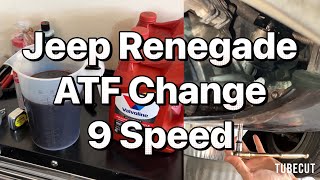
Typical fix: Top off or replace the transmission fluid and filter using the correct fluid type. The specified fluid is Mopar ZF 8&9 Speed ATF or an equivalent.
Est. part cost: $50-$150 - Faulty Shift Solenoid ⚪ Low Probability → Shop Transmission Valve Body
How to confirm: This requires advanced diagnostics, including testing the resistance and function of individual solenoids within the transmission's valve body. This is typically done after software and fluid issues have been ruled out and is often accompanied by solenoid-specific fault codes (e.g., P0755).
Typical fix: Replacement of the specific failing shift solenoid, which is located inside the transmission oil pan.
Est. part cost: $50-$200 - Failing Transmission Control Module (TCM) ⚪ Low Probability → Shop Transmission Assembly
How to confirm: After all other possibilities (software, fluid, solenoids, wiring) have been ruled out, the TCM itself may have a hardware fault. This is confirmed by testing the module's inputs and outputs and finding no other cause.
Typical fix: Replacement and programming of the TCM. This is a rare cause for this specific code on this vehicle compared to the software issue.
Est. part cost: $450-$800
Rare But Worth Checking
- Wiring Harness or Connector Issue: Corrosion or damage to the wiring between the TCM and the transmission can interrupt signals, mimicking a component failure. A visual inspection of the harness is always a worthwhile check, especially for any signs of chafing or rodent damage.
- Internal Mechanical Transmission Failure: → Shop Transmission Assembly While rare on a newer vehicle, internal issues like a failing hydraulic pump, clogged passages, or worn clutch packs can cause this code. This is usually a last resort after all electronic and software possibilities are exhausted and may be indicated by metal shavings in the transmission fluid.
Diagnosis Steps
- Scan the vehicle for all DTCs. Note P0780 and any other codes, especially P1DD2-00.
- Check for applicable Technical Service Bulletins (TSBs) for your vehicle's VIN. Specifically look for TSBs #21-026-20, #21-025-20, and #21-028-19.
- If a relevant TSB exists and the software has not been updated, have a dealer or qualified shop perform the recommended TCM software update. This is the most probable solution.
- If the code returns or no TSB applies, have the transmission fluid level and condition professionally checked. The ZF 9HP transmission does not have a dipstick and requires a specific procedure.
- Inspect the transmission wiring harness and connectors for any visible damage, corrosion, or loose connections.
- If fluid and wiring are good, perform electronic tests on the shift solenoids to check for proper resistance and operation. This may require a scan tool capable of commanding individual solenoids.
- If solenoids test good, further diagnosis of the TCM hardware and internal transmission mechanicals is required. This is a job for a transmission specialist.
Parts You'll Likely Need
- TCM Software Update — This is not a physical part, but a service. It is the most common and manufacturer-documented fix for this specific code on a 2019 Renegade. Out of warranty, dealers typically charge 0.5 to 1.0 hour of labor ($100-$250).
OEM price range: $100-$250
Aftermarket price range: $0-$0 - Automatic Transmission Fluid
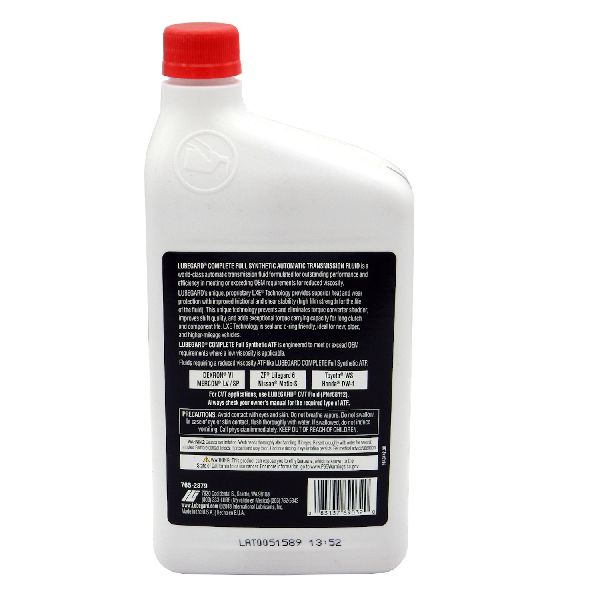
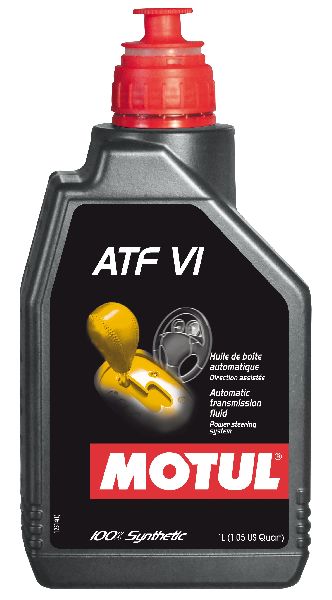
(OEM #68218925AB (replaces 68157995AA, 68218925AA, 68339073AA))— Low or dirty fluid is a common cause of general shifting problems and should be checked after confirming software is up to date. The correct fluid type is critical for the ZF 9-speed transmission.
Trusted brands: Mopar ZF 8&9 Speed ATF
OEM price range: $22-$35 per quart
Aftermarket price range: $15-$25 per quart
Related Codes That Often Appear With This One
- P1DD2-00 — This code, 'Torque Request Signal From TCM Denied,' is explicitly mentioned in Jeep TSBs #21-026-20 and #21-028-19 as appearing alongside P0780. Its presence strongly reinforces the likelihood of a software or communication issue between the engine and transmission controllers.
Technical Service Bulletins (TSBs) & Recalls
- 21-026-20 - Flash: Transmission Control Module (TCM) Updates
- 21-025-20 - Flash: Transmission Control Module (TCM) Updates
- 21-028-19 - Flash: Transmission Control Module (TCM) Updates
Platform-Specific Known Issues
- Jeep issued TSB #21-026-20 in March 2020 specifically for the 2019 Renegade with the 1.3L Turbo engine. It identifies that a MIL with DTCs P0780 and P1DD2-00 can be resolved with a TCM software update. Symptoms include limp mode and a 'bump' at 40 mph with a sudden RPM spike.
- An earlier TSB, #21-028-19, from May 2019 also addresses P0780 on 2019 models (Compass and Renegade) built on or before May 8, 2019, recommending a TCM re-program for symptoms like a 'bump feeling' and limp mode.
- Owners on forums like r/JeepRenegade have described experiencing the exact limp mode symptoms, where the car loses throttle response and gets stuck in a gear, which sometimes temporarily clears after restarting the vehicle.
Mechanic-Grade Diagnostic Values
- Shift Solenoid Resistance — expected: 5 to 30 Ohms (general range). Failure: A reading of 0 Ohms indicates a short, while an infinite reading (OL) indicates an open circuit.
- TCM Power Supply Voltage — expected: 12V (or battery voltage). Failure: Voltage below 10V at the TCM's main power feed can indicate a power supply issue that needs to be corrected before condemning the module.
Scan Tool Commands That Help
- wiTECH or AlfaOBD: Reset Adaptive Values — This function should be performed before a 'Quick Learn' procedure. It clears the learned clutch fill times and pressure settings, preparing the TCM for a fresh adaptation.
- wiTECH or AlfaOBD: Quick Learn — This procedure must be performed after any transmission repair, valve body replacement, or when adaptation memory cells are cleared. It runs the transmission through a static test to learn new clutch adaptive values, which is often a first step to remedy shift quality concerns.
- wiTECH: Transmission Adaptation Drive Learn Procedure — If a customer still has shift quality concerns after a Quick Learn, a specific, lengthy drive cycle (up to 78 minutes) may be required to allow the TCM to fully adapt to the new components or software.
Wiring & Ground Locations
- Transmission Main Connector — The main wiring harness connector for the transmission is a twist-lock style connector that passes through the case. On the 948TE, you twist the connector to unlock it and pull it up and out of the transmission housing.. A poor connection at this primary connector can interrupt communication between the TCM and all internal transmission solenoids and sensors, potentially causing a generic shift fault like P0780.
- Common Ground Points (General) — While not specific to P0780, Jeeps are known for having critical ground points on the engine block or chassis that can corrode. A common issue on other Jeep models involves a ground designated G104 at the rear of the engine.. A faulty ground for the TCM or related sensors can cause a wide range of electrical issues, including communication codes and incorrect sensor readings that could lead to a P0780. Verifying main engine and chassis grounds is a good practice when diagnosing any complex electronic fault.
Real Owner Repair Stories
- Reddit user on r/MechanicAdvice (2018 Jeep Compass (uses the same 948TE transmission and often has similar TSBs)) — Vehicle would go into limp mode, setting code P1DD2.
❌ Tried (didn't work) Initial diagnosis pointed to other issues.
✅ What actually fixed it The user posted the full text of the TSB which states the fix is to reprogram the PCM with the latest software, and then verify the TCM is also programmed with the latest software. This directly addresses the P1DD2 code, which is often paired with P0780.
Model Year Variations Within This Range
- 2019 models built on or before May 8, 2019: TSB #21-028-19 specifically targets vehicles built before this date for a TCM re-program to fix symptoms including a 'bump feeling' and limp mode associated with P0780. Vehicles built after this date may have already received the updated software from the factory.
Helpful Videos

We Have This Part in Stock


The information in this article is provided for general reference and educational purposes only. Vehicle specifications, procedures, and part compatibility can vary by production date, trim level, and region. Always consult your vehicle's factory service manual and verify part numbers before purchasing or performing repairs. Safety-critical components such as airbags, seat belts, and braking systems should be installed by a qualified professional.
- Jeep RENEGADE:
- 🧭 Diagnostic Flowchart
- 🎬 Helpful Videos
- 🛍️ Shop This Part
- What's Unique About the 2019-2019 Jeep RENEGADE
- Symptoms You May Notice
- Most Likely Causes
- Rare But Worth Checking
- Diagnosis Steps
- Parts You'll Likely Need
- Related Codes That Often Appear With This One
- Technical Service Bulletins (TSBs) & Recalls
- Platform-Specific Known Issues
- Mechanic-Grade Diagnostic Values
- Scan Tool Commands That Help
- Wiring & Ground Locations
- Real Owner Repair Stories
- Model Year Variations Within This Range
- 🎟️ Get 5% Off