

OBD-II Code P0781: 1-2 Shift Malfunction
What P0781 means, why it triggers, and how to fix it
- Check your transmission fluid first; low or burnt fluid causes over 50% of P0781 shift malfunctions.
- P0781 triggers when the 1-2 shift takes longer than the manufacturer's 200-350 millisecond limit, resulting in a harsh jolt or slipping.
- Stop driving immediately; slipping clutches generate extreme heat that turns a $300 solenoid repair into a $3,500 transmission rebuild within weeks.
- Do not blindly replace the shift solenoid; on GM 4L60E transmissions, a broken $20 accumulator spring is the most frequent culprit.
What Does P0781 Mean?
The Powertrain Control Module (PCM) or Transmission Control Module (TCM) detected a problem shifting from 1st to 2nd gear. The transmission is not shifting quickly or smoothly, indicating a hydraulic, mechanical, or electrical failure.
Technical definition: Code P0781 means the actual gear ratio differs from the commanded gear during the 1-2 shift. The computer compares signals from the input and output speed sensors and flags a fault when the shift timing exceeds the manufacturer's specified window (typically 200-350 milliseconds).
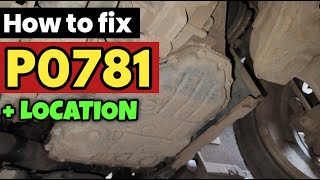
🎬 Watch: A quick overview of the P0781 code and its meaning.Can I Drive With P0781?
Yes, But With Caution. Short trips to a repair shop are possible, but extended driving is strongly discouraged. Harsh or failed shifts put significant stress on internal components. Slipping generates extreme heat, which burns the fluid and damages clutches and seals. Ignoring the problem quickly turns a $300 solenoid repair into a $3,500+ transmission rebuild.
Common Causes
- Low, Dirty, or Burnt Transmission Fluid (Very Common) — Insufficient or contaminated Automatic Transmission Fluid (ATF) fails to create the hydraulic pressure needed to actuate shifts. Burnt fluid indicates internal friction and clutch damage.
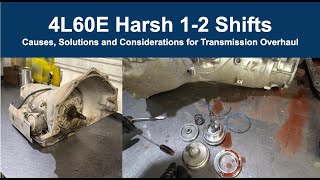
- Broken 1-2 Accumulator Piston or Spring (Common) — In GM 4L60E transmissions, a broken spring or cracked piston in the 1-2 accumulator assembly is the primary cause. This failure eliminates shift cushioning, causing a harsh 1-2 bang. 🎬 See this breakdown of what causes harsh 1-2 shifts in GM transmissions.
- Faulty 1-2 Shift Solenoid (Common) — The 1-2 shift solenoid fails electrically (open/shorted), mechanically (stuck), or clogs with debris, preventing hydraulic pressure application.
- Clogged Transmission Filter or Valve Body Passages (Common) — Clutch material and debris clog the transmission filter or valve body passages, restricting fluid flow and preventing the 1-2 shift.
- Internal Mechanical Transmission Failure (Less Common) — Worn clutch packs, failing brake bands, a defective pump, or a faulty torque converter prevent the transmission from physically engaging 2nd gear.
- Damaged Wiring or Corroded Connectors (Less Common) — Corroded, damaged, or shorted wiring harnesses interrupt electrical signals between the TCM and shift solenoids.
- Failed Vehicle Speed Sensor (VSS) or Turbine Speed Sensor (TSS) (Less Common) — Erratic signals from the input (TSS) or output (VSS) speed sensors trick the TCM into falsely detecting a shift problem.
- TCM Communication or Power Supply Issue (Rare) — Corrupted CAN bus data, unstable voltage, or internal TCM short-circuits prevent the module from calculating correct shift timing.
Symptoms
- Harsh, Delayed, or Failed Shifting — The transmission jolts, pauses, or refuses to shift out of 1st gear.
- Transmission Slipping or Engine Revving — The engine revs without a corresponding increase in vehicle speed, indicating the clutches are slipping.
- Transmission Enters 'Limp Mode' — The transmission locks into a single gear (usually 2nd or 3rd) to prevent further internal damage.
- Check Engine Light is On — The Malfunction Indicator Lamp (MIL) illuminates.
- Unusual Noises — A whining noise indicates a clogged filter or failing pump, while clunking during the 1-2 shift points to a broken accumulator spring.
Common Fixes & Costs
- Transmission Fluid and Filter Change — Parts: $50-$120, Labor: $150-$350, ~1.5 hr book time (Intermediate)
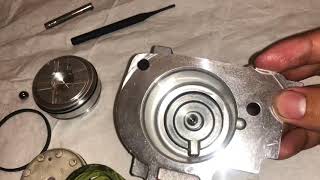
- Replace 1-2 Accumulator Piston/Spring (GM)
— Parts: $15-$60, Labor: $200-$450, ~3.5 hr book time
(Intermediate)
Chevrolet/GM (4L60E): OEM 8684428 (Housing with updated aluminum piston) (Alt: Sonnax 77704S (Performance Spring), Dorman 917-133 (Piston Kit)) - Replace 1-2 Shift Solenoid
— Parts: $30-$150, Labor: $200-$500, ~3 hr book time
(Intermediate)
Chevrolet/GM (4L60E): OEM AC Delco 24230298 (Alt: ATP JE-53, Standard Motor Products TCS17, Duralast TCS00500)
Ford F-150 (6R80): OEM AL3Z-7G484-B (On-Off Solenoid) (Alt: TC Remanufacturing 76922, Rostra 52-0563)
Honda Accord/Odyssey: OEM 28015-R90-308 (Solenoid Set) (Alt: ATP HE-10, WSO W0133-1695247) - Replace Transmission Valve Body — Parts: $300-$1,200, Labor: $400-$1,000, ~4.5 hr book time (Professional)
- Transmission Rebuild or Replacement — Parts: $2,500-$6,000+, Labor: Included in total, ~10 hr book time (Professional)
DIY vs Professional
- Transmission Fluid and Filter Change 🟢 Beginner
Tools: Socket set, drain pan, funnel, torque wrench, new fluid and filter/gasket. - Replace 1-2 Shift Solenoid / Accumulator 🟢 Beginner
Tools: Tools for fluid change, plus a multimeter, snap-ring pliers (for accumulator), and a service manual for torque specs and wiring. - Replace Transmission Valve Body 🟢 Beginner
Tools: Extensive set of clean tools, inch-pound and foot-pound torque wrenches, service manual, potentially specialized alignment tools. - Transmission Rebuild or Replacement 🟢 Beginner
Tools: Specialized transmission tools, press, clean room environment.
Used vs. New Parts: Buying Guide
When a used part is worth it: For a shift solenoid or accumulator, new aftermarket or OEM parts are strongly recommended due to high labor costs. A used part only makes sense if the vehicle has very low value.
Donor-vehicle mileage cap: roughly under 80000 miles for the part to have meaningful remaining life.
Donor quality checklist:
- For a used valve body, look for one from a low-mileage vehicle scrapped due to an accident.
- Verify the part number exactly; internal calibrations change year-to-year.
- Avoid parts with signs of heavy sludge or contamination.
Decision logic:
- If The part is electronic, like a solenoid → Buy new. The risk of a used electronic part failing is too high compared to the part's cost.
- If Vehicle is older (>150K miles) and the repair is a last-ditch effort → A low-cost used part is a gamble but acceptable; expect a short remaining life.
- If The part is a complex assembly like a valve body → Favor a new or professionally remanufactured unit with a warranty over a used one.
Warranty tradeoff: Used parts offer a 30-90 day functional warranty that doesn't cover labor. New aftermarket parts carry a 1-year to limited lifetime warranty.
Worst-case if a used part fails: $400-$800 if a used solenoid or accumulator fails after installation, primarily due to repeating 2-5 hours of labor.
What Happens If You Wait — Timeline
- 0-1 month: Intermittent harsh 1-2 shift, especially when cold. Check Engine Light (MIL) on. The transmission slips occasionally but functions. (MPG impact: 0-5%% · Added cost: $0. The initial problem exists but has not caused collateral damage.)
- 1-3 months: Shifting becomes consistently harsh or delayed. Slipping generates significant heat, breaking down the transmission fluid and hardening seals. (MPG impact: 5-10%% · Added cost: $200-$500. The initial fix is compounded by needing a full fluid flush.)
- 3-6 months: Sustained slipping wears down the 1-2 clutch pack. Burnt fluid circulates clutch material, clogging the filter and valve body. Limp mode occurs frequently. (MPG impact: 10-15%% · Added cost: $800-$2,000. Internal parts must be replaced; a simple solenoid fix is no longer possible.)
- 6+ months: Catastrophic failure. Debris destroys other clutches, the oil pump, and the torque converter. The vehicle becomes undrivable. (MPG impact: 15-25%+% · Added cost: $2,800-$6,000+. A complete rebuild or replacement is the only option.)
Cost of Not Fixing It
- 0-1 month: Noticeable drop in fuel economy (5-15%), harsh shifting, and potential to get stuck in 'limp mode'. (Added cost: Negligible, but inconvenient.)
- 1-6 months: Slipping clutches cause severe overheating, burning the transmission fluid and damaging seals and clutch packs. (Added cost: $800-$2000 for clutch pack and seal replacement, on top of the initial repair.)
- 6+ months: Catastrophic internal damage. Debris clogs the valve body and oil pump, destroying hard parts. (Added cost: $2,800-$6,000+)
Diagnosis Steps
- Check Transmission Fluid Level and Condition
With the engine running at operating temperature, check the dipstick. Fluid must be at the 'Full' mark and bright red. Brown, burnt-smelling fluid confirms internal overheating.
Tools: Rag, Gloves (Beginner) - Scan for Trouble Codes & Review Freeze Frame Data
Use an OBD-II scanner to confirm P0781. Check for companion codes (P0751, P0782) and review freeze frame data for vehicle speed and RPM when the fault occurred.
Tools: OBD-II Scanner (Beginner) - Analyze Live Data with a Scan Tool
Monitor 'Commanded Gear' vs. 'Actual Gear' and '1-2 Shift Time' while driving. A shift time exceeding 350ms confirms a mechanical or hydraulic delay.
Tools: Advanced OBD-II Scan Tool (Advanced) - Inspect the Valve Body and Accumulators
Drop the oil pan and inspect the valve body for metal shavings. On GM models, remove the 1-2 accumulator piston and spring to check for cracks or breakage.
Tools: Socket Set, Drain Pan, Flashlight, Torque Wrench (Advanced) - Test the 1-2 Shift Solenoid Circuit Resistance
Disconnect the transmission harness. Measure the 1-2 shift solenoid circuit resistance with a multimeter. Typical specs: GM 4L60E (20-40 Ω), Ford 6R80 (~18 Ω). Infinite resistance means an open circuit.
Tools: Multimeter, Service Manual with Wiring Diagram (Advanced) - Inspect External Wiring and Connectors
Visually inspect the harness connecting the transmission to the TCM for frayed wires, melted insulation, or corroded pins.
Tools: Flashlight (Intermediate) - Perform a Transmission Line Pressure Test
Connect a pressure gauge to the transmission test port. Compare idle and stall speed readings to specs (e.g., GM 4L60E: 55-65 PSI at idle). Low pressure confirms a failing pump or internal leak.
Tools: Transmission Pressure Gauge Set, Service Manual (Advanced) - Check TCM Power, Ground, and CAN Bus Integrity
Verify the TCM receives stable power (12.0V ± 0.5V) and a clean ground (≤ 0.1 Ω). Perform a CAN bus resistance test at the diagnostic port (expecting ~60 Ω).
Tools: Multimeter, Service Manual (Professional)
When This Code Triggers (Freeze-Frame Conditions)
- Engine Coolant Temp: 175-210°F (Fully warmed up)
- RPM: 1500-2500 (During light to moderate acceleration)
- Engine Load: 25-55% (Accelerating from a stop or at low speed)
- Vehicle Speed: 10-20 mph (During the 1-2 upshift event)
Related Codes
- P0700 — Generic TCM fault request. Ignore for diagnosis; focus entirely on P0781.
- P0780 — General shift malfunction. P0781 is the specific 1-2 version.
- P0782 — 2-3 shift malfunction. Seeing both indicates a systemic issue like low pressure or burnt fluid, not a single solenoid.
- P0751 — Shift Solenoid 'A' Performance. Directly points to the 1-2 solenoid failing electrically or mechanically.
Climate & Environmental Factors
- Cold Weather: Extreme cold thickens transmission fluid, slowing hydraulic actuation and pushing shift times beyond the 350ms limit. Often resolves as the vehicle warms up.
- High Heat: Towing or high ambient temperatures accelerate fluid breakdown and increase solenoid coil resistance, causing intermittent electrical failures.
- High Humidity / Water Exposure: High humidity accelerates corrosion on external wiring harnesses, increasing circuit resistance and disrupting TCM signals.
How to Talk to a Mechanic About This Code
Say this: "I have a P0781 code for a 1-2 shift malfunction and I'm experiencing harsh shifting. Please start by checking the transmission fluid level and condition, and inspect the external wiring. If those are okay, I'd like the test results for the 1-2 shift solenoid and line pressure before authorizing major repairs."
This directs the mechanic to start with the most common and cheapest causes (fluid, wiring) before assuming a major component failed, preventing expensive guesswork.
Avoid saying:
- 'My transmission is acting weird.'
- 'Just fix the check engine light.'
- 'I think I need a new transmission.'
Questions to ask before authorizing the repair:
- What was the condition and level of the transmission fluid?
- Did you find any debris in the transmission pan?
- What was the resistance reading for the 1-2 shift solenoid, and what is the spec?
- What were the line pressure test results at idle and stall?
- Is there a Technical Service Bulletin (TSB) for this issue on my vehicle?
Where to Take It: Dealer vs Independent vs Chain
- Dealer:
Best for: Vehicles under powertrain warranty, Known issues requiring a manufacturer-specific software update (TCM reflash), Complex transmissions on German or luxury brands
Downsides: Highest labor rates, often 1.5-2x more than independent shops., Defaults to replacing larger, more expensive assemblies instead of smaller components. (Typical cost: +50% vs. baseline) - Independent Shop:
Best fit. An independent transmission specialist is the ideal choice for diagnosing and repairing P0781, offering expert knowledge without the high dealer cost.
Best for: Out-of-warranty vehicles where cost is a factor., Diagnosing common transmission issues like fluid, solenoid, or wiring problems., Shops that specialize in transmissions.
Downsides: Quality varies widely; vet shops carefully by checking reviews and ASE certifications., General mechanics lack specific tools for deep internal transmission work. (Typical cost: +0% vs. baseline) - Chain Shop:
AVOID for diagnosis. They are not the right choice for accurately diagnosing a complex internal transmission code like P0781.
Best for: Simple fluid and filter changes, but only if you trust the location.
Downsides: High pressure to upsell; P0781 easily leads to a hard sell for a transmission rebuild., Technician skill varies dramatically. (Typical cost: -10% vs. baseline)
When to Walk Away From the Repair
If the estimated repair cost exceeds 50% of your car's private-party value, seriously consider selling or trading it in instead of repairing it.
- Car worth $8000, fix is $600: Fix it. This is a relatively minor repair cost compared to the car's value.
- Car worth $5000, fix is $3500: Walk away. The repair cost is 70% of the car's value. It's not a sound investment.
- Car worth $3000, fix is $1800: Borderline. The repair is over 50% of the value. Getting a second opinion is wise.
What Scan Tool You Need for This Code
Minimum: An OBD-II scanner that can read and graph live transmission data, specifically 'Commanded Gear', 'Actual Gear', and transmission fluid temperature.
A basic $20 code reader only shows the P0781 code. To properly diagnose, you need live data to determine if the problem is electrical, hydraulic, or mechanical. Without it, you might replace a perfectly good solenoid.
Budget: BlueDriver Pro Scan Tool (~$100) — Connects to your smartphone and graphs essential live data PIDs like commanded gear and transmission fluid temperature.
Mid-range: Foxwell NT510 Elite (~$200) — Offers manufacturer-specific diagnostics, accesses shift timing data, and performs basic adaptations or resets after a repair.
Professional: Autel MaxiCOM MK808S / MK808S-TS (~$500-700) — Provides full bidirectional control to command specific solenoids to activate or perform system tests like a 'quicklearn' transmission adaptation reset.
Rent vs buy: For a one-time diagnosis, auto parts stores loan scanners. If you do your own maintenance, buying a mid-range scanner like the Foxwell is a worthwhile investment.
How to Clear the Code After You Fix It
- Use an OBD-II scan tool to clear diagnostic trouble codes.
- Perform a complete OBD-II drive cycle to allow readiness monitors to run.
- Re-scan to confirm no codes have returned.
Drive cycle (~30 minutes): A general drive cycle includes: a cold start, 2-3 minutes of idling, 10-15 minutes of mixed city/highway driving, several gentle accelerations and decelerations, and allowing the vehicle to cool down.
Readiness monitors affected: Catalyst Monitor, EVAP System Monitor, O2 Sensor Monitor
Before emissions retest: drive at least 100 miles to fully set monitors.
Watch out for:
- Clearing the code with a scanner does not fix the mechanical or hydraulic fault; the code returns if the repair fails.
- Disconnecting the battery clears adaptive learning for the transmission, causing erratic shifting initially.
- Showing up for an emissions test with 'Not Ready' monitors results in a failure.
Will This Fail Emissions / State Inspection?
Yes — this code typically fails an OBD-II emissions inspection.
- California: An illuminated Check Engine Light from P0781 is an automatic failure. The vehicle must complete a drive cycle to set readiness monitors before re-testing.
- New York: The NYVIP3 inspection program automatically fails a vehicle if the MIL is on. 2001 and newer vehicles are only allowed one 'Not Ready' monitor to pass.
- Texas: In emissions testing counties, an active P0781 code results in an automatic failure of the OBDII test.
Most Commonly Affected Vehicles
- Chevrolet / GM Silverado, Tahoe, Suburban (with 4L60E/4L65E) (1993-2014) — A broken 1-2 accumulator spring or cracked piston is an extremely common cause for a harsh 1-2 shift and this code.
- Ford Focus, Explorer, F-150 (2005-2017) — Often related to shift solenoid failure, valve body issues, or requires a PCM software update (Recall 26S28 for 2015-2017 F-150). 🎬 Watch: How to replace the shift solenoid on a Ford transmission.
- Honda Odyssey, Accord, Pilot (2003-2013) — 5-speed automatic transmissions in this era are known for harsh shifting and torque converter problems.
- Toyota Tundra, Sequoia, FJ Cruiser (2007-2014) — Frequently caused by a stuck 1-2 shift valve or a failing SLT line pressure control solenoid.
- Nissan Qashqai, X-Trail, Murano (2007-2017) — CVT models experience internal mechanical faults that the TCM interprets as a step-gear shift error.
- BMW 3 Series (E90), 5 Series (E60), X3 (E83) (2004-2014) — Prone to mechatronic unit issues, including cracked adapter seals and failing solenoids.
- Audi A4, A6, Q5 (2005-2015) — Experience issues with the mechatronic unit and solenoids, causing hydraulic pressure loss.
- Mercedes-Benz C-Class (W203), E-Class (W211) (2003-2013) — Faulty conductor plates disrupt signals for the 1-2 shift.
- Volkswagen Passat, Jetta, Tiguan (2006-2016) — Commonly associated with mechatronic unit failures in the DSG (Direct-Shift Gearbox).
Manufacturer-Specific Notes
- General Motors (GM): On 4L60E transmissions, a broken 1-2 accumulator piston spring is an extremely common cause for a harsh 1-2 shift. Technicians check this before replacing the solenoid.
- Ford: Ford issued recall 26S28 for 2015-2017 F-150 models and TSB 07-2-4 for other vehicles addressing harsh shifting with PCM software updates.
- Toyota: Toyota issued TSB-0015-11 for some models, involving an ECM software update to correct harsh 1-2 shift quality.
Real Owner Stories
2002 Ford F-250 7.3L at 180k miles
Check Engine Light and flashing Overdrive light came on with code P0781, but the truck drove normally.
What they tried:
- Confirmed fluid was clean and red.
- Cleared the code, but it returned within a few miles.
Outcome: Electrical tests and internal inspection of the valve body were required. The owner learned that P0781 triggers from minor electrical faults before causing major drivability issues.
Lesson: Do not ignore P0781 just because the vehicle drives fine; early diagnosis prevents mechanical damage.
2006 Lexus GS300 at 100k miles
Experienced rough, delayed shifting and the engine revved to 4500 RPM before a harsh shift. Codes P0781 and P0761 (Shift Solenoid C Stuck Off) were present.
What they tried:
- Checked fluid level.
- Planned a fluid drain and fill.
Outcome: The combination of a general shift error (P0781) and a specific solenoid code (P0761) confirmed the problem was the solenoid or its circuit, requiring replacement.
Lesson: Companion codes pinpoint the exact component causing the P0781 shift error.
2003 Jaguar S-Type R (X200)
The 1-2 upshift progressively worsened, causing engine flare and getting stuck in gear.
What they tried:
- Suspected a bad connection or internal transmission problem.
Outcome: A forum expert pointed to Jaguar Technical Service Bulletin JTB00072v2. The fix was a $110 TCM software update by the dealer, avoiding hardware replacement.
Lesson: Always check for TSBs; software updates frequently fix harsh shifting codes.
GM Truck with 4L60E Transmission
Experienced a harsh 1-2 shift that felt like a bang or jolt.
What they tried:
- Considered replacing the 1-2 shift solenoid.
Outcome: The actual cause was a broken 1-2 accumulator piston and spring. Replacing the accumulator piston with an updated aluminum version fixed the issue.
Lesson: On GM 4L60E transmissions, the 1-2 accumulator is a more likely culprit for P0781 than the solenoid.
How to Prevent This Code From Triggering
- Change transmission fluid and filter at recommended intervals. (Every 30,000 to 60,000 miles.) — Prevents fluid breakdown and removes contaminants that clog solenoids and valve body passages.
- Check transmission fluid level and condition. (Monthly) — Catches leaks early, preventing the hydraulic pressure drops that lead to shift errors and overheating.
- Come to a complete stop before shifting from Drive to Reverse. (Daily habit) — Prevents shock loading on internal transmission components, extending the life of clutches and bands.
- Do not exceed your vehicle's towing or payload capacity. (When hauling or towing) — Prevents excessive heat generation, which is the primary cause of fluid breakdown and seal damage.
Frequently Asked Questions
Can I fix P0781 myself?
A DIYer can check and top off transmission fluid. Most other repairs, like changing a shift solenoid or accumulator spring, require removing the transmission pan and intermediate mechanical skills.
How much does it cost to fix P0781?
A fluid/filter change is typically $200-$470. A shift solenoid replacement ranges from $230-$650. A full transmission rebuild starts at $2,800 and can exceed $6,000.
Will clearing the code fix the problem?
No. Clearing the code only turns off the Check Engine Light temporarily. The fault is mechanical, hydraulic, or electrical, so the code returns as soon as the computer detects the malfunction again.
What is the most common misdiagnosis for P0781?
Immediately replacing the 1-2 shift solenoid without proper diagnosis. The actual cause is often simpler, like low fluid, or a different mechanical part, like a broken 1-2 accumulator spring in GM vehicles.
I replaced the shift solenoid, but the code came back. What now?
If a new solenoid fails to fix the issue, the problem lies deeper. Inspect the wiring harness, check for valve body blockages, and examine the 1-2 accumulator on GM vehicles. If those pass, perform a line pressure test to identify internal leaks or a failing pump.
How long does it take to repair P0781?
A transmission fluid and filter service takes 1-2 hours. A shift solenoid or accumulator spring replacement typically takes 2-4 hours. A full transmission rebuild requires 2-4 days.
Can a bad speed sensor cause a P0781 code?
Yes. The TCM compares the input and output speed sensors to verify a shift occurred. If one sensor provides an erratic signal, the TCM incorrectly flags a shift malfunction.
Does aggressive driving cause P0781?
Aggressive driving accelerates wear on transmission clutches and bands. This premature wear eventually leads to the hydraulic and mechanical failures that trigger P0781.
Key Takeaways
- Check your transmission fluid first; low or burnt fluid causes over 50% of P0781 shift malfunctions.
- P0781 triggers when the 1-2 shift takes longer than the manufacturer's 200-350 millisecond limit, resulting in a harsh jolt or slipping.
- Stop driving immediately; slipping clutches generate extreme heat that turns a $300 solenoid repair into a $3,500 transmission rebuild within weeks.
- Do not blindly replace the shift solenoid; on GM 4L60E transmissions, a broken $20 accumulator spring is the most frequent culprit.
Helpful Videos
Shop the Parts Behind P0781
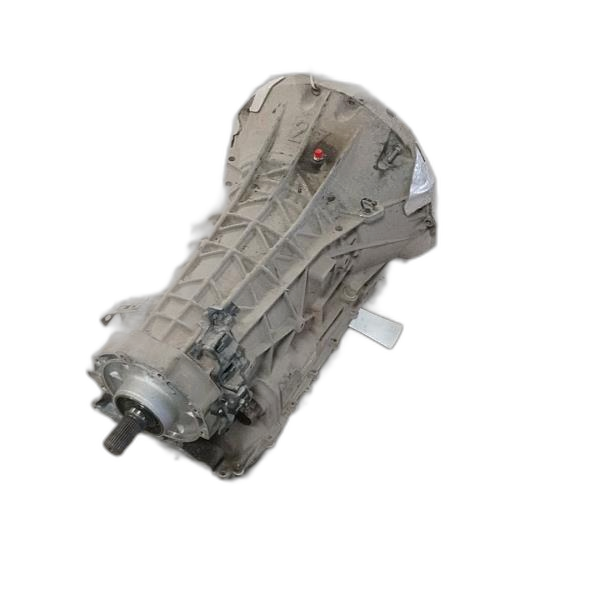
Below are the parts most often responsible for code P0781, ranked by how frequently each one is the actual culprit (per the diagnosis above). Tap any to see what we have for your vehicle.


The information in this article is provided for general reference and educational purposes only. Vehicle specifications, procedures, and part compatibility can vary by production date, trim level, and region. Always consult your vehicle's factory service manual and verify part numbers before purchasing or performing repairs. Safety-critical components such as airbags, seat belts, and braking systems should be installed by a qualified professional.
- 🎬 Helpful Videos
- 🛍️ Shop This Part
- What Does P0781 Mean?
- Can I Drive With P0781?
- Common Causes
- Symptoms
- Common Fixes & Costs
- DIY vs Professional
- Used vs. New Parts: Buying Guide
- What Happens If You Wait — Timeline
- Cost of Not Fixing It
- Diagnosis Steps
- When This Code Triggers (Freeze-Frame Conditions)
- Related Codes
- Climate & Environmental Factors
- How to Talk to a Mechanic About This Code
- Where to Take It: Dealer vs Independent vs Chain
- When to Walk Away From the Repair
- What Scan Tool You Need for This Code
- How to Clear the Code After You Fix It
- Will This Fail Emissions / State Inspection?
- Most Commonly Affected Vehicles
- Manufacturer-Specific Notes
- Real Owner Stories
- 2002 Ford F-250 7.3L at 180k miles
- 2006 Lexus GS300 at 100k miles
- 2003 Jaguar S-Type R (X200)
- GM Truck with 4L60E Transmission
- How to Prevent This Code From Triggering
- Frequently Asked Questions
- Can I fix P0781 myself?
- How much does it cost to fix P0781?
- Will clearing the code fix the problem?
- What is the most common misdiagnosis for P0781?
- I replaced the shift solenoid, but the code came back. What now?
- How long does it take to repair P0781?
- Can a bad speed sensor cause a P0781 code?
- Does aggressive driving cause P0781?
- Key Takeaways
- 🎟️ Get 5% Off