

OBD-II Code P0785: Shift/Timing Solenoid 'A' Malfunction
What P0785 means, why it triggers, and how to fix it
- Code P0785 triggers when the transmission control module detects that a commanded gear change took longer than the expected 50-200 milliseconds.
- Check your transmission fluid first; low or burnt fluid is the root cause in over 50% of P0785 cases.
- Limit driving to under 15 miles to reach a repair shop, as operating in 'limp mode' or with slipping clutches quickly turns a $300 solenoid repair into a $3,000 rebuild.
- Test the solenoid's electrical resistance (typically 20-30 ohms) and verify wiring continuity before replacing any internal transmission parts.
What Does P0785 Mean?
P0785 means your vehicle's computer (PCM or TCM) detected a problem with the 'A' shift timing solenoid in the automatic transmission. This solenoid is a small, spring-loaded plunger acting as a hydraulic valve, directing transmission fluid to apply clutches and bands that change gears. When the computer commands a gear change, it monitors the transmission's input and output speed sensors to confirm the shift occurred within a specific time frame (often 50-200 milliseconds). If the expected gear ratio change fails to happen or is too slow, the computer sets this performance code.
Technical definition: The official SAE/OBD-II definition is "Shift/Timing Solenoid 'A' Malfunction." It indicates the Powertrain Control Module (PCM) or Transmission Control Module (TCM) detected an electrical or mechanical fault in the circuit for the shift timing solenoid designated as 'A'. On many GM vehicles with the 4L60E transmission, this code specifically refers to the 3-2 Shift Solenoid.
Can I Drive With P0785?
Yes, But With Caution. Driving is not recommended. While you can drive a short distance (under 15 miles) to a repair shop, doing so risks severe internal transmission damage. Continued operation burns out clutches or damages the valve body, turning a sub-$500 solenoid repair into a $2,500+ transmission rebuild. If the transmission enters a fail-safe 'limp mode,' it is unsafe to exceed 40 mph as acceleration is severely limited.
Common Causes
- Low or dirty Automatic Transmission Fluid (ATF) (Very Common) — This is the most frequent cause. Old, burnt, or low fluid fails to create proper hydraulic pressure and carries debris that clogs the solenoid's internal screen or the valve body passages it controls.
- Faulty shift/timing solenoid 'A' (Very Common) — The solenoid fails electrically (open or shorted coil) 🎬 Watch: How to test solenoid resistance using Ohm's Law. or mechanically (sticking plunger, clogged screen, broken spring) due to age and wear.
- Wiring or connector issues (Common) — The wiring harness becomes damaged, corroded, or disconnected. Wires break at connector pins, short to ground on the chassis, or become brittle from heat and fluid exposure.
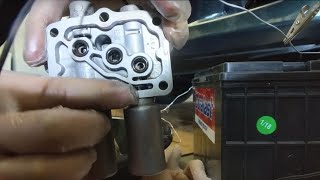
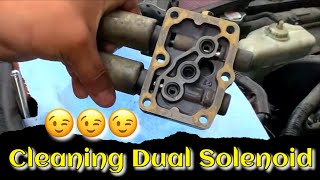
- Internal mechanical failure (Less Common) — Worn-out internal components like clutch packs or bands prevent proper gear engagement. Friction material from worn clutches contaminates the fluid, clogging filters and solenoids, a known issue in early-2000s Hondas. 🎬 See how to clean or replace solenoids on Honda models.
- Incorrect ATF Type Used (Less Common) — Using non-specified transmission fluid alters hydraulic properties and friction characteristics, causing incorrect shift timing and setting performance codes.
- Faulty Ignition Switch (Rare) — On older GM models, a failing ignition switch causes intermittent power loss to transmission solenoids, triggering P0785 alongside other electrical codes.
- Faulty Transmission Control Module (TCM) or Powertrain Control Module (PCM) (Rare) — The computer controlling the transmission fails due to a burnt internal driver circuit. Consider this only after exhaustively ruling out wiring and connectors.
Symptoms
- Harsh, delayed, or erratic shifting — You feel a noticeable clunk, hesitation, or unpredictable gear changes during acceleration or deceleration.
- Transmission stuck in one gear (Limp Mode) — The vehicle enters a fail-safe mode, locking into 2nd or 3rd gear to prevent further damage, severely limiting speed and power.
- Transmission slipping — Engine RPMs increase without a corresponding increase in vehicle speed, indicating the gear is not fully engaged.
- Check Engine Light is on — The PCM logs a fault and illuminates the Malfunction Indicator Lamp (MIL). A dedicated transmission warning light also illuminates on some models.
- Transmission Overheating — Slipping clutches generate excessive heat, burning the fluid and accelerating internal component failure.
Diagnostic Flowchart
Tap your situation to follow the diagnostic path that matches what you're seeing on this code.
Common Fixes & Costs
- Transmission Fluid and Filter Change — Parts: $50-$120, Labor: $150-$300, ~1.5 hr book time (DIY)
- Replace Shift/Timing Solenoid 'A'
— Parts: $20-$100, Labor: $200-$500, ~2.5 hr book time
(Intermediate)
: OEM 24212327 (Alt: ACDelco: 24212327, Rostra: 52-0543)
: OEM 28400-P6H-013 (Alt: Beck Arnley: 201-2098, WVE: 6J9) - Replace Shift Solenoid Pack
— Parts: $70-$550, Labor: $200-$500, ~3 hr book time
(Intermediate)
: OEM 9L2Z-7G391-A (Alt: Bosch: F026001010, Dorman: 926-128)
: OEM 28015-P7W-316 (Alt: Standard Motor Products: TCS121) - Repair or Replace Wiring Harness — Parts: $25-$250, Labor: $150-$400, ~3.5 hr book time (Professional)
- Replace Transmission Control Module (TCM) — Parts: $200-$800, Labor: $150-$300, ~2 hr book time (Professional)
Used vs. New Parts: Buying Guide
When a used part is worth it: For a simple shift solenoid, buying used is not recommended. The labor cost to access the solenoid inside the transmission is significant, and a used part has an unknown lifespan. The savings on the part itself (typically under $100) do not justify the risk of a premature failure and paying for the same labor twice.
Donor-vehicle mileage cap: roughly under 50000 miles for the part to have meaningful remaining life.
Donor quality checklist:
- Match the part number exactly; even within the same model year, different solenoids are used.
- Avoid parts from vehicles scrapped due to transmission failure.
- For solenoid packs, ensure all connectors are intact with no corrosion.
Decision logic:
- If The part is a single, inexpensive shift solenoid → Always buy new. The risk of repeating a 2-4 hour labor job to save $40 on a part is not worth it.
- If The part is an expensive, sealed solenoid pack ($300+) → A used part from a very low-mileage, accident-totaled vehicle is an option on a tight budget, but a new aftermarket or remanufactured unit with a warranty is strongly preferred.
- If The vehicle has high mileage (>150k miles) → Favor new OEM or high-quality aftermarket parts to ensure longevity. A used part likely has as much wear as the one being replaced.
Warranty tradeoff: Used parts from a salvage yard typically offer a 30-90 day warranty on the part only, not labor. New aftermarket parts usually come with a 1-year to limited lifetime warranty. New OEM parts carry a 1-year warranty.
Worst-case if a used part fails: $400-$800 if a used solenoid fails after installation, requiring a repeat of the labor and the purchase of another part.
What Happens If You Wait — Timeline
- 0-1 month: Check Engine Light on. Shifting becomes occasionally harsh or delayed, especially when cold or hot. Transmission enters 'limp mode' intermittently. (MPG impact: 0-5%% · Added cost: $0-$50 in wasted fuel.)
- 1-3 months: Shifting becomes consistently erratic and harsh. Transmission slipping becomes noticeable, where the engine RPMs flare between gears. The fluid overheats, accelerating its breakdown and losing its lubricating properties. (MPG impact: 5-15%% · Added cost: $50-$200 in wasted fuel and accelerated fluid degradation.)
- 3-6 months: Sustained slipping generates extreme heat, burning the friction material off the internal clutch packs. The burnt material circulates in the fluid, clogging the filter and valve body passages, leading to widespread hydraulic failure. (MPG impact: 10-20%% · Added cost: $1,800-$3,500 as the damage now requires a transmission rebuild to replace burnt clutches, on top of the original solenoid issue.)
- 6+ months: Catastrophic failure. The clutch packs are destroyed, the valve body warps or scores, and the torque converter is contaminated with debris. The vehicle stops moving altogether. The repair is a full transmission rebuild or replacement. (MPG impact: 20%+% · Added cost: $3,500-$7,000+ for a complete transmission replacement, potentially including a new torque converter and flushing of the cooler lines.)
Cost of Not Fixing It
- 0-1 month: Erratic shifting, decreased fuel economy (5-15%), and potential for being stranded if the transmission enters limp mode. The transmission fluid begins to overheat due to slipping, accelerating its breakdown. (Added cost: $50-$150 in wasted fuel.)
- 1-6 months: Continued slipping generates extreme heat, burning the transmission fluid and causing permanent damage to clutch packs and bands. The valve body becomes clogged with debris or warps from heat. (Added cost: $1,800-$3,500 for a transmission rebuild if clutch packs are destroyed.)
- 6+ months: Catastrophic transmission failure. The cost of the initial solenoid repair ($300-$500) becomes a full transmission replacement. Damage extends to the torque converter and transmission cooler from circulating debris. (Added cost: $3,500-$7,000+ for a complete transmission replacement.)
Diagnosis Steps
- Check the Transmission Fluid
With the engine warm and running (in Park or Neutral, check your owner's manual), pull the transmission dipstick. The fluid must be at the 'Full' mark, bright red, and not smell burnt. Low, dark brown/black fluid, or metallic particles indicate a fluid issue or severe internal wear.
Tools: Rag or paper towel (Beginner) - Scan for Other Trouble Codes
Use an OBD-II scanner to read all codes. P0785 often appears with other codes that pinpoint the problem. P0753 (electrical fault) points to wiring or the solenoid coil, while P0751 (stuck off) suggests a mechanical or hydraulic issue. P0700 simply confirms a transmission fault is stored.
Tools: OBD-II Scanner (Beginner) - [PRO TIP] Command the Solenoid with a Bidirectional Scanner
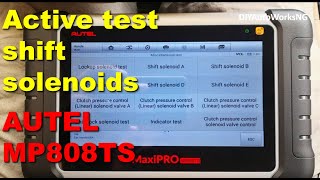
A professional-grade scan tool commands shift solenoid 'A' on and off while monitoring its status in live data. With the engine on, activate the solenoid and listen for an audible 'click' from the transmission pan. If it clicks but the code persists, the issue is mechanical (sticking) or hydraulic (blockage). If it fails to click, the problem is electrical.
Tools: Bidirectional OBD-II Scanner (Advanced) - Inspect the External Wiring and Connectors
Visually inspect the main wiring harness connector on the outside of the transmission. Look for corrosion, bent or pushed-out pins, and wire damage. On GM trucks, check the wiring harness where it rubs against the chassis or engine components. Verify all transmission ground straps are clean and tight.
Tools: Flashlight (Beginner) - Drop the Transmission Pan and Inspect
Drain the fluid and remove the transmission pan. A small amount of fine gray dust on the magnet is normal, but large metal shavings or chunks of clutch material indicate a serious internal failure requiring a rebuild.
Tools: Socket set, drain pan, rags, new pan gasket (Intermediate) - Test the Solenoid's Resistance
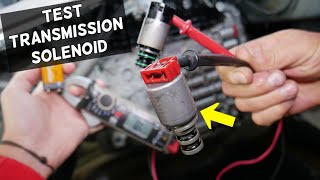
With the pan off, unplug the connector for shift solenoid 'A'. Use a digital multimeter set to Ohms (Ω) to measure the resistance across the two pins on the solenoid. Compare this reading to your vehicle's service manual. For many GM 4L60E transmissions, the spec is 20-30 ohms. A reading that is out of spec, infinite (OL), or zero indicates a faulty solenoid coil.
Tools: Digital multimeter, vehicle-specific service manual (Intermediate) - Inspect the Solenoid Mechanically
After removing the solenoid, inspect its filter screens for metallic debris or clutch material. A clogged screen causes P0785 even if the solenoid is electrically sound. Carefully apply 12V from the vehicle's battery to the solenoid's pins to check if the internal plunger moves freely with a solid click. If it is sluggish or silent, it is mechanically faulty.
Tools: 12V power source with fused leads (Intermediate) - Test the Solenoid Circuit Wiring
If the solenoid tests good, the problem is in the wiring between the solenoid and the TCM. Check for continuity on the power and control wires from the TCM connector to the solenoid connector (should be < 1.0 Ω). Then, check for a short to ground on the control wire by testing for continuity between that wire's pin at the TCM and a good chassis ground.
Tools: Digital multimeter, vehicle-specific service manual (Advanced) - Check TCM Power and Ground
Using a wiring diagram, identify the power and ground pins for the Transmission Control Module. With the key on, verify the TCM receives full battery voltage (12.0V+) on its power inputs and has a solid ground connection (less than 100mV between the ground pin and the negative battery terminal). An unstable power supply causes erratic behavior and false codes.
Tools: Digital multimeter, vehicle-specific service manual (Advanced) - [PRO TIP] Perform a Transmission Line Pressure Test
Low line pressure causes delayed shifts and triggers P0785. Connect a transmission pressure gauge to the line pressure test port. For a GM 4L60E, expected pressure at idle is 55-65 PSI in Drive and 64-75 PSI in Reverse. At wide-open throttle (stall test), pressure rises to 170-190 PSI in Drive and up to 300-325 PSI in Reverse. Pressures significantly below these ranges indicate a worn pump, internal leaks, or a clogged filter.
Tools: Transmission pressure gauge kit (0-400 PSI), vehicle-specific service manual (Advanced)
When This Code Triggers (Freeze-Frame Conditions)
- Engine Coolant Temp: 180-210°F (The code typically sets when the engine is fully warmed up, as fluid viscosity is stable.)
- Engine RPM: 1500-3000 RPM (Triggers during a commanded upshift or downshift under light to moderate acceleration.)
- Vehicle Speed: 25-55 mph (Occurs during shifts at city or highway cruising speeds (e.g., 2-3, 3-4, or a 3-2 downshift).)
- Gear Commanded: 2, 3, or 4 (The fault logs when the TCM commands a shift to a new gear but the input/output speed sensor ratio fails to confirm the change within the expected time.)
Related Codes
- P0750 — P0750 is a generic electrical circuit fault for Shift Solenoid 'A'. P0785 is a timing/performance fault. You get P0785 without P0750 if the solenoid's circuit is fine, but it mechanically sticks. If you have P0750, you likely also get P0785 because the electrical fault prevents the solenoid from working, causing a shift timing error.
- P0751 — Indicates Shift Solenoid 'A' is 'Stuck Off'. This is a more specific mechanical/hydraulic fault than P0785. A stuck-off solenoid always causes a timing error, so P0751 is often accompanied by P0785.
- P0753 — Points to a purely electrical fault (short or open) in the Shift Solenoid 'A' circuit. P0785 is the resulting performance issue. If you see P0753, find the electrical problem (bad coil, broken wire, bad connection). If you only have P0785, the cause is electrical, mechanical, or hydraulic.
- P0700 — A general transmission fault code. It is an informational flag set by the Engine Control Module (ECM) to tell you that a specific code, like P0785, is stored in the Transmission Control Module (TCM). It provides no diagnostic value on its own.
Climate & Environmental Factors
- Extreme Cold: In cold weather, transmission fluid thickens, increasing its viscosity. This causes delayed or harsh shifts on startup as the solenoids struggle to move the thicker fluid, triggering a timing-related code like P0785.
- Extreme Heat: High ambient temperatures, especially combined with heavy loads or stop-and-go traffic, cause the transmission fluid to overheat and thin out. This reduces hydraulic pressure and lubrication, leading to accelerated wear and erratic solenoid performance.
- High Humidity / Coastal Regions: Moisture in the air leads to condensation inside electrical connectors, causing corrosion and poor connections for the solenoid circuit. Salt in coastal air accelerates this corrosion, increasing the likelihood of electrical faults.
- High Altitude: At higher altitudes, the engine produces less power due to thinner air. The TCM adjusts shift points and line pressure to compensate. This exposes underlying weaknesses in the transmission, making a borderline solenoid or clutch issue more apparent.
How to Talk to a Mechanic About This Code
Say this: "I have a P0785 code with harsh shifting and I'd like to schedule a diagnostic. Please start by checking the transmission fluid condition and level, and then test the shift solenoid 'A' circuit, including its resistance and wiring, before recommending any part replacements."
This signals you've done research and directs the shop to follow a logical, cost-effective diagnostic path (fluid -> wiring -> solenoid) instead of immediately quoting an expensive solenoid or valve body replacement.
Avoid saying:
- 'My transmission is acting weird, can you fix it?'
- 'My check engine light is on, just do whatever it takes.'
- 'I think I need a new shift solenoid, can you give me a price?'
Questions to ask before authorizing the repair:
- What was the condition and level of the transmission fluid? Was there any metal or clutch material in the pan?
- Did you test the resistance of the 'A' solenoid? What was the ohm reading and is it within spec?
- Did you test the wiring from the TCM to the solenoid for continuity and for a short to ground?
- If the solenoid needs replacement, does your estimate include a new pan gasket, a new filter, and the manufacturer-specified fluid type?
- What is the warranty on the parts and labor for this repair?
Where to Take It: Dealer vs Independent vs Chain
- Dealer:
A safe, but most expensive, option. Recommended if the issue is diagnosed to be a faulty TCM or a known manufacturer-specific problem that independent shops are not equipped to handle.
Best for: Vehicles still under powertrain warranty., Complex, manufacturer-specific issues (e.g., known TSBs for valve body problems)., When a TCM replacement and programming is required.
Downsides: Highest labor rates., Defaults to replacing larger, more expensive assemblies (like a full valve body) instead of individual components. (Typical cost: +50% vs. baseline) - Independent Shop:
Best fit for most P0785 scenarios. An experienced independent transmission shop expertly diagnoses and repairs fluid, wiring, or solenoid issues for a reasonable price.
Best for: Out-of-warranty vehicles where cost is a factor., Standard diagnosis and replacement of solenoids, fluid, or wiring., Finding a shop that specializes in transmissions is ideal for this code.
Downsides: Quality and expertise vary greatly; vet shops by reviews and ASE certifications., Lacks access to the latest manufacturer software for TCM programming. (Typical cost: +0% vs. baseline) - Chain Shop:
AVOID for diagnosis. The risk of misdiagnosis or being sold an unnecessary, expensive repair is very high for an internal transmission code like P0785.
Best for: A simple transmission fluid drain-and-fill if you are certain that is the only issue.
Downsides: Technicians lack the specialized training for in-depth transmission diagnostics., High pressure to upsell services; misdiagnoses the issue or recommends a costly transmission replacement unnecessarily. (Typical cost: -10% vs. baseline)
When to Walk Away From the Repair
If the estimated repair cost exceeds 50% of the car's private-party value, seriously consider selling the car as-is or trading it in.
- Car worth $4000, fix is $600: Fix it. This is a standard repair cost and is well below the 50% threshold.
- Car worth $4000, fix is $2500: Walk away. The diagnosis likely found internal damage requiring a rebuild, which costs more than half the car's value.
- Car worth $12000, fix is $3500: Borderline - Fix it if the car is otherwise in excellent condition with no other major deferred maintenance. Get a second opinion before proceeding.
What Scan Tool You Need for This Code
Minimum: A scanner that reads transmission-specific codes and displays live data for transmission sensors (Input/Output Speed, solenoid status).
A basic $20 code reader only confirms the P0785 code exists. It cannot show live data to see if the computer's commands are executed or if sensors read correctly, which is essential for diagnosing whether the problem is electrical, mechanical, or hydraulic.
Budget: BlueDriver Pro (~$100) — Reads engine and transmission codes, displays freeze frame data, and graphs live data for transmission sensors. It helps you see what the transmission is doing in real-time to narrow down the problem before going to a shop.
Mid-range: XTOOL D7 / Autel MaxiCOM MK808S (~$350-500) — This is the sweet spot for DIY diagnosis of P0785. These tablet scanners offer bidirectional control, allowing you to command the 'A' solenoid on and off directly from the tool to confirm if it works electrically. This is the single most effective test to isolate a bad solenoid from a wiring or TCM issue.
Professional: Autel MaxiSys Series / Launch X431 Series (~$900-2000+) — Provides full, dealer-level bidirectional control, advanced ECU coding and programming (if a TCM replacement is needed), and access to wiring diagrams and troubleshooting guides directly on the tool.
Rent vs buy: For P0785, renting is not ideal. The free 'loaner tools' at auto parts stores are typically basic code readers lacking the necessary live data and bidirectional functions. If you plan to diagnose the issue yourself, buying a mid-range scanner with bidirectional control is a worthwhile investment saving you hundreds on diagnostic fees.
How to Clear the Code After You Fix It
- Use an OBD-II scan tool to clear the diagnostic trouble codes.
- Perform a complete transmission drive cycle to allow the TCM to verify the repair.
- Check for pending codes after the drive cycle to confirm the fix was successful.
Drive cycle (~30 minutes): A generic drive cycle includes: 1) Cold start and idle for 2-3 minutes. 2) Drive in stop-and-go city traffic for 10-15 minutes, including several full stops. 3) Drive at a steady highway speed (55 mph) for 5-10 minutes. 4) Safely come to a stop and idle for 30 seconds before shutting down. The goal is to operate the transmission through all of its gears, both up and down.
Readiness monitors affected: Comprehensive Component Monitor (CCM), Transmission
Before emissions retest: drive at least 50 miles to fully set monitors.
Watch out for:
- Disconnecting the battery clears the code but erases all readiness monitors and learned transmission shift adapts, causing poor shifting initially and guaranteeing an emissions test failure.
- The code returns immediately if the underlying mechanical or electrical fault remains unrepaired.
Will This Fail Emissions / State Inspection?
Yes — this code typically fails an OBD-II emissions inspection.
- California: An illuminated Check Engine Light results in an automatic failure of the smog check. After repairs, a full OBD-II drive cycle must be completed to set all readiness monitors to 'Ready' before a retest is possible.
- New York: The NYS vehicle inspection includes an OBD-II scan. The presence of code P0785 causes an immediate failure.
- Texas: In the 17 Texas counties requiring emissions testing, an active P0785 code and illuminated Check Engine Light result in a failed inspection.
Most Commonly Affected Vehicles
- Chevrolet/GMC Silverado, Sierra, Tahoe, Suburban, Blazer (1997-2008) — Vehicles with the 4L60E or 4L65E transmission are very prone to this code, where it specifically refers to the 3-2 shift solenoid. A common failure point is a broken wire at the main PCM connector or a faulty ignition switch causing intermittent power loss.
- Ford Explorer, Ranger, Mustang (2002-2010) — Often related to issues with the solenoid body (block) or internal wiring harness within the 5R55E/W/S transmissions. Failure requires replacing the entire solenoid block.
- Honda Odyssey, Accord, Pilot (1999-2004) — Early 2000s models with 5-speed automatic transmissions are known for premature clutch wear, which contaminates the fluid and clogs the linear solenoid screens, causing this and other pressure-related codes.
- Toyota Camry, Sienna, Corolla (1997-2006) — Often caused by a failing solenoid or an internal issue within the valve body requiring more extensive service.
- Jeep Grand Cherokee (1999-2004) — Models with the 42RE or 45RFE transmission log this code due to solenoid pack failure or wiring issues, particularly at the main connector.
- Nissan Murano, Altima, Maxima (2003-2016) — On models with a CVT, a P0785 equivalent points to issues with the torque converter clutch solenoid or flow control valves within the valve body, often presenting with a shudder.
- Hyundai Elantra, Sonata, Santa Fe (2006-2015) — Triggered by a faulty internal transmission wiring harness, which is susceptible to heat damage and becoming brittle, or a failing shift solenoid.
- Subaru Outback, Forester, Impreza (2005-2014) — Associated with valve body issues or failure of the shift solenoids. On many models, the solenoids are integral to the valve body and are replaced as a complete assembly.
Manufacturer-Specific Notes
- GM (General Motors): On 4L60E/4L65E transmissions, P0785 specifically points to the '3-2 Shift Solenoid'. When this code sets, the PCM commands maximum line pressure (causing harsh shifts), inhibits torque converter clutch lockup, and inhibits 4th gear. A faulty ignition switch is a known issue causing intermittent power loss, triggering P0785 along with P0740 and P0753.
- Honda: On early 2000s models (Odyssey, Accord), P0785 is frequently a secondary code caused by a primary mechanical issue. Worn internal clutches contaminate the fluid with friction material, clogging the fine mesh screens on the shift and lock-up solenoids, restricting fluid flow and causing performance codes.
- Ford: In many Ford transmissions (like the 5R55E/W/S), the solenoids are part of a larger solenoid block. If one solenoid fails, the entire pack requires replacement. TSB 09-22-13 notes that shift issues are sometimes caused by worn servo bores in the transmission case, which mimic a solenoid problem.
- Hyundai: A common point of failure is the internal transmission wiring harness. Over time, heat causes the wire insulation to become brittle and crack, leading to intermittent shorts or open circuits that trigger P0785 and other solenoid codes. The harness is replaced along with any faulty solenoids during service.
Real Owner Stories
2006 Chevrolet Silverado 1500 (4L60E) with multiple transmission codes
After the truck was parked for a week, the Check Engine Light came on with codes P0740, P0753, P0758, P0785, and P2761. The truck was stuck in 3rd gear ('limp mode').
What they tried:
- Replaced two shift solenoids, the downshift solenoid, and the clutch pressure solenoid, along with a fluid and filter change. The fix worked for three weeks.
- The problem returned after parking the truck for another week. The owner suspected a blown transmission fuse or a wiring issue.
Outcome: The intermittent nature of the problem, especially after sitting, points strongly to an electrical issue rather than a hard part failure. A common cause for this group of codes on GM trucks is a faulty ignition switch or a poor connection at the main transmission plug, causing a loss of power to all solenoids simultaneously.
Lesson: When multiple solenoid electrical codes appear at once, the problem is almost never the solenoids themselves. It is a shared power or ground issue. Check fuses and the main harness connector before replacing internal parts.
1999 Chevrolet Blazer with P0785 only when hot
The truck shifted perfectly when cold, but triggered a P0785 and went into limp mode after reaching operating temperature (around 195°F).
What they tried:
- Replaced all transmission solenoids and the internal wiring harness. The problem returned after a short drive.
- Tested wiring from the PCM to the transmission. Warmed the PCM with a hairdryer to see if it triggered the fault (it didn't immediately).
- The owner noted that a spring behind the 3-2 solenoid is a common failure point that is easily missed.
Outcome: The symptoms (failure only when hot) strongly suggest either the 3-2 solenoid failed electrically when its internal coil resistance changed with temperature, or a hairline crack in the wiring/PCM expanded and lost connection when hot.
Lesson: Temperature-related failures are classic signs of an electrical component at the edge of its tolerance. A part tests fine when cold, but fails when hot. A broken 3-2 downshift valve spring in the 4L60E valve body also causes this code and is often overlooked.
2002 Ford Explorer (5R55W) with P0785 and harsh shifting
Vehicle experienced harsh shifting and the P0785 code was stored. The 5R55W/S transmissions are known for solenoid issues.
What they tried:
- Initial diagnosis pointed towards a faulty shift solenoid 'A'.
Outcome: On these Ford transmissions, the solenoids are integrated into a single 'solenoid block' or 'pack'. It is standard practice to replace the entire block as a unit, even if only one solenoid is suspected of failure. An updated OEM part (9L2Z-7G391-A) or a quality remanufactured block from a brand like Sonnax is the standard repair.
Lesson: Know your vehicle's specific design. On many Fords, you cannot replace just one solenoid. The entire solenoid pack must be replaced, which costs more in parts ($150-$400) but simplifies the repair and prevents future failures of the other integrated solenoids.
How to Prevent This Code From Triggering
- Regularly change the transmission fluid and filter (Every 30,000 to 60,000 miles) — Clean fluid maintains correct hydraulic pressure and prevents abrasive particles from clutch wear from clogging or damaging solenoid screens and delicate valve body passages.
- Use only the manufacturer-specified ATF (Every fluid service) — The fluid's specific friction properties and viscosity are critical for proper solenoid and clutch operation. Using a generic or incorrect fluid type leads to shifting problems.
- Install an auxiliary transmission cooler (Once, especially for vehicles that tow or operate in hot climates) — Excess heat is the number one killer of automatic transmissions. Keeping the fluid temperature stable (ideally 175-200°F) prevents fluid breakdown and protects solenoids and seals from heat damage, significantly extending transmission life.
- Periodically inspect external wiring and connectors (Every oil change) — A quick visual check of the main transmission harness connector for corrosion, and ensuring the harness is secured away from hot exhaust pipes, prevents common electrical failures that trigger solenoid codes.
- Maintain battery and charging system health (Annually) — Solenoids require a stable voltage to actuate correctly. A weak battery or failing alternator causes voltage drops during shifts, leading to erratic solenoid performance and triggering fault codes.
Frequently Asked Questions
What are the most common misdiagnosis mistakes for P0785?
The most common mistake is immediately replacing the shift solenoid without testing the circuit or checking fluid condition. Technicians often find the problem is actually a corroded wire, a bad ground, or low/dirty fluid. Always perform a full diagnosis before replacing parts.
Can a bad ground cause a P0785 code?
Yes. The TCM controls the solenoids by providing a ground path. A corroded or loose ground strap for the TCM or the main engine harness causes erratic voltage and unpredictable solenoid operation, leading to a P0785 performance code.
Why did the code come back after replacing the solenoid?
If a new solenoid fails to fix the problem, the issue is upstream or downstream. The most likely culprits are an intermittent fault in the wiring harness, a poor connection at the main plug, clogged hydraulic passages, or a failing TCM driver circuit.
What's the difference between P0785 and an electrical code like P0753?
P0753 indicates a direct electrical short or open circuit. P0785 is a performance code meaning the shift took too long. While an electrical issue causes P0785, mechanical sticking or hydraulic blockages also trigger it.
Can a weak battery or bad alternator cause a P0785 code?
Yes. Transmission solenoids rely on precise voltage to operate correctly. A weak battery or failing alternator causes voltage drops (typically below 12.0V), leading to erratic solenoid function and triggering performance codes like P0785.
What does the 'A' in P0785 signify?
The letter 'A' designates a specific solenoid or its circuit within the transmission. Transmissions have multiple solenoids ('A', 'B', 'C', etc.) controlling different functions. In a GM 4L60E, 'A' refers to the 3-2 shift solenoid.
Can I just clear the P0785 code?
You can clear the code with a scanner, but it returns within a few drive cycles if the underlying problem remains. Ignoring the code leads to severe and expensive transmission damage, such as burnt clutches or a failed valve body.
Is P0785 a serious problem?
Yes, any transmission code is a serious issue. Leaving it unaddressed turns a relatively minor solenoid or fluid issue into a complete transmission failure, costing thousands to repair or replace.
Key Takeaways
- Code P0785 triggers when the transmission control module detects that a commanded gear change took longer than the expected 50-200 milliseconds.
- Check your transmission fluid first; low or burnt fluid is the root cause in over 50% of P0785 cases.
- Limit driving to under 15 miles to reach a repair shop, as operating in 'limp mode' or with slipping clutches quickly turns a $300 solenoid repair into a $3,000 rebuild.
- Test the solenoid's electrical resistance (typically 20-30 ohms) and verify wiring continuity before replacing any internal transmission parts.
Helpful Videos

Shop the Parts Behind P0785
Below are the parts most often responsible for code P0785, ranked by how frequently each one is the actual culprit (per the diagnosis above). Tap any to see what we have for your vehicle.


The information in this article is provided for general reference and educational purposes only. Vehicle specifications, procedures, and part compatibility can vary by production date, trim level, and region. Always consult your vehicle's factory service manual and verify part numbers before purchasing or performing repairs. Safety-critical components such as airbags, seat belts, and braking systems should be installed by a qualified professional.
- 🧭 Diagnostic Flowchart
- 🎬 Helpful Videos
- 🛍️ Shop This Part
- What Does P0785 Mean?
- Can I Drive With P0785?
- Common Causes
- Symptoms
- Common Fixes & Costs
- Used vs. New Parts: Buying Guide
- What Happens If You Wait — Timeline
- Cost of Not Fixing It
- Diagnosis Steps
- When This Code Triggers (Freeze-Frame Conditions)
- Related Codes
- Climate & Environmental Factors
- How to Talk to a Mechanic About This Code
- Where to Take It: Dealer vs Independent vs Chain
- When to Walk Away From the Repair
- What Scan Tool You Need for This Code
- How to Clear the Code After You Fix It
- Will This Fail Emissions / State Inspection?
- Most Commonly Affected Vehicles
- Manufacturer-Specific Notes
- Real Owner Stories
- 2006 Chevrolet Silverado 1500 (4L60E) with multiple transmission codes
- 1999 Chevrolet Blazer with P0785 only when hot
- 2002 Ford Explorer (5R55W) with P0785 and harsh shifting
- How to Prevent This Code From Triggering
- Frequently Asked Questions
- What are the most common misdiagnosis mistakes for P0785?
- Can a bad ground cause a P0785 code?
- Why did the code come back after replacing the solenoid?
- What's the difference between P0785 and an electrical code like P0753?
- Can a weak battery or bad alternator cause a P0785 code?
- What does the 'A' in P0785 signify?
- Can I just clear the P0785 code?
- Is P0785 a serious problem?
- Key Takeaways
- 🎟️ Get 5% Off