

P0796 on 2016-2022 Honda HR-V 1.8L CVT: Pressure Control Solenoid 'C' Causes and Fixes
P0796 on a Honda HR-V often indicates a serious internal CVT transmission problem, not just a bad solenoid. The most likely cause is a failing CVT drive belt, evidenced by metal debris in the fluid. This typically requires a full transmission replacement, a very costly repair. Honda has acknowledged this with a warranty extension for many affected models.
- P0796 on a 2016-2022 HR-V is a very serious code that strongly suggests an impending or current internal CVT failure.
- Before any repair, the CVT fluid MUST be inspected for metal debris. If metal is present, the transmission needs to be replaced.
- Do not simply replace the solenoid without a thorough diagnosis, as it's likely a symptom of a larger problem.
- Owners of 2016-2020 models should contact a Honda dealer to check for warranty coverage under the CVT warranty extension (TSB 21-014).
What's Unique About the 2016-2022 Honda HR-V
For the 2016-2022 HR-V, code P0796 is a major red flag that often points beyond a simple solenoid failure to a much more severe issue: CVT drive belt deterioration. Honda acknowledged this weakness by issuing service bulletin TSB 21-014, which includes a software update to better monitor CVT pressure and an extended warranty on the CVT assembly for many of these vehicles. Owners and technicians frequently discover metal shavings in the transmission fluid along with this code, which is a definitive sign of the CVT belt failing and requiring a complete transmission replacement.
Symptoms You May Notice
- Check Engine Light is on
- Flashing 'D' (Drive) indicator light
- Vehicle enters 'limp mode' with severely reduced power
- Harsh engagement or hesitation when shifting from Park to Drive/Reverse
- Vehicle will not move or stops moving while driving.
- Slipping, jerking, or erratic transmission performance.
- Inability to accelerate
- Unusual noises like whining or grinding from the transmission area.
- Replacing only the pressure control solenoid 'C' without checking for metal debris in the fluid. If the CVT belt is failing, a new solenoid or valve body will be quickly destroyed by metal contamination, and the problem will return.
- Performing a fluid flush on a transmission that already has metal debris. This will not fix the mechanical damage and is a waste of money.
Most Likely Causes
- Internal CVT Failure (Drive Belt/Chain) 🔴 High Probability Honda issued a warranty extension (TSB 21-047, related to 21-014) for the CVT on 2016-2020 models due to the potential for early deterioration of the internal drive belt. The belt sheds metal, which contaminates the fluid and clogs the valve body, leading to the P0796 code.
How to confirm: Drain the CVT fluid and inspect it carefully for metallic debris or shavings. Pouring the fluid through a paint strainer or coffee filter into a clean pan makes the metal particles easy to see. The presence of metal confirms a catastrophic internal failure.
Typical fix: Complete replacement of the CVT assembly with a new or remanufactured unit. This is the only permanent solution once metal is present.
Est. part cost: $4000-$7000 - Low or Contaminated CVT Fluid 🟡 Medium Probability Fluid is the lifeblood of the CVT. If it's low or degraded, it cannot create the hydraulic pressure needed for the solenoids and pulleys to operate correctly. However, on this platform, contaminated fluid is most often a *symptom* of the failing CVT belt, not the root cause.
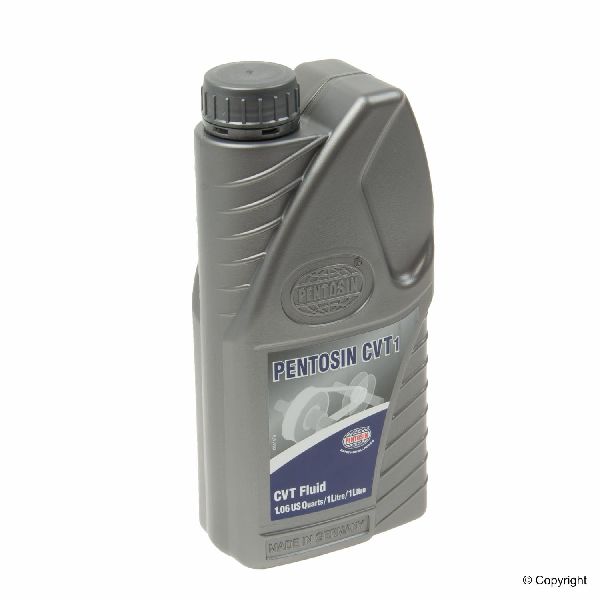
How to confirm: Check the CVT fluid level and condition. The fluid should be at the correct level and translucent, not dark, burnt-smelling, or full of particles. Use only Honda HCF-2 fluid. 🎬 Watch: Step-by-step guide on how to change your CVT fluid.
Typical fix: Perform a CVT fluid drain and fill using only Honda HCF-2 fluid. If the fluid is heavily contaminated with metal, this is only a temporary diagnostic step, and the transmission will need replacement.
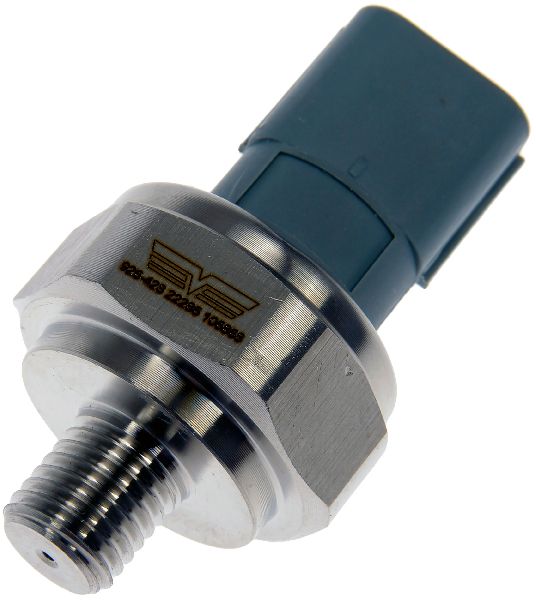
Est. part cost: $75-$150 - Faulty Transmission Valve Body or Solenoid ⚪ Low Probability → Shop Transmission Valve Body While possible, a simple solenoid failure is less common on this platform than the belt failure. Debris from a failing belt can clog the valve body and cause the solenoid to malfunction, making this a secondary failure. Replacing the valve body without addressing the source of the metal debris will result in a repeat failure.
How to confirm: If the fluid is perfectly clean (no metal), a technician can test the solenoid's electrical resistance and command it on/off with a diagnostic tool. This requires accessing the valve body inside the transmission. 🎬 Watch: How to diagnose valve body clogs before total failure.
Typical fix: Replacement of the pressure control solenoid or the entire valve body assembly. This should only be attempted if the fluid is confirmed to be 100% free of metal debris.
Est. part cost: $400-$1200
Rare But Worth Checking
- Wiring Harness or Connector Damage: An open or short in the wiring to the solenoid can trigger the code. This should be checked before condemning expensive hard parts, especially if there is any sign of rodent damage or previous repairs.
- Failed Transmission Control Module (TCM): → Shop Transmission Assembly This is very rare, but the TCM can fail and incorrectly report a solenoid issue. All other possibilities should be exhausted first.
Diagnosis Steps
- Check and document all stored Diagnostic Trouble Codes (DTCs).
- Inspect the level and condition of the CVT fluid. Note any burnt smell or visible metal particles.
- CRITICAL: Drain a small amount of fluid and pour it through a filter or into a clean pan. Inspect for metal shavings. If found, the transmission has failed internally and requires replacement.
- If the fluid is clean, inspect the wiring harness and connectors leading to the transmission for any visible damage, corrosion, or loose connections.
- If wiring is intact, a professional technician will need to test the pressure control solenoid circuit, which may involve dropping the transmission pan and valve body.
- Follow Honda's specific diagnostic procedure for P0796 using a compatible scan tool (like the Honda HDS) to test solenoid function.
- Check with a Honda dealer using your VIN to see if the CVT warranty extension (TSB 21-014 / 21-047) applies to your vehicle.
Parts You'll Likely Need
- CVT Assembly (Remanufactured)
(OEM #06200-52P-A70RM (example for 2022 2WD, many variations exist))— This is the most common fix due to the high rate of internal CVT belt failure associated with code P0796 on this vehicle.
Trusted brands: Honda (OEM Remanufactured)
OEM price range: $4500-$7000
Aftermarket price range: $4000-$6000 - Honda Genuine HCF-2 CVT Fluid
(OEM #08200-HCF2)— This specific fluid is required for all diagnosis and repair. Using any other fluid can cause damage.
Trusted brands: Honda
OEM price range: $20-$30 per quart - CVT Valve Body Assembly — If diagnosis confirms clean fluid but a faulty solenoid, the entire valve body is often replaced as a unit. This is an uncommon fix for this specific code on this vehicle.
Trusted brands: Honda
OEM price range: $800-$1200
Aftermarket price range: $500-$900
Related Codes That Often Appear With This One
- P0793 — This code for 'Input Shaft Speed Sensor 'A' Circuit No Signal' can appear with P0796 when there is a major internal failure, as the TCM loses critical data from multiple components.
- P0717 — This code for 'Turbine/Input Shaft Speed Sensor 'A' Circuit No Signal' is also commonly seen with P0796 on related Honda models like the Fit, indicating a widespread system failure within the transmission.
Technical Service Bulletins (TSBs) & Recalls
- Honda TSB 21-014 - Product Update: 2016-20 HR-V PGM-FI and CVT Software Update, and CVT Warranty Extension
- Honda TSB 21-047 - Warranty Extension: 2016-20 HR-V CVT Premature Belt Deterioration
Platform-Specific Known Issues
- Honda Service Bulletin 21-014 / 21-047: Addresses a software update for the PGM-FI and CVT to improve belt durability monitoring. It also extends the warranty on the CVT assembly to 7 years or 150,000 miles for certain 2016-2020 models due to potential CVT belt deterioration. Owners should check with a Honda dealer to see if their vehicle is covered, as this could result in a no-cost transmission replacement.
Mechanic-Grade Diagnostic Values
- Pressure Control Solenoid 'C' Coil Resistance — expected: 4.6 to 6.3 Ω. Failure: A reading of infinite ohms (open circuit) or near-zero ohms (short circuit).
- Pressure Control Solenoid 'C' Functional Test — expected: Audible 'click' when 12V is applied.. Failure: No clicking sound when voltage is applied, indicating a mechanically stuck solenoid.
Scan Tool Commands That Help
- Honda Diagnostic System (HDS): Clutch Pressure Control (Linear) Solenoid Valve C Test — This bidirectional test is found in the 'Miscellaneous Test Menu' and allows a technician to command the solenoid on and off. It is used to verify if the solenoid is responding to electrical commands from the TCM, which helps isolate the problem to the solenoid itself, the wiring, or the TCM.
Wiring & Ground Locations
- PCM Connector B (51-pin) & Solenoid Harness Connector (8-pin) — The PCM connector is located at the Powertrain Control Module, while the 8-pin solenoid harness connector is on the engine wire harness side, connecting to the transmission's internal harness.. Diagnostic procedures for related codes on similar platforms require disconnecting these specific connectors to test for shorts or opens in the circuit between the PCM and the solenoid. This is a critical step if the fluid is clean and a wiring fault is suspected.
Real Owner Repair Stories
- Reddit user discussion in r/hondahrv (2020 Honda HR-V EX vs 2021 Honda HR-V Sport) — General discussion about known CVT issues.
✅ What actually fixed it Preventative choice: A user opted for the 2021 model over a 2020, noting that the 2021 models came from the factory with the preventative software update already installed, while the 2020 models required the update via TSB and had a higher risk of having been driven with the faulty software. Another user confirmed they ensured their 2020 model had the software update and the warranty extension applied before purchase. - YouTube video 'Honda HRV 2016 DTC P0796' (2016 Honda HR-V) — Harsh shifting, multiple warning indicators on the dash, and no throttle response.
✅ What actually fixed it The video description states the root cause was a fault in the electrical wiring that ultimately caused damage to the ECU (Engine Control Unit). This required ECU repair/replacement in addition to fixing the wiring.
Documented NHTSA Reports
- In a report involving a related Honda model, NHTSA ODI #10949348 describes a scenario where the check engine code P0796 (A/T Clutch Pressure Control Solenoid Valve C Stuck Off) appeared repeatedly, though the code did not immediately return after being reset by a dealer.
- NHTSA ODI #11265807 notes that code P0796 can occur alongside other transmission codes like P0780 and P1733, with symptoms including the transmission taking time to engage after being placed in Drive and a blinking Drive light.
OEM Part Supersession History
Multiple, e.g., 06200-52N-A00RM, 06200-52N-A01RM, etc.→06200-52N-A04RM— Revision to address internal component durability, likely related to the CVT belt issue.
Heads up: This part is for 2WD models. Using the latest part number available from Honda is critical to ensure the most recent design improvements are included.Multiple, e.g., 06200-52P-A01RM, 06200-52P-C70RM, etc.→06200-52P-A70RM or 06200-52P-A02RM— Revision to address internal component durability, likely related to the CVT belt issue.
Heads up: These parts are for AWD models. The existence of numerous superseded part numbers strongly indicates that Honda has made several revisions to fix the underlying defect.
Model Year Variations Within This Range
- 2016-2020: These model years are specifically covered by Honda's TSB 21-014 and the associated warranty extension for premature CVT belt deterioration. They require a software update and inspection, and are at the highest risk for this failure.
- 2021-2022: While mechanically similar, these models were likely manufactured after the software fix was developed. Forum users report these years are less prone to the issue because they shipped with the updated CVT control software from the factory, though they can still fail. The official warranty extension does not explicitly cover these years.
Diagnostic Flowchart
Other Known Issues on This Vehicle
Issues unrelated to this code that are worth knowing about as an owner of this generation:
- Failing Push-Button Start Switch 🟠 Medium — Commonly reported in 2016-2018 models, often starting around 60,000 miles. Symptoms include needing multiple presses to start the vehicle. (Ref: Honda TSB 20-116 extended the warranty for this part to 9 years or 125,000 miles.)
- Premature Fuel Injector Failure 🟠 Medium — Can cause misfires, rough idle, and check engine lights for codes like P030x, P0171, P0172. This issue was also seen on the platform-mate Honda Fit. (Ref: A warranty extension was issued for the fuel injectors on some related models (e.g., 2015-16 Fit), but HR-V coverage should be confirmed with a dealer.)
- VTC Actuator Rattle on Cold Start 🟡 Low — A brief, loud grinding or rattling noise for 1-2 seconds upon starting the engine when cold. While common on many Honda 4-cylinder engines, it can lead to timing chain stretch if ignored long-term.
- Weak OEM Battery / Starting Issues 🟡 Low — Many owners report premature failure of the original factory battery, leading to no-start conditions.
- Faulty Low-Pressure Fuel Pump 🔴 High — Affects certain 2018-2019 HR-V models. The fuel pump can fail, causing the engine to stall while driving. (Ref: Honda Recall NHTSA #21V215000.)
Used vs. New Parts: Buying Guide for This Vehicle
When a used part is the smart pick: For this specific repair (P0796), a used part is an extremely high-risk choice and is NOT recommended. The failure is due to a known design and manufacturing defect in the CVT belt. A used transmission from a 2016-2020 donor vehicle is highly likely to suffer the same fate.
Donor-vehicle mileage cap: roughly under 30000 miles for the part to have meaningful remaining life.
What to inspect on the donor part:
- If a used part must be considered, only source from a 2021-2022 model with very low mileage.
- Obtain the VIN of the donor car and have a Honda dealer run a service history to see if any transmission-related work has been done.
- Demand a warranty from the salvage yard, and get it in writing.
- Before installation, drain the fluid from the used unit. If ANY metallic particles are found, return it immediately.
OEM-only on this vehicle (don't cheap out):
- CVT Assembly: The only reliable fix is a remanufactured unit from Honda, which will have the latest design updates and a warranty.
- CVT Fluid: Only use Honda Genuine HCF-2 fluid. Using any other fluid can cause damage and will void any warranty on a replacement transmission.
Brands owners have reported issues with on this vehicle:
- Any non-Honda remanufactured CVT for this platform should be treated with extreme caution. The internal parts and software are highly specific, and aftermarket rebuilds may not have access to the latest revised components from Honda.
Real Owner Stories
Aggregated from forums and TSBs cited above. Mileages and costs reflect what owners reported in those sources.
2016 Honda HR-V
Symptoms: Received multiple diagnostic codes, including P0796, and was told the transmission needs to be replaced. Other codes included ABS 83-12, 83-16, EPS U0416-68, and EPB U0401-68, U0402-68.
What fixed it: The user was quoted $7,000 for a transmission replacement but was seeking financial advice rather than reporting a completed repair.
Cost: $7000
Source hint: Reddit r/personalfinance thread titled 'My Honda 2016 hr-v trans needs to be replaced but it's 7k...'
2016 Honda Fit 1.5L CVT
Symptoms: The vehicle presented with a P0796 code and a no-move condition.
What fixed it: The source did not specify the final repair.
Source hint: FitFreak.net: '2016 honda fit transmission problems'
Related OBD-II Codes
Frequently Asked Questions
Is the CVT transmission failure causing code P0796 on my 2016-2020 HR-V covered by a warranty?
My mechanic quoted me $7,000 for a new transmission for my HR-V. Is this a normal price for a P0796 fix?
Can't my mechanic just replace the pressure control solenoid to fix P0796 on my HR-V?
How can I be certain my HR-V's CVT has failed internally before agreeing to a full replacement?
I have a 2017 Honda Fit with code P0796. Does this article about the HR-V apply to my car?
What specific fluid should be used in my HR-V's CVT transmission?
Helpful Videos
We Have This Part in Stock


The information in this article is provided for general reference and educational purposes only. Vehicle specifications, procedures, and part compatibility can vary by production date, trim level, and region. Always consult your vehicle's factory service manual and verify part numbers before purchasing or performing repairs. Safety-critical components such as airbags, seat belts, and braking systems should be installed by a qualified professional.
- Honda HR-V:
- 🧭 Diagnostic Flowchart
- 🎬 Helpful Videos
- 🛍️ Shop This Part
- What's Unique About the 2016-2022 Honda HR-V
- Symptoms You May Notice
- Most Likely Causes
- Rare But Worth Checking
- Diagnosis Steps
- Parts You'll Likely Need
- Related Codes That Often Appear With This One
- Technical Service Bulletins (TSBs) & Recalls
- Platform-Specific Known Issues
- Mechanic-Grade Diagnostic Values
- Scan Tool Commands That Help
- Wiring & Ground Locations
- Real Owner Repair Stories
- Documented NHTSA Reports
- OEM Part Supersession History
- Model Year Variations Within This Range
- Other Known Issues on This Vehicle
- Used vs. New Parts: Buying Guide for This Vehicle
- Real Owner Stories
- 2016 Honda HR-V
- 2016 Honda Fit 1.5L CVT
- Related OBD-II Codes
- Frequently Asked Questions
- 🎟️ Get 5% Off