

OBD-II Code P0805: Clutch Position Sensor 'A' Circuit
What P0805 means, why it triggers, and how to fix it
- 1. Code P0805 indicates an electrical fault in the clutch position sensor circuit, preventing the engine computer from knowing if the clutch is pressed.
- 2. The top 3 symptoms are a no-crank condition, disabled cruise control, and erratic shifting on automated manual transmissions.
- 3. On traditional manual transmissions, replacing a worn $30-$80 clutch position switch resolves the code 80% of the time.
- 4. For Ford Focus/Fiesta and VW/Audi DSG models, P0805 frequently signals a failing Transmission Control Module (TCM) or mechatronics unit requiring a $1,000+ professional repair.
- 5. Always test the sensor for a 5V reference signal and near 0Ω resistance when closed before replacing expensive parts like the starter motor.
What Does P0805 Mean?
P0805 means the Powertrain Control Module (PCM) or Transmission Control Module (TCM) detects an electrical fault in the clutch position sensor circuit. This sensor tells the computer whether the clutch is engaged or disengaged. This data is critical for starting manual transmission vehicles, disengaging cruise control, and managing gear shifts in automated manual or dual-clutch transmissions.
Technical definition: The SAE/ISO definition for P0805 is: Clutch Position Sensor 'A' Circuit Malfunction. The PCM or TCM has detected incorrect voltage, resistance, or an open/short in the clutch position sensor circuit. The 'A' designates a specific sensor on vehicles with multiple clutch sensors, such as dual-clutch transmissions.
Can I Drive With P0805?
Yes, But With Caution. You can usually drive, but it poses a severe safety risk. The engine often will not start, or worse, it starts without the clutch depressed, causing the vehicle to lurch if left in gear. Cruise control disables automatically. On automated manual transmissions, it causes erratic shifting, stalling, or a dangerous 'limp mode' in traffic. Continued driving risks severe transmission damage.
Common Causes
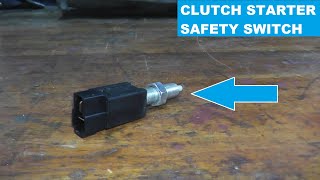
- Faulty Clutch Position Sensor/Switch (Very Common) — The sensor itself is the most frequent point of failure. 🎬 Watch: How to test and replace a clutch safety switch. Typically located on the clutch pedal bracket, this switch wears out mechanically from constant use or fails internally.
- Faulty Control Module (PCM/TCM) (Common) — While rare on traditional manuals, this is a highly common failure point on Ford Focus/Fiesta (DPS6) and VW/Audi (DSG) automated transmissions. The TCM or internal mechatronics unit fails and loses communication with the clutch actuators.
- Damaged Wiring or Connectors (Common) — Wires leading to the sensor break or chafe from foot movement, vibration, or age. The electrical connector also loosens, corrodes, or suffers moisture contamination, causing high resistance.
- Improperly Adjusted Sensor/Switch (Common) — The sensor requires precise positioning to activate at the correct point in the pedal's travel. If knocked out of alignment or improperly installed, it sends an inaccurate signal.
- Blown Fuse or Fusible Link (Less Common) — A blown fuse in the sensor's power circuit disables it entirely. Fuses that appear intact when cold sometimes fail under load, requiring multimeter testing.
- Water Intrusion and Corrosion (Less Common) — On off-road vehicles like Jeep Wranglers, water and mud contaminate the sensor, connector, or CAN bus junction blocks, 🎬 Watch: 2017 Jeep Wrangler clutch switch replacement walkthrough. causing short or open circuits.
- Worn Clutch Pedal Assembly Components (Rare) — A worn bushing, bent pedal arm, or weak return spring prevents the sensor from actuating correctly. This mechanical fault mimics an electrical sensor failure.
- Aftermarket Accessories or Modifications (Rare) — Improperly installed remote starters or alarms tapped into the starter interlock circuit interfere with the clutch sensor signal, triggering the code.
Symptoms
- Engine Will Not Start or Crank — The clutch position sensor acts as a safety interlock. If it fails, the computer prevents the starter from engaging because it cannot confirm the clutch is pressed.
- Check Engine Light is On — The primary indicator. Automated transmissions also display a 'Gearbox Malfunction' or 'Transmission Fault' message on the dashboard.
- Erratic Shifting, Stalling, or Limp Mode — On DSG or PowerShift transmissions, a bad sensor signal causes rough shifting or stalling. The transmission enters 'limp mode,' locking out specific gears (e.g., only allowing even gears).
- Cruise Control Does Not Work — Cruise control relies on the clutch sensor to disengage automatically. A faulty signal disables the system entirely as a safety precaution.
- Engine Starts Without Pressing the Clutch — A critical safety failure where the sensor sticks closed. The computer believes the clutch is always pressed, allowing the car to start in gear and lurch unexpectedly.
- High or Low Engine Idle Speed — The PCM uses clutch position to control idle speed. Incorrect sensor data causes the engine RPM to surge or drop unusually when the pedal is depressed.
- Freeze Frame Data Logged (scan-tool only — no driver-felt sign) — The computer stores a snapshot of sensor data at the exact moment the fault occurred, providing vital clues for professional diagnosis.
Common Fixes & Costs
- Replace Clutch Position Sensor/Switch
— Parts: $20-$100, Labor: $100-$175, ~1.2 hr book time
(DIY)
Chevrolet Cruze: OEM ACDelco 20995840 (Alt: Standard Motor Products C437DN, Dorman)
Subaru Impreza/WRX/Forester: OEM Subaru 36073FJ000 (Alt: Standard Motor Products, Beck/Arnley) - Replace Transmission Control Module (TCM) or Mechatronics Unit
— Parts: $500-$1500, Labor: $300-$700, ~3.5 hr book time
(Professional)
Ford Focus/Fiesta (DPS6 Actuator): OEM Ford AE8Z-7C604-A (Alt: Dorman)
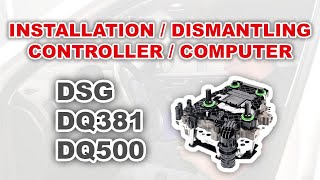
Volkswagen/Audi (DQ381 Mechatronics): OEM VAG 0GC927711G 🎬 See this DQ381 DSG control unit removal and installation guide. (Alt: Remanufactured units from Eco Torque) - Repair Damaged Wiring or Connector — Parts: $10-$30, Labor: $125-$250, ~1.5 hr book time (Intermediate)
- Adjust Clutch Position Sensor — Parts: $0, Labor: $50-$100, ~0.5 hr book time (DIY)
- Replace Blown Fuse — Parts: $1-$10, Labor: $0-$50, ~0.2 hr book time (DIY)
Used vs. New Parts: Buying Guide
When a used part is worth it: Buying a used clutch position switch is never recommended as it is a cheap wear item. For expensive modules like a TCM, a professionally remanufactured unit with a warranty is viable, but junkyard parts are high risk.
Donor-vehicle mileage cap: roughly under 20000 miles for the part to have meaningful remaining life.
Donor quality checklist:
- Match the part number exactly; superseded numbers fail to communicate.
- Ensure the donor vehicle's VIN is available for module programming.
- Avoid parts from flood-damaged vehicles.
Decision logic:
- If The part is a simple clutch pedal switch/sensor → Always buy new. Cost savings are negligible compared to the risk of premature failure.
- If The part is an expensive TCM or Mechatronics unit → Favor a new OEM or quality remanufactured unit with a warranty over a junkyard part.
- If Vehicle is old, budget is tight, and the part is a simple switch → A used part is a last resort. Test it with a multimeter before installation.
Warranty tradeoff: Salvage yard parts offer 30-day warranties. Aftermarket new sensors carry 1-year to lifetime warranties. OEM new parts carry 1-year/12,000-mile warranties.
Worst-case if a used part fails: $150-$300 if a used sensor fails, requiring repeat labor. A used TCM failure costs $1000+ for repeat labor and replacement.
Cost of Not Fixing It
- Immediate: Inability to start the engine, leaving you stranded. A critical safety risk if the car starts in gear and lurches unexpectedly. (Added cost: $100-$200 (Towing service))
- 0-3 months: On automated manual transmissions, continued driving with erratic shifting causes excessive wear on internal clutch packs. (Added cost: $1500-$4000 (Premature clutch replacement or transmission damage))
- Ongoing: Automatic failure of state emissions or safety inspections due to the Check Engine Light. (Added cost: $50-$500 (Fines and re-inspection fees))
Diagnosis Steps
- Read the Code and Freeze Frame Data
Use an OBD-II scanner to confirm P0805. Document related codes (like P0807 or P1735) and review freeze frame data to see the exact vehicle conditions when the fault triggered.
Tools: OBD-II Scanner (Beginner) - Test Basic Sensor and Safety Interlock Function
Attempt to start the engine without pressing the clutch (it should not crank). Try starting it while pressing the clutch. Test if cruise control engages while driving. This confirms the physical symptoms.
Tools: None (Beginner) - Perform a Thorough Visual Inspection
Inspect the clutch pedal assembly, sensor, connector, and wiring harness. Look for frayed wires, loose connectors, or physical damage. Ensure the sensor aligns properly with the pedal mechanism.
Tools: Flashlight, Inspection Mirror (Beginner) - PRO TIP: Use a Scan Tool for Live Data Monitoring
View the clutch position sensor status in the scanner's live data stream. The status must change (e.g., 'On' to 'Off', or a sweeping voltage) as you press the pedal. If data remains static while the pedal moves, the sensor or wiring is dead.
Tools: Advanced OBD-II Scan Tool (Intermediate) - Check for a Blown Fuse
Locate the fuse for the clutch interlock or starting system in the owner's manual. Visually inspect it. Test for power at the fuse with a multimeter while an assistant presses the clutch pedal, as fuses can fail under load.
Tools: Fuse puller, Multimeter (Beginner) - Test the Sensor's Electrical Circuit with a Multimeter
Disconnect the sensor. Identify power, ground, and signal wires using a diagram. Verify a 5V reference from the PCM on the power wire and near 0 ohms resistance on the ground wire. Reconnect and back-probe the signal wire to ensure voltage toggles or sweeps smoothly when the pedal is pressed.
Tools: Multimeter, Back-probe kit, Vehicle-specific wiring diagram (Intermediate) - Inspect the Clutch Pedal Assembly for Mechanical Faults
Check the pedal for excessive play, worn bushings, a bent arm, or a damaged return spring. Mechanical binding prevents the sensor from actuating, mimicking an electrical failure.
Tools: Flashlight (Intermediate) - Check for Wiring Continuity and Shorts
Disconnect the sensor and PCM/TCM connectors. Check for continuity on all wires between the two points. Test for a short to ground (resistance between wire and chassis ground should be OL) and a short to power (resistance between signal and power wires).
Tools: Multimeter (Advanced) - ADVANCED: Quantitative Voltage Testing
Back-probe the signal wire with a multimeter set to DC Volts. For a potentiometer sensor, voltage must sweep smoothly from ~0.5V to ~4.5V. For a switch, it must cleanly toggle between 0V and 5V/12V. Erratic or intermediate readings indicate failure.
Tools: Multimeter, Back-probe kit, Wiring Diagram (Advanced) - ADVANCED: Quantitative Resistance Testing
Disconnect the sensor. For a 2-wire switch, resistance must be infinite (OL) when released and under 1.0 Ohm when depressed. For a 3-wire sensor, measure between signal and ground pins; resistance must change smoothly without open spots as the pedal moves.
Tools: Multimeter, Wiring Diagram (Advanced)
When This Code Triggers (Freeze-Frame Conditions)
- Fault Trigger: Key On or During Shift (Triggers immediately at key-on for hard faults (open/short), or during driving when the PCM expects a signal change and receives none.)
- Engine RPM: 0 or 800-3000 RPM (Triggers at 0 RPM if it prevents starting, or during normal driving RPMs.)
- Vehicle Speed: 0 mph or 20-60 mph (Triggers when stationary (no-start) or at speed when a shift is commanded.)
- Clutch Pedal Status (Live Data): Stuck 'On' or 'Off' (The scan tool shows the clutch status as unchanging, regardless of actual pedal position.)
Related Codes
- P0806 — Sensor circuit is out of expected performance range (erratic or stuck signal). P0805 is a hard electrical fault, while P0806 means the signal exists but is illogical.
- P0807 — Circuit voltage is too low (short to ground). A multimeter test reveals the signal wire has 0 volts constantly.
- P0808 — Circuit voltage is too high (short to power). A multimeter test shows the signal wire has a constant 5V or 12V.
- P1735 / P1736 — VW/Audi specific codes for Clutch Position Sensor 1 and 2. Appearing with P0805, they confirm internal mechatronics failure.
Climate & Environmental Factors
- Humidity and Water: High humidity or direct water exposure causes corrosion on connector pins and CAN bus junction blocks, triggering P0805. This is highly prevalent in off-road vehicles like Jeeps.
- Heat: High engine bay temperatures make wiring insulation brittle, leading to shorts near exhaust components or the transmission housing.
- Vibration and Physical Stress: Constant vibration and clutch pedal movement chafe wires against metal brackets and loosen connector pins, causing intermittent open circuits.
How to Clear the Code After You Fix It
- Perform the repair (e.g., replace sensor, fix wiring).
- Reconnect the battery if disconnected.
- Use an OBD-II scan tool to clear the diagnostic trouble codes.
- Perform a complete drive cycle to allow readiness monitors to run.
Drive cycle (~20 minutes): Start the engine cold and idle for 3 minutes. Drive in mixed city conditions with several stops. Drive for 10 minutes at a steady highway speed (55-65 mph). Allow the vehicle to cool down completely.
Readiness monitors affected: Comprehensive Component Monitor, Catalyst Monitor, EVAP System Monitor
Before emissions retest: drive at least 50 miles to fully set monitors.
Watch out for:
- Clearing the code without fixing the problem results in immediate code return.
- Taking an emissions test immediately after clearing codes results in an automatic 'Not Ready' failure.
Will This Fail Emissions / State Inspection?
Yes — this code typically fails an OBD-II emissions inspection.
- California: An illuminated Check Engine Light is an automatic failure. Clearing the code resets monitors, leading to a failure until the vehicle completes a full drive cycle.
- New York: Automatically fails the NYS emissions inspection if the Check Engine Light is on. Clearing codes just before the test fails the vehicle for 'Not Ready' monitors.
- Texas: In emissions-testing counties, an illuminated Check Engine Light or 'Not Ready' monitors result in an automatic OBD-II test failure.
Most Commonly Affected Vehicles
- Ford Focus, Fiesta (2012-2018) — Extremely common on DPS6 'PowerShift' transmissions. Indicates a failing clutch actuator motor or Transmission Control Module (TCM). Swapping actuators helps isolate the fault.
- Volkswagen/Audi Golf, A3, TT, Passat, Tiguan (2015-2024) — Affects DQ380/DQ381/DQ500 DSG transmissions. Indicates internal mechatronics unit failure requiring professional replacement.
- Chevrolet Cruze, Sonic, Camaro (2011-2018) — Caused by a failed clutch pedal position switch, often integrated with the brake light switch. Inexpensive DIY repair.
- Subaru Impreza, WRX, Forester, Crosstrek (2008-2019) — Triggered by a faulty clutch switch (neutral safety switch) at the top of the pedal assembly, preventing starting or cruise control.
- Jeep Wrangler (JK/JL), Gladiator (JT) (2007-2024) — Clutch interlock switch fails from off-road mud/water. On 2017+ models, P0805 alongside other codes indicates a failing CAN bus 'star connector'.
- Hyundai Elantra, Veloster, Accent (2011-2020) — Manuals suffer from failed pedal switches. Dual-clutch (DCT) models experience clutch actuator or wiring harness issues.
- Honda Civic, Accord (2016-2022) — Faulty clutch interlock switch prevents starting and disables electronic parking brake or hill-hold assist.
- Smart ForTwo (451) (2008-2015) — Classic symptom of a failing clutch actuator. Causes three horizontal dash lines, failure to engage gear, or 'bunny-hopping'.
Manufacturer-Specific Notes
- Ford: On DPS6 transmissions, swap the upper (Clutch A) and lower (Clutch B) actuators. If the code changes to P0902, the actuator is bad. If it stays P0805, suspect the TCM or wiring. Ford issued extended warranty 14M02 for TCMs.
- Volkswagen / Audi: On DSG transmissions, P0805 points to internal mechatronics failure, forcing 'limp mode' (even gears only). This requires professional replacement and programming.
- General Motors (Chevrolet/GMC): The sensor is often integrated with the brake light switch. A single failure disables both the starting circuit and brake lights.
- Jeep: On 2017+ models, P0805 with multiple unrelated codes points to a corroded CAN bus 'star connector' behind the kick panel, not the clutch sensor.
Frequently Asked Questions
Can a bad battery cause a P0805 code?
It is unlikely to be the direct cause, but a failing battery causes low system voltage, leading to unpredictable module behavior. This triggers random electronic codes. Always ensure your battery is healthy before diagnosing complex circuit faults.
What's the difference between a clutch position sensor and a neutral safety switch?
A clutch position sensor verifies the clutch pedal is depressed on manual transmissions before starting. A neutral safety switch ensures automatic transmissions only start in Park or Neutral.
How much does it cost to fix code P0805?
Costs vary dramatically. A simple clutch switch replacement on a Chevrolet or Subaru costs $150-$250. A failed mechatronics unit on a Volkswagen exceeds $1,500, and a Ford Focus TCM replacement averages $900-$1,200.
Can I just bypass the clutch position sensor?
Bypassing the sensor disables a critical safety feature, allowing the car to start in gear. This causes the vehicle to lurch unexpectedly, leading to serious injury or property damage. Never bypass this sensor.
Will clearing the code fix the problem?
No. Clearing the code only erases the stored fault temporarily. The PCM detects the underlying electrical fault and re-triggers the code immediately upon the next startup.
What is the most common misdiagnosis for P0805?
Replacing the starter motor is the most common mistake. Because a faulty clutch sensor prevents the starter from engaging, people incorrectly assume the starter is dead. Always test the clutch interlock circuit first.
My car has an automatic transmission, so why do I have a clutch sensor code?
Modern automated transmissions (like VW's DSG or Ford's PowerShift) lack a clutch pedal but use internal clutches controlled by the TCM. These systems use clutch position sensors to monitor internal clutch movement. A P0805 code on these vehicles indicates an internal transmission fault, not a pedal issue.
Is there a recall for the P0805 code?
There is no universal recall, but manufacturers issue specific warranty extensions. For example, Ford extended the warranty on the DPS6 transmission's TCM (program 14M02). Check with your local dealer using your VIN.
Key Takeaways
- 1. Code P0805 indicates an electrical fault in the clutch position sensor circuit, preventing the engine computer from knowing if the clutch is pressed.
- 2. The top 3 symptoms are a no-crank condition, disabled cruise control, and erratic shifting on automated manual transmissions.
- 3. On traditional manual transmissions, replacing a worn $30-$80 clutch position switch resolves the code 80% of the time.
- 4. For Ford Focus/Fiesta and VW/Audi DSG models, P0805 frequently signals a failing Transmission Control Module (TCM) or mechatronics unit requiring a $1,000+ professional repair.
- 5. Always test the sensor for a 5V reference signal and near 0Ω resistance when closed before replacing expensive parts like the starter motor.
Helpful Videos


Shop the Parts Behind P0805
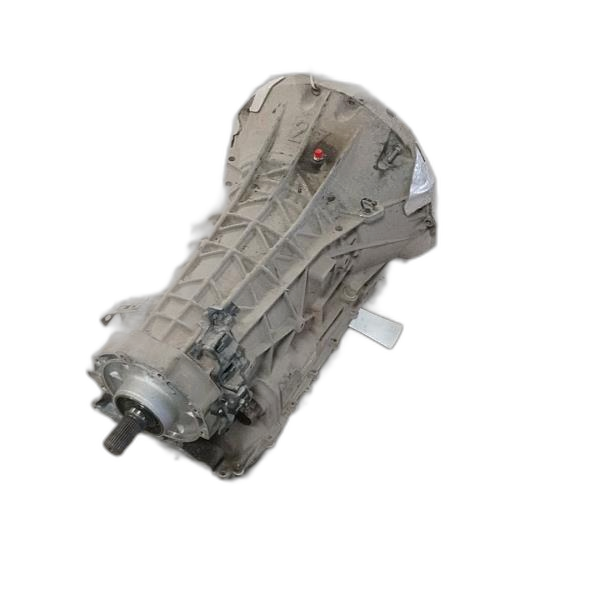
Below are the parts most often responsible for code P0805, ranked by how frequently each one is the actual culprit (per the diagnosis above). Tap any to see what we have for your vehicle.




The information in this article is provided for general reference and educational purposes only. Vehicle specifications, procedures, and part compatibility can vary by production date, trim level, and region. Always consult your vehicle's factory service manual and verify part numbers before purchasing or performing repairs. Safety-critical components such as airbags, seat belts, and braking systems should be installed by a qualified professional.
- 🎬 Helpful Videos
- 🛍️ Shop This Part
- What Does P0805 Mean?
- Can I Drive With P0805?
- Common Causes
- Symptoms
- Common Fixes & Costs
- Used vs. New Parts: Buying Guide
- Cost of Not Fixing It
- Diagnosis Steps
- When This Code Triggers (Freeze-Frame Conditions)
- Related Codes
- Climate & Environmental Factors
- How to Clear the Code After You Fix It
- Will This Fail Emissions / State Inspection?
- Most Commonly Affected Vehicles
- Manufacturer-Specific Notes
- Frequently Asked Questions
- Can a bad battery cause a P0805 code?
- What's the difference between a clutch position sensor and a neutral safety switch?
- How much does it cost to fix code P0805?
- Can I just bypass the clutch position sensor?
- Will clearing the code fix the problem?
- What is the most common misdiagnosis for P0805?
- My car has an automatic transmission, so why do I have a clutch sensor code?
- Is there a recall for the P0805 code?
- Key Takeaways
- 🎟️ Get 5% Off