

OBD-II Code P0830: Clutch Pedal Position Switch 'A' Circuit Malfunction
What P0830 means, why it triggers, and how to fix it
- Code P0830 indicates a failure in the clutch pedal position switch circuit, disabling cruise control and often preventing the engine from starting.
- Replacing the clutch switch resolves this code in 80% of cases and typically costs between $85 and $250 at a repair shop.
- Test the $30 switch with a multimeter and check the circuit fuse before assuming you need a $400 starter motor replacement.
- Jeep Wrangler owners (2012-2014) should check TSB #18-057-14, as this code is frequently caused by a software glitch requiring a 1-hour dealer reflash rather than new parts.
What Does P0830 Mean?
Code P0830 means the Powertrain Control Module (PCM) detects a fault in the clutch pedal position switch 'A' circuit. This safety sensor on manual transmission vehicles tells the computer when the clutch pedal is pressed. The PCM requires this signal to allow the engine to start and to operate the cruise control.
Technical definition: The official SAE/OBD-II definition is "Clutch Pedal Position (CPP) Switch 'A' Circuit Malfunction". The PCM triggers this code when it detects an incorrect, erratic, or missing voltage reading from the clutch switch circuit. The 'A' designation distinguishes it from secondary 'B' switches used for redundancy. The code sets when the signal contradicts driving conditions, such as remaining static after multiple gear shifts.
Can I Drive With P0830?
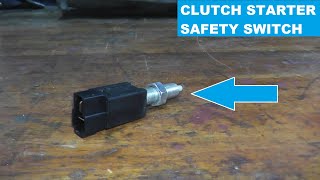
Yes, But With Caution. You can drive, but it is not recommended. Your cruise control will not work, and the engine will likely fail to start, leaving you 🎬 Learn how to bypass the switch to get moving again. stranded. In rare cases, the engine starts without the clutch pressed, creating a severe safety hazard. Ignoring the code damages the starter circuit over time.
Common Causes
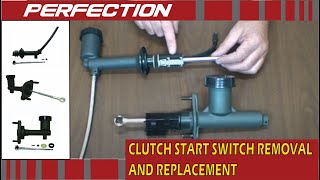
- Faulty Clutch Pedal Position Switch (Very Common) — The switch is the most frequent 🎬 See this walkthrough on removing and replacing the clutch switch. failure point. Its internal mechanical contacts wear out from constant pedal motion, causing it to stick, send incorrect signals, or fail completely.
- Damaged Wiring or Corroded Connectors (Common) — Wires leading to the switch fray or short from chafing against sharp edges under the dashboard. The electrical connector also corrodes from moisture, interrupting the signal.
- PCM Software Glitch (Less Common) — On certain vehicles, notably 2012-2014 Jeep Wranglers, overly sensitive factory software sets a false P0830 code when the driver rests their foot on the clutch. A dealer software update (reflash) is the required fix.
- Blown Fuse or Fusible Link (Less Common) — A blown fuse cuts power to the clutch switch circuit, immediately triggering the code. This usually indicates an underlying short circuit.
- Incorrectly Adjusted Switch or Pedal (Rare) — If the switch's mounting bracket bends or a plastic stopper pad on the pedal assembly falls off, the pedal arm cannot make proper contact to activate the switch.
- Clutch Hydraulic System Issues (Rare) — A failing master or slave cylinder prevents the pedal from achieving its full range of travel. The pedal fails to depress the switch plunger, causing the PCM to flag an electrical fault.
- Aftermarket Accessory Interference (Rare) — Installing aftermarket electrical accessories, such as HID headlights, creates electrical noise or voltage drops that interfere with sensitive switch circuits on some models.
- Failed Powertrain Control Module (PCM) (Very Rare) — The PCM itself rarely fails. Consider this only after exhaustively testing the switch, wiring, fuses, and verifying software updates.
Symptoms
- Engine Will Not Start — The starter motor will not engage when you turn the key because the PCM does not receive the safety interlock signal confirming the clutch is pressed.
- Cruise Control Inoperative — The cruise control system disables itself as a safety precaution when it loses the clutch switch signal.
- Check Engine Light is On — The Malfunction Indicator Lamp (MIL) illuminates on the dashboard.
- Engine Starts Without Pressing the Clutch — If the switch fails in the 'closed' position, the car starts while in gear, causing it to lurch unexpectedly.
- Auto Stop/Start System Not Working — On newer vehicles, a faulty clutch switch signal prevents the fuel-saving Auto Stop/Start feature from operating.
Diagnostic Flowchart
Tap your situation to follow the diagnostic path that matches what you're seeing on this code.
Common Fixes & Costs
- Replace Clutch Pedal Position Switch — Parts: $25-$90, Labor: $60-$160, ~0.8 hr book time (DIY)
- Replace Blown Fuse — Parts: $1-$5, Labor: $0-$50, ~0.2 hr book time (DIY)
- Repair Damaged Wiring or Connector — Parts: $10-$30, Labor: $120-$250, ~1.5 hr book time (Intermediate)
- Reprogram Powertrain Control Module (PCM) — Parts: $0, Labor: $125-$250, ~1 hr book time (Professional)
- Professional Diagnosis — Parts: $0, Labor: $100-$180, ~1 hr book time (Professional)
DIY vs Professional
- Replace Clutch Pedal Position Switch 🟢 Beginner
Tools: Basic hand tools (socket set, wrenches), flashlight. - Repair Damaged Wiring or Connector 🟢 Beginner
Tools: Multimeter, wire cutters/strippers, soldering iron, heat shrink tubing. - Replace Blown Fuse 🟢 Beginner
Tools: Fuse puller or small pliers. - Reprogram Powertrain Control Module (PCM) 🟢 Beginner
Tools: Manufacturer-specific diagnostic tool with programming capabilities.
Used vs. New Parts: Buying Guide
When a used part is worth it: Buying a used clutch pedal position switch is not recommended. It is an inexpensive wear-and-tear item. The savings are minimal and not worth the risk of premature failure.
Donor-vehicle mileage cap: roughly under 40000 miles for the part to have meaningful remaining life.
Donor quality checklist:
- Ensure the plastic housing and connector pins are free of cracks or corrosion.
- Match the part number exactly to ensure correct internal resistance.
Decision logic:
- If The new part costs under $100 → Always buy new. The reliability outweighs the small savings of a used part.
- If The vehicle is very old and the part is discontinued → A used part from a salvage yard is acceptable, but test it with a multimeter before installation.
Warranty tradeoff: Salvage yards offer 30-90 day warranties. New aftermarket parts offer 1-year to lifetime warranties.
Worst-case if a used part fails: $100-$250 (Diagnostic time and labor to replace a failed used switch).
What Happens If You Wait — Timeline
- 0-1 month: Code P0830 sets. Cruise control disables. The car occasionally hesitates to start, requiring a harder press of the clutch. (MPG impact: 0%% · Added cost: $0)
- 1-3 months: The no-start symptom becomes frequent. The safety risk of the car starting in gear (if the switch fails 'closed') is present at all times. (MPG impact: 0%% · Added cost: $0-$200 (Potential towing cost if stranded).)
- 3-6 months: Continued attempts to start with a faulty circuit puts stress on the starter solenoid. The risk of blowing fuses increases if a wiring short worsens. (MPG impact: 0%% · Added cost: $50-$250 (Wiring repair or starter solenoid replacement).)
- 6+ months: An unaddressed short circuit in the wiring harness causes a voltage spike that damages the driver circuit within the PCM. (MPG impact: 0%% · Added cost: $800-$2000 (PCM replacement).)
Cost of Not Fixing It
- Immediate: The vehicle may not start, leaving you stranded. Cruise control is disabled. (Added cost: $0-$200 (Towing cost if stranded).)
- 1-6 months: Increased wear on the starter motor or solenoid from repeated start attempts with an intermittently failing circuit. (Added cost: $250-$600 (Starter replacement).)
- 6+ months: Ignoring a wiring short eventually damages the Powertrain Control Module (PCM). (Added cost: $800-$2000 (PCM replacement and programming).)
Diagnosis Steps
- Confirm the Code and Review Freeze Frame Data
Use an OBD-II scanner to verify P0830. Check for related codes like P0831 or P0832. Review freeze frame data to see vehicle speed and RPM when the fault occurred.
Tools: OBD-II Scanner (Beginner) - Check for Technical Service Bulletins (TSBs)
Search for TSBs related to P0830 for your specific make and model. Manufacturers often release software updates to fix false codes, saving you from unnecessary parts replacement.
Tools: Internet Access or Phone Call to Dealer (Beginner) - Visually Inspect the Switch, Pedal, and Wiring
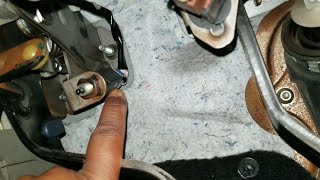
Locate the clutch switch under the dashboard. Look for a bent bracket, unplugged connector, frayed wires, or a missing plastic stopper pad on the pedal arm.
Tools: Flashlight (Beginner) - Check for Blown Fuses
Locate the fuse for the clutch switch circuit in your owner's manual. Remove and inspect it. A broken filament indicates a short circuit.
Tools: Fuse Puller or Pliers (Beginner) - Test the Switch's Electrical Function (Resistance)
Disconnect the switch connector. Set a multimeter to Ohms (Ω). Probe the switch terminals while pressing and releasing the plunger. A good two-wire switch shows infinite resistance ('OL') in one position and near-zero resistance (<5.0 Ohms) in the other. Erratic readings mean the switch is bad.
Tools: Multimeter (Intermediate) - Test Circuit Voltage at the Connector
Turn the ignition 'ON'. Set the multimeter to DC volts. Probe the harness connector terminals. One wire must show battery voltage (~12V) or a 5V reference. No voltage confirms a broken wire or blown fuse upstream.
Tools: Multimeter, Jumper Wire (Advanced) - Inspect the Clutch Hydraulic System
Check clutch fluid levels and look for leaks at the master and slave cylinders. A failing hydraulic component prevents the pedal from traveling far enough to activate the switch.
Tools: Flashlight (Intermediate) - Advanced: Analyze Live Data with a Scan Tool
Monitor the 'CPP Switch' live data PID. As you press the clutch, the status must toggle cleanly between 'ON' and 'OFF'. A static reading indicates a wiring or PCM issue if the switch tested good manually.
Tools: Advanced OBD-II Scan Tool (Advanced) - Advanced: Perform a Voltage Drop Test
With the circuit active, measure voltage drop across the power and ground wires. A reading above 0.3V on the power side or 0.1V on the ground side indicates excessive resistance requiring repair.
Tools: Multimeter with long leads (Advanced)
When This Code Triggers (Freeze-Frame Conditions)
- Vehicle Speed: 0 MPH (During engine start attempt (no-start symptom).)
- RPM: 0 (During engine start attempt (no-start symptom).)
- Clutch Switch Status: OFF or OPEN (When the PCM expects to see an ON/CLOSED signal during an engine start command.)
- System Voltage: 11.8-12.5V (Normal battery voltage, confirming the battery is not the cause of the no-start.)
Related Codes
- P0831 — Means 'Circuit Low'. Indicates a short to ground in the signal wire or a switch physically stuck in the 'pressed' (closed) position.
- P0832 — Means 'Circuit High'. Points to an open circuit, such as a broken wire, disconnected connector, or a switch stuck in the 'released' (open) position.
- P0704 — A general 'Clutch Switch Input Circuit Malfunction'. If present with P0830, the issue is certainly in the clutch switch system.
- P0833 — Refers to the 'Clutch Pedal Switch 'B' Circuit'. Points to a problem with the secondary redundancy switch.
- P083F — Means 'Correlation' error. The PCM receives conflicting signals from the 'A' and 'B' switches, indicating one has failed or is misadjusted.
Climate & Environmental Factors
- High Humidity / Water Intrusion: Moisture seeps into the switch's electrical connector, causing corrosion on the terminals. This increases resistance and triggers code P0830.
- Cold Climates / Road Salt: Salty slush tracked into the driver's footwell accelerates corrosion on the low-mounted clutch switch connector and wiring.
How to Talk to a Mechanic About This Code
Say this: "I have an OBD-II code P0830 for the 'Clutch Pedal Position Switch A Circuit'. My symptoms are [a no-start condition / my cruise control doesn't work]. Please test the clutch switch for continuity and verify 12V at the connector before quoting a starter or PCM."
This directs the shop to perform a methodical diagnosis starting with the cheapest parts, preventing them from immediately quoting an expensive and unnecessary starter or PCM replacement.
Avoid saying:
- 'My check engine light is on, can you just fix it?' (Invites upselling).
- 'My car won't start, I think I need a new starter.' (Don't suggest expensive repairs; provide the code).
- 'Just do whatever you think is best.' (Gives up control over the diagnostic process).
Questions to ask before authorizing the repair:
- Did you test the clutch switch with a multimeter for continuity?
- Did you confirm there is correct voltage at the switch's electrical connector?
- Did you check for any manufacturer TSBs related to code P0830?
- What is the warranty on the proposed repair?
Where to Take It: Dealer vs Independent vs Chain
- Dealer:
Necessary for TSB-related software fixes. Otherwise, an expensive option for a simple repair.
Best for: Vehicles where a known software update (TSB) is the fix (e.g., Jeep Wranglers)., Vehicles under powertrain warranty.
Downsides: Highest labor rates, typically 1.5x to 2x more than an independent shop., May push for a full harness replacement rather than a simple wiring repair. (Typical cost: +50% vs. baseline) - Independent Shop:
Best fit for most P0830 situations. A good independent shop easily diagnoses and fixes the common causes at a reasonable price.
Best for: Out-of-warranty vehicles with common P0830 symptoms., Diagnosing and replacing a faulty switch or repairing a broken wire.
Downsides: May not have the specific tools to perform a PCM reflash if one is needed. (Typical cost: +0% vs. baseline) - Chain Shop:
Use with caution. Acceptable for a simple switch replacement, but an independent shop is safer for correct initial diagnosis.
Best for: Simple parts replacement if you are certain the switch is the only problem.
Downsides: Technician diagnostic capability is inconsistent., More likely to replace parts without thorough diagnosis. (Typical cost: -10% vs. baseline)
When to Walk Away From the Repair
If a shop quotes over $800 for a PCM replacement to fix P0830, stop and get a second opinion focused on the $30 switch and wiring.
- Car worth $4000, fix is $250: Fix it. This is a low-cost repair essential for reliability and safety.
- Car worth $2500, fix is $1500: Walk away. A $1500 quote almost certainly means a shop is incorrectly diagnosing a bad PCM.
What Scan Tool You Need for This Code
Minimum: A basic OBD-II code reader that can view Live Data for sensor status (PIDs).
A cheap code reader only tells you P0830 is present. A scanner with Live Data lets you watch the clutch switch status ('On/Off') change in real-time as you press the pedal, confirming if the switch works before buying parts.
Budget: BlueDriver Pro Scan Tool (~$100) — Connects to your smartphone via Bluetooth. Reads P0830 and displays live data to verify clutch switch operation.
Mid-range: Foxwell NT510 Elite (~$180) — Handheld scanner offering live data graphing and access to manufacturer-specific codes.
Professional: Autel MaxiCOM MK808S (~$450) — Professional tablet scanner with fast live data graphing and full bi-directional controls. Overkill for P0830, but excellent for serious DIYers.
Rent vs buy: Auto parts stores read codes for free but won't diagnose with live data. For DIY diagnosis of P0830, a simple multimeter is the most essential tool. Buy a scanner only if you plan to do regular car repairs.
How to Clear the Code After You Fix It
- Use an OBD-II scan tool to clear the P0830 code.
- Start the engine to confirm the no-start issue is resolved.
- Perform a drive cycle to test cruise control and run readiness monitors.
Drive cycle (~20 minutes): Start the engine and idle for 2-3 minutes. Drive at a mix of city (25-45 mph) and highway (50-60 mph) speeds for 15-20 minutes. Press and release the clutch pedal multiple times and attempt to engage cruise control.
Readiness monitors affected: Comprehensive Component Monitor
Before emissions retest: drive at least 50 miles to fully set monitors.
Watch out for:
- Disconnecting the battery clears the code but resets all readiness monitors to 'Not Ready', guaranteeing an emissions test failure.
- The code returns immediately if the root cause (e.g., bad switch, broken wire) was not repaired.
- Forgetting to test the cruise control function after the repair.
Will This Fail Emissions / State Inspection?
Yes — this code typically fails an OBD-II emissions inspection.
- California: An illuminated Check Engine Light results in an automatic failure of the smog check.
- New York: An active P0830 code and illuminated MIL causes the vehicle to fail the OBD-II emissions inspection.
- Texas: In counties requiring emissions testing, an illuminated Check Engine Light is an automatic failure.
Most Commonly Affected Vehicles
- Jeep Wrangler (JK) (2012-2014) — Extremely common issue caused by sensitive PCM software triggering a false P0830. The primary fix is a dealer PCM reflash per TSB #18-057-14.
- Dodge Ram 1500/2500/3500 (Manual) (2006-2018) — The clutch interlock switch on the master cylinder pushrod is a frequent failure point leading to a no-start condition.
- Ford Focus, Mustang, Ranger (2005-2015) — Prevalent due to worn-out switches. On older Rangers, the switch is integrated into the clutch master cylinder assembly.
- Chevrolet Cobalt, Cruze (Manual) (2005-2016) — Failure of the plastic clutch pedal position switch on the pedal assembly is a well-documented cause for no-start symptoms.
- Honda Civic (2012-2015) — Replacing the clutch interlock switch at the top of the pedal assembly resolves starting and cruise control problems.
- Kia Sportage, Cee'd (2010-2014) — Disables cruise control and ISG (Idle Stop & Go). Sometimes linked to electrical interference from aftermarket HID lighting kits.
- Nissan Frontier, Navara, Xterra (2005-2015) — Typically points to a faulty clutch pedal position switch or an issue in the associated wiring harness.
- Hyundai Getz, H-1 (2007-2009) — The ECU sets the code if the switch signal doesn't change after 4 gear shifts above 10 km/h, indicating a stuck switch.
Manufacturer-Specific Notes
- Jeep / Chrysler / Dodge: On 2012-2014 Wranglers, P0830 is frequently caused by overly sensitive PCM software. The official fix is a software update (reflash) per TSB #18-057-14. The system also triggers false codes if the driver rests their foot on the clutch.
- Hyundai: The ECU sets code P0830 if it detects the clutch switch signal has not changed state after four consecutive gear shifts while moving above 10 km/h.
- General Motors (Chevrolet): Some GM vehicles use a 3-wire sensor (power, ground, signal) that sends variable voltage to the ECM. Diagnosis requires verifying a 5V reference and a signal voltage that sweeps smoothly (~1.0V to ~4.5V) as the pedal is pressed.
- Ford: On older Rangers and Mustangs, the switch is integrated into the clutch master cylinder assembly. If the switch fails, the entire master cylinder requires replacement.
Real Owner Stories
2013 Jeep Wrangler JK at 75K miles - The Software 'Fix'
Check Engine Light came on, and cruise control stopped working. The vehicle still started and drove normally. Code scanner showed P0830.
What they tried:
- Replaced the clutch pedal position switch.
- The code returned within a day.
Outcome: The owner found Jeep TSB #18-057-14 describing the exact symptom. The dealership performed a PCM reflash for a $150 diagnostic fee. The code did not return, and cruise control was restored.
Lesson: Always search for TSBs before replacing parts on modern vehicles. A software glitch perfectly mimics hardware failure.
2008 Dodge Ram 2500 at 140K miles - The Misdiagnosis
Truck would not crank or start. All dash lights worked, and the battery was new.
What they tried:
- Replaced the starter motor.
- Replaced the starter solenoid.
- Towed to a shop where a scanner revealed P0830.
Outcome: The mechanic diagnosed a failed clutch interlock switch on the master cylinder pushrod. The $40 part and one hour of labor fixed the truck perfectly.
Lesson: Never replace expensive starter components without scanning for codes first. P0830 points directly to the $40 safety circuit.
1997 Toyota Tercel at 180K miles - The Unusual Cause
Car became increasingly difficult to start. The owner had to push the clutch pedal extremely hard to the floor to get the engine to crank.
What they tried:
- Considered bypassing the switch but was concerned about safety.
Outcome: The root cause was a worn clutch pedal assembly. The pedal wasn't traveling far enough to activate the switch. Replacing the switch and adjusting the pedal stopper resolved the issue.
Lesson: Inspect the mechanical parts that activate the switch. Worn bushings or missing stopper pads prevent a perfectly good switch from engaging.
How to Prevent This Code From Triggering
- Avoid 'Riding the Clutch' (Daily habit) — Resting your foot on the pedal causes constant pressure on the switch plunger, accelerating mechanical wear and triggering false codes on sensitive systems.
- Use the Footrest (Daily habit) — Moving your foot to the dead pedal ensures the clutch returns fully to its resting position, allowing the switch to completely disengage.
- Apply Dielectric Grease to the Connector (During clutch replacement or under-dash work) — Seals the electrical connector from moisture, preventing the pin corrosion that causes high resistance and signal loss.
- Secure Under-Dash Wiring (After any under-dash repairs) — Prevents loose wiring harnesses from getting snagged by feet or chafing against sharp metal brackets.
Frequently Asked Questions
What does the clutch pedal position switch actually do?
It is a safety sensor on manual transmission cars that tells the PCM when the clutch pedal is pressed. This signal allows the engine to start, disengages cruise control, and manages Auto Stop/Start systems.
Is it safe to drive with code P0830?
You can drive, but it is not advisable. The main risks are being stranded if the car refuses to start, or the dangerous possibility of the car starting in gear and lurching unexpectedly. Your cruise control will also be disabled.
Can I just bypass the clutch safety switch?
Bypassing the switch by permanently joining the wires is strongly discouraged. It disables a critical safety feature, allowing the car to start in gear and creating a serious risk of accidents. It also disables cruise control and other dependent systems.
What are the most common misdiagnosis mistakes for P0830?
A frequent mistake is replacing expensive components like the starter motor, starter solenoid, or the PCM. In most cases, the fault lies with the inexpensive $30 switch, its wiring, or a blown fuse. Always test the switch and circuit first.
Can a hydraulic clutch problem cause a P0830 code?
Yes. If the clutch master or slave cylinder fails, the pedal cannot travel far enough to fully depress the switch. The computer interprets this lack of signal as an electrical fault and sets code P0830.
How much does it cost to fix P0830?
A professional diagnosis costs $100 to $180. Replacing the switch costs between $85 and $250 total ($25-$90 for parts, $60-$160 for labor). A dealer software update ranges from $125 to $250.
Can resting my foot on the clutch cause this code?
Yes, especially on sensitive systems like Jeep Wranglers. 'Riding the clutch' prevents the switch from fully returning to its 'off' position. The PCM interprets this lingering signal as a circuit fault and triggers P0830.
Key Takeaways
- Code P0830 indicates a failure in the clutch pedal position switch circuit, disabling cruise control and often preventing the engine from starting.
- Replacing the clutch switch resolves this code in 80% of cases and typically costs between $85 and $250 at a repair shop.
- Test the $30 switch with a multimeter and check the circuit fuse before assuming you need a $400 starter motor replacement.
- Jeep Wrangler owners (2012-2014) should check TSB #18-057-14, as this code is frequently caused by a software glitch requiring a 1-hour dealer reflash rather than new parts.
Helpful Videos
Shop the Parts Behind P0830
Below are the parts most often responsible for code P0830, ranked by how frequently each one is the actual culprit (per the diagnosis above). Tap any to see what we have for your vehicle.



The information in this article is provided for general reference and educational purposes only. Vehicle specifications, procedures, and part compatibility can vary by production date, trim level, and region. Always consult your vehicle's factory service manual and verify part numbers before purchasing or performing repairs. Safety-critical components such as airbags, seat belts, and braking systems should be installed by a qualified professional.
- 🧭 Diagnostic Flowchart
- 🎬 Helpful Videos
- 🛍️ Shop This Part
- What Does P0830 Mean?
- Can I Drive With P0830?
- Common Causes
- Symptoms
- Common Fixes & Costs
- DIY vs Professional
- Used vs. New Parts: Buying Guide
- What Happens If You Wait — Timeline
- Cost of Not Fixing It
- Diagnosis Steps
- When This Code Triggers (Freeze-Frame Conditions)
- Related Codes
- Climate & Environmental Factors
- How to Talk to a Mechanic About This Code
- Where to Take It: Dealer vs Independent vs Chain
- When to Walk Away From the Repair
- What Scan Tool You Need for This Code
- How to Clear the Code After You Fix It
- Will This Fail Emissions / State Inspection?
- Most Commonly Affected Vehicles
- Manufacturer-Specific Notes
- Real Owner Stories
- 2013 Jeep Wrangler JK at 75K miles - The Software 'Fix'
- 2008 Dodge Ram 2500 at 140K miles - The Misdiagnosis
- 1997 Toyota Tercel at 180K miles - The Unusual Cause
- How to Prevent This Code From Triggering
- Frequently Asked Questions
- What does the clutch pedal position switch actually do?
- Is it safe to drive with code P0830?
- Can I just bypass the clutch safety switch?
- What are the most common misdiagnosis mistakes for P0830?
- Can a hydraulic clutch problem cause a P0830 code?
- How much does it cost to fix P0830?
- Can resting my foot on the clutch cause this code?
- Key Takeaways
- 🎟️ Get 5% Off