

P0841 on 2013-2017 Honda Accord: Transmission Pressure Sensor Causes and Fixes
On a 2013-2017 Honda Accord, especially models with the CVT transmission, the P0841 code is most often caused by a faulty transmission fluid pressure switch or low/dirty transmission fluid. This code specifically points to a performance issue in the 'A' circuit, which is often the 2nd clutch pressure switch. Replacing the correct switch and ensuring the transmission is filled with clean, genuine Honda HCF-2 fluid is the most common and effective fix.
- The P0841 code on a 2013-2017 Accord points to a problem with a transmission fluid pressure sensor's performance.
- Before replacing any parts, always check the transmission fluid level and condition first. For CVT models, use only Honda HCF-2 fluid.
- The most likely part to fail is the transmission fluid pressure switch itself, which is an accessible and affordable repair.
- A visual inspection of the sensor's wiring and connector for corrosion or damage is a critical and easy diagnostic step.
- Ignoring this code can lead to poor drivability and potentially severe, expensive damage to the transmission.
What's Unique About the 2013-2017 Honda Accord
This generation of Honda Accord heavily features a Continuously Variable Transmission (CVT) in its popular 4-cylinder models. CVTs are particularly sensitive to hydraulic fluid pressure for their operation. The P0841 code on these models often points directly to the health of the fluid or the pressure switches that monitor it, which are known failure points. Using the correct, genuine Honda HCF-2 fluid is critical, as improper fluid can cause this code to appear. These second-generation CVTs are specifically designed for HCF-2 fluid, and mixing it with other types can cause damage.
Symptoms You May Notice
- Check Engine Light is on
- Flashing 'D' (Drive) indicator light on the dashboard
- Harsh, erratic, or delayed shifting
- Transmission slipping or hesitating
- Vehicle enters 'limp mode' (reduced engine power)
- Decreased fuel efficiency
- Delayed engagement when shifting from Park to Drive or Reverse
- Replacing the entire transmission when only a simple external sensor or fluid change is needed.
- Replacing the wrong pressure switch, as there are multiple switches on the transmission. For example, on some Hondas, 28600-RPC-004 is the 2nd gear switch and 28600-RPC-013 is the 3rd. It's crucial to identify the correct switch for circuit 'A'.
Most Likely Causes
- Faulty Transmission Fluid Pressure Switch 🔴 High Probability → Shop Transmission Assembly These switches are a common failure point due to constant exposure to heat and pressure changes within the transmission. They are typically located on the exterior of the transmission case or on the valve body.
How to confirm: After confirming fluid level and condition are good, a technician can test the switch's circuit and output voltage with a multimeter or advanced scan tool to see if it matches specifications. The wiring and connector should be inspected for corrosion, especially in regions that use road salt.
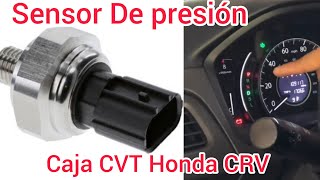
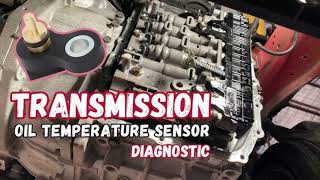
Typical fix: Replace the faulty pressure switch. There are multiple switches, so proper diagnosis is needed to identify the correct one ('A' circuit). For many Honda models, the 'A' switch corresponds to the 2nd clutch 🎬 See this CVT pressure switch replacement walkthrough pressure switch.
Est. part cost: $40-$100 - Low, Dirty, or Incorrect Transmission Fluid 🔴 High Probability → Shop Transmission Assembly The Honda CVT is highly sensitive to fluid quality and level. The manufacturer specifies Honda HCF-2 fluid, and using anything else can cause operational issues and codes. Degraded fluid from high heat can also cause juddering and pressure issues.
How to confirm: Check the transmission fluid fill plug for level and inspect the fluid's color and smell. It should be translucent and not smell burnt. The fill plug is often marked with a yellow label indicating HCF-2 fluid is required.
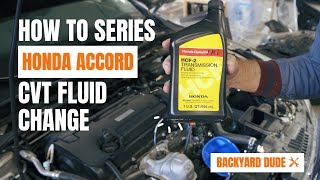
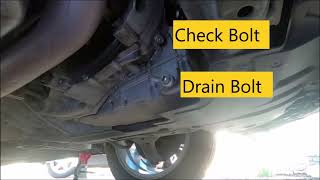
Typical fix: Perform a transmission fluid drain and fill using only genuine Honda HCF-2 CVT fluid. A typical drain and fill requires about 4 quarts. 🎬 Watch: How to change CVT fluid and filters Always use a new drain plug crush washer to prevent leaks.
Est. part cost: $50-$150 for fluid - Damaged Wiring or Corroded Connector 🟡 Medium Probability The wiring and connectors for the pressure switches are located on the exterior of the transmission case, exposing them to road debris, moisture, and salt, which can lead to corrosion (green crust), frayed wires, or loose connections.
How to confirm: Visually inspect the wiring harness and connector leading to the pressure switch for any signs of corrosion, frayed wires, or loose connections. A wiggle test on the connector while monitoring sensor data on a scan tool can reveal intermittent connections.
Typical fix: Clean the connector terminals or repair/replace the damaged section of the wiring harness.
Est. part cost: $10-$200 depending on the extent of damage
Rare But Worth Checking
- Internal Transmission Mechanical Failure: → Shop Transmission Assembly While less common, issues like a failing oil pump, clogged passages in the valve body, or worn internal seals can cause incorrect pressure readings. This is usually accompanied by more severe symptoms like noises or significant slipping. In other Honda models, NHTSA ODI #11720874 notes that P0841 was cited alongside internal failures that required a vehicle tow.
- Faulty Powertrain or Transmission Control Module (PCM/TCM): → Shop Transmission Assembly This is a very rare cause. The control module should only be considered after all other possibilities (fluid, sensor, wiring, internal mechanics) have been exhaustively ruled out.
Diagnosis Steps
- Check Transmission Fluid: Verify the fluid level is correct and the fluid is clean. For CVT models, ensure only Honda HCF-2 fluid is used. A fluid change is often the first and easiest step.
- Inspect Wiring and Connector: Visually inspect the wiring harness going to the transmission fluid pressure switches. Look for any signs of damage, corrosion, or loose connections. Pay close attention to the connector for the 'A' switch.
- Scan Tool Data: Use an advanced OBD-II scanner to monitor the live data from the transmission fluid pressure sensor 'A'. Compare the voltage readings to the manufacturer's specifications for different gear states (Park, Drive, etc.). An illogical or static reading points to a 🎬 Watch: P0841 sensor circuit causes and fixes sensor or circuit issue.
- Test the Sensor Circuit: If the readings are incorrect, disconnect the sensor and test the wiring. Use a multimeter to check for the correct reference voltage (usually 5V) and a good ground at the connector.
- Test the Sensor: If the circuit is good, test the pressure switch itself. This may involve checking its internal resistance or applying pressure to see if it functions correctly, as per the factory service manual.
- Check for TSBs: Check for any Technical Service Bulletins (TSBs) from Honda that may relate to this code. For example, TSB 17-017 addresses a judder caused by deteriorated fluid and provides a software update, which could be related to pressure issues.
- Inspect Internal Components: If all external components check out, the issue may be internal, such as the valve body or oil pump, which requires professional diagnosis.
Parts You'll Likely Need
- Transmission Fluid Pressure Switch
(OEM #28600-R94-004)— This is the most common component to fail, causing the P0841 code. It directly measures the hydraulic pressure that the code reports as faulty. This part number supersedes 28600-R90-013 and 28600-R90-003.
Trusted brands: Honda (Genuine OEM)
OEM price range: $80-$140
Aftermarket price range: $40-$90 - Honda HCF-2 CVT Fluid
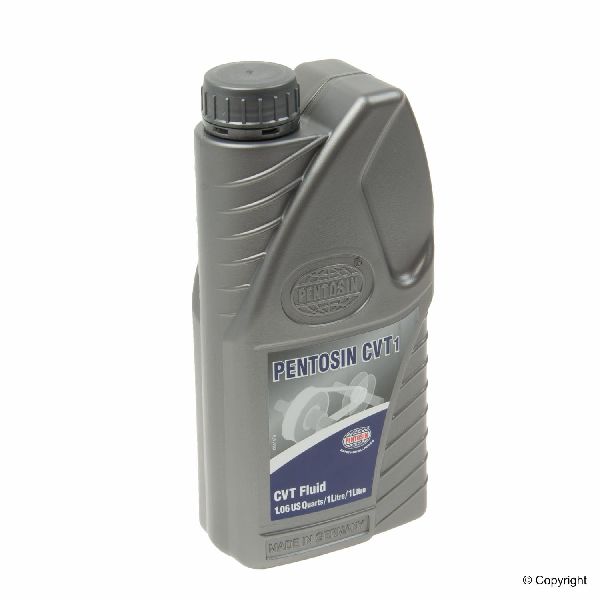
(OEM #08200-HCF2)— Low, degraded, or incorrect fluid is a primary cause of pressure-related codes in Honda CVTs. Using the correct OEM fluid is essential for proper transmission function. Do not mix with other CVT fluids.
Trusted brands: Honda (Genuine OEM)
OEM price range: $15-$25 per quart
Aftermarket price range: Not Recommended
Related Codes That Often Appear With This One
- P0700 — P0700 is a generic code indicating the Transmission Control Module (TCM) has stored a fault. It often appears alongside more specific transmission codes like P0841 to signal a transmission-related issue.
- P0868 — This code indicates 'Transmission Fluid Pressure Low'. If it appears with P0841, it strongly suggests the root cause is low fluid level or a failing transmission oil pump, rather than just a sensor error.
Technical Service Bulletins (TSBs) & Recalls
- TSB 17-017: While not directly for P0841, this TSB addresses a 'Judder from the Torque Converter Lock-Up Clutch' on 2013-17 Accords. The fix involves a software update and a transmission fluid flush because the original fluid deteriorates faster than expected. This underlying fluid issue could contribute to pressure-related codes like P0841.
Platform-Specific Known Issues
- A common owner experience involves the P0841 code appearing, followed by a simple drain-and-fill of the CVT with genuine Honda HCF-2 fluid, which resolves the issue. This highlights the transmission's sensitivity to fluid condition.
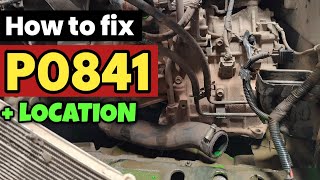
- In forums, some owners have replaced the pressure switch themselves, noting its location on the transmission case makes it accessible after removing the driver-side wheel and splash shield.
Mechanic-Grade Diagnostic Values
- Transmission Fluid Pressure Sensor 'A' Signal Voltage — expected: Should vary smoothly between approximately 0.5V (low pressure) and 4.5V (high pressure) as the engine RPM and gear state change.. Failure: A voltage reading that is stuck, erratic, or does not change when the transmission is commanded to shift indicates a faulty sensor or circuit.
- Reference Voltage at Sensor Connector — expected: With the sensor disconnected and key on, engine off, the reference wire should show a steady 5V or 12V.. Failure: No voltage or incorrect voltage points to a wiring issue or a problem with the PCM/TCM.
Scan Tool Commands That Help
- Honda Diagnostic System (HDS): Live Data Parameter Check in Gear — To accurately diagnose the switch, a technician may use the HDS to disable Vehicle Stability Assist (VSA), raise the vehicle on a lift, and run the wheels in a specific gear (e.g., 2nd gear) to monitor the pressure switch parameters in real-time under controlled conditions.
Wiring & Ground Locations
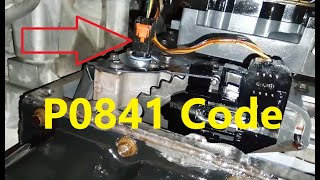
- 2nd Clutch Pressure Switch 'A' — Located on the exterior of the transmission case, on the left (driver's) side. It is often found under the air filter housing and battery tray assembly. The connector is frequently orange.. This is the physical component and connector that must be inspected for corrosion, damage, and tested for the P0841 code.
- G101 — A common ground point located on the right front of the engine compartment.. A poor ground connection at G101 can cause a variety of electrical issues, including erratic sensor readings. Verifying this ground is clean and tight is a crucial step in diagnosing circuit-related fault codes.
OEM Part Supersession History
28600-R90-003, 28600-R90-013→28600-R94-004— Standard part revision and consolidation by the manufacturer.
Heads up: No known incompatibilities; the newest part number is the correct service replacement for the previous versions.
Model Year Variations Within This Range
- 2013-2017 (4-Cylinder Models): The information in this article primarily applies to the 4-cylinder models equipped with a Continuously Variable Transmission (CVT). The V6 models from this generation use a conventional 6-speed automatic transmission which has different components and diagnostic procedures.
- 2013-2015: Early models in this generation (2013-2015) were more prone to CVT issues like start clutch juddering. While not a direct cause of P0841, this indicates a higher likelihood of underlying mechanical transmission issues contributing to pressure-related codes compared to the improved 2016-2017 models.
Diagnostic Flowchart
Other Known Issues on This Vehicle
Issues unrelated to this code that are worth knowing about as an owner of this generation:
- Premature Starter Motor Failure 🔴 High — Commonly reported between 30,000 and 70,000 miles. Symptoms include a click with no crank, or requiring multiple attempts to start. (Ref: TSB 16-002 (for V6 models with grinding noise))
- VTC Actuator Rattle on Cold Start 🟠 Medium — A very common issue on the 2.4L 4-cylinder engine. A brief, loud rattle or grind for 1-2 seconds upon a cold start. While often not immediately catastrophic, it can lead to timing chain issues if ignored.
- Infotainment System Freezing/Blank Screen 🟡 Low — The dual-screen infotainment system is known to freeze, become unresponsive, or have the upper screen go blank. Often requires a system reboot (restarting the car) or a software update from the dealer to resolve.
- Weak/Undersized 12V Battery (4-cylinder models) 🟡 Low — The factory battery in 4-cylinder models is noted for having a short lifespan and can cause various electrical gremlins when it starts to fail. (Ref: A recall was issued for a related battery sensor.)
Used vs. New Parts: Buying Guide for This Vehicle
When a used part is the smart pick: For this repair, using a used part is generally not recommended for the sensor itself. However, if the wiring connector (pigtail) is damaged by corrosion or heat, sourcing a used connector from a junkyard harness is a cost-effective and reliable repair.
Donor-vehicle mileage cap: roughly under 100000 miles for the part to have meaningful remaining life.
What to inspect on the donor part:
- For a wiring pigtail, ensure the plastic is not brittle or cracked.
- Check for any signs of green corrosion on the metal pins inside the connector.
- Ensure there is at least 4-6 inches of wire attached to the connector for easier splicing.
OEM-only on this vehicle (don't cheap out):
- Honda HCF-2 CVT Fluid: The CVT is extremely sensitive to fluid type. Using anything other than genuine Honda HCF-2 fluid is a major risk and can cause driveability problems or damage.
Brands owners have reported issues with on this vehicle:
- Non-specific or 'universal' CVT fluids should be avoided entirely.
Real Owner Stories
Aggregated from forums and TSBs cited above. Mileages and costs reflect what owners reported in those sources.
2013-2017 Honda Accord
Symptoms: The P0841 code appeared on the dashboard.
What fixed it: A simple drain-and-fill of the CVT with genuine Honda HCF-2 fluid resolved the issue.
Source hint: vehicle_specific_issues
2013-2017 Honda Accord
Symptoms: P0841 code present; fluid change with HCF-2 did not work.
What fixed it: Replacing the pressure switch (part #28600-R94-004).
Source hint: DriveAccord.net
Documented NHTSA Reports
Internal Failure and Towing
Symptoms: An owner reported that their vehicle required a tow to the dealership after the P0841 code appeared for the transmission fluid pressure sensor/switch A circuit range/performance.
What fixed it: The dealership cited an internal failure in the transmission (NHTSA ODI #11720874).
Non-Serviceable Internal Components
Symptoms: A report describes a transmission failure where the P0841 code was present, but no external sensors or actuators could be replaced.
What fixed it: The report noted the transmission failed internally because all solenoids, sensors, and switches were internal, non-serviceable parts (NHTSA ODI #11568181).
Related OBD-II Codes
Frequently Asked Questions
Does TSB 17-017 apply to my 2013-2017 Honda Accord if I have transmission issues?
What specific transmission fluid should I use for my Accord CVT to clear P0841?
Which pressure switch is usually the 'A' circuit on a Honda Accord?
Where is the transmission fluid pressure switch located on the 2013-2017 Accord?
Can a weak battery cause electrical issues like transmission codes in my 4-cylinder Accord?
Is there a specific part number recommended by Accord owners for the pressure switch?
Helpful Videos
We Have This Part in Stock

The information in this article is provided for general reference and educational purposes only. Vehicle specifications, procedures, and part compatibility can vary by production date, trim level, and region. Always consult your vehicle's factory service manual and verify part numbers before purchasing or performing repairs. Safety-critical components such as airbags, seat belts, and braking systems should be installed by a qualified professional.
- Honda Accord:
- 🧭 Diagnostic Flowchart
- 🎬 Helpful Videos
- 🛍️ Shop This Part
- What's Unique About the 2013-2017 Honda Accord
- Symptoms You May Notice
- Most Likely Causes
- Rare But Worth Checking
- Diagnosis Steps
- Parts You'll Likely Need
- Related Codes That Often Appear With This One
- Technical Service Bulletins (TSBs) & Recalls
- Platform-Specific Known Issues
- Mechanic-Grade Diagnostic Values
- Scan Tool Commands That Help
- Wiring & Ground Locations
- OEM Part Supersession History
- Model Year Variations Within This Range
- Other Known Issues on This Vehicle
- Used vs. New Parts: Buying Guide for This Vehicle
- Real Owner Stories
- 2013-2017 Honda Accord
- 2013-2017 Honda Accord
- Documented NHTSA Reports
- Internal Failure and Towing
- Non-Serviceable Internal Components
- Related OBD-II Codes
- Frequently Asked Questions
- 🎟️ Get 5% Off