

P0841 on 2016-2022 Honda Pilot: Transmission Pressure Sensor Fault Causes & Fixes
On a 2016-2022 Honda Pilot, P0841 indicates a transmission fluid pressure sensor issue, but the fix depends entirely on which transmission you have. For the 6-speed automatic, it's often low fluid or a simple, inexpensive external pressure switch replacement. For the 9-speed automatic, this code is more serious and can point to an internal, non-serviceable sensor, potentially requiring transmission replacement.
- The first step for a P0841 code on a 2016-2022 Pilot is to identify whether you have the 6-speed or 9-speed automatic transmission.
- Always check the transmission fluid level and condition first, using the correct OEM fluid for your specific transmission.
- For the 6-speed AT, the cause is likely a bad external pressure switch, which is a manageable DIY or shop repair.
- For the 9-speed AT, P0841 is a much more serious code that often points to an internal, non-serviceable fault requiring professional diagnosis and potentially a full transmission replacement.
- Check for software updates (TSBs) for the 9-speed transmission, as they can resolve some shifting performance issues.
What's Unique About the 2016-2022 Honda Pilot
The 2016-2022 Honda Pilot is unique because it was equipped with two very different automatic transmissions, and the meaning of P0841 changes dramatically between them. Lower-trim models (2016-2020) used a Honda-built 6-speed automatic where the pressure switches are typically external and replaceable. Higher trims (Touring, Elite) and all 2021-2022 models use a ZF-manufactured 9-speed automatic (ZF 9HP). This 9-speed unit is known for shifting issues and has been the subject of class-action lawsuits. On the 9-speed, a P0841 code is far more severe, as owner reports and service information indicate the pressure sensors are internal to the valve body and non-serviceable, often leading to a full transmission replacement diagnosis.
Symptoms You May Notice
- Check Engine Light is illuminated
- Flashing 'D' (Drive) indicator on the dashboard
- Harsh, erratic, or delayed gear shifts
- Transmission slipping between gears
- Vehicle may feel sluggish or hesitate on acceleration, sometimes feeling like it's starting in the wrong gear
- Transmission may get stuck in one gear (limp mode)
- Decreased fuel economy
- Replacing the entire transmission on a 6-speed model when only an inexpensive external pressure switch has failed.
- Using the wrong type of transmission fluid during a service, which can cause this code and severe damage.
- Condemning the transmission on a 9-speed model without first checking for available TCM software updates that address shift quality.
Most Likely Causes
- Low or Dirty Transmission Fluid 🔴 High Probability → Shop Transmission Assembly Fluid is a common failure point on all automatic transmissions. The 9-speed is particularly sensitive to fluid condition and level. The 6-speed is also known to be problematic if fluid is not changed regularly.
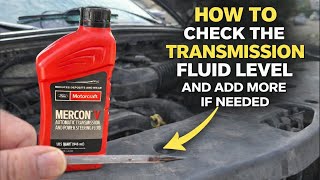
How to confirm: Check the transmission fluid level and condition. The 6-speed has a dipstick. The 9-speed does not and must be checked via a fill plug when the vehicle is at a specific temperature (typically 35-45°C), which is best left to a professional.
Typical fix: Perform a transmission fluid drain-and-fill using the correct OEM fluid. Use Honda ATF DW-1 for the 6-speed and Honda ATF Type 3.1 (or equivalent ZF Lifeguard 9) for the 9-speed. 🎬 See this 9-speed transmission fluid drain and fill walkthrough
Est. part cost: $60-$150 - Faulty Transmission Fluid Pressure Switch (6-Speed AT Only) 🟡 Medium Probability → Shop Transmission Assembly These external switches are exposed to heat and vibration and can fail over time. The 3rd clutch pressure switch is a very common failure point that triggers P0841 on Honda's 6-speed transmissions.
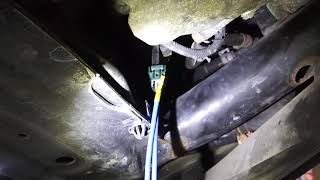
How to confirm: After confirming fluid is good, locate the pressure switches on the outside of the 6-speed transmission case. The 3rd clutch switch is often accessible from the wheel well after removing the driver's side front tire. Test the suspect switch ('A' circuit) and its connector with a multimeter for proper resistance and voltage.
Typical fix: Replace the faulty pressure switch. The 3rd clutch pressure switch is the most common culprit. 🎬 Watch: How to replace the 3rd clutch pressure switch
Est. part cost: $40-$130 - Wiring or Connector Issue 🟡 Medium Probability The wiring harness to the transmission can be damaged by road debris, heat, or corrosion at the connector pins. This is a common issue in areas with harsh winters where road salt is used.
How to confirm: Visually inspect the wiring harness leading to the transmission. Unplug the main connector and check for green corrosion, bent pins, or melted plastic. Perform a continuity test on the wires for the 'A' pressure switch circuit between the sensor and the Transmission Control Module (TCM).
Typical fix: Repair the broken/shorted wire or clean/replace the corroded connector.
Est. part cost: $5-$100 - Internal Transmission Failure (9-Speed AT) 🟡 Medium Probability → Shop Transmission Assembly The ZF 9-speed transmission has a documented history of issues. Owner complaints for P0841 on this transmission point to internal, non-serviceable sensors located within the valve body. Dealerships often cannot replace just the sensor.
How to confirm: This requires professional diagnosis. If fluid level is correct, the TCM software is up-to-date, and external wiring is intact, the issue is almost certainly internal to the transmission. NHTSA ODI #11568181 notes that no external sensors or actuators can be replaced when they fail because all solenoids, sensors, and switches are internal non-serviceable parts.
Typical fix: Unfortunately, this often requires a complete transmission replacement or a valve body replacement, which is a very costly and complex job.
Est. part cost: $5000-$9000
Rare But Worth Checking
- Faulty Transmission Control Module (TCM) or Powertrain Control Module (PCM): → Shop Transmission Assembly This is uncommon, but possible. On 9-speed models, a software update may be available (see TSB 20-029) to fix related shifting symptoms, so checking the software version should be done before condemning the hardware. A faulty PCM is the diagnosis of last resort after all other possibilities are exhausted.
Diagnosis Steps
- Read the code with an OBD-II scanner and record any other codes present. Note freeze frame data if available.
- Crucially, identify the transmission type: Check if the vehicle has the 6-speed (lower trims 2016-2020) or 9-speed automatic (Touring/Elite trims, and all 2021-2022).
- Check the transmission fluid level and condition. For the 6-speed, use the dipstick. For the 9-speed, this must be done by a professional as it lacks a dipstick and requires a specific procedure at a specific fluid temperature (35-45°C).
- If 9-Speed AT: Check with a dealer for any available Technical Service Bulletins (TSBs), especially TSB 20-029 for a TCM software update if harsh shifting is a symptom. This TSB specifically addresses intermittent harsh upshifts due to abnormal TCM adaptation values.
- If 6-Speed AT: Inspect the external pressure switches and their wiring connectors for damage or corrosion. The 3rd clutch pressure switch (often the 'A' circuit) is a prime suspect. Test the switch and circuit with a multimeter. If the switch is faulty, replace it.
- Inspect the main transmission wiring harness and connector for any visible damage, corrosion, or loose connections. Pay close attention to areas exposed to road debris and salt.
- If the fluid, software, and external wiring are all good, the problem is likely internal. At this point, especially for the 9-speed, professional diagnosis with a mechanical pressure gauge is required to confirm an internal fault before recommending a transmission replacement.
Parts You'll Likely Need
- Transmission Fluid Pressure Switch (3rd Clutch)
(OEM #28600-R97-013)— This is a common failure point on the Honda 6-speed automatic transmission that triggers P0841. It is external and relatively easy to replace.
Trusted brands: Honda Genuine, Standard Motor Products, Dorman
OEM price range: $60-$130
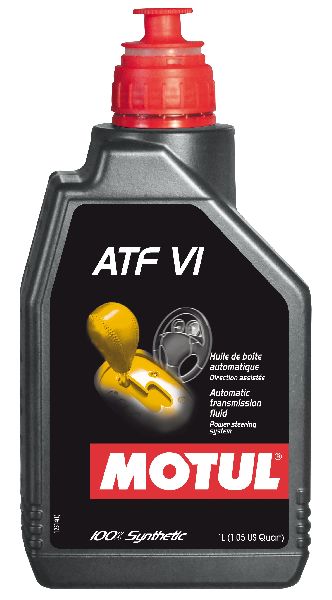
Aftermarket price range: $40-$70 - Honda ATF DW-1 Automatic Transmission Fluid
(OEM #08200-9008)— This is the required fluid for the 6-speed automatic transmission. Low, dirty, or incorrect fluid is a primary cause of transmission codes.
Trusted brands: Honda Genuine
OEM price range: $10-$15 per quart
Aftermarket price range: N/A - Honda ATF Type 3.1 Automatic Transmission Fluid
(OEM #08200-9017)— This is the required fluid for the 9-speed ZF automatic transmission. Using any other fluid will cause damage. ZF Lifeguard 9 is the OEM equivalent.
Trusted brands: Honda Genuine, ZF Lifeguard 9
OEM price range: $25-$40 per quart
Aftermarket price range: N/A
Related Codes That Often Appear With This One
- P0868 (Transmission Fluid Pressure Low) - If seen with P0841, this strongly suggests a problem with the fluid level or a clogged filter/strainer.
Technical Service Bulletins (TSBs) & Recalls
- TSB 20-029: 9-Speed A/T Hard Upshift with Steady Acceleration: Affects 2016-2020 Pilots with the 9-speed AT. The corrective action is to update the TCM software to fix abnormal adaptation values causing harsh or jerky upshifts. This should be checked before condemning the transmission hardware.
- TSB 17-040: Vibration While Driving Under Light Acceleration After Software Update: While this TSB is for other Honda models like the CR-V, it details a known issue with Honda transmissions where a judder/vibration can indicate a failing torque converter. If a software update doesn't fix it, the torque converter may need replacement. This is relevant as a failing converter can contaminate fluid and cause pressure-related codes.
Platform-Specific Known Issues
- 9-Speed Transmission Problems: The ZF 9-speed automatic in 2016-2022 Pilots is subject to a class-action lawsuit alleging defects in the control software causing harsh shifting, delayed acceleration, and sudden loss of power. ZF itself also issued a recall for some 9HP transmissions due to wiring harness issues that could cause a sudden shift to neutral.
Mechanic-Grade Diagnostic Values
- 6-Speed Transmission Fluid Pressure Switch 'A' (3rd Clutch) Circuit Voltage — expected: 5V or 12V reference signal at the harness connector with key on, engine off.. Failure: No voltage indicates an open in the power supply from the TCM/PCM.
- 6-Speed Transmission Fluid Pressure Switch 'A' (3rd Clutch) Resistance — expected: Check manufacturer's service manual for specific ohm values. The reading should be stable.. Failure: Infinite resistance (OL) indicates an open switch. Zero resistance may indicate a short. If resistance fluctuates when wiggling the connector, the switch is failing internally.
Scan Tool Commands That Help
- Honda Diagnostic System (HDS): Clear DTCs — Used after a repair to reset the fault codes stored in the computer and verify if the fix was successful.
- Honda Diagnostic System (HDS): A/T Data List — To check the current software program P/N on the TCM to see if a software update TSB (like 15-086 or 17-040 for related judder issues) has been applied.
- Honda Diagnostic System (HDS): Take automatic transmission snapshot — Used to capture transmission operating data when a symptom (like a judder) occurs. This data is reviewed to determine if a component, like the torque converter, needs replacement as per TSB 17-040.
Wiring & Ground Locations
- G101 — On the left side of the engine block, often near the thermostat housing.. G101 is a primary ground for the ECU/PCM. A corroded or loose G101 ground can cause a host of intermittent electrical problems, including erratic sensor readings that could trigger a P0841 code.
- 3rd Clutch Pressure Switch Connector (6-Speed AT) — On the outside of the transmission case, accessible after removing the driver's side front tire and a plastic splash cover. It is a single-wire connector.. This is the direct connection point for the sensor most commonly associated with P0841 on the 6-speed. Checking for voltage here is a key diagnostic step. Corrosion is common.
- TCM Connectors (26P and 58P) — Inside the vehicle, location varies but typically under the dash or in the center console area.. Diagnostic procedures may require disconnecting these connectors to test for continuity or shorts in the wiring harness between the TCM and the pressure switch.
Real Owner Repair Stories
- YouTube user 'veedub360' (2005 Honda Pilot (demonstrates fix applicable to the 6-speed transmission in 2016-2020 Pilots)) — Check engine light with code P0848 (3rd clutch pressure switch circuit high), which is functionally similar to P0841 for this component.
❌ Tried (didn't work) The video proceeds directly to diagnosis and replacement.
✅ What actually fixed it The 3rd clutch transmission fluid pressure switch was replaced. The old switch was removed from the driver's side of the transmission case and a new genuine Honda part was installed, which resolved the code. - NHTSA ODI #11720874 — An owner of a similar Honda model reported that their vehicle required a tow to the dealer where an internal failure in the transmission was cited, confirming related DTCs P0841 for the pressure sensor circuit and P0844 for a dog clutch malfunction.
OEM Part Supersession History
28600-R97-013→28600-R36-004— Part update/revision by Honda.
Heads up: The new part number (28600-R36-004) is the current replacement for the original. Always verify with a dealer using the VIN, but this is the documented supersession.28600-R97-003→28600-R97-013— Part update/revision by Honda.
Heads up: 28600-R97-013 was the replacement for the older -003 part number. It has since been superseded again.
Model Year Variations Within This Range
- 2016-2020: Lower trims (LX, EX, EX-L) used a Honda 6-speed automatic where P0841 is commonly a fixable external pressure switch. Higher trims (Touring, Elite) used the ZF 9-speed.
- 2021-2022: All trims came standard with the ZF 9-speed automatic, making a P0841 code a more serious issue potentially requiring internal transmission work or replacement.
Diagnostic Flowchart
Other Known Issues on This Vehicle
Issues unrelated to this code that are worth knowing about as an owner of this generation:
- Auto Idle-Stop Failure 🔴 High — Widespread on 2016-2020 models with the 9-speed transmission. Can occur at any mileage. (Ref: NHTSA investigation opened (approx. 195,000 vehicles); Honda has issued service bulletins (e.g., 23-008) and product updates.)
- Infotainment System Glitches/Failure 🟠 Medium — Common on 2018-2022 models, leading to screen freezing, black screens, and popping noises. (Ref: Subject of multiple class-action lawsuits and service bulletins (e.g., A19030B).)
- Fuel Injector Failure 🔴 High — A known problem, particularly on the 2016 model year, often occurring around 60,000 miles and can lead to engine misfires or stalling. (Ref: Honda has issued TSBs related to this issue (e.g., 19-053).)
- Engine Knocking / Connecting Rod Bearing Failure 🔴 High — Reported most frequently on the 2016 model year, can lead to sudden engine failure.
Used vs. New Parts: Buying Guide for This Vehicle
When a used part is the smart pick: For the 6-speed transmission, a used wiring harness from a reputable dismantler can be a cost-effective fix if the original is damaged. For the 9-speed, a used, low-mileage transmission assembly from a donor vehicle with a known history (e.g., rear-end collision) can be a viable, though still risky, alternative to a brand new unit, saving thousands of dollars.
Donor-vehicle mileage cap: roughly under 75000 miles for the part to have meaningful remaining life.
What to inspect on the donor part:
- For a used transmission, request the VIN of the donor car to check its service history.
- Inspect the fluid from the donor transmission if possible. Dark, burnt-smelling fluid is a major red flag.
- Look for any external damage to the transmission case, connectors, or cooling lines.
- For a wiring harness, ensure all connectors are intact with no broken clips, and inspect for any signs of previous repairs, melting, or corrosion.
OEM-only on this vehicle (don't cheap out):
- Transmission Fluid (Honda ATF DW-1 for 6-speed, Honda ATF Type 3.1 or ZF Lifeguard 9 for 9-speed)
- Internal Transmission Sensors (For the 9-speed, if available at all, OEM is the only reliable choice)
- Transmission Control Module (TCM)
Aftermarket brands forum-validated for this vehicle:
- Standard Motor Products (For 6-speed external pressure switches)
- Dorman (For 6-speed external pressure switches)
Brands owners have reported issues with on this vehicle:
- Unbranded, no-name pressure switches from online marketplaces, as they often have high failure rates and may not be calibrated correctly.
Real Owner Stories
Aggregated from forums and TSBs cited above. Mileages and costs reflect what owners reported in those sources.
2016-2020 Honda Pilot (9-Speed AT)
Symptoms: Intermittent harsh upshifts during steady acceleration due to abnormal TCM adaptation values.
What fixed it: TCM software update as per TSB 20-029.
Source hint: TSB 20-029: 9-Speed A/T Hard Upshift with Steady Acceleration
2016-2022 Honda Pilot (9-Speed AT)
Symptoms: Harsh shifting, delayed acceleration, and sudden loss of power.
What fixed it: This issue is the subject of a class-action lawsuit alleging defects in the control software; some cases require complete transmission or valve body replacement.
Source hint: vehicle_specific_issues: 9-Speed Transmission Problems
2016-2022 Honda Pilot (9-Speed AT)
Symptoms: Transmission failed internally with code P0841.
What fixed it: According to NHTSA ODI #11568181, the transmission failed because all solenoids, sensors, and switches are internal non-serviceable parts, meaning no external sensors can be replaced when they fail.
Source hint: NHTSA ODI #11568181
Related OBD-II Codes
Frequently Asked Questions
My 2017 Honda Pilot Touring is shifting harshly; could TSB 20-029 fix my P0841 code?
I have a 2016 Pilot EX with a 6-speed transmission. Which part is most likely causing the P0841?
Does the 9-speed transmission in my 2021 Pilot have a dipstick to check the fluid level?
What kind of transmission fluid should I use for a 2019 Pilot Elite?
Is there a recall for the transmission wiring on these vehicles?
Could a failing torque converter cause pressure-related codes like P0841?
Helpful Videos

We Have This Part in Stock



The information in this article is provided for general reference and educational purposes only. Vehicle specifications, procedures, and part compatibility can vary by production date, trim level, and region. Always consult your vehicle's factory service manual and verify part numbers before purchasing or performing repairs. Safety-critical components such as airbags, seat belts, and braking systems should be installed by a qualified professional.
- Honda Pilot:
- 🧭 Diagnostic Flowchart
- 🎬 Helpful Videos
- 🛍️ Shop This Part
- What's Unique About the 2016-2022 Honda Pilot
- Symptoms You May Notice
- Most Likely Causes
- Rare But Worth Checking
- Diagnosis Steps
- Parts You'll Likely Need
- Related Codes That Often Appear With This One
- Technical Service Bulletins (TSBs) & Recalls
- Platform-Specific Known Issues
- Mechanic-Grade Diagnostic Values
- Scan Tool Commands That Help
- Wiring & Ground Locations
- Real Owner Repair Stories
- OEM Part Supersession History
- Model Year Variations Within This Range
- Other Known Issues on This Vehicle
- Used vs. New Parts: Buying Guide for This Vehicle
- Real Owner Stories
- 2016-2020 Honda Pilot (9-Speed AT)
- 2016-2022 Honda Pilot (9-Speed AT)
- 2016-2022 Honda Pilot (9-Speed AT)
- Related OBD-II Codes
- Frequently Asked Questions
- 🎟️ Get 5% Off