

P0841 on 2013-2020 Nissan Altima: Transmission Pressure Sensor Fault Explained
On a 2013-2020 Nissan Altima, code P0841 indicates a transmission fluid pressure sensor issue. However, this is almost always a symptom of a larger problem with the CVT transmission, typically a faulty valve body or internal failure. Expect a costly repair that is not a simple sensor swap. In many cases, the official diagnostic procedure for this code is simply to replace the entire transmission assembly.
- P0841 on a 2013-2020 Altima is a serious code that often signals a major transmission problem, not just a bad sensor.
- The most common fixes are expensive: replacement of the CVT valve body or the entire transmission assembly.
- Always check the transmission fluid level and condition first, and only use Nissan-specified CVT fluid (NS-3).
- Due to the complexity and known issues with these CVTs, diagnosis and repair should be handled by a qualified professional.
- Check with a Nissan dealer to see if any warranty extensions for the CVT apply to your vehicle's VIN.
What's Unique About the 2013-2020 Nissan ALTIMA

The 2013-2020 Nissan Altima uses a Jatco-supplied Continuously Variable Transmission (CVT) that is notoriously prone to premature failure. Code P0841 is a very common indicator of these well-documented CVT issues. Unlike on many other vehicles where this code might point to a simple sensor or fluid issue, on the Altima it frequently signals an impending failure of the complex valve body or the entire transmission assembly. This problem is so common it has resulted in multiple Technical Service Bulletins (TSBs) and class-action lawsuits. For some model years, Nissan's own diagnostic procedure for P0841 is a single step: "Replace transmission assembly".
Diagnostic Flowchart

Tap your situation to follow the diagnostic path that matches what you're seeing on this vehicle.
Generation note: This range covers the end of the fifth generation (L33, 2013-2018) and the beginning of the sixth generation (L34, 2019-2020). Both generations use a Jatco CVT8 (models like JF016E or JF017E) and are known to experience similar issues related to this code. The provided TSBs like NTB16-110Q and NTB19-076a specifically cover these generations and list P0841 as a key diagnostic code.
Symptoms You May Notice
- Check Engine Light is on.
- Jerking, shuddering, or harsh shifting during acceleration.
- Difficulty accelerating or a feeling of reduced power.
- RPMs fluctuating erratically while driving at a steady speed.
- Vehicle enters 'limp mode,' with sluggish acceleration that may temporarily reset after restarting the car.
- Loud whining or clunking noise while driving.
- Vehicle stalls when shifting from Park or Neutral into Drive or Reverse.
- Replacing only the external transmission filter, assuming it will fix the pressure issue.
- Using the wrong type of transmission fluid after a service, which can cause more damage.
- Attempting to replace just the pressure sensor, which is integrated into the valve body on this platform.
Most Likely Causes

- Faulty CVT Control Valve Body 🔴 High Probability → Shop Transmission Valve Body The valve body is a known weak point in these Jatco CVTs. It houses the solenoids and the pressure sensors. TSBs often group P0841 with other codes that are resolved by replacing the valve body. The pressure sensor 'A' is integrated into the valve body and is not sold as a separate, replaceable part.
How to confirm: A technician will follow the diagnostic flowchart in TSBs like NTB16-110Q or NTB19-076a. This involves checking for other codes and inspecting the CVT belt/chain for slippage after removing the valve body. If the belt/chain is okay, the valve body is replaced.
Typical fix: Replacement of the entire control valve body assembly, followed by a fluid fill with Nissan NS-3 fluid and a TCM reprogramming/calibration procedure.
Est. part cost: $800-$1500 - Internal CVT Failure 🔴 High Probability The steel belt or chain and pulley system inside the CVT can wear, scuff, or break, causing juddering and critical pressure fluctuations. This damage is often the root cause when P0841 appears with judder codes like P17F0. 🎬 See how internal belt slip causes these common failure symptoms. For some models and years, Nissan's official repair for P0841 is immediate transmission replacement.
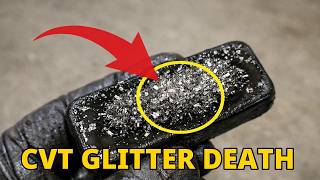
How to confirm: This is diagnosed per TSB guidelines, often after removing the valve body and visually inspecting the CVT's internal belt/chain for scuffing or damage. Finding significant metallic debris in the transmission fluid pan is also a definitive sign of internal damage.
Typical fix: Complete replacement of the CVT assembly with a new or remanufactured unit. Many owners on forums report this as the final resolution after being quoted nearly $4,000-$5,000.
Est. part cost: $3500-$5000+ - Low or Degraded Transmission Fluid 🟡 Medium Probability → Shop Transmission Assembly CVTs are extremely sensitive to fluid level and condition. Old, burnt, or low fluid cannot maintain the required hydraulic pressure, leading to performance codes. Using anything other than Nissan NS-3 fluid is a common cause of failure.
How to confirm: Check the transmission fluid level and condition. This is difficult as there is no dipstick. The level must be checked via a service port at a specific fluid temperature (around 105°F). The fluid should be light green, not dark brown or black, and not smell burnt.
Typical fix: Perform a transmission fluid drain and fill or a full fluid exchange using only the specified Nissan CVT fluid (NS-3). This is often attempted first but rarely solves the problem if the P0841 code has already appeared.
Est. part cost: $150-$300 - Failed Transmission Fluid Pressure Sensor ⚪ Low Probability → Shop Transmission Assembly While the code directly names the sensor, the sensor itself is almost never the standalone failure point. On these models, the sensor is integrated into the valve body and is not sold or serviced as a separate part, making this cause moot.
How to confirm: Testing the sensor's circuit is impractical. The diagnosis defaults to the valve body test procedure.
Typical fix: The fix becomes replacing the entire valve body assembly.
Est. part cost: $800-$1500
Rare But Worth Checking
- Wiring Harness or Connector Damage: Damage to the wiring leading to the transmission can cause an erratic signal. This should be checked before condemning expensive internal components.
- Faulty Transmission Control Module (TCM): → Shop Transmission Assembly While rare, the TCM itself can fail. This is usually the last item to be considered after all other possibilities have been exhausted.
Diagnosis Steps
- Scan the TCM for all stored trouble codes. Note if P0841 appears with other codes like P17F0, P17F1, or P0776, which are critical for diagnosis.
- Consult the relevant Technical Service Bulletin (TSB) for the specific vehicle year and other codes present. Key bulletins include NTB16-110Q, 🎬 Watch: Step-by-step diagnostic procedure using the Nissan Consult software. NTB19-076a, and others.
- Verify the transmission fluid level and condition. This must be done at the correct temperature (approx. 105°F) using the overflow plug. Ensure only Nissan NS-3 fluid is present.
- Follow the TSB diagnostic flow chart. This will typically lead to one of two paths based on the codes and symptoms.
- Path 1: If codes point to a valve body issue without evidence of belt slippage, the procedure is to replace the control valve body assembly and reprogram the TCM.
- Path 2: If codes and inspection (visual check of the belt/chain after removing the valve body) indicate belt slippage or internal damage, the procedure is to replace the entire CVT sub-assembly or the complete transmission.
- In some cases, for specific models and codes, the TSB may direct an immediate transmission replacement with no further diagnosis.
Parts You'll Likely Need
- CVT Control Valve Body
(OEM #31705-28X0B (example for 2.5L, verify by VIN))— This is the most common point of failure that triggers P0841. It contains the solenoids and integrated pressure sensors.
Trusted brands: Nissan OE, Hitachi, Rostra
OEM price range: $1000-$1700
Aftermarket price range: $140-$900 - CVT Transmission Assembly
(OEM #Varies significantly by year/engine (e.g., RE0F10D, RE0F10E). Must be verified by VIN.)— In cases of severe internal wear (indicated by judder codes or metal in the fluid), replacing the entire transmission is the only reliable fix. Repair quotes often range from $4,500 to over $8,000.
Trusted brands: Nissan OE, Jatco (remanufactured)
OEM price range: $4000-$5500
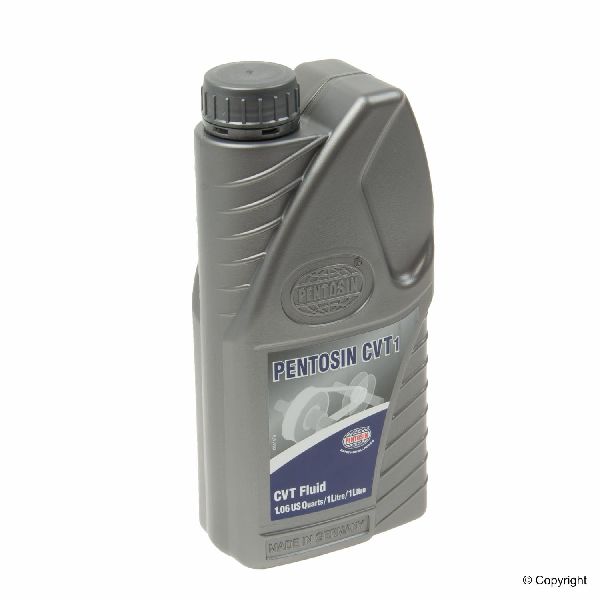
Aftermarket price range: $3000-$4500 - Nissan CVT Fluid (NS-3)
(OEM #999MP-NS300P, 999MP-CSHNS3)— This specific fluid is
Related Codes That Often Appear With This One
- P17F0 — Indicates 'CVT Judder (T/M Inspection)'. This code, along with P0841, is a strong indicator of internal mechanical wear or a failing valve body, as noted in Nissan TSBs NTB16-110Q and NTB19-076a.
- P17F1 — Also a 'CVT Judder (C/U Inspection)' code. Its presence with P0841 reinforces the diagnosis of a serious internal transmission problem requiring inspection per the TSB.
- P0776 — Relates to the 'Pressure Control Solenoid B'. When seen with P0841, it points strongly towards a faulty valve body assembly where both components are located.
- P0868 — Indicates 'Transmission Fluid Pressure Low'. This can appear alongside P0841 if the root cause is low fluid level or a failing transmission pump.
Technical Service Bulletins (TSBs) & Recalls

- NTB16-110Q: Covers 2013-2017 Altima with P0841 and other codes, providing a diagnostic flowchart for valve body or sub-assembly replacement.
- NTB19-076a: Covers 2018 Altima (and others) with P0841, detailing a similar diagnostic path to NTB16-110Q.
- NTB19-040H: A bulletin that, after several revisions, directs technicians to refer to the Electronic Service Manual (ESM) for P0841, indicating it's a known, complex issue.
Platform-Specific Known Issues
- Class Action Lawsuits and Warranty Extensions: Numerous class-action lawsuits have been filed against Nissan for CVT failures. One settlement for 2013-2016 Altimas extended the powertrain warranty by 24 months or 24,000 miles (to 84 months/84,000 miles total) and offered reimbursement for prior repairs up to $5,000. Another settlement covered 2014-2018 Rogues and other models with similar warranty extensions. Owners should check their VIN against these settlement terms, as they may be eligible for coverage even if the original warranty has expired.
- Owner Experience: Repair vs. Trade-In: A common theme in owner forums is the difficult choice after a P0841 diagnosis. Faced with a $4,000-$5,000+ repair bill for a vehicle that may only be worth slightly more, many owners choose to trade in or sell the vehicle at a loss rather than invest in a new transmission that has the same inherent design flaws.
- Dealer Diagnosis Can Be Abrupt: In a documented case for a 2019 Nissan Rogue, which shares CVT architecture, the official diagnostic procedure in the AllData repair database for code P0841 was a single step: 'Replace transmission assembly.' This highlights how, for newer models, Nissan may have determined that the code is a definitive sign of a non-serviceable internal failure.
Mechanic-Grade Diagnostic Values
- Reference Voltage at TFPS Connector — expected: 5V or 12V (depending on specific circuit design). Failure: If voltage is incorrect or unstable, the power feed from the TCM/PCM or the ground wire is faulty.
- General TFPS Signal Voltage — expected: Approx. 0.5V (low pressure) to 4.5V (high pressure). Failure: A signal that is stuck, shows 0V (short to ground), or matches reference voltage (short to power) indicates a sensor or wiring fault.
Hidden / Shadow Codes Worth Checking
- P17F0 / P17F1: These are 'CVT Judder' codes. Their presence alongside P0841 is a strong confirmation of a mechanical problem (belt/pulley damage) within the CVT, per Nissan TSBs. A basic OBD-II scanner may only show P0841, while a more advanced scanner is needed to read these crucial manufacturer-specific codes from the TCM. (see via Enhanced OBD-II scanner with access to the Transmission Control Module (TCM) or the Nissan CONSULT dealer tool.)
Scan Tool Commands That Help
- Nissan CONSULT: TCM Calibration Data Write — This is mandatory after replacing the CVT assembly or the control valve body. It involves writing a specific calibration file from a disc/QR code that comes with the new part to the TCM. Failure to perform this can result in a no-move condition.
- Nissan CONSULT: Clutch Point Learning & Select Learning — These are sub-procedures within the calibration data write process. They adapt the TCM to the specific engagement points of the clutches and drive/reverse gears. The 'Select Learning' involves shifting between N-D and N-R ten times each while the vehicle is stationary.
- Manual Procedure (No Tool): Accelerator Pedal Reset / TCM Adaptive Memory Wipe — This procedure, often called the 'pedal dance', can clear the TCM's learned adaptive shift data. It can sometimes resolve minor shifting complaints but will not fix an underlying mechanical or electrical fault causing P0841. It involves a timed sequence of turning the ignition on, pressing and releasing the accelerator pedal, and watching for the check engine light to blink.
Wiring & Ground Locations
- Valve Body Bolts — On the CVT control valve body, inside the transmission oil pan.. According to Nissan TSB NTB16-110J, the specific bolts that must be removed to detach the valve body are marked with the number '7' on the head. Removing the wrong bolts can lead to internal transmission damage.
- Main Valve Body Electrical Connector — Inside the transmission, connecting the vehicle harness to the valve body assembly.. After dropping the transmission pan, this is the single electrical connector that must be disconnected to fully remove the valve body. It has a press-tab release and can be difficult to access while the valve body is hanging.
Real Owner Repair Stories
- Reddit user in r/Nissan (2015 Nissan Altima) — P0841 code.
❌ Tried (didn't work) The owner was advised by a commenter that per TSB NTB16-110, the fix is either a valve body or a new transmission.
✅ What actually fixed it The owner traded the car in. After taking it to three different mechanics, all of them concluded the transmission was failing and recommended a full replacement quoted around $4,000. - Reddit user in r/Nissan (2007 Nissan Altima) — P0841, P0826, P0725, P1726. Sluggish acceleration (limp mode) that temporarily resets after restarting the car.
❌ Tried (didn't work) Replaced transmission fluid and coolant.
✅ What actually fixed it The user did not post a final repair, but their self-diagnosis using the CVTz50 app led them to conclude the issue was an intermittently sticking valve in the valve body, causing the pressure discrepancy. This aligns with the common failure pattern. - YouTube video by 'Car Fix School' (2016 Nissan Altima with 98,000 miles) — P0841 and the 'hidden' judder code P17F0.
❌ Tried (didn't work) The narrator notes that some valve body rebuilders have seen the problem persist even after a valve body replacement.
✅ What actually fixed it The only reliable fix discussed for the P17F0/P0841 combination was replacing the entire transmission with a lower-mileage used unit. The video explains this is because the root cause is often belt/pulley scoring, which is not fixed by a valve body swap.
OEM Part Supersession History
31705-28X0A→31705-28X0B— Revision or update to the CVT Control Valve Assembly.31705-28X9B→3170E-28X0B— Part number change for the Control Valve Assembly Kit.
Heads up: The 'E' in the part number may designate a kit vs. a single assembly. It is critical to verify the correct part number by VIN before ordering.
Model Year Variations Within This Range
- 2013-2018 (5th Gen, L33) vs. 2019-2020 (6th Gen, L34): The 2013-2018 models use an earlier generation of the Jatco CVT that is widely known for high failure rates. The 2019+ models use a revised, supposedly more reliable '3rd generation' Jatco Xtronic CVT. While both can still log a P0841 code and have similar diagnostic procedures outlined in TSBs, the internal components and part numbers may differ.
Helpful Videos

We Have This Part in Stock

The information in this article is provided for general reference and educational purposes only. Vehicle specifications, procedures, and part compatibility can vary by production date, trim level, and region. Always consult your vehicle's factory service manual and verify part numbers before purchasing or performing repairs. Safety-critical components such as airbags, seat belts, and braking systems should be installed by a qualified professional.
- Nissan ALTIMA:
- 🧭 Diagnostic Flowchart
- 🎬 Helpful Videos
- 🛍️ Shop This Part
- What's Unique About the 2013-2020 Nissan ALTIMA
- Symptoms You May Notice
- Most Likely Causes
- Rare But Worth Checking
- Diagnosis Steps
- Parts You'll Likely Need
- Related Codes That Often Appear With This One
- Technical Service Bulletins (TSBs) & Recalls
- Platform-Specific Known Issues
- Mechanic-Grade Diagnostic Values
- Hidden / Shadow Codes Worth Checking
- Scan Tool Commands That Help
- Wiring & Ground Locations
- Real Owner Repair Stories
- OEM Part Supersession History
- Model Year Variations Within This Range
- 🎟️ Get 5% Off