

P0841 on 2018-2022 Nissan KICKS: Transmission Pressure Sensor Faults and Fixes
On a 2018-2022 Nissan Kicks, code P0841 almost always points to a known issue with the Jatco CVT transmission. The fix often requires following manufacturer Technical Service Bulletins (TSBs), which may lead to replacing the transmission valve body or the entire CVT assembly, a costly repair if not covered by warranty. It is rarely a simple sensor issue.
- P0841 on a 2018-2022 Nissan Kicks is a serious code that points to a problem with the CVT transmission.
- Do not ignore this code. Driving with it can lead to complete transmission failure.
- The most common cause is an internal failure of the CVT, specifically the valve body or the entire unit, as documented in multiple Nissan TSBs.
- This is not a DIY-friendly repair. It requires professional diagnosis with specialized tools at a dealership or transmission shop.
- Check if your vehicle is still under the powertrain warranty, as this could be a very expensive repair.
What's Unique About the 2018-2022 Nissan KICKS
The Nissan Kicks, like many modern Nissans, uses a Jatco CVT (Continuously Variable Transmission), specifically the Jatco CVT7 WR (JF015E) or the newer JF020E in later models. This code is frequently associated with a series of well-documented internal component failures in these transmissions. Nissan has released multiple Technical Service Bulletins (TSBs) that group P0841 with other transmission codes, indicating a pattern failure. Unlike a simple sensor replacement on other vehicles, on the Kicks this code often precedes a more complex and expensive repair involving the transmission's valve body or a full replacement of the CVT unit, as the sensor is integrated into the valve body assembly.
Diagnostic Flowchart
Tap your situation to follow the diagnostic path that matches what you're seeing on this vehicle.
Symptoms You May Notice
- Check Engine Light is on
- Hesitation or shuddering during acceleration.
- Reduced engine power or vehicle entering 'fail-safe' (limp) mode.
- Jerky or sluggish performance.
- Slipping transmission, where engine RPMs flare up without a corresponding increase in speed.
- Whining or humming noises from the transmission.
- Delayed engagement when shifting from Park to Drive or Reverse.
- Increased fuel consumption.
- Replacing only an external pressure sensor when none exists separately; the sensor is internal to the valve body.
- Assuming the issue is a simple fluid change when there is already mechanical damage (belt slippage or debris) inside the transmission.
- Blaming the sensor itself when it is merely reporting a pressure problem caused by a failing valve body or CVT belt/pulley system.
Most Likely Causes
- Internal CVT Failure (Control Valve/Valve Body or CVT Assembly) 🔴 High Probability This is a widely documented issue for this platform, as evidenced by multiple Nissan TSBs (NTB22-021A, NTB19-040 series) that address this code by outlining procedures for inspecting and replacing the control valve (valve body) or the entire CVT assembly. The presence of other codes, especially P17F0 or P17F1 (CVT Judder), often determines the repair path.
How to confirm: A Nissan dealership or qualified transmission shop must follow the diagnostic steps in the relevant TSB. This involves checking for a specific group of DTCs, then removing the transmission pan to inspect for debris. A borescope inspection of the CVT belt for slippage marks is often the deciding factor between replacing the valve body versus the entire transmission.
Typical fix: Replacement of the CVT control valve assembly (valve body) or, if significant metal debris or belt slippage is found, replacement of the entire CVT transmission assembly.
Est. part cost: $800-$1200 (Valve Body), $3500-$7000 (CVT Assembly) - Low or Degraded Transmission Fluid 🟡 Medium Probability → Shop Transmission Assembly CVTs are highly sensitive to fluid level and condition. Incorrect fluid levels or old, degraded fluid can cause pressure fluctuations that trigger this code. Many owners are unaware of the required 30,000-60,000 mile service interval.
How to confirm: Checking the fluid is complex as the Kicks has no dipstick. The vehicle must be level, running, and the fluid at a specific temperature (35°C - 45°C). A technician removes a check plug; if fluid drips out, it's full. If not, fluid must be added until it does. The fluid should be the correct color (greenish for NS-3) and not smell burnt.
Typical fix: Perform a transmission fluid drain and fill with the correct fluid (Nissan CVT Fluid NS-3). If the fluid is very dirty, a full replacement may be needed, but changing fluid on a failing transmission may worsen symptoms.
Est. part cost: $100-$250 (Fluid) - Faulty Transmission Fluid Pressure Sensor ⚪ Low Probability → Shop Transmission Assembly While the code directly names the sensor, the sensor itself is rarely the point of failure. It is integrated into the control valve (valve body) assembly and is not sold as a separate component for this vehicle. Therefore, a 'bad sensor' diagnosis automatically leads to a valve body replacement.
How to confirm: A technician would test the sensor's circuit for proper voltage and ground. However, because the root cause is almost always mechanical wear within the valve body or CVT, and the sensor is not serviceable alone, diagnosis typically follows the TSB path focusing on debris and belt inspection.
Typical fix: The entire control valve (valve body) assembly is replaced.
Est. part cost: $800-$1200 (Valve Body Assembly)
Rare But Worth Checking
- Faulty Transmission Control Module (TCM): → Shop Transmission Assembly A TCM failure is very rare but possible. It should only be considered after all other possibilities, including the valve body, CVT assembly, and wiring, have been exhaustively checked per the TSBs.
- Wiring Harness Damage: Damage to the wiring between the TCM and the transmission can cause this code. Look for chafed, corroded, or broken wires, especially where the harness may rub against the chassis or engine components. This is an unlikely cause compared to the known mechanical CVT issues.
Diagnosis Steps
- Scan the TCM for all stored trouble codes. Note if P0841 appears with other codes like P0746, P0776, P0965, or especially P17F0/P17F1.
- Check for applicable Nissan Technical Service Bulletins (TSBs) like NTB22-021A or NTB19-040E. These provide the official, mandatory diagnostic path.
- Follow the TSB repair flowchart. This will typically direct the technician to first check the transmission fluid level and condition.
- Drop the transmission oil pan and inspect the magnets for metal debris. The amount and type of debris are critical diagnostic indicators. Clean the pan and magnets.
- Per TSB NTB19-040E, the next step is often to remove the control valve to perform a borescope inspection of the CVT belt. Look for evidence of belt slippage (scuffing, scratches) on the sides of the belt.
- If there is evidence of belt slippage or significant metal debris in the pan, the TSB directs the technician to replace the entire CVT assembly.
- If there is no evidence of belt slippage and minimal debris, the TSB directs the technician to replace the control valve (valve body) assembly.
- After repairs, install a new pan gasket, refill with Nissan CVT Fluid NS-3, clear all DTCs, and perform a test drive to ensure the issue is resolved.
Parts You'll Likely Need
- CVT Assembly
(OEM #31020-50X5A (or 31020-50X1A))— This is the required fix when significant metal debris or CVT belt slippage is found, as directed by Nissan TSBs.
Trusted brands: Nissan OE
OEM price range: $3500-$7000
Aftermarket price range: $3000-$5000 (Remanufactured) - Transmission Control Valve Assembly (Valve Body)
(OEM #31705-X428D)— If no major debris or belt damage is found, Nissan's repair procedure calls for replacing the valve body, which contains the solenoids and integrated pressure sensors.
Trusted brands: Nissan OE
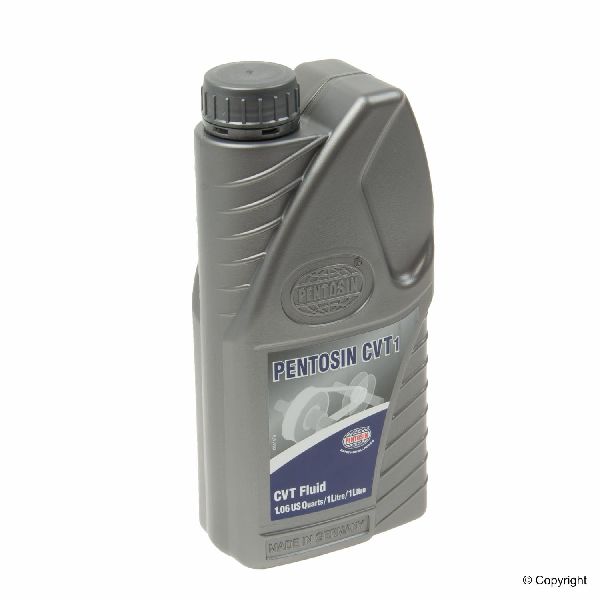
OEM price range: $828-$1150 - Nissan CVT Fluid NS-3
(OEM #999MP-NS300P)— This specific fluid is required for any service involving the CVT, whether it's a fluid top-off, drain-and-fill, or a full transmission replacement.
Trusted brands: Nissan OE, Idemitsu N3, ENEOS ECO CVT
OEM price range: $20-$25 per quart
Aftermarket price range: $15-$20 per quart
Related Codes That Often Appear With This One
- P17F0 / P17F1 — These Nissan-specific codes indicate 'CVT Judder'. TSB NTB22-021A and NTB19-040E use the presence of these codes as a primary indicator for a deeper mechanical inspection, often leading to a full CVT replacement.
- P0776 — Relates to the Pressure Control Solenoid 'B'. Both codes are listed together in Nissan TSBs, indicating a common internal CVT fault within the valve body.
- P0965 — Relates to the Pressure Control Solenoid 'B' circuit. Its presence alongside P0841 reinforces the likelihood of a valve body or internal transmission problem.
- P0746 — Relates to the Pressure Control Solenoid 'A'. Like the other codes, it is grouped in the same TSBs and points to a systemic issue within the valve body or CVT.
Technical Service Bulletins (TSBs) & Recalls
- NTB22-021A: Details the procedure for diagnosing a group of CVT codes including P0841, often superseding older bulletins.
- NTB19-040E: Provides a detailed repair flowchart for P0841 and other codes, including instructions for a borescope inspection of the CVT belt.
- NTB19-040H: A superseded bulletin that directs technicians to either NTB22-021A or the Electronic Service Manual (ESM) depending on which specific codes are stored with P0841.
Platform-Specific Known Issues
- Multiple Technical Service Bulletins (NTB22-021A, NTB19-040E, NTB19-040H, NTB19-040F) have been issued by Nissan for P0841 and related codes on the Kicks. These bulletins provide a detailed diagnostic and repair path that often leads to replacing the valve body or the entire CVT assembly.
Mechanic-Grade Diagnostic Values
- Secondary Pulley Pressure Sensor Voltage — expected: Approximately 0.88 - 0.94 V. Failure: A voltage reading outside of this range indicates a potential sensor or circuit issue.
- Line Pressure at Stall Test — expected: 41.8 - 46.8 Bars (607 - 680 psi). Failure: Pressure significantly below this range indicates a major hydraulic issue (pump, valve body, internal leaks).
Scan Tool Commands That Help
- Nissan CONSULT-III plus: ERASE CALIBRATION DATA — This must be performed after replacing the CVT assembly or the control valve (valve body) to clear the old calibration data from the TCM before writing the new data.
- Nissan CONSULT-III plus: WRITE IP CHARA - REPLACEMENT AT/CVT — This function is used to write the new calibration file (from a CD or downloaded from Nissan) to the TCM after a CVT or valve body has been replaced.
- Nissan CONSULT-III plus: CLUTCH POINT LEARNING — This relearn procedure is required after replacing the control valve (valve body). It is not performed if the entire CVT assembly is replaced. Failure to perform this correctly can result in a no-move condition.
- Nissan CONSULT-III plus: Select Learning (Drive / Reverse Learning) — This procedure is required after replacing the CVT assembly, valve body, or TCM to allow the transmission to relearn shift engagement points. It involves shifting between N, D, and R ten times each while stationary.
Wiring & Ground Locations
- TCM Connector E28 / E29 — The TCM is located on the passenger side, under the dashboard area. The main harness connector to the TCM is identified as E28 or E29 in wiring diagrams.. This is the primary connector where a technician would perform pin-out testing for the pressure sensor circuit to check for continuity, shorts, or opens between the TCM and the transmission harness.
- Secondary Speed Sensor Connector — Located on the right rear of the transmission.. While not the pressure sensor itself, damage to the main transmission harness in this area could affect multiple circuits, including the pressure sensor wiring that runs alongside it.
Real Owner Repair Stories
- Bob Is The Oil Guy forum user (2016 Nissan Rogue (uses a similar Jatco CVT and exhibits the same failure pattern)) — Vehicle started revving high, not accelerating properly, and shuddering. Code P0841 was the only one stored.
❌ Tried (didn't work) The owner had performed regular drain and fills of the CVT fluid, but the failure still occurred.
✅ What actually fixed it The consensus from other experienced members was that this is a classic symptom of internal failure. The recommended diagnostic path was to drop the transmission pan to check for metal debris and inspect the valve body, which aligns with the official Nissan TSB procedures. The story highlights that even with good fluid maintenance, the inherent mechanical issues can still lead to failure.
OEM Part Supersession History
31705-X428B / 31705-X429B→31705-X428D— Part revision and consolidation by the manufacturer.
Heads up: 31705-X428D is listed as the replacement for earlier versions. Using an older part number if found may not have the latest internal updates.31705-X428A→Unknown, part is listed as a multi-supersession item.— Part revision by manufacturer.
Heads up: This part number is listed for the Versa but shares the same base code (31705) and is part of the same family. It's critical to verify the exact part number by VIN, as multiple similar-looking valve bodies exist for different Jatco CVTs.
Model Year Variations Within This Range
- 2018-2021: Early production Kicks models use a variant of the Jatco CVT7 platform known as the RE0F11B (likely a JF020E), which differs from the more common RE0F11A (JF015E) found in other Nissans. It has a different final drive ratio (4.055:1) and relocates the high clutch pressure sensor to the top of the valve body alongside an added primary pressure sensor.
- 2025+: The second-generation 2025 Nissan Kicks moves to a new 2.0L engine and a new Jatco CVT-XS (JF023E) transmission. This is a completely different unit from the one in the 2018-2022 models, so diagnostic procedures and common failures will not be the same.
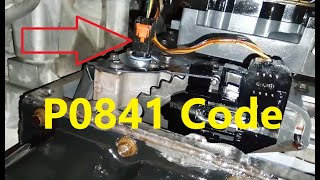
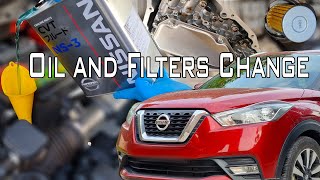
Helpful Videos


We Have This Part in Stock

The information in this article is provided for general reference and educational purposes only. Vehicle specifications, procedures, and part compatibility can vary by production date, trim level, and region. Always consult your vehicle's factory service manual and verify part numbers before purchasing or performing repairs. Safety-critical components such as airbags, seat belts, and braking systems should be installed by a qualified professional.
- Nissan KICKS:
- 🧭 Diagnostic Flowchart
- 🎬 Helpful Videos
- 🛍️ Shop This Part
- What's Unique About the 2018-2022 Nissan KICKS
- Symptoms You May Notice
- Most Likely Causes
- Rare But Worth Checking
- Diagnosis Steps
- Parts You'll Likely Need
- Related Codes That Often Appear With This One
- Technical Service Bulletins (TSBs) & Recalls
- Platform-Specific Known Issues
- Mechanic-Grade Diagnostic Values
- Scan Tool Commands That Help
- Wiring & Ground Locations
- Real Owner Repair Stories
- OEM Part Supersession History
- Model Year Variations Within This Range
- 🎟️ Get 5% Off