

OBD-II Code P0842: Transmission Fluid Pressure Sensor 'A' Circuit Low
The Ultimate Guide to What P0842 Means, Why It Triggers, and How to Fix It for Good
- Code P0842 indicates the transmission fluid pressure sensor 'A' circuit voltage dropped below the manufacturer threshold (e.g., <0.21V on Hondas), signaling a critical electrical short.
- Stop driving immediately; continuing to drive in limp mode causes clutch slippage that escalates a $200 sensor replacement into a $3,500+ transmission rebuild.
- Always check for vehicle-specific Technical Service Bulletins (TSBs) before buying parts, as seen with the 2019-2020 Subaru Ascent's recall (WRK-21) for a faulty wiring harness.
- Look for a flashing 'D' light on Honda and Acura models (2005-2022), which strongly confirms a failed external 2nd clutch pressure switch (OEM P/N 28610-RKE-004).
What Does P0842 Mean?

Code P0842 means the Powertrain Control Module (PCM) detects a voltage signal from Transmission Fluid Pressure Sensor 'A' that is continuously lower than the specified range. This sensor reports real-time hydraulic pressure in a specific transmission circuit, allowing the PCM to command smooth gear shifts. A 'circuit low' signal means the computer lost this data, forcing it to guess and triggering a fault.
Technical definition: The SAE/OBD-II definition is "Transmission Fluid Pressure Sensor/Switch 'A' Circuit Low". The PCM or Transmission Control Module (TCM) registers a persistent voltage input from the 'A' sensor circuit below its normal operational threshold. On Hondas, this code sets when sensor voltage reads less than 0.21V; on Mitsubishis, the threshold is below 0.09V for 5 seconds. This points to an electrical fault—a short to ground in the signal wire, an internal sensor failure, or a corroded connector.
Can I Drive With P0842?

No — Do Not Drive. Driving is strongly discouraged. Your vehicle enters a 'limp mode' with limited gears, shifts harshly, or shifts to neutral unexpectedly. Continuing to drive causes severe transmission overheating and catastrophic internal damage (e.g., failed clutches, damaged torque converter), escalating a $200 sensor repair into a full transmission replacement costing $3,500 or more. On 2019-2020 Subaru Ascents, a known defect tied to this code causes sudden power loss, creating a significant crash risk.
Common Causes

- Faulty Transmission Fluid Pressure Sensor (TFPS) (Very Common) — The sensor fails internally, creating a permanent short to ground that holds the circuit voltage near zero. It also malfunctions when contaminated by metallic debris in the transmission fluid.
- Wiring Harness or Connector Short to Ground (Common) — The wiring harness frays from heat and vibration, shorting the signal wire directly to the transmission case (ground). Connectors also corrode, fill with moisture, or suffer from dissimilar metal oxidation (notably on 2019-2020 Subarus), causing a permanent loss of signal.
- Low or Severely Contaminated Transmission Fluid (Common) — Low fluid prevents the pump from building adequate hydraulic pressure. Old, burnt fluid contaminated with clutch material clogs the sensor's orifice or the transmission filter, starving the pump and dropping system pressure.
- Faulty Pressure Control Solenoid or Valve Body (Less Common) — A pressure control solenoid stuck open or a jammed valve within the valve body causes a massive hydraulic leak. This prevents the circuit from reaching its target pressure, triggering the code.
- Internal Mechanical Transmission Failure (Less Common) — A failing transmission pump, cracked internal components, or blown seals cause major hydraulic leaks. The system cannot build enough pressure for the sensor to read.
- Faulty Powertrain/Transmission Control Module (PCM/TCM) (Very Rare) — The computer module itself fails. A fault in the internal circuit that processes the sensor's signal forces it to read low. Consider this only after exhaustively ruling out all other electrical and hydraulic faults.
Symptoms

- Check Engine Light (or Malfunction Indicator Lamp) is On — The PCM illuminates the light immediately upon logging the P0842 fault.
- Vehicle Stuck in 'Limp Mode' — To prevent catastrophic damage, the computer forces the transmission into a single gear (usually 2nd or 3rd). This causes poor acceleration and high engine RPMs at cruising speeds.
- Harsh, Delayed, or Failed Shifts — Without correct pressure data, the TCM cannot time shifts. The transmission slams into gear, hesitates, or refuses to shift entirely.
- Flashing 'D' or Gear Indicator Light — On Honda and Acura vehicles, the 'D' 🎬 Watch: How to replace the pressure switch on a Honda. (Drive) light flashes to specifically indicate a stored transmission electronic fault.
- Transmission Overheating — Incorrect line pressure causes clutches to slip, generating excessive friction and heat. The 'AT Oil Temp' light illuminates on equipped vehicles.
- Decreased Fuel Economy — An inefficiently shifting transmission and disabled torque converter lockup force the engine to operate outside its optimal power band, increasing fuel consumption by 10-20%.
Diagnostic Flowchart
Tap your situation to follow the diagnostic path that matches what you're seeing on this code.
Common Fixes & Costs
- Replace Transmission Fluid Pressure Sensor (TFPS) — Parts: $40-$150, Labor: $120-$400, ~1.5 hr book time (Intermediate)
- Repair Wiring Harness or Replace Connector — Parts: $15-$60, Labor: $100-$250, ~2.0 hr book time (Intermediate)
- Replace Transmission Fluid and Filter — Parts: $50-$120, Labor: $100-$250, ~1.5 hr book time (DIY)
- Replace Valve Body or Pressure Control Solenoid — Parts: $250-$800, Labor: $300-$600, ~3.5 hr book time (Professional)
- Replace Powertrain/Transmission Control Module (PCM/TCM) — Parts: $500-$1200, Labor: $150-$300, ~2.5 hr book time (Professional)
Used vs. New Parts: Buying Guide
When a used part is worth it: A used sensor is never recommended. It is a wear item, and labor is the primary cost. Only consider used if replacing an entire transmission assembly.
Donor-vehicle mileage cap: roughly under 50000 miles for the part to have meaningful remaining life.
Donor quality checklist:
- Verify the donor vehicle was not scrapped due to transmission failure.
- Match the part number exactly; superseded numbers are common.
- Avoid parts with any visible corrosion on the electrical connector.
Decision logic:
- If The sensor is located externally and is easy to access. → Buy a new aftermarket sensor from a reputable brand (Denso, Standard Motor Products).
- If The sensor is located inside the transmission pan. → Always buy a new OEM part. The risk of a cheap part failing is too high to justify repeating the labor.
- If The vehicle is older (>15 years) and OEM parts are unavailable. → Buy a high-quality aftermarket part from a brand known for reliable electronics.
Warranty tradeoff: Used parts offer a 30-day warranty. Aftermarket new parts offer 1-year to lifetime warranties. New OEM parts carry a 1-year/12,000-mile warranty.
Worst-case if a used part fails: $300-$600 if a cheap part fails after installation, primarily due to repeated labor costs.
What Happens If You Wait — Timeline
- 0-100 miles: Check Engine Light illuminates. Vehicle enters 'limp mode', limiting gears. Shifting becomes harsh. (MPG impact: 10-20%% · Added cost: $0)
- 100-500 miles: Incorrect line pressure causes clutch surfaces to slip. Fluid overheats and degrades rapidly. (MPG impact: 15-25%% · Added cost: $150)
- 500-1,000 miles: Clutch slipping glazes the clutch plates. Overheated fluid destroys rubber seals and plastic solenoids. (MPG impact: 20-30%% · Added cost: $1,500)
- 1,000+ miles: Catastrophic failure. Extreme heat warps the valve body and destroys the torque converter. The transmission stops functioning. (MPG impact: N/A% · Added cost: $3,500 - $7,000+)
Cost of Not Fixing It
- Immediate (0-100 miles): Reduced fuel economy (10-20% drop), harsh shifting, and vehicle stuck in 'limp mode,' creating a safety hazard. (Added cost: $0)
- Short-Term (100-1,000 miles): Increased friction from slipping clutches causes transmission fluid to overheat and burn, destroying seals and solenoids. (Added cost: $200 - $500)
- Long-Term (1,000+ miles): Catastrophic internal transmission failure. Burnt clutches and a damaged torque converter require a complete transmission rebuild. (Added cost: $3,500 - $7,000+)
Diagnosis Steps

- Check Transmission Fluid Level and Condition
Verify the transmission fluid is at the correct level and in good condition. Park on a level surface and follow the manufacturer's procedure. Low, dark, or burnt-smelling fluid confirms a hydraulic or internal transmission issue.
Tools: Rag or paper towel (Beginner) - Check for Technical Service Bulletins (TSBs)
Search for TSBs related to P0842 for your specific VIN. Manufacturers release bulletins for known issues, like the Subaru Ascent's wiring harness defect (WRK-21), saving you from a costly misdiagnosis.
Tools: Smartphone or computer with internet access (Beginner) - Scan for All Trouble Codes and Monitor Live Data
Use a scanner to read codes from the ECM and TCM. View the live data stream for the TFPS 'A' voltage. A 'Circuit Low' code typically shows exactly 0.0V. If the reading is stuck at zero and does not change with RPM or gear selection, you have a hard electrical fault.
Tools: Advanced OBD-II Scanner with Live Data (Intermediate) - Inspect External Wiring and Connectors
Locate the TFPS 'A' sensor. Inspect the wiring harness for fraying, melting, or chafing against the transmission case. Check the connector for corrosion, moisture, or pushed-out pins. Perform a wiggle test on the harness while watching the live scanner data to spot intermittent shorts.
Tools: Flashlight, Mirror (Intermediate) - [PRO TIP] Test the Sensor Circuit with a Multimeter
Disconnect the sensor. With the key on, engine off (KOEO), test the connector. Identify the 5V reference, ground, and signal wires. Test the signal wire for continuity to ground. If continuity exists (low resistance), the harness has a short to ground and requires repair.
Tools: Digital Multimeter, Back-probe kit (Advanced) - Test the Sensor Directly
If the wiring tests perfect, the sensor is the culprit. For simple pressure switches (older Hondas), test continuity with a multimeter; it must change state (open to closed) when the vehicle starts. For variable sensors, bench test with a regulated air pressure source while monitoring voltage output.
Tools: Digital Multimeter, Socket Set, Regulated Air Pressure Source (Advanced) - [PRO TIP] Analyze the Sensor Signal with an Oscilloscope
For intermittent issues, back-probe the signal wire at the TCM and observe the voltage waveform while driving. A healthy sensor shows clear voltage steps with shifts. A faulty sensor reveals noise, glitches, or sudden dropouts to zero.
Tools: Oscilloscope, Back-probe kit (Advanced)
When This Code Triggers (Freeze-Frame Conditions)
- Engine Coolant Temp: 185-210°F (Vehicle at normal operating temperature.)
- Engine RPM: 1200-2500 RPM (During light acceleration or when attempting to shift gears.)
- Vehicle Speed: 25-55 mph (Triggers during a gear shift command at city or highway cruising speeds.)
- Gear Commanded: 2nd, 3rd, or 4th (The fault sets when the TCM commands a shift and does not see the expected pressure response.)
Related Codes
- P0843 — The direct opposite of P0842, indicating circuit voltage is too high (open circuit or short to power). Seeing P0842 and P0843 intermittently confirms a damaged wire alternately shorting to ground and breaking contact.
- P0841 — A 'Range/Performance' code. The sensor produces a signal, but it is incorrect for the commanded gear. P0841 points to internal hydraulic issues, whereas P0842 points directly to an electrical short.
- P0700 — A generic informational code set by the Engine Control Module indicating the Transmission Control Module stored a fault. You must use a capable scanner to retrieve the specific P0842 code hiding behind the P0700.
- P0840 — Indicates a general fault in the TFPS 'A' circuit without specifying high, low, or performance. P0842 is more specific, pinpointing a low voltage state.
Climate & Environmental Factors
- High Humidity and Road Salt: Regions using road salt accelerate corrosion on external wiring harness connectors and grounding points. This corrosion causes a direct short to ground, triggering P0842.
- Extreme Cold: Very cold temperatures cause internal valves to stick or marginal pressure switches to temporarily fail. The P0842 code triggers on startup but disappears once the transmission fluid reaches operating temperature.
How to Talk to a Mechanic About This Code
Say this: "I have a P0842 code, and the transmission is shifting harshly. Please start by checking the fluid condition, inspecting the sensor's external wiring, and checking the sensor's live voltage reading on a scan tool before quoting any internal repairs."
This directs the technician to check the cheapest electrical causes first, preventing them from immediately quoting a $3,500 transmission rebuild.
Avoid saying:
- 'My car is shifting weird, can you fix it?'
- 'The check engine light is on, just do whatever it takes.'
- 'I think I need a new transmission.'
Questions to ask before authorizing the repair:
- What did the live data for the 'A' pressure sensor show? Was the voltage stuck at exactly zero?
- Did you inspect the wiring harness and connector for corrosion or shorts to ground?
- Have you checked for any Technical Service Bulletins (TSBs) for this code on my specific VIN?
- Is the sensor located externally or internally, and what is the labor breakdown?
Where to Take It: Dealer vs Independent vs Chain
- Dealer:
Recommended only for warranty work or known TSBs.
Best for: Vehicles under powertrain warranty., Known manufacturer-specific issues covered by a TSB or recall (e.g., Subaru Ascent wiring harness).
Downsides: Highest labor rates ($150-$250/hr)., Prefers replacing large assemblies (entire valve bodies) rather than individual sensors. (Typical cost: +50% vs. baseline) - Independent Shop:
Best fit for most P0842 repairs. A reputable independent transmission specialist offers the best balance of diagnostic expertise and value.
Best for: Out-of-warranty vehicles., Common P0842 failures on Hondas or Dodges.
Downsides: Quality varies; requires verifying ASE certifications. (Typical cost: +0% vs. baseline) - Chain Shop:
AVOID. They will likely misdiagnose complex wiring or internal issues, leading to expensive and incorrect repairs.
Best for: Basic fluid changes.
Downsides: Lacks advanced diagnostic tools for complex electrical or internal transmission work., High pressure to upsell unnecessary flushes. (Typical cost: -10% vs. baseline)
When to Walk Away From the Repair
If the estimated repair cost exceeds 50% of the car's private-party value, sell or trade it in instead of repairing it.
- Car worth $5000, fix is $450: Fix it. The repair is a small fraction of the car's value.
- Car worth $8000, fix is $1200: Fix it. This is a significant repair, but well below the 50% threshold.
- Car worth $3500, fix is $3800: Walk away. The repair cost exceeds the car's value.
What Scan Tool You Need for This Code
Minimum: A scanner that reads manufacturer-specific transmission codes and displays live data PIDs for transmission sensor voltages.
A basic $20 code reader only shows the P0842 code. Without live voltage data, you cannot determine if the problem is a dead sensor, a shorted wire, or a hydraulic failure.
Budget: Autel MaxiAP AP200 / BlueDriver Pro (~$60) — Pairs with your smartphone to graph live transmission data, allowing you to see if the sensor voltage is stuck at 0.0V.
Mid-range: Innova 5610 / Foxwell NT809BT (~$350) — Offers comprehensive OEM-specific transmission data and bidirectional controls to perform transmission relearn procedures after a repair.
Professional: Autel MaxiCOM MK808 (~$500) — Provides professional-level diagnostics, extensive bidirectional controls, and robust graphing for pinpointing intermittent wiring shorts.
Rent vs buy: Buy a budget-friendly scanner with live data capability. AutoZone loaner tools rarely offer the live transmission data required for this specific diagnosis.
How to Clear the Code After You Fix It
- Use an OBD-II scan tool to clear all diagnostic trouble codes (DTCs).
- Perform a transmission relearn procedure or drive cycle as specified by the manufacturer.
- Check for codes again after the drive cycle to confirm the fix.
Drive cycle (~20 minutes): After clearing the code, start the engine and let it reach normal operating temperature. Drive the vehicle through a mix of city and highway speeds, ensuring the transmission shifts through all gears multiple times. Perform several gentle accelerations and decelerations.
Readiness monitors affected: Comprehensive Component Monitor, Catalyst Monitor, Evaporative System Monitor
Before emissions retest: drive at least 50 miles to fully set monitors.
Watch out for:
- Disconnecting the battery fails to clear the code from the TCM on modern vehicles.
- The code returns immediately if the underlying short to ground is not repaired.
- Failing to perform the manufacturer-specific relearn procedure results in continued harsh shifting even after replacing the sensor.
Will This Fail Emissions / State Inspection?
Yes — this code typically fails an OBD-II emissions inspection.
- California: An illuminated Check Engine Light results in an automatic failure. All OBD-II readiness monitors must be set to 'Ready' before a re-test.
- New York: The NYS DMV inspection includes an OBD-II scan. P0842 is a powertrain fault causing immediate failure.
- Texas: In the 17 counties requiring emissions testing, an active P0842 code causes the vehicle to fail the OBD portion of the inspection.
Most Commonly Affected Vehicles
- Honda Accord, Civic, Odyssey, CR-V, Pilot (2005-2022) — Extremely common. The flashing 'D' light is the tell-tale symptom. The issue is almost always a failed external 2nd clutch pressure switch (OEM P/N 28610-RKE-004).
- Chevrolet / GMC Silverado, Sierra, Tahoe, Suburban (2008-2016) — On 6L80/6L90 transmissions, P0842 relates to TFP Switch 1 inside the transmission. The entire internal TEHCM assembly (P/N 24256657) requires replacement, necessitating pan removal.
- Dodge / Ram / Jeep Ram 1500/2500, Grand Cherokee, Durango (2004-2018) — Vehicles with 45RFE, 545RFE, and 68RFE transmissions suffer failures of the solenoid/pressure switch block assembly. The updated Mopar P/N is 68353383AC.
- Subaru Ascent, Outback, Legacy (2019-2020) — A critical defect on Ascent models involves a faulty transmission wiring harness causing P0842 (TSB 16-128-20R / Recall WRK-21). The fix is replacing the harness (P/N 24031AA851), not the sensor.
- Nissan Altima, Maxima, Rogue, Murano (2007-2018) — On CVT models, this code points to internal pressure sensor failures integral to the valve body, requiring complex diagnosis and often a valve body replacement.
- Ford F-150, Focus, Fusion, Explorer (2009-2019) — On the F-150 (6R80 transmission), this points to a faulty lead frame (internal wiring harness) subject to extended warranties. On the Focus, it points to the external sensor.
- Toyota Corolla, Camry, RAV4 (2014-2021) — On CVT models, this code indicates a failure of the oil pressure sensor integrated into the valve body assembly.
Manufacturer-Specific Notes
- Honda: Honda service manuals explicitly state P0842 is an electrical circuit problem (sensor or wiring), not an internal mechanical failure. The flashing 'D' indicator confirms a transmission electronic fault.
- Subaru: For the 2019-2020 Ascent, TSB 16-128-20R dictates the problem is a faulty transmission wiring harness due to oxidation. Do not replace the sensor; replace the harness with updated P/N 24031AA851.
- Dodge / Ram / Jeep: On RFE transmissions, the pressure sensors are permanently integrated into a single solenoid block assembly. A P0842 code requires replacing the entire block (Mopar P/N 68353383AC).
Real Owner Stories
2016 Honda CR-V with flashing 'D' light
Owner experienced a flashing 'D' (Drive) indicator light on the dashboard. A scan revealed code P0842.
Outcome: The owner replaced the accessible external 2nd clutch pressure switch using a 22mm socket. After clearing the code, the flashing 'D' light disappeared permanently.
Lesson: On Honda models, a flashing 'D' light with P0842 strongly indicates a failed external pressure switch. It is an accessible, inexpensive part and the logical first repair.
2019 Subaru Ascent with sudden power loss
While merging onto a highway, the Ascent lost power, dropping to 15 mph. The Check Engine Light illuminated with code P0842.
Outcome: The dealer applied TSB 16-128-20R (Recall WRK-21). The root cause was a defective transmission wiring harness. The dealer replaced the harness (P/N 24031AA851), resolving the issue.
Lesson: Always check for TSBs and recalls. For the 2019-2020 Subaru Ascent, P0842 is a harness issue; replacing the sensor is a misdiagnosis.
2018 Chevrolet Malibu with contaminated fluid
The vehicle threw a P0842 code and exhibited erratic shifting.
Outcome: The fluid was heavily contaminated. A complete transmission fluid flush restored normal pressure readings, and the code did not return.
Lesson: Never skip basic hydraulic checks. Poor fluid quality triggers electrical codes by dropping system pressure.
How to Prevent This Code From Triggering
- Perform regular transmission fluid and filter changes (Every 30,000 to 60,000 miles) — Clean fluid maintains correct hydraulic pressure and prevents debris from clogging sensor orifices.
- Use only the manufacturer-specified transmission fluid (OEM fluid) (At every fluid change) — OEM fluids possess specific viscosity properties. Incorrect fluid alters hydraulic pressures, triggering sensor errors.
- Inspect and clean wiring harness connectors (Every 2 years in high-salt environments) — Applying dielectric grease prevents the corrosion that causes low voltage signals and shorts to ground.
- Install an auxiliary transmission cooler (One-time upgrade for towing vehicles) — Heat destroys transmissions. An external cooler prevents fluid breakdown and reduces thermal stress on electronic sensors.
Frequently Asked Questions
Can I fix P0842 myself?
Yes, if the sensor mounts externally on the transmission case (like many Hondas), it is a straightforward DIY repair. If the sensor sits inside the transmission oil pan or requires complex wiring repair, tow the vehicle to a transmission specialist. Internal repairs require strict cleanliness and advanced tools.
What happens if I ignore code P0842?
Ignoring this code destroys your transmission. Driving with incorrect line pressure causes clutch packs to slip and burn, leading to severe overheating. This turns a $200 sensor replacement into a $3,500+ complete transmission rebuild.
Is P0842 an electrical or mechanical problem?
P0842 is overwhelmingly an electrical problem, indicating a failed sensor, a shorted wire to ground, or a corroded connector. While severe mechanical failures like a dying pump cause pressure drops, diagnosis must always start with the electrical circuit.
How much does it cost to fix P0842?
Professional diagnosis costs $100-$180. Replacing an external sensor ranges from $150 to $300, while internal sensors cost $400-$750 due to labor. Wiring repairs average $150-$350, but internal mechanical failures escalate into the thousands.
Will clearing the code fix the problem?
No. Clearing the code only erases the fault from the computer's memory temporarily. Because P0842 indicates a hard electrical fault, the code returns immediately once the computer runs its self-test.
What does 'circuit low' actually mean?
'Circuit low' means the computer sees a voltage near zero (e.g., under 0.21V on Hondas). This happens when the signal wire makes an unwanted connection to a ground source (a 'short to ground') or the sensor fails internally.
Where is the Transmission Fluid Pressure Sensor 'A' located?
On Hondas and Fords, it is typically an external sensor screwed directly into the transmission case. On GM and Dodge vehicles, it sits inside the transmission on the valve body, requiring oil pan removal. Always consult a factory service manual for your exact model.
Can a clogged transmission filter cause a P0842 code?
Yes, a severely clogged filter restricts fluid flow enough to cause a system-wide pressure drop. However, this is rare and always accompanies whining noises from the transmission pump and heavily burnt fluid.
Key Takeaways
- Code P0842 indicates the transmission fluid pressure sensor 'A' circuit voltage dropped below the manufacturer threshold (e.g., <0.21V on Hondas), signaling a critical electrical short.
- Stop driving immediately; continuing to drive in limp mode causes clutch slippage that escalates a $200 sensor replacement into a $3,500+ transmission rebuild.
- Always check for vehicle-specific Technical Service Bulletins (TSBs) before buying parts, as seen with the 2019-2020 Subaru Ascent's recall (WRK-21) for a faulty wiring harness.
- Look for a flashing 'D' light on Honda and Acura models (2005-2022), which strongly confirms a failed external 2nd clutch pressure switch (OEM P/N 28610-RKE-004).
Helpful Videos
Shop the Parts Behind P0842
Below are the parts most often responsible for code P0842, ranked by how frequently each one is the actual culprit (per the diagnosis above). Tap any to see what we have for your vehicle.


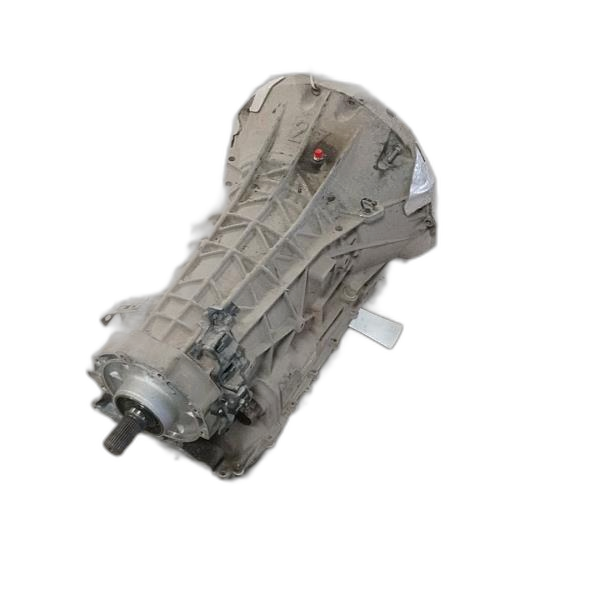



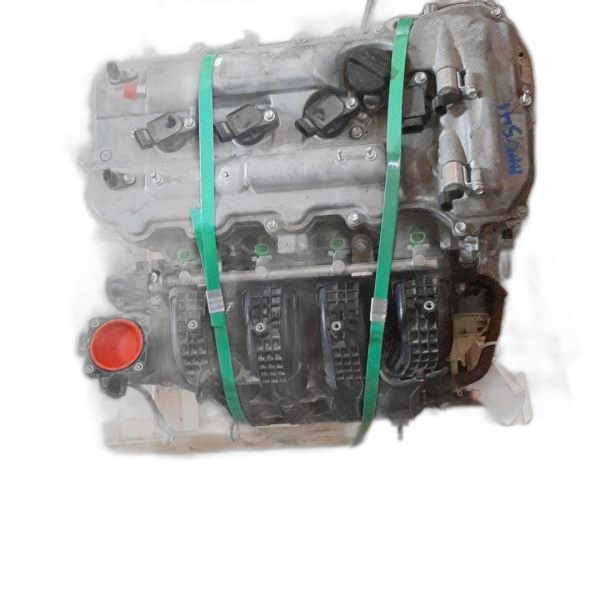



The information in this article is provided for general reference and educational purposes only. Vehicle specifications, procedures, and part compatibility can vary by production date, trim level, and region. Always consult your vehicle's factory service manual and verify part numbers before purchasing or performing repairs. Safety-critical components such as airbags, seat belts, and braking systems should be installed by a qualified professional.
- 🧭 Diagnostic Flowchart
- 🎬 Helpful Videos
- 🛍️ Shop This Part
- What Does P0842 Mean?
- Can I Drive With P0842?
- Common Causes
- Symptoms
- Common Fixes & Costs
- Used vs. New Parts: Buying Guide
- What Happens If You Wait — Timeline
- Cost of Not Fixing It
- Diagnosis Steps
- When This Code Triggers (Freeze-Frame Conditions)
- Related Codes
- Climate & Environmental Factors
- How to Talk to a Mechanic About This Code
- Where to Take It: Dealer vs Independent vs Chain
- When to Walk Away From the Repair
- What Scan Tool You Need for This Code
- How to Clear the Code After You Fix It
- Will This Fail Emissions / State Inspection?
- Most Commonly Affected Vehicles
- Manufacturer-Specific Notes
- Real Owner Stories
- 2016 Honda CR-V with flashing 'D' light
- 2019 Subaru Ascent with sudden power loss
- 2018 Chevrolet Malibu with contaminated fluid
- How to Prevent This Code From Triggering
- Frequently Asked Questions
- Can I fix P0842 myself?
- What happens if I ignore code P0842?
- Is P0842 an electrical or mechanical problem?
- How much does it cost to fix P0842?
- Will clearing the code fix the problem?
- What does 'circuit low' actually mean?
- Where is the Transmission Fluid Pressure Sensor 'A' located?
- Can a clogged transmission filter cause a P0842 code?
- Key Takeaways
- 🎟️ Get 5% Off