

P0842 on 2011-2015 Honda Civic: Transmission Pressure Switch 'A' Circuit Low Causes and Fixes
For a 2011-2015 Honda Civic, code P0842 is almost always caused by a failed transmission fluid pressure switch. A flashing 'D' light is the key symptom. Replacing the switch is a common DIY fix, with the part costing between $40 and $100. Honda service information explicitly states this code points to an electrical fault, not an internal mechanical transmission failure.
- P0842 on a 2011-2015 Civic points to an electrical issue with a transmission pressure switch, not a major mechanical failure.
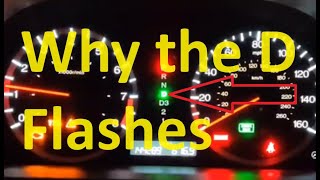
- The most common symptom, besides the Check Engine Light, is a flashing 'D' (Drive) light.
- The most likely fix is replacing the correct pressure switch ('2nd Clutch' for 2011 Auto, CVT sensor for 2012-2015) and its sealing washer.
- Be wary of any repair shop that immediately recommends a full transmission rebuild for this code without performing electrical diagnostics first.
What's Unique About the 2011-2015 Honda Civic
This year range covers two different Civic generations with different transmissions, which is critical for this code. The 2011 model (8th generation) uses a traditional 5-speed automatic, where P0842 typically refers to the '2nd Clutch Pressure Switch'. The 2012-2015 models (9th generation) mostly use a Continuously Variable Transmission (CVT), where the switch monitors pulley pressure and is located on the CVT driven pulley. Despite the different hardware, the root cause is very similar: a failed external pressure switch is the most common point of failure on both.
Generation note: The 2011 model year is the final year of the 8th generation Honda Civic and uses a 5-speed automatic transmission. The 2012-2015 models are the 9th generation, which primarily use a CVT. The function of 'Switch A' differs between these two transmission types, but the diagnosis and common fix (replacing the switch) are very similar. For the 5-speed auto, the switch is for the 2nd clutch; for the CVT, it monitors pulley pressure.
Symptoms You May Notice
- Flashing 'D' (Drive) indicator light on the instrument cluster
- Check Engine Light is on
- Harsh or delayed gear shifting
- Transmission slipping or failing to accelerate properly
- Vehicle stuck in a single gear (limp mode)
- Noticeable lurching or jolting during low-gear shifts
- Replacing the entire transmission or valve body. This code is almost always caused by a simple, inexpensive external switch or a wiring issue, not a major mechanical failure. A transmission shop that immediately quotes a rebuild for P0842 without diagnosing the switch and circuit first is a major red flag.
Most Likely Causes
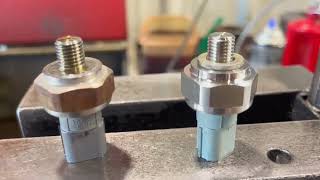
- Failed Transmission Fluid Pressure Switch 'A' 🔴 High Probability → Shop Transmission Assembly These switches are a very common failure item on many Honda models from this era, including the Civic, Accord, CR-V, and Odyssey. The internal components of the switch can wear out or short circuit, leading to a constant low voltage signal. 🎬 Watch this walkthrough on diagnosing the P0842 pressure sensor circuit.
How to confirm: After checking wiring, use a scan tool to monitor the switch's voltage data. If the reading is stuck low (near 0 volts) or doesn't change as expected, the switch has failed. You can also test the switch for continuity with a multimeter. Honda's official troubleshooting procedure involves checking the switch function with their HDS scanner first.
Typical fix: Replace the faulty pressure switch. On the 2011 model, this is often the 2nd Clutch Pressure Switch. On 2012-2015 CVT models, it's the corresponding pressure sensor on the transmission body. It is critical to also replace the sealing washer. Some replacement switches do not come with a new seal, so the old one must be carefully transferred.
Est. part cost: $40-$100 - Wiring or Connector Issue 🟡 Medium Probability The wiring harness and connectors are exposed to engine bay heat and vibration, which can lead to corrosion (often appearing as green crust), frayed wires, or damaged pins over time.
How to confirm: Visually inspect the wiring harness and the connector at the pressure switch for any signs of corrosion, damage, or loose pins. Perform a wiggle test on the connector while monitoring live data to see if the signal changes. A continuity test between the sensor connector and the PCM connector can identify a short to ground in the wire.
Typical fix: Repair the damaged section of wire or clean/replace the connector.
Est. part cost: $10-$50 - Low or Dirty Transmission Fluid ⚪ Low Probability → Shop Transmission Assembly While the code indicates an electrical fault, extremely low or degraded fluid can sometimes cause erratic pressure readings that the system may interpret as a fault. However, this is less likely than a direct sensor or wiring failure.
How to confirm: Check the transmission fluid level and condition according to the owner's manual procedure. The fluid should be at the correct level and reddish/pink, not dark brown or burnt-smelling. The first step in many diagnostic routines is to verify the fluid level is correct.
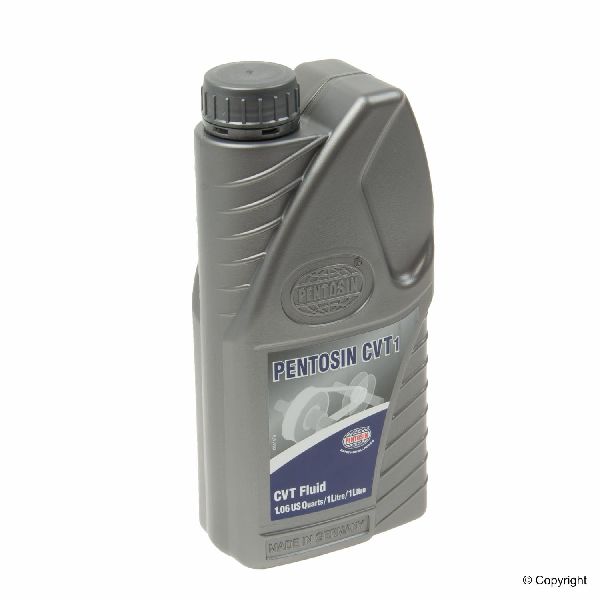
Typical fix: Perform a transmission fluid drain and fill using the correct Honda Genuine ATF (DW-1 for automatic, HCF-2 for CVT).
Est. part cost: $40-$90
Rare But Worth Checking
- Faulty Powertrain Control Module (PCM): → Shop Engine Control Module (ECM) This is very rare. The PCM should only be suspected after the switch, wiring, and fluid have all been confirmed to be in good condition. Honda's own service literature recommends this as the last step in the diagnostic tree.
Diagnosis Steps
- Read the code with an OBD-II scanner and confirm P0842 is present. Note if the 'D' light is flashing.
- Check the transmission fluid level and condition. Top off or replace if necessary with the correct Honda-specific fluid (ATF DW-1 for 2011 Auto, HCF-2 for 2012-2015 CVT).
- Locate the Transmission Fluid Pressure Switch 'A'. For the 2011 model, this is the 2nd clutch pressure switch, often accessible by removing the air intake box. 🎬 Watch: How to locate and replace sensors on 2011 models. For 2012-2015 CVT models, it's a pressure sensor on the transmission case, sometimes accessed through the driver's side fender well.
- Inspect the electrical connector and wiring going to the switch. Look for green corrosion, frayed wires, or loose pins. Repair as needed.
- If wiring is good, use a scan tool (like the Honda HDS) to observe the live data for the switch. A reading near zero volts indicates a short or a failed switch.
- If a scan tool is unavailable, you can test the switch directly. Disconnect it and check for continuity with a multimeter. The reading should change when the vehicle is started.
- To definitively rule out wiring, check for continuity between the sensor connector's signal wire pin and body ground. If continuity exists, there is a short to ground in the harness that must be repaired.
- If the switch and wiring test good, the issue may be an internal transmission problem or a faulty PCM, at which point professional diagnosis is strongly recommended.
Parts You'll Likely Need
- Transmission Fluid Pressure Switch (2nd Clutch)
(OEM #28600-RPC-003)— This is the most common failure point for P0842 on the 2011 Civic with a 5-speed automatic transmission. It is also used on many other Honda models.
Trusted brands: Honda Genuine, Standard Motor Products, NTK
OEM price range: $50-$80
Aftermarket price range: $30-$60 - Transmission Fluid Pressure Switch (CVT)
(OEM #28600-R90-013)— This is the equivalent part that fails on the 2012-2015 Civic with a CVT. It often looks physically identical to the automatic transmission switch but may have different pressure ratings.
Trusted brands: Honda Genuine
OEM price range: $60-$100
Aftermarket price range: $40-$70 - Sealing Washer / Gasket
(OEM #90471-PW7-A00)— A new crush washer is required when replacing the pressure switch to prevent leaks. It is often sold separately.
Trusted brands: Honda Genuine
OEM price range: $2-$5 - Honda Genuine Transmission Fluid — Crucial for fluid changes. Use ATF DW-1 for the 2011 automatic and HCF-2 for the 2012-2015 CVT. Using incorrect fluid can cause damage.
OEM price range: $10-$15 per quart
Related Codes That Often Appear With This One
- P0843 (Transmission Fluid Pressure Sensor/Switch 'A' Circuit High) may be seen if the fault is intermittent or related to wiring damage causing shorts to power instead of ground.
Platform-Specific Known Issues
- Owner Experience: Misdiagnosed as Major Failure: An owner of a 2015 Honda Odyssey with code P0842 was quoted $1,300 by a dealer and $4,700 for a full rebuild by a transmission shop. A third independent shop replaced the switch and fluid for $700, fixing the issue. This highlights the importance of not defaulting to a transmission replacement for this code.
- DIY Repair Location: On many Hondas with V6 engines like the Pilot, the switch is located on top of the transmission under the airbox, requiring a 22mm deep socket for removal. On 4-cylinder models like the Civic and CR-V, access is often through the driver's side wheel well after removing a plastic splash shield.
Mechanic-Grade Diagnostic Values
- CVT Driven Pulley Pressure Sensor Voltage (KOEO) — expected: Approx. 5V reference on VCC2 line (Pin 3, YEL/BLU wire) with connector unplugged.. Failure: Voltage less than 0.21V with connector plugged in indicates a fault. If voltage remains below 0.21V with the sensor unplugged, the fault is in the wiring harness or PCM.
- 5-Speed Automatic Transmission Pressure Control Solenoid Resistance — expected: 3 to 10 Ohms.. Failure: A reading outside of this range indicates a faulty solenoid.
- 5-Speed Automatic 2nd Clutch Pressure Switch (KOEO) — expected: With the switch connector unplugged, there should be a 5V or 12V reference voltage from the PCM at the harness connector.. Failure: No voltage at the harness connector points to a wiring or PCM issue. If voltage is present but the code persists with a new switch, the switch itself is likely faulty.
Scan Tool Commands That Help
- Honda HDS (Honda Diagnostic System): Monitor OBD STATUS for P0842 — Used after clearing the DTC to verify if the repair was successful or if the fault is intermittent. The system will show PASSED, FAILED, or NOT COMPLETED.
- Honda HDS (Honda Diagnostic System): A/T Data List - 2nd Pressure Switch ON/OFF status — For the 2011 5-speed automatic, this allows a technician to see the switch's reported state in real-time to confirm if it's stuck.
- Honda HDS (Honda Diagnostic System): Driven Pulley Pressure Sensor Voltage — For 2012-2015 CVT models, this live data PID is used to check the sensor's voltage output against the specified threshold (less than 0.21V).
- Honda HDS (Honda Diagnostic System): Jump SCS Line — This is a diagnostic step required before performing certain continuity tests on the PCM connectors to prevent damage.
Wiring & Ground Locations
- PCM Connector B (51P) — Located at the Powertrain Control Module (PCM).. For CVT models, this connector contains the pin for the pressure sensor signal. Disconnecting it is required to test for a short to ground in the wiring harness between the sensor and the PCM.
- CVT Driven Pulley Pressure Sensor 3P Connector, Pin #2 — On the sensor connector at the transmission.. This pin (typically a Blue/Red wire) is the signal wire (PDN - Pressure Data Network) to the PCM. Testing for continuity to ground from this pin helps diagnose a shorted wire.
- CVT Driven Pulley Pressure Sensor 3P Connector, Pin #3 — On the sensor connector at the transmission.. This pin (typically a Yellow/Blue wire) is the 5V reference voltage (VCC2) from the PCM. A lack of 5V here indicates an open circuit in the power supply wire.
- Main Transmission Ground — A braided cable or strap running from the transmission case to the vehicle's chassis/frame rail, often near the battery.. A corroded or loose main transmission ground can cause a variety of electrical issues and erratic sensor readings, including P0842. Cleaning the mounting points is a common preventative and diagnostic step.
Real Owner Repair Stories
- YouTube channel 'Codemansauto' (2016 Honda CR-V (similar CVT system)) — Flashing 'D' (Drive) light, P0842 code stored.
❌ Tried (didn't work) Checking transmission fluid level, which was found to be full.
✅ What actually fixed it The transmission fluid pressure switch was replaced. The mechanic noted the new switch did not come with a new sealing washer, so the old one had to be transferred. After replacement and clearing the code, the flashing 'D' light did not return on a test drive.
OEM Part Supersession History
28600-RPC-003→28600-RPC-013, then 28600-RPC-004— Part revision and consolidation by Honda.
Heads up: For 8th generation Civics (like the 2011 model), part numbers 28600-RPC-003, 28600-RPC-013, and 28600-RPC-004 are often used for different pressure switches (e.g., 2nd vs 3rd clutch). While some sources state -004 supersedes -013, it is critical to match the correct switch to its location and function. Using the wrong switch can cause shifting problems even if it physically fits.
Diagnostic Flowchart
Other Known Issues on This Vehicle
Issues unrelated to this code that are worth knowing about as an owner of this generation:
- Peeling/Cracking Exterior Paint 🟠 Medium — Very common, especially on dark colors (black, blue, gray) and white. Can start after 3-5 years. (Ref: Honda Service Bulletin 14-034 extended the paint warranty to 7 years/unlimited miles for 2006-2013 Civics, but this has expired for most vehicles.)
- VTC Actuator Rattle on Cold Start 🟠 Medium — Common on the K24 engine (in Si models) and other Honda 4-cylinders. A loud grinding/rattling noise for 1-2 seconds upon starting the engine when cold. (Ref: No recall, but it is a widely known issue. The only fix is to replace the VTC actuator. Using aftermarket parts is not recommended as they often fail quickly.)
- Failing Engine/Transmission Mounts 🟠 Medium → Shop Transmission Assembly — Common after 80,000 miles. Causes a clunking noise when shifting from Park to Reverse or Drive, and excessive vibration at idle or under acceleration.
- Excessive Oil Consumption 🔴 High — More prevalent on 2010-2011 models with the 2.4L engine (shared with CR-V) but can affect others. Caused by sticking piston oil control rings. (Ref: Honda TSB 12-089 extended the warranty to 8 years/125,000 miles for some affected vehicles (primarily CR-V), but this has expired.)
- Unreliable Bluetooth (HandsFreeLink) 🟡 Low — Common complaint on 9th gen (2012-2015) models. Symptoms include intermittent disconnecting/reconnecting, lag, or the module failing entirely. (Ref: No recall. Some owners report success with phone-side apps or simply replacing the HFL module.)
Used vs. New Parts: Buying Guide for This Vehicle
When a used part is the smart pick: For this specific repair, using a used part is not recommended. The pressure switch is a known high-failure item and is relatively inexpensive to purchase new. The risk of a used part failing shortly after installation is high.
OEM-only on this vehicle (don't cheap out):
- Honda Genuine Transmission Fluid (ATF DW-1 for 5-speed Auto, HCF-2 for CVT). Using non-OEM fluid is a major cause of transmission problems in Hondas.
- Transmission Fluid Pressure Switch. While aftermarket switches exist, their reliability can be inconsistent. Given the relatively low cost of the OEM part, it is the recommended choice to ensure compatibility and longevity.
Aftermarket brands forum-validated for this vehicle:
- Standard Motor Products (SMP)
- NTK
Brands owners have reported issues with on this vehicle:
- Unbranded, no-name parts from online marketplaces should be avoided due to a high likelihood of premature failure or incorrect pressure specifications.
Real Owner Stories
Aggregated from forums and TSBs cited above. Mileages and costs reflect what owners reported in those sources.
2015 Honda Odyssey
Symptoms: Vehicle presented with code P0842. The owner was quoted $1,300 by a dealer and $4,700 for a full transmission rebuild by another shop.
What fixed it: An independent shop diagnosed the issue correctly and fixed it by replacing the faulty pressure switch and changing the transmission fluid.
Cost: $700-$700
Source hint: vehicle_specific_issues: Owner Experience: Misdiagnosed as Major Failure
Related OBD-II Codes
Frequently Asked Questions
Where is the transmission pressure switch 'A' on my 2011-2015 Civic?
My 'D' (Drive) indicator light is flashing. Is this a symptom of code P0842?
What is the correct transmission fluid for my 2013 Civic?
A mechanic told me I need a whole new transmission for a P0842 code. Is that accurate?
Can I replace the pressure switch myself to fix P0842?
I replaced the pressure switch, but the P0842 code came back. What else could it be?
Helpful Videos

We Have This Part in Stock

The information in this article is provided for general reference and educational purposes only. Vehicle specifications, procedures, and part compatibility can vary by production date, trim level, and region. Always consult your vehicle's factory service manual and verify part numbers before purchasing or performing repairs. Safety-critical components such as airbags, seat belts, and braking systems should be installed by a qualified professional.
- Honda Civic:
- 🧭 Diagnostic Flowchart
- 🎬 Helpful Videos
- 🛍️ Shop This Part
- What's Unique About the 2011-2015 Honda Civic
- Symptoms You May Notice
- Most Likely Causes
- Rare But Worth Checking
- Diagnosis Steps
- Parts You'll Likely Need
- Related Codes That Often Appear With This One
- Platform-Specific Known Issues
- Mechanic-Grade Diagnostic Values
- Scan Tool Commands That Help
- Wiring & Ground Locations
- Real Owner Repair Stories
- OEM Part Supersession History
- Other Known Issues on This Vehicle
- Used vs. New Parts: Buying Guide for This Vehicle
- Real Owner Stories
- 2015 Honda Odyssey
- Related OBD-II Codes
- Frequently Asked Questions
- 🎟️ Get 5% Off