

P0842 on 2012-2013 Mazda 3: Transmission Pressure Switch Fault Causes and Fixes
On a 2012-2013 Mazda 3, code P0842 almost always points to an internal transmission issue documented in multiple Mazda TSBs. The most common fix is replacing the pressure switches or the entire valve body, which is a job for a professional. This issue is caused by contamination sticking the switches.
- P0842 on a 2012-2013 Mazda 3 is a very specific code indicating an internal transmission pressure switch is stuck on.
- This is a known issue with Mazda's SKYACTIV transmissions from this era, and the manufacturer has issued multiple service bulletins about it.
- Do not be surprised if your mechanic recommends replacing the entire transmission valve body; this is the official fix in many cases.
- This is not a DIY-friendly repair. It requires dropping the transmission pan, working in a clean environment, and using a scan tool for reprogramming.
- Always check for other codes like P0847, P0872, P0877, and P0780, as they are commonly found together and confirm the same underlying issue.
What's Unique About the 2012-2013 Mazda MAZDA3
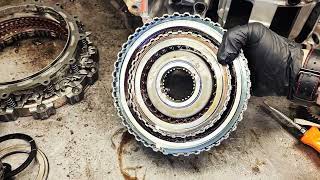
This is a widely documented issue for the second-generation Mazda 3 with the SKYACTIV-DRIVE 6-speed automatic transmission (model FW6A-EL). Mazda has released 🎬 Watch: A detailed overview of the Skyactiv FW6A-EL transmission numerous Technical Service Bulletins (TSBs) acknowledging that contamination in the transmission fluid can cause these internal pressure switches to stick. The SKYACTIV-DRIVE transmission was designed to combine the benefits of conventional automatic, CVT, and dual-clutch transmissions, featuring a multi-disc torque converter clutch that engages at very low speeds. This design, while efficient, can be sensitive to fluid contamination. As a result, the repair often involves more than just a simple sensor swap; it frequently requires replacing the entire control valve body assembly and reprogramming the TCM.
Diagnostic Flowchart
Tap your situation to follow the diagnostic path that matches what you're seeing on this vehicle.
Symptoms You May Notice
- Check Engine Light is on
- Automatic Transaxle (A/T) warning light is on 🎬 Watch: What the AT light means for your Mazda
- Harsh or erratic shifting, sometimes described as a severe jerk, especially between 2nd and 3rd gear when cold.
- Transmission stuck in a single gear (limp mode)
- Delayed engagement when shifting from Park or Neutral into Drive
- Vehicle jolts or acts like it is in neutral while driving at speed.
- Replacing only the external transmission speed sensors when the fault is with the internal pressure switches.
- Assuming the entire transmission needs to be rebuilt without first diagnosing the specific valve body issue as outlined in Mazda's TSBs.
- Using a universal transmission fluid instead of the required Mazda ATF-FZ, which can cause shifting problems.
Most Likely Causes
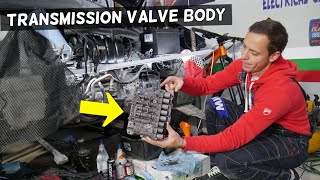
- Faulty Transmission Valve Body / Internal Pressure Switches 🔴 High Probability → Shop Transmission Valve Body As documented in multiple Mazda TSBs (e.g., 05-002-23, 05-005-14), contamination in the transmission fluid causes the pressure switches (A and B) within the valve body to stick. This is the officially recognized root cause by Mazda.
How to confirm: A professional technician will use a scan tool to monitor live data from the pressure switches. If the switch 'B' reading does not change as expected during operation, the fault is confirmed. The diagnostic procedure in the TSBs is the primary method for confirmation.
Typical fix: Following TSB procedures, the fix is to replace the faulty oil pressure switches (A and B) inside the transmission oil pan. In many cases, and as a more robust repair, Mazda recommends replacing the entire control valve body assembly, which includes the switches and solenoids, followed by reprogramming the TCM.
Est. part cost: $400-$1300 - Contaminated or Low Transmission Fluid 🟡 Medium Probability → Shop Transmission Assembly The TSBs explicitly state that contamination is the root cause of the switches sticking. The SKYACTIV transmission uses a specific low-viscosity fluid (ATF-FZ) and does not have a traditional dipstick, making fluid checks less common for owners. Degraded fluid can carry metallic debris that fouls the precision components in the valve body.
How to confirm: A technician will check the transmission fluid level and condition via the service port. The fluid should be bright red and clear, not brown, black, or smelling burnt. Finding a large amount of foreign material in the oil pan during inspection confirms contamination.
Typical fix: Perform a complete transmission fluid flush and fill with the correct Mazda ATF-FZ fluid. However, if the switch is already stuck, a fluid change alone is often not enough to resolve the issue and parts replacement is necessary.
Est. part cost: $100-$200 - Transmission Control Module (TCM) Software Issue ⚪ Low Probability → Shop Transmission Assembly Mazda TSBs mention reprogramming the TCM as a required step after parts replacement. In some specific VIN ranges, a TCM reflash with an updated calibration file was the first step to improve the diagnostic logic before replacing parts. However, this is usually done in conjunction with a hardware fix.
How to confirm: A Mazda dealership or qualified shop can check the current software version of the TCM against the latest version specified in the TSBs using the Mazda Modular Diagnostic System (M-MDS).
Typical fix: Reprogram the TCM to the latest calibration file. This is almost always done in conjunction with replacing the valve body or pressure switches.
Est. part cost: $0-$200 (Labor cost)
Rare But Worth Checking
- Wiring Harness Damage: While less common than internal failures, damage to the wiring leading to the transmission valve body can cause short circuits or open circuits, mimicking a sensor failure. This should be inspected before condemning the valve body.
- Failed Transmission Control Module (TCM): → Shop Transmission Assembly In very rare instances, the TCM itself (which is internal to the transmission on the valve body) can fail, causing false readings or a no-communication state. This is unlikely and should only be considered after all other possibilities, including those in the TSBs, have been exhausted.
Diagnosis Steps
- Verify the code with a quality OBD-II scanner.
- Check for any accompanying codes, especially P0847, P0872, P0877, P0780, and P1738.
- Check the transmission fluid level and condition. If it is dark, burnt, or low, this points to a problem.
- Consult the relevant Mazda TSBs (05-002-23, 05-005-14, 05-002/15) for this specific vehicle and code.
- Using a professional scan tool (like Mazda's M-MDS), monitor the live data for the transmission oil pressure switches while operating the vehicle to see if they are responding as expected.
- Inspect the transmission's external wiring harness and connector for any signs of damage or corrosion.
- If the switch data is static ('Stuck On'), the next step is to drop the transmission pan to access the valve body and pressure switches.
- Following the TSB procedure, replace the faulty pressure switches (A and B) or the entire control valve body assembly.
- If a large amount of debris is found in the pan, the oil strainer should also be replaced.
- Refill with the correct type and amount of Mazda ATF-FZ.
- Reprogram the TCM to the latest calibration and perform the 'Initial Learning Procedure' as specified by Mazda.
Parts You'll Likely Need
- Transmission Control Valve Body Assembly
(OEM #FZ21-21-100J)— This is the most common repair recommended by Mazda TSBs to definitively fix the sticking pressure switch issue caused by contamination. It includes the TCM, solenoids, and switches as one unit.
Trusted brands: Mazda (OEM), Rostra
OEM price range: $800-$1300
Aftermarket price range: $400-$700 - Transmission Oil Pressure Switch / Solenoid
(OEM #FZ01-21-1F1)— The TSBs identify the switches as the component that sticks. If the valve body itself is undamaged, a technician may opt to replace only the switches. This part is often referred to as Switch B or Switch No. 1.
Trusted brands: Mazda (OEM)
OEM price range: $120-$160
Aftermarket price range: $70-$110 - Automatic Transmission Fluid (Mazda FZ)
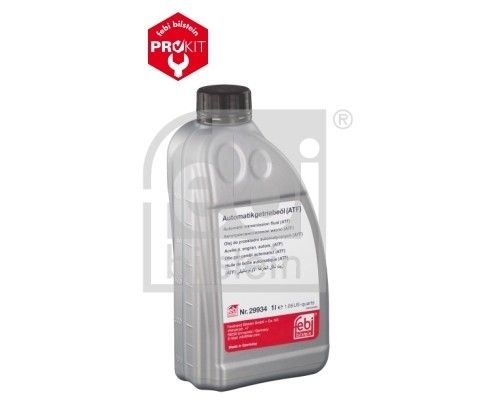
(OEM #0000-FZ-113E-01)— New fluid is required anytime the transmission pan is removed. Only Mazda ATF-FZ should be used to ensure compatibility.
Trusted brands: Mazda (OEM), Idemitsu (OEM supplier), Ravenol
OEM price range: $15-$25 per quart
Aftermarket price range: $10-$20 per quart
Related Codes That Often Appear With This One
- P0847 — This code is for 'Oil Pressure Switch No. 2 (A) Stuck On' and is often triggered by the same contamination issue.
- P0872 — This code is for 'Oil Pressure Switch No. 3 (A) Stuck On' and is part of the same family of faults.
- P0877 — This code is for 'Oil Pressure Switch No. 4 (B) Stuck On' and is also caused by the same known issue.
- P0780 — This code indicates a 'Gear Shifting Malfunction' which is a direct symptom of the pressure switches not working correctly.
- P1738 — This code points to a general 'Automatic Transaxle Internal Malfunction' and often accompanies the more specific pressure switch codes.
Technical Service Bulletins (TSBs) & Recalls
- 05-002-23: Mentions P0842 with check engine and AT warning lights.
- 0500215: Notes P0842 with other codes and warning lights.
- 05-003-14-2898A: Recommends a new programmed valve body as the fix.
- 05-005-14-2902D: Defines P0842 as 'OIL PRESSURE SWITCH B STUCK ON'.
Platform-Specific Known Issues
- Mazda has issued multiple Technical Service Bulletins (TSBs) for the 2012-2013 Mazda3 regarding P0842 and related codes. Bulletin #05-002-23 explicitly states that vehicles may experience the check engine and AT warning lights with this code.
- Bulletin #05-005-14-2902D defines the code as 'OIL PRESSURE SWITCH NO. 1 (OIL PRESSURE SWITCH B) STUCK ON' and notes it may appear with P0847, P0872, and/or P0877. It identifies the cause as contamination causing the switch to stick.
- TSB #05-002/15 provides a detailed r
Mechanic-Grade Diagnostic Values
- TCM Software File Version — expected: PE08-21-PS1-K or later. Failure: File name is PE08-21-PS1-J or older, which indicates outdated diagnostic logic.
- ATF Temperature for On-Board Diagnostic Test — expected: 55 °C (131 °F) or more. Failure: Running diagnostic tests below this temperature may not yield accurate results for this DTC.
- ATF Temperature for DTC Detection Logic — expected: 20 °C (68 °F) or more. Failure: The TCM will not run the monitor for this DTC until the fluid reaches this minimum temperature.
Scan Tool Commands That Help
- Mazda M-MDS (or equivalent advanced scan tool): Initial Learning Procedure — This procedure is mandatory after replacing the control valve body or the individual oil pressure switches. It allows the TCM to learn the hydraulic characteristics of the new components. Failure to perform this procedure can result in poor shift quality or the return of trouble codes. The procedure involves a specific sequence of starting the engine, warming the ATF, depressing the brake pedal firmly (>5 MPa), and shifting between D and M positions at precise times prompted by the scan tool.
- Mazda M-MDS: Module Reprogramming (TCM) — Used to update the TCM with the latest calibration file. For certain 2012-2013 Mazda3s, TSB 05-005/14 specifies this as a required step if the vehicle is within a specific VIN range and has an old software version, to improve the diagnostic logic before replacing any parts.
Wiring & Ground Locations
- Transmission Case Ground — A primary ground wire is typically bolted directly to the transmission bell housing or a bracket on top of the transmission case, connecting it to the chassis or negative battery terminal.. The TCM and its internal sensors, including the pressure switches, rely on a stable ground reference. A loose or corroded transmission ground can cause erratic sensor readings, communication errors, and potentially trigger false codes like P0842.
- Incorrect Ground Point (Oil Filter Housing) — On some 2013 Mazda 3 models, a main ground wire has been found incorrectly attached to the oil filter housing by previous repairers.. The oil filter housing is isolated by a rubber gasket, making it a very poor ground point. This can cause widespread CAN network communication faults (U-codes) and unstable sensor readings across multiple modules, including the TCM, which could contribute to or be misdiagnosed as an internal transmission fault.
Real Owner Repair Stories
- General consensus from multiple online forums (e.g., Mazda3Forums, Mazdas247) (2012-2013 Mazda 3 with SKYACTIV Automatic Transmission) — Check Engine Light and AT warning light on, harsh shifting, transmission stuck in gear.
❌ Tried (didn't work) Changing the transmission fluid without addressing the hardware., Clearing the codes without performing repairs (code returns quickly).
✅ What actually fixed it The overwhelming majority of resolved cases point to a single solution: following the official Mazda Technical Service Bulletins (TSBs). The definitive fix is the replacement of the internal transmission oil pressure switches or, more commonly, the entire control valve body assembly, followed by the mandatory 'Initial Learning Procedure'. Owner and independent shop success stories almost universally involve performing the TSB-specified repair.
OEM Part Supersession History
FZ21-21-100 (any level)→Various pre-programmed part numbers (e.g., PEY0-21-C00 for 2012-13 Mazda3 2.0L)— The original 'blank' valve body was replaced by pre-programmed units to simplify service procedures.
Heads up: For vehicles produced on or before March 29, 2013, the blank valve body FZ21-21-100 is no longer available. A specific pre-programmed valve body must be ordered based on the vehicle's VIN/specification. A key benefit is that these new programmed units do not require TCM configuration/reprogramming after installation, though the 'Initial Learning Procedure' is still necessary.
Model Year Variations Within This Range
- 2012-2013: For 2012-2013 Mazda3 models within the VIN range JM1BL**500001 - 733727, Mazda TSB 05-005/14 advises checking the TCM software first. If the file name is 'PE08-21-PS1-J' or older, the first step is to reprogram the TCM to the latest version. This software update improved the diagnostic logic and may prevent unnecessary parts replacement. If the code persists after the update, then hardware replacement is necessary.
Helpful Videos

We Have This Part in Stock

The information in this article is provided for general reference and educational purposes only. Vehicle specifications, procedures, and part compatibility can vary by production date, trim level, and region. Always consult your vehicle's factory service manual and verify part numbers before purchasing or performing repairs. Safety-critical components such as airbags, seat belts, and braking systems should be installed by a qualified professional.
- Mazda MAZDA3:
- 🧭 Diagnostic Flowchart
- 🎬 Helpful Videos
- 🛍️ Shop This Part
- What's Unique About the 2012-2013 Mazda MAZDA3
- Symptoms You May Notice
- Most Likely Causes
- Rare But Worth Checking
- Diagnosis Steps
- Parts You'll Likely Need
- Related Codes That Often Appear With This One
- Technical Service Bulletins (TSBs) & Recalls
- Platform-Specific Known Issues
- Mechanic-Grade Diagnostic Values
- Scan Tool Commands That Help
- Wiring & Ground Locations
- Real Owner Repair Stories
- OEM Part Supersession History
- Model Year Variations Within This Range
- 🎟️ Get 5% Off