

P0842 on 2014-2017 Mazda MAZDA6: Transmission Pressure Switch Causes and Fixes
On a 2014-2017 Mazda6, P0842 is almost always caused by failing internal transmission oil pressure switches. Mazda has issued multiple Technical Service Bulletins (TSBs) for this exact issue. The fix involves replacing two pressure switches (A and B) inside the transmission oil pan and often requires a Transmission Control Module (TCM) software update as a first step or concurrent action.
- P0842 on a 2014-2017 Mazda6 is a well-documented issue with a clear fix outlined in multiple Mazda Technical Service Bulletins.
- The most common cause is sticking oil pressure switches inside the transmission, caused by fluid contamination.
- The standard repair involves replacing both internal pressure switches (A and B) and may include a TCM software update.
- Symptoms include the Check Engine light, the 'AT' warning light, and harsh or erratic shifting.
- This is not a DIY-friendly repair for beginners, as it requires accessing internal transmission components.
What's Unique About the 2014-2017 Mazda MAZDA6
This issue is so common on Mazda vehicles with the SKYACTIV 6-speed automatic transmission (model FW6A-EL) that the manufacturer has released multiple, superseding Technical Service Bulletins (TSBs) over several years. The TSBs state that contamination in the transmission fluid can cause the internal oil pressure switches to stick, leading to this code. The official repair procedure has been refined over time, often starting with a TCM software update for certain VIN ranges before proceeding to the replacement of the pressure switches located on the valve body.
Diagnostic Flowchart
Tap your situation to follow the diagnostic path that matches what you're seeing on this vehicle.
Symptoms You May Notice
- Check Engine Light is on
- Automatic Transaxle (AT) warning light is on
- Harsh, erratic, or delayed shifting
- Transmission may feel like it's slipping or banging into gear
- Vehicle may enter 'limp mode,' stuck in a single gear (often 3rd gear)
- Whining noise from the transmission area
- Replacing the entire transmission when only internal switches are needed.
- Replacing only one pressure switch instead of the pair (A and B) as recommended by the TSB.
- Replacing the valve body when only the pressure switches are faulty.
- Mistaking the transmission fluid pressure switch for the engine oil pressure switch, which is a completely separate part and system.
Most Likely Causes
- Failed Internal Transmission Oil Pressure Switches 🔴 High Probability → Shop Engine Oil Pressure Switch Mazda TSBs #05-002-23 and #05-005/14 directly state this is a known issue caused by contamination causing the switches (A and B) on the valve body to stick. This is the most common failure point for this code on this platform.
How to confirm: A professional technician will scan for codes. If P0842 is present, especially with P0847, P0872, P0877, P0780, or P1738, they will follow the TSB diagnostic procedure which points directly to these switches.
Typical fix: Replace both oil pressure switches (A and B) located on the transmission valve body. This involves draining the fluid, removing the oil pan, replacing the switches, and refilling with fresh fluid. A TCM software update and an 'Initial Learning Procedure' are also required parts of the official repair.
Est. part cost: $100-$200 for the set of switches - Contaminated or Low Transmission Fluid 🟡 Medium Probability → Shop Transmission Assembly The TSBs explicitly name contamination as the root cause of the switches sticking. While Mazda has marketed the fluid as 'lifetime,' real-world experience and mechanic recommendations suggest that the fluid degrades and collects debris, leading to this and other transmission issues. A fluid change is often a preventative measure.
How to confirm: Check the transmission fluid level and condition. If the fluid is dark, has a burnt smell, or contains visible debris, it is contaminated. Low fluid indicates a leak that must be found and repaired.
Typical fix: Perform a transmission fluid drain and fill. If the code is already present, a fluid change alone is unlikely to fix the stuck switch, but it is a necessary part of the switch replacement procedure.
Est. part cost: $80-$150 for fluid and filter - Faulty Transmission Control Module (TCM) Software ⚪ Low Probability → Shop Transmission Assembly Mazda's TSBs specify that for certain VIN ranges, the first step of the repair is to update the TCM software. The updated software has improved diagnostic logic that is less sensitive to minor fluctuations from the pressure switches. In some cases, this update alone may resolve the issue, but often it is a prerequisite to replacing the switches.
How to confirm: A Mazda dealership or a shop with a Mazda Modular Diagnostic System (M-MDS) or equivalent J2534 device can check the current software calibration and update it if a newer version is available per the TSB.
Typical fix: Reprogram the TCM to the latest calibration file. If the code persists, the hardware (pressure switches) must be replaced.
Est. part cost: $0 (if part of another repair) - $200 for programming labor
Rare But Worth Checking
- Wiring Harness or Connector Issue: While the TSBs point to the switches themselves, damage to the internal transmission wiring harness or the connectors for the switches could cause a similar electrical fault. This should be inspected during the switch replacement.
- Valve Body Malfunction: → Shop Transmission Valve Body If new pressure switches, clean fluid, and a TCM update don't solve the problem, the issue could be a stuck valve or blocked passage within the valve body itself. This is a more complex and expensive repair, often involving valve body replacement.
Diagnosis Steps
- Scan the TCM for all stored trouble codes. Note if P0842 appears with any of the other common codes (P0847, P0872, P0877, P0780, P1738).
- Check for applicable TSBs. For this vehicle and code, TSB #05-002-23 (and its predecessors like 05-002/15) is the primary guide.
- For certain VIN ranges, the TSB may direct the technician to first update the TCM software. If the code returns, proceed with hardware replacement.
- Check the transmission fluid level and condition. Low, dark, or burnt fluid confirms contamination but is not a definitive diagnosis on its own.
- Drain the transmission fluid and remove the transmission oil pan.
- Visually inspect the oil pan magnet for excessive metallic debris. If a large amount is present, the oil strainer should also be replaced.
- Locate and replace both oil pressure switches (Switch A and Switch B) on the control valve body.
- Clean the oil pan and magnet thoroughly. Clean the mating surfaces on the pan and transmission case.
- Reinstall the oil pan with a new gasket or specified silicone sealant, torquing the new bolts to specification.
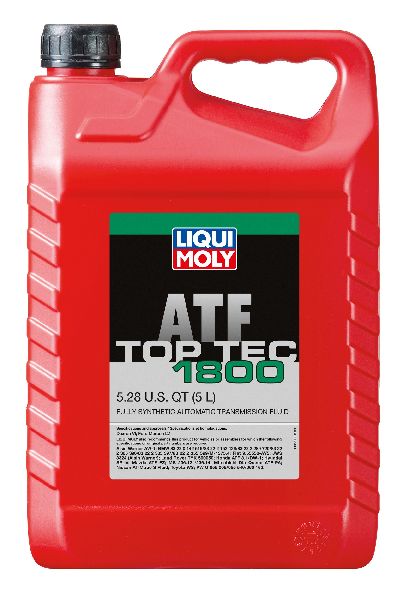
- Refill the transmission with the correct type and amount of Mazda-specific ATF FZ fluid.
- Clear all DTCs and perform the transmission's 'Initial Learning Procedure'. This is a critical step that requires a specific sequence of actions (depressing brake, shifting gears with engine on/off) and may require a diagnostic tool like the M-MDS.
- Perform a test drive to verify that shifting is smooth and no warning lights or codes return.
Parts You'll Likely Need
- Transmission Oil Pressure Switch A
(OEM #FZ01-21-240)— This is one of the two switches identified by Mazda as the primary cause of failure in multiple TSBs. They must be replaced as a pair.
Trusted brands: Mazda OE
OEM price range: $50-$100
Aftermarket price range: $40-$80 - Transmission Oil Pressure Switch B
(OEM #FZ01-21-250)— This is the second of two switches identified by Mazda as the primary cause of failure. TSBs instruct to replace both A and B switches simultaneously.
Trusted brands: Mazda OE
OEM price range: $50-$100
Aftermarket price range: $40-$80 - Mazda SKYACTIV-Drive ATF (Type FZ)
(OEM #0000-FZ-113E-01)— The transmission fluid must be drained to access the switches and must be replaced with the specific fluid required for this transmission (FW6A-EL).
Trusted brands: Mazda OE, Idemitsu ATF Type M-S, Ravenol ATF FZ
OEM price range: $20-$30 per quart
Aftermarket price range: $15-$25 per quart - Transmission Oil Strainer (Filter)
(OEM #FZ01-21-500)— The TSBs recommend replacing the strainer if a large amount of foreign material is found in the oil pan, which is common with this issue.
Trusted brands: Mazda OE
OEM price range: $40-$60
Aftermarket price range: $20-$40
Related Codes That Often Appear With This One
- P0847 — This code is for 'Oil pressure switch No. 2 (oil pressure switch A) stuck on.' Both switches are on the same valve body, are replaced as a pair, and are prone to the same contamination issue per the TSBs.
- P0872 — This code is for 'Oil pressure switch No. 3 (oil pressure switch A) stuck on.' It is part of the same family of codes mentioned in the Mazda TSBs, indicating the same underlying fault.
- P0877 — This code is for 'Oil pressure switch No. 4 (oil pressure switch B) stuck on.' It is also part of the group of codes identified in the Mazda TSB for this issue.
- P0780 — This code indicates a 'Gear shifting malfunction.' It's a general code that is often triggered as a direct result of the specific pressure switch failures.
- P1738 — This is a manufacturer-specific code for 'Automatic transaxle internal malfunction.' It is often set alongside the pressure switch codes as a result of the underlying hydraulic pressure monitoring fault.
Technical Service Bulletins (TSBs) & Recalls
- 05-002-23: The most recent TSB, which supersedes many earlier versions. It covers 2014-2021 Mazda6 models and confirms the cause is sticking pressure switches due to contamination, listing DTCs P0842, P0847, P0872, P0877, P0780, and P1738.
- 05-002/15: An earlier, superseded TSB that provides detailed repair procedures, including diagrams for replacing the switches and instructions to reprogram the TCM for certain VINs as the first step.
- 05-005/14: Another superseded TSB that clearly identifies the cause as 'oil pressure switch A and/or B at the control valve body temporarily or permanently getting stuck due to contamination entering the passage'.
Platform-Specific Known Issues
- Mazda has issued a long series of superseding TSBs for this exact problem on SKYACTIV transmissions, with the latest being #05-002-23. The issue stems from internal contamination causing oil pressure switches to stick.
- The official repair procedure evolved; early TSBs focused on parts replacement, while later versions for specific VINs instruct technicians to first perform a TCM software update before replacing parts.
- A real-world owner story on CarTalk's forum highlighted a 2014 Mazda6 with 123k miles being quoted for a full transmission replacement, but after escalating the issue, Mazda acknowledged the known defect and covered a significant portion of the cost, demonstrating this is a well-known manufacturing/design flaw.
Mechanic-Grade Diagnostic Values
- Pressure Control Solenoid Resistance — expected: 2.4 - 7.3 ohms. Failure: Resistance outside of this range indicates a faulty solenoid.
- On/Off Solenoid Resistance — expected: 11 - 14 ohms. Failure: Resistance outside of this range indicates a faulty solenoid.
- Oil Pressure Switch (A or B) Electrical Test — expected: Not specified in service literature.. Failure: Mazda's diagnostic procedure per TSBs does not involve an electrical test of the switch itself. Diagnosis is based on the presence of DTCs P0842, P0847, etc. The failure mode is described as mechanically 'stuck on' due to contamination.
Scan Tool Commands That Help
- Mazda M-MDS (or equivalent): Initial Learning Procedure — This procedure is mandatory after replacing the oil pressure switches or the control valve body. It allows the TCM to learn the hydraulic characteristics of the new components to ensure smooth shifting. The procedure can be initiated using the M-MDS by navigating to the TCM self-test menu and clearing DTCs, which then triggers the learning sequence when specific gear shift patterns are followed.
Wiring & Ground Locations
- Transmission Ground Points — General locations include a ground point on a bracket on top of the transmission case and another on the passenger-side motor mount.. While not a primary cause for this specific code (which is usually internal), poor grounds can cause a wide range of erratic electronic behaviors in the TCM and its sensors. Verifying main grounds is always a good practice during electrical diagnosis.
- TCM Connector Pins for Pressure Switches — Inside the transmission, on the valve body.. A publicly available, verifiable wiring diagram or TCM pinout specifically identifying the circuits for pressure switches A (FZ01-21-240) and B (FZ01-21-250) for the 2014-2017 Mazda 6 could not be located in research. Testing would require a subscription to Mazda's official service information or a similar professional resource.
Real Owner Repair Stories
- Reddit user story (adapted from a similar Honda pressure switch issue) (2012 Honda CRV with 148,000 km) — Check engine light on, flashing 'D' (Drive) indicator, and a stored code for a transmission pressure switch circuit fault (P0843).
❌ Tried (didn't work) A mechanic replaced the pressure sensor with an aftermarket part and changed the transmission fluid; the problem persisted., The car was then taken to a chain transmission shop (Mr. Transmission) who, after a test drive, diagnosed internal damage and quoted a $4,300 transmission rebuild.
✅ What actually fixed it The owner got a second opinion from a local transmission specialist. The specialist diagnosed that the new aftermarket pressure sensor was faulty out of the box. They replaced the faulty aftermarket sensor with a genuine OEM Honda sensor, which immediately fixed all symptoms. The transmission did not need to be rebuilt.
OEM Part Supersession History
N/A→N/A— Evolution of Repair Procedure and Software
Heads up: The history of this issue is tracked through numerous superseding Technical Service Bulletins. For example, TSB 05-002/15 (issued in 2015) superseded nine previous bulletins related to this exact set of codes, dating back to 2013. The most recent TSB, 05-002-23, was issued in May 2023. This long history implies that Mazda has repeatedly updated the diagnostic logic, TCM software calibrations, and potentially the internal design of the pressure switches themselves to improve resistance to contamination and prevent the code from being set.
Model Year Variations Within This Range
- 2012-2016 (Varies by VIN): According to TSBs like 05-002/15, certain VIN ranges of Mazda3, CX-5, and Mazda6 require a mandatory TCM software update as the first step of the repair. If the code returns after reprogramming, the technician then proceeds with replacing the pressure switches. For vehicles outside these specified VIN ranges, the procedure is to replace the hardware (pressure switches) directly without a preliminary software update.
Helpful Videos
We Have This Part in Stock


The information in this article is provided for general reference and educational purposes only. Vehicle specifications, procedures, and part compatibility can vary by production date, trim level, and region. Always consult your vehicle's factory service manual and verify part numbers before purchasing or performing repairs. Safety-critical components such as airbags, seat belts, and braking systems should be installed by a qualified professional.
- Mazda MAZDA6:
- 🧭 Diagnostic Flowchart
- 🎬 Helpful Videos
- 🛍️ Shop This Part
- What's Unique About the 2014-2017 Mazda MAZDA6
- Symptoms You May Notice
- Most Likely Causes
- Rare But Worth Checking
- Diagnosis Steps
- Parts You'll Likely Need
- Related Codes That Often Appear With This One
- Technical Service Bulletins (TSBs) & Recalls
- Platform-Specific Known Issues
- Mechanic-Grade Diagnostic Values
- Scan Tool Commands That Help
- Wiring & Ground Locations
- Real Owner Repair Stories
- OEM Part Supersession History
- Model Year Variations Within This Range
- 🎟️ Get 5% Off