

P0843 on 2009-2010 Chevrolet Silverado 2500: TFP Sensor Circuit High Causes and Fixes
On a 2009-2010 Silverado 2500 with a 6L80 or 6L90 transmission, P0843 almost always points to a failed transmission fluid pressure (TFP) switch. These switches are delicate diaphragms integrated into the Transmission Electro-Hydraulic Control Module (TEHCM) inside the transmission pan. A 'Circuit High' fault indicates an electrical failure, not a hydraulic pressure problem. The standard repair is to replace the entire TEHCM assembly, which requires dropping the pan and must be followed by a prog
- P0843 on a 2009-2010 Silverado 2500 indicates an electrical fault with the 'A' transmission pressure switch.
- The cause is almost always internal to the transmission, specifically a failed sensor on the TEHCM (valve body).
- This is not a simple DIY fix. The repair is complex due to the location of the part and obstruction from the exhaust system.
- Do not assume the transmission needs a full rebuild; this code points to a specific, replaceable electronic assembly.
- If code P0700 is also present, it is simply confirming the transmission has a fault; focus on diagnosing P0843.
What's Unique About the 2009-2010 Chevrolet SILVERADO 2500
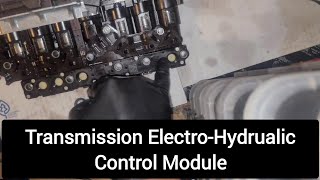
On the 2009-2010 Silverado 2500, equipped with a 6-speed automatic transmission (6L80/6L90), the fluid pressure sensors are not simple, individual screw-in parts. Instead, they are integrated as delicate laminate diaphragms on the Transmission Electro-Hydraulic Control Module (TEHCM), which is part of the valve body assembly inside the oil pan. This design, a hallmark of the 6LXX series, means a single sensor failure requires a more involved repair: replacing the entire TEHCM unit. These modules are known failure points, and GM has released multiple updated part numbers to improve reliability.
Diagnostic Flowchart
Tap your situation to follow the diagnostic path that matches what you're seeing on this vehicle.
Symptoms You May Notice
- Harsh, erratic, or delayed shifting.
- Transmission stuck in one gear (limp mode).
- Inability to shift into certain gears, including reverse.
- Check Engine Light is on.
- "Shift Range Inhibited" message on the driver information center.
- Transmission may feel like it's slipping.
- Increased fuel consumption.
- Replacing only the transmission fluid and filter without addressing the TEHCM. While a fluid change is part of the repair, it will not fix a failed electronic pressure switch.
- Assuming the entire transmission needs to be rebuilt. P0843 is an electrical fault and often does not signify a major mechanical failure of clutches or gears.
- Replacing the TEHCM without programming it. A new TEHCM will not function correctly and may cause a no-start condition or immediate limp mode if it is not programmed to the vehicle's VIN.
Most Likely Causes
- Failed Transmission Fluid Pressure (TFP) Switch on TEHCM 🔴 High Probability → Shop Transmission Assembly The pressure switches on the 6L80/6L90 TEHCM are a well-documented failure point. They are delicate laminate diaphragms that are exposed to constant heat and fluid, causing them to rupture or fail over time, creating an open circuit that the TCM reads as high voltage.
How to confirm: A professional technician will use a scan tool to monitor live data from the TFP switches. A voltage reading for switch 'A' that is stuck high (near 5.0V) and does not change state (e.g., from 'Off' to 'On') when gears are commanded confirms the internal electrical failure.
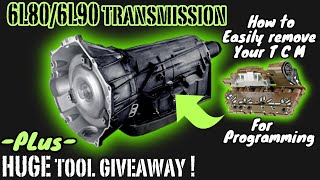
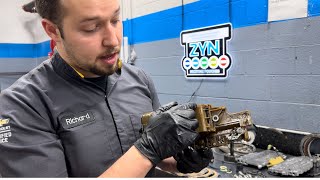
Typical fix: Drop the transmission pan and replace the entire TEHCM (valve body with integrated control module and sensors). The new module must be programmed to the vehicle's VIN. Some specialists offer repair services for the original TEHCM. 🎬 Watch: How to rebuild and test TEHCM circuits yourself
Est. part cost: $400-$800 - Damaged Internal Wiring Harness 🟡 Medium Probability The wiring harness inside the transmission is subjected to constant heat and immersion in fluid, which can make it brittle over time, leading to cracked insulation or poor connections at the TEHCM.
How to confirm: During the replacement of the TEHCM, the internal harness should be carefully inspected for brittle wires, cracked insulation, or a loose connection at the main pass-through connector.
Typical fix: Replace the internal transmission wiring harness. This is typically done at the same time as the TEHCM replacement as a preventative measure.
Est. part cost: $50-$150 - Low or Contaminated Transmission Fluid ⚪ Low Probability → Shop Transmission Assembly While P0843 is an electrical code, extremely low or dirty fluid can cause erratic hydraulic behavior and overheating, which can stress and damage electronic components like the TEHCM. However, this is rarely the root cause of a 'Circuit High' fault.
How to confirm: Check the transmission fluid level and condition using the dipstick. The fluid should be at the correct level, red in color (DEXRON-VI), and not smell burnt.
Typical fix: Perform a transmission fluid and filter change. If the fluid is very dark or contains metal particles, it may indicate a more severe internal failure beyond the TEHCM.
Est. part cost: $100-$200
Rare But Worth Checking
- Faulty Powertrain Control Module (PCM) or external wiring: While less common, a fault in the main engine computer or the external wiring harness between the PCM and the transmission can mimic a sensor failure. This should be investigated with continuity tests only after internal transmission components have been ruled out.
Diagnosis Steps
- Check and verify the transmission fluid level and condition. Ensure it is clean and filled with DEXRON-VI fluid.
- Use a professional-grade scan tool to confirm the presence of P0843 and check for other related transmission codes.
- Monitor the live data stream for the TFP switches. Observe the voltage for switch 'A'. A reading stuck high (e.g., ~5.0V) that does not change as gears are manually selected indicates an internal fault.
- If the switch 'A' reading is stuck 'High' or 'Open', the fault is likely internal to the transmission.
- Inspect the external transmission wiring harness and the main round connector at the transmission case for any visible damage, corrosion, or loose pins.
- If external wiring is okay, the next step is to drop the transmission oil pan to inspect the internal components.
- Visually inspect the TEHCM for any obvious signs of damage, such as cracked plastic or leaking laminate discs, and check the internal harness for brittleness or damage.
- If no visible damage is found, the most probable cause is a failed pressure switch on the TEHCM, requiring replacement of the entire TEHCM assembly.
- After replacement, the new TEHCM must be programmed to the vehicle, and a transmission adaptive learn procedure must be performed.
Parts You'll Likely Need
- Transmission Electro-Hydraulic Control Module (TEHCM)
(OEM #24256861 (Note: Multiple revisions exist, always verify with VIN))— This is the most common cause of P0843 on this platform, as the pressure sensors are integrated into this module. It is sold as a complete assembly including the valve body, solenoids, and TCM.
Trusted brands: ACDelco (GM Genuine), Dorman (Remanufactured)
OEM price range: $500-$900
Aftermarket price range: $400-$700 - Transmission Fluid and Filter Kit — Replacing the TEHCM requires removing the transmission pan, so replacing the fluid (DEXRON-VI), filter, and pan gasket is a necessary part of the job.
Trusted brands: ACDelco, Valvoline, Castrol
OEM price range: $80-$150
Aftermarket price range: $50-$100
Related Codes That Often Appear With This One
- P0700 — P0700 is a generic code that means the Transmission Control Module (TCM) has stored a fault and requested the Check Engine Light. It will almost always be present with specific transmission codes like P0843.
- P0842, P0872, P0877, P0989 — These are codes for the other pressure switches ('A' low, 'C' low, 'D' low, etc.). It is common for multiple switch diaphragms on the TEHCM to fail, triggering a variety of these codes along with P0843, further confirming a faulty TEHCM.
- P0751, P0776 — These are codes for shift solenoids. Since the solenoids are also part of the TEHCM assembly, it's common for solenoid performance codes to appear alongside pressure switch codes when the module is failing.
Technical Service Bulletins (TSBs) & Recalls
- PIP4379N: Addresses conditions like no reverse or range inhibit, listing P0843 as one of many possible diagnostic trouble codes. It confirms the issue is internal to the transmission and often related to the TEHCM.
- 14-07-30-001 (and subsequent revisions): While not for P0843 specifically, this TSB is critical as it outlines the required adaptive learning procedure after a TEHCM has been replaced to ensure proper shifting.
Platform-Specific Known Issues
- The exhaust crossover pipe often blocks easy removal of the transmission pan, complicating the repair. Technicians may need to lower the exhaust or use specific techniques to maneuver the pan out.
- A GM Technical Service Bulletin (TSB #PIP4379N) lists P0843 among a group of codes that can cause a no reverse condition or a range inhibit message, confirming the severity of this fault.
- After TEHCM replacement, a 'Transmission Service Fast Learn' and adaptive drive cycle procedure is critical. Failure to perform this can result in continued harsh shifting or transmission damage. TSBs like 14-07-30-001 detail this process.
Mechanic-Grade Diagnostic Values
- TFP Sensor/Switch 'A' Signal Voltage (Live Scan Data) — expected: Varies between 0.5V (low pressure) and ~4.5V (high pressure) depending on gear and load.. Failure: A sustained reading that is stuck high, typically at or near 5.0V, regardless of gear selection.
- TEHCM Regulated Voltage Supply — expected: 8.3 - 9.3 Volts.. Failure: Voltage reading outside of this range can indicate an internal power regulation fault within the TEHCM itself.
- TFP Sensor 'A' Signal Wire to Ground (Jumper Test) — expected: When the signal wire in the harness connector is grounded with a jumper (with the sensor unplugged), a scan tool should show the voltage drop to 0V.. Failure: If the voltage does not drop to 0V, it indicates a short to voltage in the harness. If it does drop, it confirms the wiring and TCM are likely good, pointing to an internal sensor fault.
Scan Tool Commands That Help
- GDS2 (GM Global Diagnostic System 2): Transmission Service Fast Learn — This procedure is mandatory after replacing the TEHCM. It resets and relearns the adaptive pressure values for the clutches in a service bay without extensive driving, preventing harsh shifting and potential damage with the new module.
- GDS2 / Professional Scan Tool: Live Data Monitoring - TFP Switch Status — Used during initial diagnosis. The technician commands different gears while observing the status of TFP Switch 'A'. If the status remains 'Open' or the voltage remains high, it confirms the switch is not responding and is likely failed internally.
Wiring & Ground Locations
- G103 — On the engine block, typically on the driver's side near the oil pan.. A poor engine-to-chassis ground can cause a variety of erratic electronic issues, including incorrect sensor readings. While not a primary cause, ensuring this ground is clean and tight is a crucial step in diagnosing any electronic fault code.
- Main PCM Ground — A ground wire from the main engine wiring harness that bolts to the engine, often a 10mm bolt. Its exact location can vary but is a known source of poor engine performance and shifting issues if loose or corroded.. This is a critical ground for the Powertrain Control Module. A faulty connection here can cause floating ground issues, leading the PCM/TCM to misinterpret sensor voltage, potentially triggering a 'Circuit High' code.
- Main Transmission Connector — The large, round, 16-pin pass-through connector on the driver's side of the transmission case.. This is the primary connection point for all electronic signals going to and from the TEHCM. It should be inspected for corrosion, moisture intrusion, or pushed-out pins before assuming the fault is internal to the transmission.
Real Owner Repair Stories
- eBay Buyer Feedback (2009 Chevy 2500 LTZ (LMM Duramax)) — Transmission was shifting hard and going in and out of limp mode.
✅ What actually fixed it Replacing the Transmission Control Module (TEHCM). The buyer purchased a pre-programmed new TEHCM, installed it, and reported the truck was 'back to driving like Brand New Again.'
OEM Part Supersession History
24256861→19431596, 19435614— GM periodically revises electronic components to improve reliability and address known failure modes.
Heads up: While later part numbers supersede older ones, it is critical to use a TEHCM with the correct hardware and software calibration (Tag ID) for the specific vehicle year and application. Installing the wrong TEHCM, even if it physically fits, can result in a no-start condition, immediate limp mode, or other faults.
Model Year Variations Within This Range
- 2009: 2009 was a transition year. While many Silverado 2500s received the 6-speed 6L80/6L90, some configurations, particularly with certain engines, may still have been equipped with the older 4-speed 4L80-E. The diagnostic and repair procedure for P0843 is completely different for the 4L80-E, which uses an external pressure manifold switch instead of an integrated TEHCM. A visual check of the gear selector (PRNDM for 6-speed vs. PRND321 for 4-speed) can help differentiate them.
Helpful Videos
We Have This Part in Stock

The information in this article is provided for general reference and educational purposes only. Vehicle specifications, procedures, and part compatibility can vary by production date, trim level, and region. Always consult your vehicle's factory service manual and verify part numbers before purchasing or performing repairs. Safety-critical components such as airbags, seat belts, and braking systems should be installed by a qualified professional.
- Chevrolet SILVERADO 2500:
- 🧭 Diagnostic Flowchart
- 🎬 Helpful Videos
- 🛍️ Shop This Part
- What's Unique About the 2009-2010 Chevrolet SILVERADO 2500
- Symptoms You May Notice
- Most Likely Causes
- Rare But Worth Checking
- Diagnosis Steps
- Parts You'll Likely Need
- Related Codes That Often Appear With This One
- Technical Service Bulletins (TSBs) & Recalls
- Platform-Specific Known Issues
- Mechanic-Grade Diagnostic Values
- Scan Tool Commands That Help
- Wiring & Ground Locations
- Real Owner Repair Stories
- OEM Part Supersession History
- Model Year Variations Within This Range
- 🎟️ Get 5% Off