

P0846 on 2007-2018 Lexus ES 350: Transmission Pressure Sensor 'B' Causes and Fixes
This code typically points to a failed transmission fluid pressure switch, which is part of the internal wiring harness on the valve body. Before replacing it, check for low or dirty transmission fluid. The repair requires dropping the transmission pan and is best left to a professional. The failing part is a known issue on the U660E transmission shared with many Toyota and Lexus models.
- P0846 on a Lexus ES 350 points to a problem with the 'B' transmission fluid pressure sensor circuit.
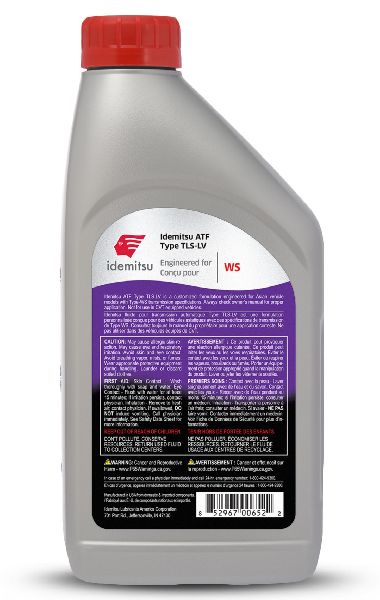
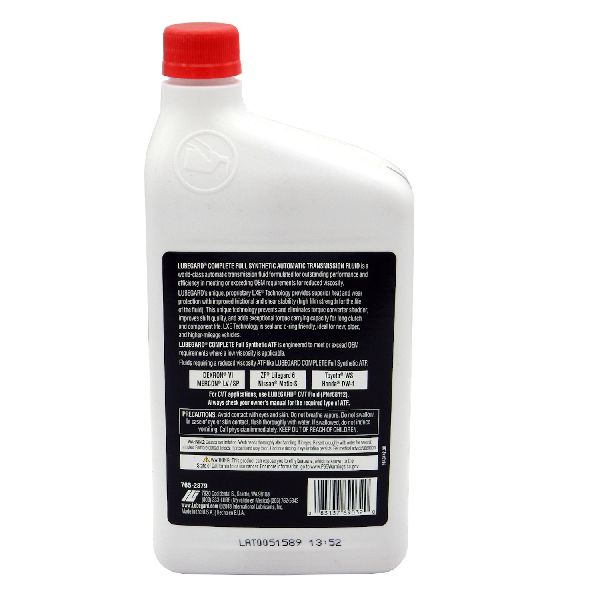
- Always check the transmission fluid level and condition first, using the specific temperature-controlled procedure. Only use Toyota WS fluid.
- The most common failed part is the pressure switch assembly, which is inside the transmission pan and integrated with the wiring harness.
- Be aware that models from ~2012-onward have a different pressure switch design (single switch) than earlier models (~2007-2011, three switches).
- This repair is complex and requires dropping the transmission pan, making it best suited for a qualified mechanic.
What's Unique About the 2007-2018 Lexus ES 350
The Lexus ES 350 uses the U660E 6-speed automatic transmission, which is known for its smooth operation but can be sensitive to fluid condition and electronic faults. Early 2007 models were particularly known for a 'shift flare' between 3rd and 4th gear when cold, addressed by TSB TC007-07, which could involve a software update or valve body replacement. A key detail for this vehicle range is a change in the pressure switch design around the 2012 model year. Earlier models use a three-switch assembly integrated into the internal wire harness. This code almost always points to an issue inside the transmission pan, rather than an external component.
Generation note: Yes, this range covers two generations of the ES 350 (XV40: 2007-2012 and XV60: 2013-2018), but the more significant difference is in the transmission hardware. Models made up to approximately 2011 use a valve body with a three-pressure-switch assembly integrated into the wire harness. Models from 2012 onward use a revised design. While the diagnostic approach is similar, the specific part to be replaced will differ.
Symptoms You May Notice
- Harsh, erratic, or delayed gear shifts
- Transmission slipping between gears or flaring (RPMs jump during a shift)
- Vehicle entering 'limp mode' (stuck in one gear)
- Check Engine Light is on
- Decreased fuel economy
- Hesitation when accelerating
- Car barely moves when put into Drive or Reverse
- Replacing individual shift solenoids when the issue is the pressure switch circuit.
- Assuming the entire transmission needs to be rebuilt without first inspecting the fluid and internal harness. Many transmission shops will recommend a full rebuild when only the internal harness is needed.
Most Likely Causes
- Low or Dirty Transmission Fluid 🔴 High Probability → Shop Transmission Assembly The U660E is a 'sealed' transmission without a dipstick, making fluid level checks less frequent and more complex. Over time, fluid can degrade or leak, causing pressure issues that the sensor correctly reports. Owners in forums report the 'lifetime' fluid is often dark and burnt smelling at higher mileage.
How to confirm: The fluid level must be checked via an overflow plug procedure at a specific temperature (typically 45°C or 113°F), which requires a scan tool. A visual inspection of the fluid condition (dark color, burnt smell) during this check indicates it's degraded.
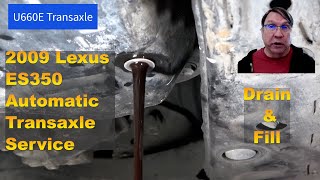
Typical fix: Perform a transmission fluid drain-and-fill using only Toyota/Lexus World Standard (WS) ATF. 🎬 Watch: Step-by-step guide for a proper fluid drain and fill. If the fluid is very dirty, multiple drain-and-fills may be needed.
Est. part cost: $60-$120 for fluid - Failed Transmission Fluid Pressure Switch Assembly 🟡 Medium Probability → Shop Transmission Assembly The pressure switches are integrated into the internal transmission wiring harness, which lives in hot fluid and can become brittle or fail electronically over time. This is a very common failure point for the U660E transmission across multiple Toyota and Lexus models.
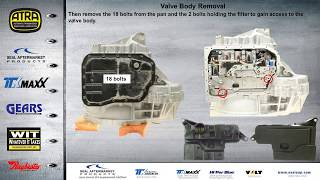
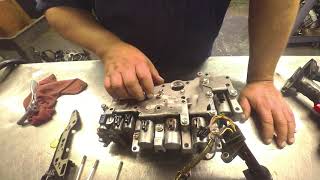
How to confirm: After confirming the fluid is correct, this is the next logical step. The part is located inside the transmission pan, attached to the valve body. 🎬 See how to identify and test the internal pressure switches. Diagnosis involves testing the switch circuit's continuity and resistance after removing the pan, per the service manual.
Typical fix: Replace the entire pressure switch and internal wiring harness assembly. This part is located on the valve body.
Est. part cost: $70-$180 - Damaged Internal Wiring or Connectors ⚪ Low Probability The internal harness connector can become brittle from heat cycles. The external connector can also be damaged, though it is less common. The failure is almost always in the harness/switch assembly itself.
How to confirm: Visually inspect the wiring harness and connectors for breaks, corrosion, or loose pins after removing the transmission pan.
Typical fix: The pressure switches and harness are a single assembly. If the fault is in the harness portion, the entire assembly is replaced.
Est. part cost: $70-$180
Rare But Worth Checking
- Faulty Transmission Valve Body: → Shop Transmission Valve Body A sticking solenoid or clogged passage within the valve body can cause pressure regulation problems that the sensor correctly reports. This is less common than the sensor itself failing but can happen if fluid maintenance has been neglected. Early 2007 models had a TSB for valve body replacement to fix shift flares.
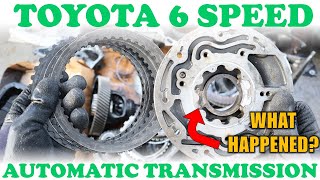
- Failed Powertrain Control Module (PCM) or Transmission Control Module (TCM): → Shop Transmission Assembly This is extremely rare. On the U660E, the TCM is bolted directly to the transmission case and can be susceptible to heat and vibration, 🎬 Watch: A full teardown of the U660E transmission internals. leading to unique failure patterns. However, this should only be considered after all other possibilities (fluid, wiring, sensors, valve body) have been exhaustively ruled out.
Diagnosis Steps
- Check and verify the transmission fluid level and condition. This is the most common cause and the first thing to check. The procedure requires a scan tool to monitor fluid temperature. The fluid must be at the correct level and should not be dark brown/black or smell burnt.
- If the fluid is correct, scan the TCM for any other related trouble codes. Codes for other sensors or solenoids can help pinpoint the issue.
- Inspect the external transmission wiring harness and connectors for any visible damage, corrosion, or loose connections.
- If external checks pass, the next step is to remove the transmission oil pan to access the internal components.
- Visually inspect the internal wiring harness, which contains the pressure switches. Look for any signs of damage, brittle wires, or broken connectors.
- Using a multimeter, test the resistance and continuity of the pressure switch 'B' circuit according to the factory service manual specifications.
- If the switch/harness assembly fails the test, replace it. If it passes, the problem may lie within the valve body or, rarely, the TCM.
Parts You'll Likely Need
- Transmission Pressure Switch / Wire Harness Assembly
(OEM #82125-33090 (superseded by 82125-33091))— This is the most common hardware failure for this code. The pressure switches are integrated into the internal transmission harness and replaced as one unit. Part number 82125-33090 is for the earlier 3-switch design (approx. 2007-2011); always verify with VIN.
Trusted brands: Toyota/Lexus (OEM), Rostra
OEM price range: $100-$180
Aftermarket price range: $70-$120 - Toyota World Standard (WS) Automatic Transmission Fluid
(OEM #00289-ATFWS)— This is the only specified fluid for the U660E transmission. Using any other fluid can cause shifting problems and damage. A drain and fill requires approximately 3.5-4 quarts.
Trusted brands: Toyota/Lexus, Aisin
OEM price range: $12-$20 per quart
Aftermarket price range: $10-$15 per quart - Transmission Pan Gasket
(OEM #35168-33080)— The gasket should always be replaced when the transmission pan is removed.
Trusted brands: Toyota/Lexus (OEM), Fel-Pro, Beck/Arnley
OEM price range: $25-$40
Aftermarket price range: $15-$25
Related Codes That Often Appear With This One
- P0700 — This is a generic code indicating the Transmission Control Module (TCM) has stored a fault. It acts as a 'master light' to turn on the MIL, while the more specific code (like P0846) is stored in the TCM.
- P0847 — Indicates the 'B' sensor circuit voltage is consistently LOW, pointing to a short to ground or a failed sensor.
- P0848 — Indicates the 'B' sensor circuit voltage is consistently HIGH, pointing to an open circuit or unplugged sensor.
Technical Service Bulletins (TSBs) & Recalls
- TC007-07: Addresses shift quality issues (flares) with a TCM reflash on early models.
- TC004-06: An earlier bulletin for 2007 models that specified replacing the transmission valve body to fix a 3-4 shift flare.
- L-SB-0033-08: Addresses hesitation on acceleration for some Lexus models, but primarily applies to the LS460, not the ES350 for this specific issue.
- L-SB-0035-16: Details a fix for a parasitic battery drain on 2013-2015 models caused by a faulty Network Gateway ECU.
Platform-Specific Known Issues
- Early U660E transmissions (approx. 2007-2009) were subject to a Technical Service Bulletin (TSB TC007-07) for a software update to correct shift flares or slipping sensations, which can be a symptom related to pressure issues.
- Some very early 2007 models required a full valve body replacement to cure the 3-4 shift flare, as per TSB TC004-06.
Mechanic-Grade Diagnostic Values
- Transmission Fluid Pressure Sensor (TFPS) 'B' Voltage — expected: 0.5V to 4.5V, varying with pressure.. Failure: A constant reading of 0V (short to ground) or 5V (open circuit) indicates a faulty sensor or wiring issue.
- Resistance of TFPS 'B' circuit to ground — expected: Above 5.0 Ohms.. Failure: Resistance below 5.0 Ohms indicates a short to ground in the signal circuit.
Scan Tool Commands That Help
- Toyota Techstream: Powertrain -> ECT -> Utility -> A/T Code Reset — This function is used to reset transmission adaptive learning values after replacing major components like the valve body, solenoids, or the entire transmission. It forces the TCM to relearn shift points and pressures with the new parts.
- Toyota Techstream: Data List -> A/T Oil Temperature 1 — This is a critical function for accurately checking the transmission fluid level. The level must be checked via the overflow plug when the fluid is within a specific temperature range (e.g., 104-113°F or 40-45°C), and this PID is the only reliable way to measure it.
Wiring & Ground Locations
- Engine Bay Ground Point — On the top, left side of the engine (when viewed from the front) is a designated solid, unpainted metallic point for grounding.. A poor engine or transmission ground can cause floating voltages and erratic sensor readings. While not a primary cause, ensuring this ground is clean and tight is a fundamental step in diagnosing any electronic fault code.
- TCM Ground (2014 ES 350) — The Transmission Control ECU assembly ground is located behind the instrument cluster, as part of the J/C H114 & H115 junction connectors.. For later models, a fault in this specific interior ground connection could directly impact the TCM's ability to correctly interpret sensor signals, leading to codes like P0846.
- ECM Ground (2007 ES 350) — The Engine Control Module for the 2007 model has a ground point located at the left side of the dash.. On earlier models where the ECM and TCM functions are more integrated, a bad ground at this location can cause a wide range of powertrain codes, including transmission sensor rationality faults.
OEM Part Supersession History
82125-33090→82125-33091— Standard part revision and improvement by the manufacturer.
Heads up: Part 82125-33090 is for the earlier U660E transmissions (approx. 2007-2011) with a 3-switch design. The later design uses a different harness. Always confirm fitment with the vehicle's VIN, as the changeover year can be inconsistent.
Model Year Variations Within This Range
- 2007-2011: These models use the earlier U660E design with an internal wire harness (PN 82125-33090) that incorporates three pressure switches.
- 2012-2018: These models use a revised U660E transmission with a different internal harness and pressure switch configuration. The part number for the harness is different, and while the P0846 code can still occur, the specific component being replaced is physically different from the earlier version.
- 2007-2009: These early production years were more prone to software-related shift quality issues like flares and harsh shifts, which could sometimes be resolved with a TCM reflash under a TSB, rather than a hard part replacement.
Diagnostic Flowchart
Other Known Issues on This Vehicle
Issues unrelated to this code that are worth knowing about as an owner of this generation:
- VVT-i Oil Line Rupture 🔴 High — Common on early 2007-2008 models. An original rubber hose section degrades and can burst, causing rapid and catastrophic oil loss, potentially leading to engine seizure. (Ref: LSC 90K / T-SB-0033-08 (Limited Service Campaign to replace the rubber hose with an all-metal line).)
- Melting / Sticky Dashboard 🟡 Low — Very common on 2007-2008 models, especially in regions with high heat and humidity. The dashboard material degrades, becoming shiny, sticky, and prone to cracking. (Ref: ZLD Warranty Enhancement Program (extended warranty coverage for replacement, now expired).)
- Transmission Shift Flare/Hesitation 🟠 Medium → Shop Transmission Assembly — Prevalent in early 2007 models. Manifests as a sharp RPM increase during the 3-4 shift when cold, or general hesitation. (Ref: TC004-06 / TC007-07 (Addresses 3-4 shift flare with a revised valve body or ECM reflash).)
- Intermittent Battery Drain (Parasitic Draw) 🟠 Medium — Affects 2013-2015 models. The Network Gateway ECU may fail to enter 'sleep mode' after the vehicle is turned off, causing the battery to discharge overnight. (Ref: L-SB-0035-16 (Provides a diagnostic procedure and part numbers for the faulty Network Gateway ECU).)
Used vs. New Parts: Buying Guide for This Vehicle
When a used part is the smart pick: A used valve body assembly from a low-mileage donor vehicle can be a cost-effective option if the entire valve body is confirmed to be faulty. However, this is risky as the used part may have the same wear issues. It is generally not recommended for electronic components like the wire harness/sensor assembly due to the low cost of new aftermarket parts.
Donor-vehicle mileage cap: roughly under 80000 miles for the part to have meaningful remaining life.
What to inspect on the donor part:
- Verify the donor vehicle's mileage and year to ensure compatibility.
- Ask for photos of the transmission fluid from the donor car if possible; avoid if the fluid is dark or burnt.
- If buying a valve body, ensure it comes with a warranty or return policy.
- Check for any physical damage to connectors or the valve body casting.
OEM-only on this vehicle (don't cheap out):
- Transmission Control Module (TCM): Due to the need for specific programming (compensation code initialization), using a new OEM or a professionally refurbished and programmed unit is critical for proper function.
Aftermarket brands forum-validated for this vehicle:
- Rostra: A well-regarded aftermarket manufacturer for transmission electronics, including the internal wire harness/pressure switch assembly for the U660E.
Brands owners have reported issues with on this vehicle:
- Unbranded, no-name electronic parts from online marketplaces should be avoided. Failure of these cheap components is common and requires repeating the entire labor-intensive repair.
Real Owner Stories
Aggregated from forums and TSBs cited above. Mileages and costs reflect what owners reported in those sources.
2007 Lexus ES 350 2GR-FE 3.5L V6
Symptoms: A sharp RPM increase (flare) during the 3-4 shift, particularly when the engine was cold, and general hesitation.
What fixed it: An ECM reflash or, in some cases, a full replacement of the transmission valve body.
Source hint: TSB TC004-06 / TC007-07, as cited in the vehicle_specific_issues section
2010 Lexus ES 350 2GR-FE 3.5L V6 — ~130000 miles
Symptoms: Harsh, erratic shifts and the Check Engine Light came on. The 'lifetime' transmission fluid was found to be dark and had a burnt smell.
What fixed it: A transmission fluid drain-and-fill using Toyota World Standard (WS) ATF.
Source hint: Forum reports cited in Common Causes section regarding degraded fluid at higher mileage
2011 Lexus ES 350 2GR-FE 3.5L V6
Symptoms: The vehicle suddenly entered 'limp mode' and was stuck in a single gear, with the Check Engine Light on.
What fixed it: After confirming the fluid was okay, the transmission pan was dropped and the entire pressure switch and internal wiring harness assembly was replaced.
Source hint: Common Causes section describing the failure of the pressure switch assembly on the U660E transmission
Related OBD-II Codes
Frequently Asked Questions
My 2008 ES 350 is shifting harshly, especially from 3rd to 4th gear. Is this related to the P0846 code?
The transmission on my ES 350 is 'sealed for life'. Does that mean I don't need to check the fluid for a P0846 code?
For code P0846, what is more likely to be the problem: the fluid or a bad sensor?
What exactly is the Transmission Fluid Pressure Switch Assembly that fails on these cars?
My mechanic says the internal wiring harness needs to be replaced to fix P0846. Is that correct?
I have a P0846 code on my Toyota Camry V6. Is the information for the Lexus ES 350 relevant?
Helpful Videos
We Have This Part in Stock

The information in this article is provided for general reference and educational purposes only. Vehicle specifications, procedures, and part compatibility can vary by production date, trim level, and region. Always consult your vehicle's factory service manual and verify part numbers before purchasing or performing repairs. Safety-critical components such as airbags, seat belts, and braking systems should be installed by a qualified professional.
- Lexus ES 350:
- 🧭 Diagnostic Flowchart
- 🎬 Helpful Videos
- 🛍️ Shop This Part
- What's Unique About the 2007-2018 Lexus ES 350
- Symptoms You May Notice
- Most Likely Causes
- Rare But Worth Checking
- Diagnosis Steps
- Parts You'll Likely Need
- Related Codes That Often Appear With This One
- Technical Service Bulletins (TSBs) & Recalls
- Platform-Specific Known Issues
- Mechanic-Grade Diagnostic Values
- Scan Tool Commands That Help
- Wiring & Ground Locations
- OEM Part Supersession History
- Model Year Variations Within This Range
- Other Known Issues on This Vehicle
- Used vs. New Parts: Buying Guide for This Vehicle
- Real Owner Stories
- 2007 Lexus ES 350 2GR-FE 3.5L V6
- 2010 Lexus ES 350 2GR-FE 3.5L V6 — ~130000 miles
- 2011 Lexus ES 350 2GR-FE 3.5L V6
- Related OBD-II Codes
- Frequently Asked Questions
- 🎟️ Get 5% Off