

P0848 on 2002-2003 Chevrolet Silverado 1500 HD: Causes and Fixes for Transmission Pressure Faults
On a 2002-2003 Silverado 1500 HD with the 4L80-E gas engine transmission, code P0848 is most often caused by a failed Transmission Fluid Pressure (TFP) Manifold Switch inside the oil pan. This requires replacing the switch, pan gasket, and filter, costing around $400-$750 at a shop.
- P0848 on a 2002-2003 Silverado 1500 HD indicates a 'Circuit High' fault for the 'B' transmission pressure switch.
- The most probable cause is a failed Transmission Fluid Pressure Manifold Switch, an internal component located on the valve body.
- Driving with this code is not recommended as it can lead to unpredictable shifting, getting stuck in limp mode, and potential long-term transmission damage.
- The repair is moderately difficult for a DIYer as it requires dropping the transmission pan, but it is a common procedure for transmission shops.
- Always replace the transmission filter and pan gasket when performing this repair.
What's Unique About the 2002-2003 Chevrolet SILVERADO 1500 HD
The 2002-2003 Silverado 1500 HD typically uses the robust 4L80-E automatic transmission for its gasoline engines. On this specific transmission, the various pressure switches (A, B, C, etc.) are integrated into a single component called the Transmission Fluid Pressure Manifold Switch (PSM). This entire manifold assembly is a very common failure point and is the most likely cause of a P0848 code, as opposed to an individual sensor or external wiring issue. Unlike the Allison transmission found in diesel HD trucks where the internal harness is a common failure, on the 4L80-E, the switch manifold itself is the primary suspect.
Diagnostic Flowchart
Tap your situation to follow the diagnostic path that matches what you're seeing on this vehicle.
Symptoms You May Notice
- Check Engine Light is on
- Transmission warning light may be illuminated
- Harsh, erratic, or delayed shifting
- Transmission stuck in a single gear (limp mode).
- Vehicle may feel like it's in neutral when coming to a stop or after starting up.
- Poor acceleration and reduced fuel economy.
- No shift into overdrive (4th gear) or dropping out of OD under load.
- Sudden loss of all forward gears, requiring a restart to temporarily fix.
- Replacing the entire transmission when only the internal pressure switch manifold has failed.
- Replacing the PCM/TCM without first diagnosing the wiring and sensor components thoroughly.
- Mistaking the issue for a bad internal harness, which is a more common failure on the Allison transmission, not the 4L80-E.
Most Likely Causes
- Failed Transmission Fluid Pressure (TFP) Manifold Switch 🔴 High Probability → Shop Transmission Assembly The pressure manifold switch on the 4L80-E transmission is a known high-failure item due to constant exposure to heat and fluid, which degrades the internal electronics and switch contacts over time, causing open circuits.
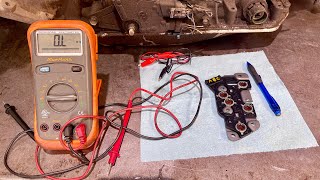
How to confirm: After confirming external wiring is intact 🎬 Watch: How to test the pressure switch and solenoids., drop the transmission pan. The manifold is located on the valve body. 🎬 See this walkthrough for valve body and electrical component testing. It can be tested with a multimeter for continuity across the switch pins while applying low air pressure, but it is often replaced on suspicion due to the extremely high failure rate for this specific code on the 4L80-E.
Typical fix: Drop the transmission pan, remove the old pressure manifold switch from the valve body, install the new one, replace the transmission filter and pan gasket, and refill with the correct type of transmission fluid (DEXRON-VI is the modern replacement for DEXRON-III).
Est. part cost: $60-$150 - Damaged Wiring or Connectors 🟡 Medium Probability The main transmission harness connector on the passenger side of the transmission can become contaminated with fluid or dirt. The harness itself can also become chafed or damaged from road debris, heat from the exhaust, or contact with other components. Fluid can also leak through the main pass-through connector, indicating a failure of the internal harness seal.
How to confirm: Visually inspect the main round connector on the passenger side of the transmission for corrosion, bent pins, or fluid intrusion. Trace the wiring harness for any signs of physical damage, melting, or chafing. Use a multimeter to test for continuity and check for a short to voltage on the specific wire for the 'B' switch between the TCM and the transmission connector.
Typical fix: Clean the connector with electrical contact cleaner. If the wiring is damaged, repair the specific circuit. If the connector itself is damaged or leaking fluid from inside the transmission, the internal transmission harness and connector assembly may need to be replaced.
Est. part cost: $20-$200 - Low or Contaminated Transmission Fluid ⚪ Low Probability → Shop Transmission Assembly While not a direct cause of a 'circuit high' code, low fluid can cause erratic hydraulic operation, slipping, and overheating, which can accelerate the failure of electrical components like the pressure switch manifold. Burnt or contaminated fluid can also cause solenoids and valves to stick.
How to confirm: Check the transmission fluid level and condition using the dipstick. The fluid should be at the correct level, reddish in color, and not have a burnt smell. If the fluid is dark or smells burnt, it indicates internal wear or overheating.
Typical fix: Top off the fluid if low. If the fluid is burnt or very dirty, a full fluid and filter change is necessary. 🎬 Watch: Step-by-step guide to changing your 4L80E transmission fluid. This is often done as part of the pressure switch replacement.
Est. part cost: $50-$100
Rare But Worth Checking
- Faulty Transmission Control Module (TCM) or Powertrain Control Module (PCM): → Shop Engine Control Module (ECM) This is extremely rare. The TCM/PCM should only be considered after all other possibilities, including the sensor, internal and external wiring, and fluid, have been exhaustively ruled out.
- Sticking Valve Body Components: → Shop Transmission Valve Body Debris in the fluid can cause shift valves or solenoids to stick, leading to incorrect hydraulic pressure in certain circuits. This can sometimes trigger a pressure switch code, even if the switch itself is functional. This usually points to a more widespread internal transmission problem requiring a rebuild or valve body service.
Diagnosis Steps
- Check and verify the transmission fluid level and condition. Address any low or burnt fluid first.
- Use an OBD-II scanner to check for any other stored codes. If P0700 or P0701 are present, it confirms a transmission fault is the root cause.
- Inspect the main transmission wiring harness and the large round connector on the passenger side of the transmission case for any visible damage, corrosion, or loose connections. Check for fluid inside the connector pins.
- Using a scan tool with live data capability, monitor the status of the TFP switches while shifting through gears (engine on, wheels blocked). The 'B' switch will likely show an incorrect state (e.g., 'Open' or 'High' when it should be 'Closed' or 'Low').
- If external wiring appears good, the next step is to drop the transmission oil pan to gain access to the internal components.
- Visually inspect the internal wiring harness and the pressure switch manifold for any obvious damage, such as cracks or signs of overheating.
- With the pan off, you can test the circuit. Disconnect the manifold and test for continuity to ground on the appropriate pin at the case connector. If the wire is good, the manifold switch is the likely culprit.
- Replace the Transmission Fluid Pressure Manifold Switch, transmission filter, and pan gasket.
- Reinstall the transmission pan, torquing bolts to the correct specification to avoid leaks.
- Refill the transmission with the manufacturer-specified fluid (DEXRON-VI is recommended).
- Clear the codes with the scan tool and perform a test drive to ensure the problem is resolved and shifting is normal.
Parts You'll Likely Need
- Transmission Fluid Pressure Manifold Switch Assembly
(OEM #24225825)— This is the most common failure point for this code on the 4L80-E transmission found in these trucks. The original part number may have been superseded.
Trusted brands: ACDelco, Delphi, Dorman, Standard Motor Products (SMP)
OEM price range: $90-$140
Aftermarket price range: $50-$90 - Transmission Pan Gasket — The gasket must be replaced anytime the transmission pan is removed to prevent leaks. Many modern gaskets are reusable, but replacement is cheap insurance against leaks.
Trusted brands: ACDelco, Fel-Pro
OEM price range: $20-$40
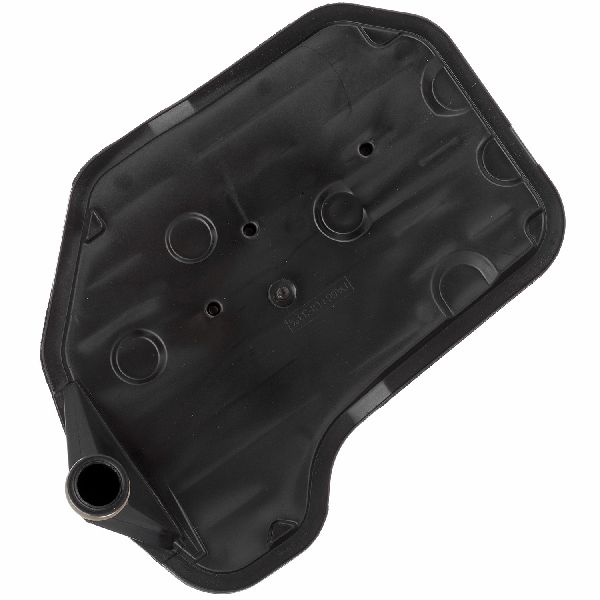
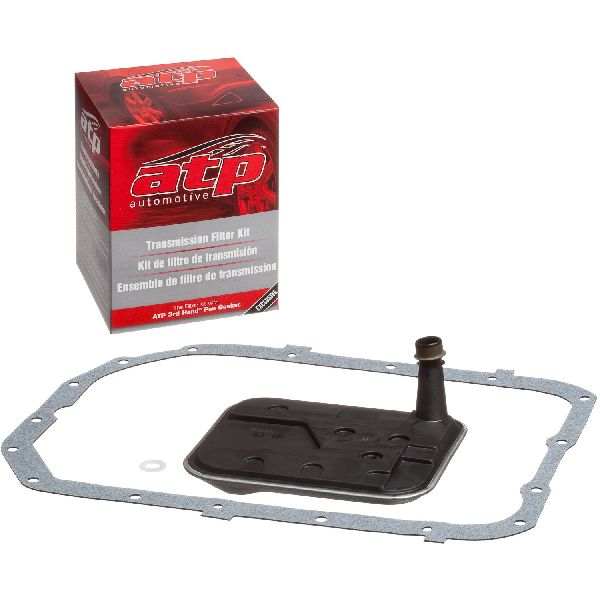
Aftermarket price range: $10-$25 - Transmission Filter Kit — The filter should always be replaced when the pan is removed for service to ensure contaminants from the old failure are removed.
Related Codes That Often Appear With This One
- P0700 — This is a general transmission fault code. The TCM sends this code to the main engine computer (PCM) to turn on the Check Engine Light when any transmission-specific code, like P0848, is stored.
- P0701 — A general TCM malfunction code. The provided TSB (PIP4379M) specifically states to diagnose P0701 first if it is present with other transmission codes, as it indicates a broader control system issue.
- P0843, P0873, P0877 — These are circuit high/low codes for the other pressure switches ('A', 'C', 'D', etc.) within the same pressure switch manifold. Seeing multiple codes for different switches strongly points to a failure of the manifold assembly itself or its main connector.
- P0751, P0756 — These are codes for shift solenoid 'A' and 'B' performance. TSB PIP4379M groups these with P0848, suggesting a related hydraulic or electrical fault within the valve body assembly.
Technical Service Bulletins (TSBs) & Recalls
- PIP4379M: Mentions P0848 in a list of potential transmission-related DTCs that can cause a 'no move' or 'range inhibit' condition. It advises on a diagnostic starting point by checking for P0701 first.
Platform-Specific Known Issues
- The provided Technical Service Bulletin (TSB) #PIP4379M lists P0848 as part of a large group of transmission codes that can occur, indicating a known pattern of issues. The bulletin advises diagnosing code P0701 first if it is present, suggesting a holistic look at the control system is needed.
- Owners on forums like PerformanceTrucks.net frequently discuss issues with the 4L80-E, with many repair stories for shifting problems pointing towards internal hydraulic or electronic failures that are resolved with valve body work, confirming the commonality of these faults.
Mechanic-Grade Diagnostic Values
- TFP Switch 'B' Circuit Voltage — expected: Near 0 volts when the corresponding gear's hydraulic circuit is pressurized (switch closed to ground). Near 5 volts (reference voltage) when the circuit is not pressurized (switch open).. Failure: A reading that is consistently high (near 5V) even when the gear requiring TFP 'B' is engaged indicates an open circuit, which triggers P0848.
- Shift Solenoid A & B Resistance — expected: 20-40 Ohms. Failure: A reading outside this range indicates a faulty solenoid, which can cause related hydraulic and pressure switch issues.
- Pressure Control (PC) Solenoid Resistance — expected: 3.5 - 4.6 Ohms at 20°C (68°F). Failure: Resistance outside this range points to a failing PC solenoid, which directly impacts line pressure and can cause erratic shifting.
Scan Tool Commands That Help
- GM Tech 2: Data Display > Transmission Data — Use this function to monitor the live status (On/Off or High/Low) of all transmission fluid pressure switches (A, B, C, etc.) while manually shifting through gears (with the engine running and vehicle secured). This allows you to see if the 'B' switch is failing to change state as expected, confirming an electrical fault in that part of the circuit.
- GM Tech 2: Special Functions > Transmission Output Controls — This bi-directional control allows a technician to command individual shift solenoids On and Off. While it doesn't directly test the pressure switch, it helps verify the health of the solenoids and the integrity of the wiring harness that they share with the pressure switch manifold, helping to isolate the fault.
Wiring & Ground Locations
- Transmission Main Connector (C1) — Large, round connector on the passenger side of the 4L80-E transmission case.. This is the primary connection point between the external vehicle harness and all internal transmission electronics, including the pressure switch manifold. A P0848 fault investigation starts here.
- Pin R (TFP Switch 'B' Signal) — Pin 'R' on the main transmission connector. The corresponding wire in the harness is typically Red.. This specific pin carries the signal from the 'B' pressure switch to the PCM/TCM. Technicians test this pin for voltage and continuity to determine if the fault is in the external harness or inside the transmission.
- Engine Block Grounds (G103, G104, G105) — Bolted to the rear of the driver's side cylinder head and the front of the passenger side cylinder head. Often black wires with a white stripe.. These are the primary ground points for the PCM and many engine sensors. A loose or corroded ground here can cause erratic sensor readings and phantom electrical issues throughout the powertrain control system, potentially including transmission codes.
- Frame Ground (Under Driver's Door) — A thick ground wire bolted to the frame rail, typically below the driver's side door area.. This is a major chassis ground. While less likely to cause a specific circuit-high code, poor grounding here can contribute to overall electrical noise and unreliable module performance.
OEM Part Supersession History
24214360→24225825— Component update for reliability and to integrate new materials or technologies.
Heads up: The new part number (24225825) is the correct service replacement for the original. Some documentation notes that programming or special setup procedures may be required, though this is more common when replacing the entire valve body/TCM assembly (TEHCM) on newer transmissions, not typically for just the pressure manifold on a 4L80-E.
Model Year Variations Within This Range
- 1999-onward: Mid-year 1999 saw internal improvements to the 4L80-E, but electrical interchangeability for major components like the pressure manifold switch remained consistent for 1997+ models. A 2002-2003 Silverado HD uses this later, improved version of the 4L80-E. There are no significant electrical differences between a 2002 and 2003 4L80-E that would affect the diagnosis of P0848.
- 2003-2007: The PCM connectors changed around 2003. Earlier trucks (like the 2002 model) use blue and green connectors, while later trucks (including the 2003 model) use blue and red connectors at the PCM. This is critical to know when consulting pinout diagrams for testing wires at the computer end of the harness.
Helpful Videos
We Have This Part in Stock


The information in this article is provided for general reference and educational purposes only. Vehicle specifications, procedures, and part compatibility can vary by production date, trim level, and region. Always consult your vehicle's factory service manual and verify part numbers before purchasing or performing repairs. Safety-critical components such as airbags, seat belts, and braking systems should be installed by a qualified professional.
- Chevrolet SILVERADO 1500 HD:
- 🧭 Diagnostic Flowchart
- 🎬 Helpful Videos
- 🛍️ Shop This Part
- What's Unique About the 2002-2003 Chevrolet SILVERADO 1500 HD
- Symptoms You May Notice
- Most Likely Causes
- Rare But Worth Checking
- Diagnosis Steps
- Parts You'll Likely Need
- Related Codes That Often Appear With This One
- Technical Service Bulletins (TSBs) & Recalls
- Platform-Specific Known Issues
- Mechanic-Grade Diagnostic Values
- Scan Tool Commands That Help
- Wiring & Ground Locations
- OEM Part Supersession History
- Model Year Variations Within This Range
- 🎟️ Get 5% Off