

P0848 on 2003-2007 GMC Sierra Denali: Transmission Pressure Switch 'B' Circuit High Fixes
P0848 on a GMC Sierra Denali typically points to a failed transmission fluid pressure manifold switch assembly inside the transmission oil pan. Replacing the switch assembly (ACDelco part #24229849), along with the transmission filter and fluid, is the most common fix. Expect to pay $70-$150 for the parts.
- P0848 indicates a 'Circuit High' fault for the transmission fluid pressure switch 'B'.
- The most common cause on a 2003-2007 Sierra Denali is a failed pressure switch manifold located inside the transmission oil pan.
- Symptoms are serious and include harsh shifting, limp mode, and potentially a no-shift condition.
- Always check the external wiring and connectors before dropping the transmission pan.
- This repair is best left to experienced DIYers or professionals due to its complexity and the risk of transmission damage if done incorrectly.
What's Unique About the 2003-2007 Gmc SIERRA DENALI
The GMC Sierra Denali from this era primarily used the more robust 4L65-E automatic transmission to handle the torque of the 6.0L V8, though the base 4L60-E is similar. In these models, the five transmission fluid pressure switches are integrated into a single manifold assembly (often called the Manifold Pressure Switch) that is bolted to the valve body inside the oil pan. This design makes them susceptible to failure from heat cycles and contaminated fluid. Replacement requires removing the transmission pan. The GMT800 (2003-2006) and early GMT900 (2007 'new body style') platforms share this common failure point across many trucks and SUVs.
Diagnostic Flowchart
Tap your situation to follow the diagnostic path that matches what you're seeing on this vehicle.
Generation note: This range covers the end of the first generation (GMT800, 2003-2006 and 2007 'Classic') and the beginning of the second generation (GMT900, 2007 'New Body Style'). Both generations can experience this code, as they used the 4L60-E/4L65-E. The later GMT900s introduced 6-speed transmissions (like the 6L80) which have a different pressure switch design integrated into the TEHCM (Transmission Electro-Hydraulic Control Module), but the P0848 code still points to a pressure switch circuit fault.
Symptoms You May Notice
- Check Engine Light is on
- Harsh, erratic, or delayed shifting
- Transmission may get stuck in one gear (limp mode)
- Transmission may not shift up into higher gears
- Vehicle may not shift out of Park or Neutral (Range Inhibit)
- Reduced fuel economy
- Transmission slipping or failing to engage properly
- Replacing the entire transmission or valve body when only the pressure switch manifold is faulty.
- Replacing the TCM/PCM when the actual problem is a simple wiring fault or a bad ground.
Most Likely Causes
- Failed Transmission Fluid Pressure Manifold Switch Assembly 🔴 High Probability → Shop Transmission Assembly The pressure switches are located inside the transmission, exposed to constant heat and potentially contaminated fluid, which causes the internal diaphragms or electronics to fail over time. It's a very common wear item on GM 4-speed automatic transmissions like the 4L60-E and 4L65-E.
How to confirm: After confirming the external wiring is intact, the next step is to test the switch itself. This requires dropping the transmission pan for access. Due to the high failure rate and labor involved, it is often replaced based on the code after ruling out external wiring issues.
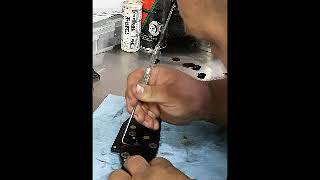
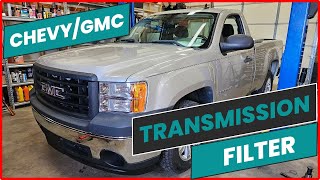
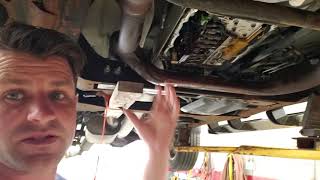
Typical fix: Replace the entire manifold pressure switch assembly. The OEM part is ACDelco 24229849. 🎬 Watch: Common manifold pressure switch issues and service tips. While the pan is off, it is best practice to also replace the transmission filter and pan gasket. 🎬 See this detailed walkthrough for a DIY transmission filter replacement.
Est. part cost: $70-$150 - Wiring or Connector Issue 🟡 Medium Probability The main transmission connector on the side of the case is exposed to road debris, moisture, and heat, which can lead to corrosion or damaged pins. A 'circuit high' code is often caused by an open ground or a short to the 5V reference wire.
How to confirm: Visually inspect the main transmission connector and wiring harness for any signs of damage, corrosion, or loose pins. Use a multimeter to check for continuity, proper ground, and voltage at the connector according to a wiring diagram. Perform a 'wiggle test' on the harness while monitoring voltage to find intermittent shorts.
Typical fix: Repair the damaged section of the wiring harness or clean/replace the corroded connector.
Est. part cost: $10-$100 - Low or Dirty Transmission Fluid ⚪ Low Probability → Shop Transmission Assembly While less likely to directly cause a 'circuit high' code, low or contaminated fluid can cause erratic pressure, overheating, and stress on components, leading to the failure of the pressure switch. In some cases, especially in cold weather, low fluid can prevent the torque converter from filling properly, causing erratic behavior and codes.
How to confirm: Check the transmission fluid level and condition using the dipstick when the transmission is warm. The fluid should be at the correct level, red in color, and not have a burnt smell.
Typical fix: Perform a transmission fluid and filter change. If the fluid is heavily contaminated or contains metal debris, a more significant internal transmission problem is likely.
Est. part cost: $60-$120
Rare But Worth Checking
- Faulty Transmission Control Module (TCM) or Powertrain Control Module (PCM): → Shop Engine Control Module (ECM) This is rare. Before condemning the control module, all other possibilities like wiring and the sensor itself must be exhaustively ruled out. The TSB PIP4379M suggests diagnosing other codes like P0701 first, which can point towards a control-side issue.
Diagnosis Steps
- Check and document any other stored DTCs in the TCM/PCM.
- Check the transmission fluid level and condition. Address low or burnt fluid first. Let the vehicle warm up before checking.
- Visually inspect the main transmission wiring harness and connector for any obvious signs of damage, corrosion, or fluid intrusion.
- Using a scan tool, observe the live data for the transmission pressure switches while shifting gears (with the engine running). Compare the readings to the manufacturer's specifications to see if switch 'B' is reporting an incorrect high voltage (typically > 4.8V).
- If the external wiring looks good, test the circuit for voltage, ground, and continuity between the TCM and the transmission connector. A high voltage reading points to a short to power, while an open circuit (especially an open ground) can also cause this code.
- If the wiring and connector are confirmed to be good, the fault is most likely the internal transmission fluid pressure manifold switch.
- Drop the transmission pan to access and replace the switch assembly. 🎬 Watch: Step-by-step guide on how to change the pressure switch. Inspect the pan for excessive metal debris, which would indicate a more severe internal failure.
- After replacement, refill with the correct type and amount of transmission fluid (DEXRON-VI is typically specified), clear the codes, and perform a test drive to ensure the repair was successful.
Parts You'll Likely Need
- Transmission Fluid Pressure Manifold Switch
(OEM #24229849)— This is the component that contains the pressure switch 'B' and is the most common failure point for this code on this vehicle.
Trusted brands: ACDelco (OEM), Duralast, Rostra Precision Controls
OEM price range: $100-$180
Aftermarket price range: $70-$120 - Transmission Oil Pan Gasket — Must be replaced anytime the transmission oil pan is removed to prevent leaks. Many filter kits include a new gasket.
Trusted brands: ACDelco, Fel-Pro
OEM price range: $20-$40
Aftermarket price range: $15-$30 - Automatic Transmission Filter Kit — Should always be replaced when the transmission pan is removed for service.
Trusted brands: ACDelco, Wix, Fram
OEM price range: $30-$50
Aftermarket price range: $15-$35 - Automatic Transmission Fluid — Required to refill the transmission after dropping the pan. DEXRON-VI is the standard for these models.
Trusted brands: ACDelco DEXRON-VI
OEM price range: $8-$12 per quart
Aftermarket price range: $6-$10 per quart
Related Codes That Often Appear With This One
- P0701 — As noted in TSB PIP4379M, this code indicates a general TCM system performance issue and may appear alongside specific pressure switch codes.
- P0843 — This is the code for Transmission Fluid Pressure Sensor/Switch 'A' Circuit Low, indicating a fault in a different pressure switch within the same manifold assembly.
- P0873 — This is the code for Transmission Fluid Pressure Sensor/Switch 'C' Circuit High, pointing to another fault within the same component.
- P0877 — This is the code for Transmission Fluid Pressure Sensor/Switch 'D' Circuit Low, again pointing to a related fault in the pressure switch manifold.
- P0875 — This code for TFP Sensor/Switch 'C' Circuit can appear with P0848, as seen in owner forums, sometimes related to cold temperatures or low fluid.
Technical Service Bulletins (TSBs) & Recalls
- PIP4379M: Addresses a range of transmission codes, including P0848, often related to no/delayed engagement or range inhibit. It advises checking P0701 diagnostics first and ensuring fluid levels are correct.
Platform-Specific Known Issues
- Cold Weather Sensitivity: Owners have reported that the P0848 code is more likely to appear during cold starts or in colder climates. This can be due to fluid being thicker and slower to build pressure, or internal seals that are slightly worn and leak pressure until the transmission warms up. One user on a forum noted that letting the truck idle for a few minutes before driving prevented the code from setting.
- Common DIY Repair: For mechanically inclined owners, replacing the manifold pressure switch is a common DIY job. The key steps involve draining the fluid,
Mechanic-Grade Diagnostic Values
- TFP Sensor/Switch 'B' Circuit Voltage — expected: Typically 0 volts when the switch is closed (pressure applied) and system voltage (12V) or reference voltage (5V) when open (no pressure).. Failure: A reading that is consistently high (near 5V or 12V) when it should be low, or vice-versa, indicates a fault. For P0848, the PCM is seeing a voltage that is stuck high.
- Pressure Control (PC) Solenoid Resistance — expected: 3.5 - 8.0 Ohms at 68°F (20°C).. Failure: Resistance outside this range indicates a faulty solenoid which can affect line pressure and cause related pressure switch codes.
- 1-2 and 2-3 Shift Solenoid Resistance — expected: 20 - 40 Ohms each at 68°F (20°C).. Failure: An out-of-spec reading can indicate a failing shift solenoid. While not a direct cause of P0848, it points to the overall health of the transmission's internal electronics.
Scan Tool Commands That Help
- GM Tech2: Transmission Data / Switch Status — Use this function to view the live state (On/Off or Active/Inactive) of all five pressure switches in the manifold assembly while manually shifting through gears (engine running). This allows you to verify if the PCM's reading of switch 'B' matches the actual gear selection and hydraulic state. A switch that doesn't change state when it should is faulty.
- GM Tech2: Capture Info / Snapshot — For intermittent faults, you can set the Tech2 to capture a snapshot of all transmission data when the fault code P0848 is triggered. This freezes the data from all sensors at the moment of the fault, helping to identify what conditions cause the code to set (e.g., during a specific shift, at a certain temperature).
Wiring & Ground Locations
- Transmission Case Connector (C7) — On the passenger side of the transmission case, a large round 20-pin connector.. This is the main electrical interface for the entire transmission. The signal wire for TFP Switch 'B' passes through this connector. Corrosion, bent pins, or fluid intrusion here can directly cause a 'Circuit High' fault. The connector must be removed by squeezing two tabs and pulling straight up; prying can damage it.
- G103 — On the front of the passenger side (right side) cylinder head.. This is a primary ground for the ECM/PCM. A poor connection here can cause a host of erratic sensor readings and seemingly unrelated codes, including transmission codes, because the PCM may not have a stable ground reference.
- G104 — On the rear of the driver's side (left side) cylinder head, near the firewall.. This ground point is tied into the main engine wiring harness and grounds several components, including some PCM functions and the instrument cluster. A loose or broken G104 can lead to bizarre electrical issues that could be misdiagnosed as a component failure.
- Engine Harness Chafe Point — The wiring harness may rub against the ECM/TCM mounting bracket, the driver's side upper control arm, and the shock tower.. Vibrations can cause the harness to chafe against these sharp metal edges, eventually wearing through the insulation of the wires inside. A short between the TFP sensor signal wire and a power or reference voltage wire within the harness will cause a P0848 code. This is a known issue on GMT900 trucks.
Real Owner Repair Stories
- YouTube user comment on a diagnostic video (1995 VS Commodore (uses 4L60E)) — Intermittently going into limp mode, staying in limp mode more often.
❌ Tried (didn't work) Customer replaced alternator., Tightened loose battery terminals., Checked for codes (only found code 12, indicating no faults stored).
✅ What actually fixed it The problem was traced to a broken contact leg on fuse #12 in the fuse box, which supplied power to the transmission controls. The fuse itself was good, but the terminal it plugged into was broken, causing an intermittent open circuit. A makeshift copper wire jumper was used to restore the connection and resolve the limp mode issue.
Model Year Variations Within This Range
- 2003-2005: These years typically used a 13-pin internal wiring harness connector for the 4L60E/4L65E. The pressure control solenoid connector was also a different, larger style.
- 2006-2008: Starting in 2006, an input shaft speed (ISS) sensor was added to the transmission. This required a change to a 15-pin internal harness connector to accommodate the new sensor's wiring. While the manifold pressure switch remained the same, the overall internal harness is not interchangeable with earlier years.
- 2009+: For reference on later models (post-2008), the harness changed again to a 17-pin connector as the 3-2 downshift solenoid was eliminated and an internal mode switch was integrated. This does not apply to the 2003-2007 range but is important for anyone sourcing parts near the model year cutoffs.
Helpful Videos

We Have This Part in Stock


The information in this article is provided for general reference and educational purposes only. Vehicle specifications, procedures, and part compatibility can vary by production date, trim level, and region. Always consult your vehicle's factory service manual and verify part numbers before purchasing or performing repairs. Safety-critical components such as airbags, seat belts, and braking systems should be installed by a qualified professional.
- Gmc SIERRA DENALI:
- 🧭 Diagnostic Flowchart
- 🎬 Helpful Videos
- 🛍️ Shop This Part
- What's Unique About the 2003-2007 Gmc SIERRA DENALI
- Symptoms You May Notice
- Most Likely Causes
- Rare But Worth Checking
- Diagnosis Steps
- Parts You'll Likely Need
- Related Codes That Often Appear With This One
- Technical Service Bulletins (TSBs) & Recalls
- Platform-Specific Known Issues
- Mechanic-Grade Diagnostic Values
- Scan Tool Commands That Help
- Wiring & Ground Locations
- Real Owner Repair Stories
- Model Year Variations Within This Range
- 🎟️ Get 5% Off