

P0848 on 2008-2012 GMC Sierra Denali: Transmission Pressure Sensor Fault Causes and Fixes
P0848 on a 2008-2012 GMC Sierra Denali indicates a 'high voltage' signal from the Transmission Fluid Pressure Sensor 'B'. This is often caused by a faulty sensor, damaged wiring, or an issue within the transmission control module (TCM), which is located inside the transmission oil pan. Addressing this often involves inspecting and possibly replacing the TCM or its internal components.
- P0848 on a 2008-2012 Sierra Denali is an electrical fault code indicating a high voltage signal from the 'B' transmission fluid pressure sensor.
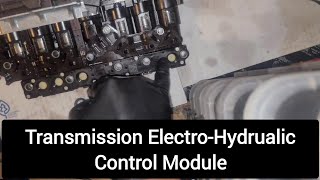
- The most common cause is a failure of the Transmission Electro-Hydraulic Control Module (TEHCM) located inside the transmission oil pan, often due to ruptured laminate discs.
- Repair almost always involves dropping the transmission pan and replacing the entire TEHCM, which then requires vehicle-specific programming.
- Driving with this code can lead to harsh shifting, limp mode, and eventual costly damage to the transmission's mechanical components.
What's Unique About the 2008-2012 Gmc SIERRA DENALI
The GMC Sierra Denali from this era is typically equipped with a 6L80 or 6L90 automatic transmission. A known and widespread issue with these transmissions is the location of the Transmission Control Module (TCM)—also called a TEHCM—inside the transmission oil pan, submerged in fluid. This design makes the integrated pressure switches susceptible to failure. A common failure mode is the rupture of the thin laminate discs that cover the pressure sensor ports on the TEHCM. When these discs tear or delaminate due to heat and pressure cycles, they can no longer properly regulate fluid pressure against the sensor, leading to erratic readings and codes like P0848.
Diagnostic Flowchart
Tap your situation to follow the diagnostic path that matches what you're seeing on this vehicle.
Symptoms You May Notice
- Harsh, erratic, or delayed gear shifts.
- Transmission slipping (engine RPMs rise without an increase in speed).
- Transmission getting stuck in "limp mode" (usually 3rd gear).
- Illuminated Check Engine Light.
- Reduced fuel economy.
- Transmission overheating or warning light.
- Replacing the entire transmission when only the internal TCM/TEHCM is faulty.
- Replacing the high-pressure fluid pump when the issue is purely electrical with the sensor circuit.
Most Likely Causes
- Faulty Transmission Electro-Hydraulic Control Module (TEHCM) 🔴 High Probability → Shop Transmission Assembly The pressure switches are integrated into the TEHCM assembly inside the 6L80/6L90 transmission. They are exposed to constant heat and fluid, leading to failure of the sensor itself or, more commonly, the rupture of the laminate seals covering the pressure ports.
How to confirm: A technician will use a scan tool to monitor live data from the pressure sensor 'B'. A static high voltage reading (near 5V) that doesn't change with gear selection points to an electrical fault. Physical confirmation involves dropping the transmission pan and visually inspecting the TEHCM's laminate discs for tears or ruptures over the sensor ports.
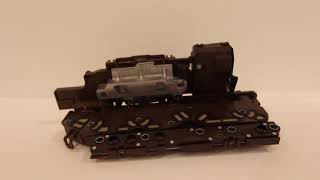
Typical fix: The entire TEHCM is typically replaced as a single unit. Aftermarket companies like Dorman offer remanufactured units. In some cases, specialized shops may offer a repair service for the original TEHCM using a rebuild kit. 🎬 See how to reseal the pressure switches yourself.
Est. part cost: $300-$700 for a new or remanufactured TEHCM - Wiring Harness or Connector Issue 🟡 Medium Probability The internal transmission wiring harness is submerged in hot fluid, which can make wires brittle over time. The main external connector on the transmission case is also susceptible to corrosion, moisture intrusion, or damage from road debris.
How to confirm: Visually inspect the main external transmission connector for bent pins, corrosion, or damage. Test the wiring for continuity and for a short to voltage between the TCM connector and the main vehicle harness. This requires vehicle-specific wiring diagrams and a multimeter.
Typical fix: Repair the damaged section of the wiring harness or replace the faulty connector. Cleaning corroded pins with electrical contact cleaner can sometimes resolve the issue.
Est. part cost: $50-$250 - Low or Contaminated Transmission Fluid ⚪ Low Probability → Shop Transmission Assembly While not a direct cause of a 'circuit high' fault, which is electrical, severely contaminated fluid with clutch material can cause erratic operation and potentially clog small orifices, affecting pressure readings. It often points to a larger mechanical issue.
How to confirm: Check the transmission fluid level and condition. The fluid should be at the correct level, pink/red in color, and not smell burnt. The presence of significant metal or clutch material on the dipstick or in the pan indicates internal wear.
Typical fix: Perform a transmission fluid and filter change. If the fluid is heavily contaminated, this suggests a more severe internal problem may be imminent and a simple fluid change will not fix the P0848 code.
Est. part cost: $100-$250 for fluid and filter
Rare But Worth Checking
- Faulty Powertrain Control Module (PCM): → Shop Engine Control Module (ECM) This is very uncommon. The PCM should only be considered after all other possibilities, including the TCM and wiring, have been exhaustively tested and ruled out.
- Internal Hydraulic Blockage or Stuck Valve: Debris in the transmission fluid can cause a shift valve or other component in the valve body to stick, which could potentially lead to a pressure switch code. This is less common for a 'circuit high' fault but is a possibility.
Diagnosis Steps
- Verify the code is active using a professional-grade OBD-II scanner.
- Check the transmission fluid level and condition. Top off or change if necessary.
- Inspect the external transmission wiring harness and the main 16-pin connector for any visible damage, corrosion, or loose connections.
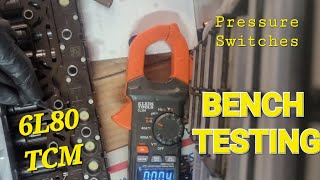
- Using a scan tool, monitor the live data for the Transmission Fluid Pressure Sensor 'B' (often labeled TFP Switch 2). The voltage should change with engine RPM and gear selection. A static high voltage (typically near 5V) confirms the electrical fault. 🎬 Watch: Bench testing the pressure switch electrical circuits.
- If the external wiring is okay, the next step is to drop the transmission oil pan to access the internal components.
- Visually inspect the TEHCM, paying close attention to the small, circular laminate discs on its surface. Look for any tears, holes, or delamination, which is a very common cause of this code.
- Inspect the internal wiring harness and the connector to the TCM/TEHCM for any signs of damage.
- If wiring is good and the laminate discs are ruptured, the TEHCM is faulty and must be replaced or repaired by a specialist.
- After replacement, the new TEHCM module must be programmed to the vehicle using specialized software like GM's GDS2/SPS2.
- Clear all codes, fill with new DEXRON VI fluid, perform the 'Transmission Service Fast Learn' procedure, and conduct a test drive to confirm the repair.
Parts You'll Likely Need
- Transmission Electro-Hydraulic Control Module (TEHCM)
(OEM #ACDelco 24256861 (verify specific application))— This module, located inside the transmission, contains the valve body solenoids, the TCM, and the pressure switches. The pressure switches or their laminate seals are a common failure point, and the entire module is replaced as a unit.
Trusted brands: ACDelco (GM Genuine), Dorman (e.g., 609-000)
OEM price range: $500-$800
Aftermarket price range: $300-$600 - Transmission Fluid and Filter Kit — The transmission pan must be removed for diagnosis and repair, requiring the fluid (DEXRON VI) to be drained and the filter to be replaced.
Trusted brands: ACDelco
OEM price range: $80-$150
Aftermarket price range: $50-$100
Related Codes That Often Appear With This One
- P0700 — P0700 is a generic code indicating the Transmission Control Module (TCM) has stored a fault. It frequently appears alongside specific transmission codes like P0848 to signal the Check Engine Light.
- P0756 — This code for 'Shift Solenoid 'B' Performance/Stuck Off' can appear with P0848. A service manual for a similar platform notes this combination may indicate an open circuit on the pressure switch 2 circuit or a shift valve 2 is stuck in the destroked position.
- P0847 — This code is for 'Transmission Fluid Pressure Sensor/Switch 'B' Circuit Low', the opposite of P0848. Seeing both could indicate an intermittent wiring problem or a failing sensor.
Technical Service Bulletins (TSBs) & Recalls
- PIP4379M - Mentions P0848 as part of a group of DTCs that can occur with a range inhibit condition, pointing towards a broader transmission control issue.
- 16-NA-019 - Provides information on transmission adaptive functions and correcting harsh shifts, which is relevant after a repair like a TEHCM replacement.
- 14-07-30-001D - Details the specific adaptive learning drive cycle procedures required to relearn clutch values after transmission service on 8-speed transmissions, with similar principles applying to the 6-speed.
Platform-Specific Known Issues
- The GM TSB #PIP4379M lists P0848 among a large group of transmission codes that can be caused by a single underlying issue, often related to the TCM or its connections. The bulletin advises starting diagnostics with code P0701 if it is present.
- Other TSBs like 16-NA-019 and 14-07-30-001, while not directly for P0848, address harsh shifting and adaptive learning procedures for GM transmissions. After a TEHCM replacement, performing the 'Transmission Service Fast Learn' procedure is critical for proper shift quality.
Mechanic-Grade Diagnostic Values
- Transmission Line Pressure (at test port) — expected: ~45-80 PSI at idle in gear; up to 300 PSI at Wide Open Throttle (WOT). Failure: Significantly lower or no pressure could indicate a pump or major leak issue. Pressure not responding to RPM/load can indicate a stuck regulator or solenoid issue.
- TFP Sensor 'B' (PS2) Scan Tool Parameter — expected: Should toggle between 'Low' and 'High' (or On/Off) as the transmission shifts and Shift Solenoid 2 is commanded.. Failure: Parameter is stuck 'High' even when the corresponding solenoid (SS2) is commanded ON.
- TFP Sensor Signal Circuit Voltage (at sensor connector) — expected: 5V or 12V reference voltage (depending on specific design) with key on, engine off.. Failure: No voltage or voltage significantly different from the specified reference points to a wiring or TCM issue.
Scan Tool Commands That Help
- GDS2 (or equivalent professional scanner): Transmission Service Fast Learn — This procedure is mandatory after replacing the TEHCM, valve body, or performing any major internal transmission service. It allows the TCM to learn the hydraulic characteristics of the clutches and solenoids to ensure proper shift quality.
- GDS2 (or equivalent professional scanner): Solenoid Activation / Output Control — During diagnosis, a technician can command Shift Solenoid 2 (SS2) ON and watch the live data parameter for TFP Switch 2 (P0848 relates to this switch). If the solenoid is commanded ON but the switch state remains 'High', it helps isolate the fault to the switch, wiring, or TCM.
Wiring & Ground Locations
- Transmission Case Connector (16-pin) — The main external electrical connector on the passenger side of the transmission case.. This is the primary interface between the vehicle's main wiring harness and the internal transmission components, including the TEHCM. It's a common point for corrosion, pin damage, or moisture intrusion that can cause various transmission codes. Pin 5 is Ground and Pin 4 is Battery+.
- Pressure Switch Ground — The pressure switches inside the TEHCM are grounded through the metal base of the pressure switch manifold, which is bolted to the valve body and grounded to the chassis via the transmission case itself.. A 'Circuit High' code like P0848 can be caused by an open or poor ground. While a bad ground at this location is unlikely without other major issues, it confirms the grounding strategy is internal to the transmission.
- TFP Switch 2 (PS2) Signal Circuit — This is an internal circuit within the TEHCM. A service manual identifies the signal circuit for PS2 (related to P0848) as terminal F at the internal connector.. For advanced technicians testing the TEHCM directly, knowing the specific terminal for the faulty switch circuit is critical for pinpoint testing, though most shops will replace the entire module.
OEM Part Supersession History
Multiple older part numbers→ACDelco 24256861— Part consolidation and revision updates by the manufacturer.
Heads up: Part number 24256861 is listed as a replacement for several other numbers including 24256670, 24257038, 24252363, and 19434406. Always verify the correct part number for the specific vehicle VIN, as programming is required and using the wrong base hardware can cause issues.TEHCM with failure-prone laminate discs→Sonnax Pressure Switch Rebuild Kit 124740-70K— This is an aftermarket repair solution, not an OEM supersession. It allows a technician to repair the failed pressure switch laminate discs on the original TEHCM instead of replacing the entire expensive module.
Heads up: This kit only repairs the physical rupture of the laminate discs and seals. It will not fix an electrical failure within the pressure switch or the TEHCM circuit board.
Model Year Variations Within This Range
- 2008-2012: The 6-speed 6L80 transmission was a significant change from the 4-speed (4L60E) used in prior model years. While the TEHCM design is a known weak point across the 2008-2012 range, some anecdotal evidence suggests that the torque converters in later (2014+) 6L80s were more problematic, potentially making the units in this specific year range less prone to that particular failure, though the P0848-causing TEHCM issue remains consistent.
Helpful Videos
We Have This Part in Stock


The information in this article is provided for general reference and educational purposes only. Vehicle specifications, procedures, and part compatibility can vary by production date, trim level, and region. Always consult your vehicle's factory service manual and verify part numbers before purchasing or performing repairs. Safety-critical components such as airbags, seat belts, and braking systems should be installed by a qualified professional.
- Gmc SIERRA DENALI:
- 🧭 Diagnostic Flowchart
- 🎬 Helpful Videos
- 🛍️ Shop This Part
- What's Unique About the 2008-2012 Gmc SIERRA DENALI
- Symptoms You May Notice
- Most Likely Causes
- Rare But Worth Checking
- Diagnosis Steps
- Parts You'll Likely Need
- Related Codes That Often Appear With This One
- Technical Service Bulletins (TSBs) & Recalls
- Platform-Specific Known Issues
- Mechanic-Grade Diagnostic Values
- Scan Tool Commands That Help
- Wiring & Ground Locations
- OEM Part Supersession History
- Model Year Variations Within This Range
- 🎟️ Get 5% Off