

P0848 on 2013-2015 GMC Sierra Denali: Transmission Pressure Sensor Fault Causes and Fixes
P0848 on a 2013-2015 Sierra Denali indicates a high voltage signal from the 'B' transmission fluid pressure sensor. The most common cause is a failed Transmission Electro-Hydraulic Control Module (TEHCM), which houses the sensors and is located inside the transmission pan. This failure is often due to ruptured internal laminate discs or seals. Repair involves replacing the entire TEHCM (a common OEM part number is ACDelco 24256861), which requires programming to the vehicle's VIN.
- P0848 on a 2013-2015 Sierra Denali is an electrical fault, not a mechanical pressure fault.
- The most common cause is a failed Transmission Electro-Hydraulic Control Module (TEHCM) inside the transmission.
- Repair is not a simple DIY job; it requires dropping the transmission pan and programming the new module.
- Do not ignore this code, as continued driving can lead to severe and expensive mechanical transmission damage.
- Always check for other codes, especially P0701, and diagnose them first as per the manufacturer's TSB. [⭐ MANUFACTURER TSB — highest authority] Bulletin #PIP4379M
What's Unique About the 2013-2015 Gmc SIERRA DENALI
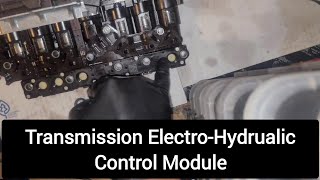
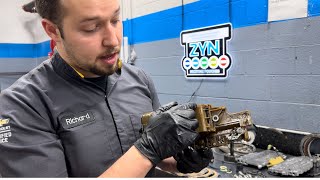
The 2013-2015 GMC Sierra Denali is typically equipped with a 6L80 or 6L90 6-speed automatic transmission. A well-documented characteristic of these transmissions is the design where the Transmission Control Module (TCM) and the pressure sensors are combined into a single unit called the Transmission Electro-Hydraulic Control Module (TEHCM). This entire module is located inside the transmission oil pan, submerged in hot fluid. This design makes the integrated pressure sensors susceptible to failure from heat and pressure cycles 🎬 Watch: Why a pro mechanic replaces the TEHCM during rebuilds., often leading to codes like P0848. A very common failure point is the tearing or delamination of the small rubber/laminate discs that seal the pressure switches, causing fluid to bypass and create incorrect readings.
Diagnostic Flowchart
Tap your situation to follow the diagnostic path that matches what you're seeing on this vehicle.
Symptoms You May Notice
- Harsh, erratic, or delayed shifting
- Transmission getting stuck in one gear (limp mode)
- Check Engine Light or Transmission Warning Light is on
- Inability to shift into gear (range inhibit) [⭐ MANUFACTURER TSB — highest authority] Bulletin #PIP4379M
- Poor fuel economy
- Transmission slipping
- Transmission overheating
- Replacing only an individual pressure sensor, which is not possible on this vehicle as they are integrated into the TEHCM.
- Assuming a major mechanical failure without first performing electrical diagnostics. The code itself points to an electrical circuit fault.
- Replacing the high-pressure fluid pump without first ruling out the more common TEHCM or wiring faults.
Most Likely Causes
- Faulty Transmission Electro-Hydraulic Control Module (TEHCM) 🔴 High Probability → Shop Transmission Assembly The TEHCM is located inside the transmission pan, where constant exposure to heat and pressure cycles can cause the internal pressure sensor laminate discs to rupture or the electronics to fail. These discs are a known weak point and frequently tear, leading to pressure codes.
How to confirm: A professional technician will use a scan tool to monitor live data from the pressure switches. If switch 'B' shows a consistently high voltage (near 5V) regardless of gear selection, and external wiring is confirmed to be good, the TEHCM is the likely culprit. Visual inspection after removing the TEHCM often reveals torn laminate seals under the pressure switches.
Typical fix: Replace the entire TEHCM assembly located on the valve body inside the transmission. The new module must be programmed to the vehicle's VIN. Some specialists offer a service to rebuild the TEHCM by replacing the failed laminate seals with upgraded components, which can be a more affordable alternative.
Est. part cost: $300-$800 - Low or Contaminated Transmission Fluid 🟡 Medium Probability → Shop Transmission Assembly
How to confirm: Check the transmission fluid level and condition. The fluid should be at the correct level and have a reddish color, not brown or black, and should not smell burnt. Debris in the pan is a sign of a larger mechanical issue.
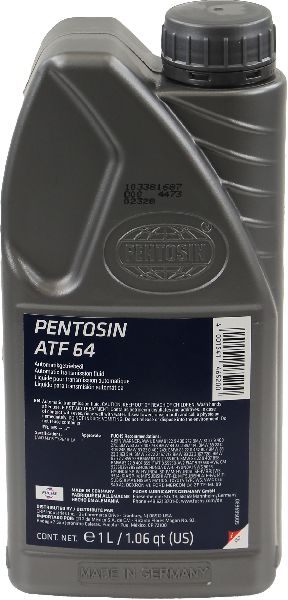
Typical fix: If the fluid is low, top it off with DEXRON-VI rated fluid and check for leaks. If the fluid is dirty or burnt, a fluid and filter change is necessary. However, this is often a symptom of another problem and may not fix the code if a component like the TEHCM has already failed.
Est. part cost: $50-$150 for a fluid and filter kit - Wiring Harness or Connector Issue ⚪ Low Probability
How to confirm: Visually inspect the external transmission wiring harness and the main connector on the case for damage, corrosion, or fluid intrusion. An internal harness issue would be diagnosed after dropping the pan. A technician can test for a short to voltage or an open ground on the sensor signal wire.
Typical fix: Repair or replace the damaged section of the wiring harness or clean/replace the connector.
Est. part cost: $50-$300 depending on the extent of damage
Rare But Worth Checking
- Internal Mechanical Transmission Failure: → Shop Transmission Assembly While the code is electrical, a severe internal mechanical issue (like a stuck valve or failing clutch pack) can sometimes trigger pressure-related codes. This is usually accompanied by burnt fluid and metal debris in the pan.
- Faulty Powertrain Control Module (PCM): → Shop Engine Control Module (ECM) It is very rare for the PCM to be the cause of this specific code, but it's a remote possibility if all other components and wiring have been ruled out.
Diagnosis Steps
- Check for other Diagnostic Trouble Codes (DTCs). If P0700 or P0701 are present, follow the manufacturer's diagnostic procedure for those codes first. [⭐ MANUFACTURER TSB — highest authority] Bulletin #PIP4379M
- Check the transmission fluid level and condition. Ensure the fluid is at the proper level and is not burnt or contaminated with debris.
- Using a professional scan tool, observe the live data for the transmission pressure switches. Check if the voltage for sensor 'B' is stuck high (typically near 5 volts).
- Inspect the main transmission wiring harness and connector on the outside of the transmission for any visible damage, corrosion, or loose connections.
- If external wiring is okay, the next step is to drop the transmission pan to access the TEHCM.
- Inspect the internal wiring harness for any signs of damage.
- If all wiring is intact, the fault is most likely within the TEHCM itself. The TEHCM can be removed from the valve body for inspection. Look for torn or deformed laminate seals under the pressure switches.
- After replacement of the TEHCM, the new module must be programmed to the vehicle's VIN using a specialized scan tool.
- Perform a 'Transmission Service Fast Learn' procedure to allow the new module to adapt to the transmission's clutch characteristics.
Parts You'll Likely Need
- Transmission Electro-Hydraulic Control Module (TEHCM)
(OEM #ACDelco 24256861 (Verify with VIN))— This is the most common failure point for a P0848 code on this platform, as it contains the integrated pressure sensors that fail.
Trusted brands: ACDelco (GM Genuine), Dorman (e.g., 609-000)
OEM price range: $400-$800
Aftermarket price range: $300-$600 - Transmission Fluid and Filter Kit — Required whenever the transmission pan is removed to service internal components like the TEHCM. Must use DEXRON-VI fluid.
Trusted brands: ACDelco
OEM price range: $70-$120
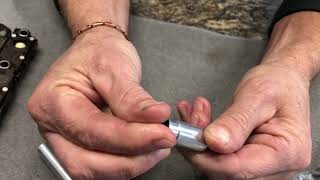
Aftermarket price range: $50-$90 - TEHCM Pressure Switch Laminate Disc/Seal Kit — For advanced DIYers or shops that rebuild TEHCMs, this kit allows for the replacement of just the failed seals, not the entire module. This is a common repair shown in DIY videos.
Trusted brands: Sonnax, TransGo
OEM price range: N/A
Aftermarket price range: $50-$100
Related Codes That Often Appear With This One
- P0700 — This is a general transmission fault code that simply indicates the TCM has stored a specific fault, like P0848. It's an informational code that directs technicians to check the TCM for more details.
- P0701 — As noted in TSB #PIP4379M, this code may appear with P0848. The bulletin advises diagnosing P0701 first, suggesting it may indicate a broader system or control issue. [⭐ MANUFACTURER TSB — highest authority] Bulletin #PIP4379M
- P0756 — This code for 'Shift Solenoid 'B' Performance/Stuck Off' can appear with P0848. A service manual notes this combination may indicate an open circuit on the pressure switch 2 circuit or a stuck shift valve.
- P0847 — This is the opposite code, for 'Sensor 'B' Circuit Low'. Seeing both codes intermittently could point to a wiring harness problem or a sensor that is failing electrically.
Technical Service Bulletins (TSBs) & Recalls
- Bulletin #PIP4379M: Mentions P0848 as part of a group of transmission codes that may set due to various issues and advises diagnosing P0701 first if present. [⭐ MANUFACTURER TSB — highest authority] Bulletin #PIP4379M
- Bulletin #16-NA-019: While not for P0848 specifically, this TSB discusses transmission adaptive functions and correcting harsh shifts, which is a critical procedure to perform after replacing the TEHCM to ensure proper operation.
Platform-Specific Known Issues
- The placement of the TEHCM inside the transmission pan leads to a higher-than-average failure rate for the integrated pressure sensors and control module due to constant heat exposure.
- A common owner experience shared on forums involves the truck suddenly shifting very hard or getting stuck in a high
Mechanic-Grade Diagnostic Values
- Transmission Fluid Pressure (TFP) Sensor Voltage — expected: Varies with gear/pressure. The TCM provides an 8.3–9.3 volt bias to the switch assembly.. Failure: A reading stuck high, near 5 volts, indicates a 'Circuit High' fault like P0848.
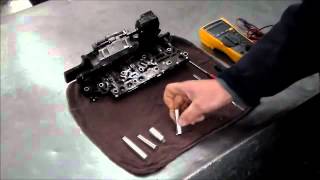
- Pressure Control (PC) Solenoid Resistance — expected: 3.0-5.5 ohms at 70ºF (21ºC).. Failure: A resistance reading outside of this range indicates a faulty solenoid. This test is performed on the TEHCM assembly after removal.
Scan Tool Commands That Help
- GDS2 / Tech 2: Service Fast Learn Adapts — This procedure is mandatory after replacing the TEHCM, valve body, or after any internal transmission service. It allows the TCM to learn the hydraulic and clutch characteristics to ensure proper shift quality.
- GDS2 / Tech 2: Solenoid Activation / Output Control — During diagnosis, a technician can command specific solenoids and pressure switches on or off while monitoring live data to see if they respond correctly. This helps isolate a faulty component within the TEHCM.
- GDS2 / Tech 2: Garage Shift Adapts — After the Service Fast Learn, this procedure helps the TCM fine-tune the adapts for shifting between Reverse, Neutral, and Drive. It can be initiated with a scan tool or performed manually by following a specific sequence of shifts.
Wiring & Ground Locations
- G102 — On the driver's side of the engine block, just above the pan rail and in front of the motor mount.. This is a primary engine control ground. A poor connection here can cause erratic behavior and fault codes from various modules, including the TCM, due to unstable voltage and signal references.
- G103 — On the front corner of the passenger side cylinder head, just below the valve cover.. Like G102, this is a critical engine ground. A loose or corroded G103 can lead to a host of electrical issues and phantom fault codes.
- Transmission Case Connector (X2) — The main 16-pin round electrical connector on the passenger side of the transmission case.. This is the sole electrical link between the vehicle's main wiring harness and the internal TEHCM. All power, ground, and data signals for the pressure sensors pass through this connector. Corrosion or damage here can directly cause a P0848 code.
Real Owner Repair Stories
- TahoeYukonForum.com user (2011 GMC Yukon XL (with 6L80 transmission)) — Check engine light with codes P0848 and P0873.
❌ Tried (didn't work) User went straight to the suspected internal cause.
✅ What actually fixed it The owner dropped the valve body and found the laminated discs/seals for the pressure switches on the TEHCM were damaged. They replaced only the seals with an aftermarket kit (such as Sonnax 124740-30K), which resolved the codes without replacing the entire TEHCM.
OEM Part Supersession History
24256861→19435614— Part number updates due to revisions or manufacturer changes. Functionality remains the same but may include internal improvements.
Heads up: GM issued a technical assistance bulletin for P/N 24256861, placing it on restriction to gather data on failures. When replacing, always verify the correct, most current part number with the vehicle's VIN.24256861→24287420 (and others)— This part number is part of a complex family of TEHCMs. Different numbers like 24287420 may apply to different engine or vehicle applications (e.g., 4-cylinder vs V8 models).
Heads up: Using the wrong TEHCM part number, even if it physically fits, can result in a no-start condition, immediate limp mode, or inability to program. The VIN must be used to select the correct part.
Model Year Variations Within This Range
- 2013-2014: The 2014 model year marked the beginning of the new K2XX platform, while the 2013 model year was primarily the older GMT900 platform. While both often used the 6L80 transmission, there can be differences in wiring, module locations, and other components. However, the TEHCM design and its common failure mode (laminate disc rupture) are consistent across both generations equipped with the 6L80.
Helpful Videos
We Have This Part in Stock

The information in this article is provided for general reference and educational purposes only. Vehicle specifications, procedures, and part compatibility can vary by production date, trim level, and region. Always consult your vehicle's factory service manual and verify part numbers before purchasing or performing repairs. Safety-critical components such as airbags, seat belts, and braking systems should be installed by a qualified professional.
- Gmc SIERRA DENALI:
- 🧭 Diagnostic Flowchart
- 🎬 Helpful Videos
- 🛍️ Shop This Part
- What's Unique About the 2013-2015 Gmc SIERRA DENALI
- Symptoms You May Notice
- Most Likely Causes
- Rare But Worth Checking
- Diagnosis Steps
- Parts You'll Likely Need
- Related Codes That Often Appear With This One
- Technical Service Bulletins (TSBs) & Recalls
- Platform-Specific Known Issues
- Mechanic-Grade Diagnostic Values
- Scan Tool Commands That Help
- Wiring & Ground Locations
- Real Owner Repair Stories
- OEM Part Supersession History
- Model Year Variations Within This Range
- 🎟️ Get 5% Off