

OBD-II Code P0849: Transmission Fluid Pressure Sensor 'B' Circuit Intermittent
What P0849 means, why it triggers, and how to fix it
- Check your transmission fluid first; low or burnt fluid causes over 30% of P0849 codes and costs under $200 to fix.
- Stop driving immediately if you experience limp mode or harsh shifting, as slipping clutches destroy a transmission within 100 miles.
- Perform a 0.2-volt drop test on the main transmission ground strap before replacing parts, as hidden corrosion mimics sensor failure.
- Expect repair costs to range from $250 for an external Honda pressure switch to $1,800+ for a Nissan CVT valve body replacement.
What Does P0849 Mean?
Your Powertrain Control Module (PCM) detects an erratic signal from transmission fluid pressure sensor 'B'. This sensor converts internal hydraulic pressure into an electrical signal, dictating smooth gear shifts. An intermittent signal means the sensor's voltage is unstable—spiking, dropping to zero, or fluctuating unpredictably—leaving the computer blind to actual transmission pressure.
Technical definition: The SAE/OBD-II definition is "Transmission Fluid Pressure Sensor/Switch 'B' Circuit Intermittent". The PCM or Transmission Control Module (TCM) detects the voltage signal from the 'B' circuit fluctuating outside expected parameters based on engine speed, throttle position, and vehicle speed. The sensor must provide a steady voltage corresponding to mechanical fluid pressure; an intermittent fault means the electrical circuit is breaking or shorting.
Can I Drive With P0849?
Yes, But With Caution. You can drive short distances, but doing so risks severe transmission damage. The transmission shifts harshly, slips, enters a 2nd-gear 'limp mode', or fails to shift entirely, creating a safety hazard. Continuing to drive causes rapid internal damage. Transmission slipping overheats the fluid and contaminates it with clutch material, turning a $200 sensor repair into a $4,000 rebuild. Unburnt fuel from engine flares during slipping also destroys the catalytic converter.
Common Causes
- Low, Dirty, or Incorrect Transmission Fluid (Very Common) — Low fluid starves the pump, preventing steady pressure. Old, burnt fluid clogs hydraulic passages and skews sensor readings. Using non-OEM fluid (especially in CVTs) alters hydraulic friction properties, directly triggering pressure codes.
- Damaged Wiring or Connectors (Very Common) — Wires chafe against the chassis, melt from exhaust heat, or corrode at the transmission housing connector. This creates an intermittent open or short circuit, causing the voltage signal to drop out over bumps or during engine vibration.
- Faulty Transmission Fluid Pressure Sensor (TFPS) (Common) — The sensor fails internally from age, thermal cycling, or vibration, sending erratic voltage spikes to the control module even when mechanical pressure is stable.
- Poor Engine/Transmission Ground Connection (Common) — A corroded or loose ground strap between the transmission and the chassis introduces high electrical resistance. This starves the sensor circuit of a clean ground, causing erratic voltage readings across multiple sensors.
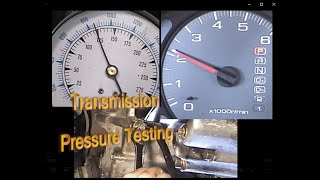
- Failing Valve Body or Solenoid Pack (Less Common) — A sticking valve or failing pressure control solenoid causes actual hydraulic pressure to fluctuate wildly. The sensor accurately reports this erratic mechanical pressure 🎬 Watch: How to perform a transmission pressure test. as an intermittent electrical signal.
- Internal Transmission Mechanical Failure (Rare) — A failing hydraulic pump, worn clutch seals, or internal hydraulic leaks cause massive pressure dropouts. This requires a full transmission rebuild.
Symptoms
- Harsh, Delayed, or Erratic Shifting — The transmission slams into gear, hesitates, or hunts between gears because the computer lacks reliable pressure data to time the shifts.
- Vehicle Enters 'Limp Mode' — The computer locks the transmission in a single gear (usually 2nd or 3rd) to prevent catastrophic internal damage, severely limiting acceleration and top speed.
- Transmission Slipping (Engine Flaring) — Engine RPMs spike between shifts as if the car is briefly in neutral. This indicates a total loss of the hydraulic pressure required to hold the clutch packs.
- Check Engine Light On — The Malfunction Indicator Lamp (MIL) illuminates after the PCM detects the intermittent fault across multiple drive cycles.
- Transmission Overheating (also visible on scanner) — Slipping clutches generate extreme friction. A transmission temperature warning light illuminates on the dash, and the fluid smells burnt.
Diagnostic Flowchart
Tap your situation to follow the diagnostic path that matches what you're seeing on this code.
Common Fixes & Costs
- Transmission Fluid and Filter Change — Parts: $50-$120, Labor: $150-$300, ~1.5 hr book time (DIY)
- Replace Transmission Fluid Pressure Sensor/Switch
— Parts: $50-$150, Labor: $150-$350, ~2.0 hr book time
(Intermediate)
: OEM 28600-RKE-004 (Alt: Standard Motor Products TCS112) - Repair Damaged Wiring or Connectors — Parts: $15-$50, Labor: $150-$400, ~2.0 hr book time (Intermediate)
- Replace Transmission Solenoid Pack/Block
— Parts: $200-$600, Labor: $400-$900, ~3.5 hr book time
(Professional)
: OEM 68456067AB (2019+), 68002342AD (2007-2018) - Replace Transmission Valve Body
— Parts: $500-$1,200, Labor: $800-$1,800, ~4.5 hr book time
(Professional)
: OEM VIN specific (e.g., 31705-29X0B)
DIY vs Professional
- Transmission Fluid and Filter Change 🟢 Beginner
Tools: Socket set, drain pan, funnel, OEM fluid, filter/gasket. - Replace External Pressure Sensor/Switch 🟢 Beginner
Tools: Deep socket set, torque wrench, drain pan. - Repair Damaged Wiring or Connectors 🟢 Beginner
Tools: Multimeter, wire strippers, soldering iron, heat shrink, dielectric grease. - Replace Internal Sensor / Solenoid Pack / Valve Body 🟢 Beginner
Tools: Extensive socket set, inch-pound torque wrench, large drain pan, service manual, advanced scanner for relearn.
Used vs. New Parts: Buying Guide
When a used part is worth it: A used OEM part makes sense only for simple, externally mounted sensors on vehicles with over 150,000 miles. Never buy used internal components like valve bodies.
Donor-vehicle mileage cap: roughly under 80000 miles for the part to have meaningful remaining life.
Donor quality checklist:
- Verify the donor vehicle was not scrapped due to transmission failure.
- Match the part number exactly, including revision letters.
- Avoid donors with visible corrosion on electrical pins.
Decision logic:
- If The part is a complex assembly like a CVT valve body or solenoid pack. → Buy new OEM or high-quality remanufactured. The risk of repeat labor costs is too high.
- If The part is a simple external sensor on an older vehicle. → A used part from a verified low-mileage donor is a reasonable budget option.
Warranty tradeoff: Used parts offer 30-90 day warranties (parts only). New OEM parts offer 1-year warranties covering parts and labor if installed by a dealer.
Worst-case if a used part fails: $800-$1200 to repeat the labor of dropping the transmission pan if a used internal part fails.
What Happens If You Wait — Timeline
- 0-1 month: Intermittent harsh shifts or brief RPM flares. The Check Engine Light toggles on and off. The vehicle occasionally enters limp mode. (MPG impact: 5%% · Added cost: $0-$50 in wasted fuel.)
- 1-3 months: Shifting problems become constant. Transmission slipping generates excess heat, rapidly degrading the transmission fluid. (MPG impact: 10%% · Added cost: $150-$300 for a required fluid flush due to heat degradation.)
- 3-6 months: Constant slipping burns the clutch packs. Abrasive clutch material clogs the valve body. Unburnt fuel from engine flaring damages the catalytic converter. (MPG impact: 20%% · Added cost: $1,200-$3,500 for catalytic converter replacement and escalating transmission damage.)
- 6+ months: Catastrophic internal failure. The transmission loses all forward gears. A complete rebuild or replacement is unavoidable. (MPG impact: 20%+% · Added cost: $3,000-$7,000+ for a full transmission replacement.)
Cost of Not Fixing It
- 0-1 Month: Decline in fuel economy and increasingly harsh shifting. Increased stress on transmission clutches. (Added cost: $50-$150 in wasted fuel.)
- 1-6 Months: Severe slipping overheats the fluid, damaging internal seals. Unburnt fuel from engine flaring destroys the catalytic converter. (Added cost: $1,200-$3,500 for catalytic converter replacement.)
- 6+ Months: Catastrophic internal transmission failure requiring a complete rebuild. (Added cost: $3,000-$7,000+)
Diagnosis Steps
- Check Technical Service Bulletins (TSBs)
Search NHTSA or manufacturer databases for TSBs related to P0849 for your specific year and model. Manufacturers frequently issue updated parts or software flashes for known pressure sensor faults.
Tools: ['Smartphone or Computer'] (Beginner) - Check Transmission Fluid Level and Condition
With the engine warm and idling on a level surface, check the dipstick (if equipped). Fluid must be in the crosshatched area and bright red. Brown, black, or burnt-smelling fluid requires immediate replacement and indicates internal wear.
Tools: ['Shop Towel', 'Funnel (if adding fluid)'] (Beginner) - Analyze Live Data and Freeze Frame
Connect a scan tool and view the freeze frame data to see the exact RPM and speed when the code triggered. Switch to Live Data and monitor the 'TFPS B Voltage' PID. The voltage must rise smoothly with RPM. Erratic jumps or dropouts to 0V confirm an electrical fault.
Tools: ['Advanced OBD-II Scan Tool'] (Intermediate) - Inspect Wiring and Perform a 'Wiggle Test'
Visually trace the harness from the transmission to the PCM. Look for melted insulation or green corrosion at the connector. While monitoring the live sensor voltage on your scanner, vigorously wiggle the wiring harness. If the voltage spikes or drops, you have found the intermittent short/open.
Tools: ['Flashlight', 'Advanced OBD-II Scan Tool'] (Intermediate) - Test the Sensor's Electrical Circuit
Disconnect the sensor. Turn the key ON (engine off). Use a multimeter to probe the harness connector. Verify a steady 5V reference signal and a solid ground. If the 5V reference fluctuates, the wiring to the PCM is compromised.
Tools: ['Digital Multimeter', 'Back-probe Pins'] (Advanced) - Perform a Ground Voltage Drop Test
Place one multimeter lead on the negative battery terminal and the other on the transmission case. With the engine running, a reading above 0.2 volts indicates high resistance in the ground strap, which skews sensor data. Clean the ground contacts to bare metal.
Tools: ['Digital Multimeter', 'Wire Brush'] (Advanced) - Test Sensor Internal Resistance
Measure the internal resistance (Ohms) across the sensor's pins. Compare the reading to the factory service manual specifications. An infinite reading (OL) means the sensor is internally broken; a zero reading means it is shorted.
Tools: ['Digital Multimeter', 'Factory Service Manual'] (Advanced) - Manual Transmission Fluid Pressure Test
Connect a mechanical pressure gauge to the transmission test port. Compare live mechanical pressure to the scanner's electronic reading. If the mechanical gauge shows steady pressure (e.g., 150 PSI) but the scanner shows erratic voltage, the sensor is bad. If the mechanical gauge fluctuates, the valve body or pump is failing.
Tools: ['Transmission Pressure Gauge Set', 'Factory Service Manual'] (Professional)
When This Code Triggers (Freeze-Frame Conditions)
- Engine Coolant Temp: 175-210°F (80-99°C) (The engine is at full operating temperature. Intermittent electrical faults often appear only after components heat soak and expand.)
- Engine RPM: 1500-2500 RPM (Occurs during steady-state cruising when the computer expects a perfectly stable pressure reading for the current gear.)
- Vehicle Speed: 35-55 mph (Triggers at cruising speeds right before or during a gear shift, when pressure changes are critical.)
Related Codes
- P0847 — Indicates 'Circuit Low' (stuck at 0V). P0849 is intermittent. If a wire intermittently shorts to ground, it sets P0849; if permanently shorted, it sets P0847.
- P0848 — Indicates 'Circuit High' (stuck at 5V). If a wire intermittently shorts to power, it sets P0849; if permanently shorted, it sets P0848.
- P0741 — Indicates Torque Converter Clutch failure. The TCM needs stable pressure data to engage the clutch. Fixing the erratic P0849 signal usually resolves P0741.
Climate & Environmental Factors
- Road Salt (Winter Climates): Salt spray accelerates corrosion on wiring connectors and ground straps. This corrosion creates high electrical resistance, directly causing the intermittent signal dropouts that trigger P0849.
- High Humidity / Coastal Areas: Constant moisture degrades rubber connector seals and oxidizes electrical contacts over time, leading to erratic sensor voltage.
How to Talk to a Mechanic About This Code
Say this: "I have a P0849 code and intermittent shifting problems. Please start with a thorough electrical diagnosis of the sensor circuit, including checking the main harness connector and grounds, before recommending internal transmission work."
This directs the technician to follow a logical diagnostic path, starting with common electrical issues, preventing them from immediately quoting a costly transmission rebuild.
Avoid saying:
- 'My transmission is slipping, I think I need a new one.'
- 'Just do whatever you think is necessary.'
Questions to ask before authorizing the repair:
- Did you perform a 'wiggle test' on the wiring harness while monitoring sensor voltage?
- Did you test the sensor's ground circuit for a voltage drop?
- If recommending an internal part, can you show me the pressure readings that prove the external circuit is good?
Where to Take It: Dealer vs Independent vs Chain
- Dealer:
Best for: Vehicles under powertrain warranty., Nissan CVTs requiring specific TCM software relearning after valve body replacement.
Downsides: Highest labor rates., Quick to recommend replacing large assemblies rather than smaller components. (Typical cost: +50% vs. baseline) - Independent Shop:
Best overall fit. A dedicated transmission specialist is highly recommended if the issue is internal.
Best for: Diagnosing wiring issues, ground faults, or external sensor replacements., Dedicated transmission specialists provide dealer-level expertise at lower costs.
Downsides: Diagnostic capabilities vary. Vet shops based on ASE certifications for transmission work. (Typical cost: +0% vs. baseline) - Chain Shop:
Avoid for initial diagnosis of P0849. You risk an expensive misdiagnosis.
Best for: Simple transmission fluid and filter changes.
Downsides: Technician skill varies dramatically., Often upsell customers to full transmission rebuilds., Lack advanced diagnostic tools for intermittent electrical faults. (Typical cost: -10% vs. baseline)
When to Walk Away From the Repair
If the estimated repair cost exceeds 50% of your car's private-party value, seriously consider selling the vehicle.
- Car worth $5000, fix is $2800: Walk away. The repair is over 50% of the car's value.
- Car worth $12000, fix is $1800: Fix it. The repair is 15% of the vehicle's value.
What Scan Tool You Need for This Code
Minimum: An OBD2 scanner with access to live data, specifically for transmission fluid pressure sensor voltage.
A $20 code reader cannot display real-time voltage signals. You must see the signal drop out or spike to confirm an intermittent electrical fault.
Budget: BlueDriver Pro Scan Tool (~$120) — Connects to a smartphone to graph live data, allowing you to watch pressure sensor voltage for erratic behavior.
Mid-range: Foxwell NT510 Elite / Autel MaxiCOM MK808 (~$150-400) — Reads proprietary transmission codes and accesses specific live data PIDs. Offers limited bidirectional controls to test solenoids.
Professional: Autel MaxiSys Series (~$900-2000+) — Provides full bidirectional control to command individual solenoids and performs TCM programming required after replacing a valve body.
Rent vs buy: Auto parts stores loan basic code readers, but you need live data for P0849. Buying a budget live-data scanner is a necessary investment.
How to Clear the Code After You Fix It
- Use an OBD-II scan tool to clear P0849 and any related TCM codes.
- Let the vehicle cool down completely overnight for a true cold start.
- Perform a full drive cycle to allow the TCM to run self-tests and set readiness monitors.
Drive cycle (~20 minutes): Cold start and idle for 3 minutes. Drive in stop-and-go traffic for 5 minutes. Drive at a steady 45-55 mph for 10 minutes. Let the vehicle cool down.
Readiness monitors affected: Comprehensive Component Monitor
Before emissions retest: drive at least 50 miles to fully set monitors.
Watch out for:
- Disconnecting the battery clears the code but erases all readiness monitors, guaranteeing an emissions test failure.
- The code returns immediately if an intermittent wiring short was missed during diagnosis.
Will This Fail Emissions / State Inspection?
Yes — this code typically fails an OBD-II emissions inspection.
- California: An active Check Engine Light for P0849 is an automatic failure. A full drive cycle must be completed post-repair.
- Texas: In emissions-testing counties, an active P0849 fails the OBD portion of the inspection.
Most Commonly Affected Vehicles
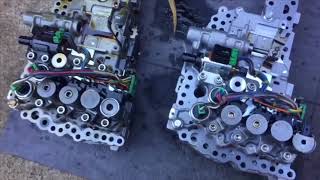
- Nissan Altima, Murano, Rogue, Sentra (2007-2018) — Extremely common in CVTs. P0849 usually indicates a failing valve body, not just a sensor. TSB NTB15-087a mandates valve body replacement.
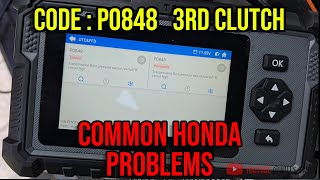
- Honda Accord, Civic, Odyssey, CR-V (2006-2014) — Caused by a failing 3rd clutch pressure switch. This is an inexpensive, externally mounted part that is easy to replace.
- Dodge/Ram Ram 1500/2500/3500 (2007-2024) — Common on 68RFE transmissions. The pressure sensor is integrated into the solenoid pack, requiring the entire block to be replaced.
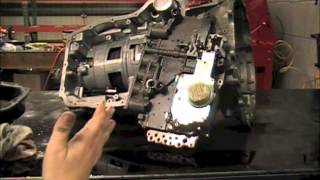
- Chevrolet/GMC Silverado, Sierra, Tahoe (2005-2014) — Relates to a failing internal Pressure Switch Manifold (PSM) on 4L60E or 6L80 transmissions, requiring pan removal.
- Subaru Outback, Forester, Impreza (2010-2018) — On Lineartronic CVTs, this code strongly indicates a failing valve body requiring complete replacement.
Manufacturer-Specific Notes
- Nissan: On CVTs, P0849 is a classic symptom of a failing valve body. Technicians replace the entire assembly rather than individual sensors. Nissan extended the warranty on many CVTs, so check with a dealer first.
- Honda: Honda refers to the 'B' sensor as the '3rd Clutch Pressure Switch'. It is externally mounted on the transmission case, making it a cheap, 30-minute DIY repair.
- Chrysler/Dodge/Ram: In 68RFE transmissions, the pressure sensor is permanently integrated into the main solenoid pack. The entire block must be replaced. 2019+ models use a blue connector that is not backward-compatible.
Real Owner Stories
2011 Honda Odyssey at 140K miles
Check engine light (P0849) and flashing 'D' light. Transmission shifted harshly from 2nd to 3rd gear.
Outcome: Replaced the external switch (Part 28600-RKE-004) in 30 minutes. Cleared the code. Harsh shifting vanished permanently.
Lesson: On Hondas, P0849 is usually a cheap, external switch failure. Always check this before assuming internal damage.
2013 Nissan Altima at 115K miles
Car entered limp mode with P0849. Shifting was erratic.
Outcome: A transmission specialist diagnosed a failed valve body. Replaced the unit and reprogrammed the TCM for $1,800. The car drove normally.
Lesson: On Nissan CVTs, P0849 almost always requires a valve body replacement. Fluid changes will not fix a mechanical valve failure.
2004 Honda Civic at 165K miles
Intermittent P0849, harsh shifting, flickering headlights, and occasional hard starts.
Outcome: Found the main engine-to-chassis ground strap heavily corroded. Replaced the $15 ground cable. All electrical and transmission issues disappeared.
Lesson: A bad ground causes erratic behavior across multiple systems. Always inspect ground straps before replacing sensors.
How to Prevent This Code From Triggering
- Perform scheduled transmission fluid and filter changes. (Every 30,000-60,000 miles.) — Clean fluid maintains correct hydraulic pressure and prevents sludge from clogging the valve body or skewing sensor readings.
- Use only OEM-specified transmission fluid. (Every fluid change.) — Modern transmissions require specific frictional properties. Universal fluids alter hydraulic pressure, triggering sensor codes.
- Inspect and clean main ground straps. (Every 30,000 miles.) — Corrosion creates electrical resistance, starving the transmission electronics of a clean ground and causing erratic sensor signals.
Frequently Asked Questions
What are the most common mistakes when diagnosing P0849?
The biggest mistake is assuming a catastrophic internal failure immediately. Always perform a thorough diagnosis of the fluid, wiring, and grounds before condemning the transmission. Simple electrical issues cause this code frequently.
I replaced the pressure sensor, but the P0849 code came back. What now?
If the code returns, the problem lies in the circuit or a related component. Re-inspect the wiring harness with a 'wiggle test' while monitoring voltage to find an intermittent short. Investigate related causes like a failing solenoid pack or a bad ground connection.
Can a bad ground cause P0849?
Yes, a poor ground connection between the transmission and chassis causes erratic sensor signals and triggers P0849. Ensure the main ground strap is clean, tight, and free of corrosion.
Is it expensive to fix a P0849 code?
Costs range from $150 for a fluid change to over $1,800 for a valve body replacement. Replacing an external sensor typically costs $250-$500. A full transmission rebuild exceeds $3,000.
Where is the transmission fluid pressure sensor 'B' located?
Location varies by vehicle make and model. On many Hondas, it is an external switch screwed into the transmission case. On GM, Ford, and Dodge vehicles, it is usually located inside the transmission oil pan on the valve body.
What's the difference between a pressure 'sensor' and a pressure 'switch'?
A pressure sensor outputs a variable voltage signal that changes smoothly with pressure. A pressure switch is a digital device that toggles on or off at a specific pressure threshold.
Will clearing the code make the problem go away?
No, clearing the code only turns off the check engine light temporarily. The computer re-logs the fault as soon as it detects the intermittent signal fluctuation again. You must repair the underlying mechanical or electrical problem.
Key Takeaways
- Check your transmission fluid first; low or burnt fluid causes over 30% of P0849 codes and costs under $200 to fix.
- Stop driving immediately if you experience limp mode or harsh shifting, as slipping clutches destroy a transmission within 100 miles.
- Perform a 0.2-volt drop test on the main transmission ground strap before replacing parts, as hidden corrosion mimics sensor failure.
- Expect repair costs to range from $250 for an external Honda pressure switch to $1,800+ for a Nissan CVT valve body replacement.
Helpful Videos
Shop the Parts Behind P0849
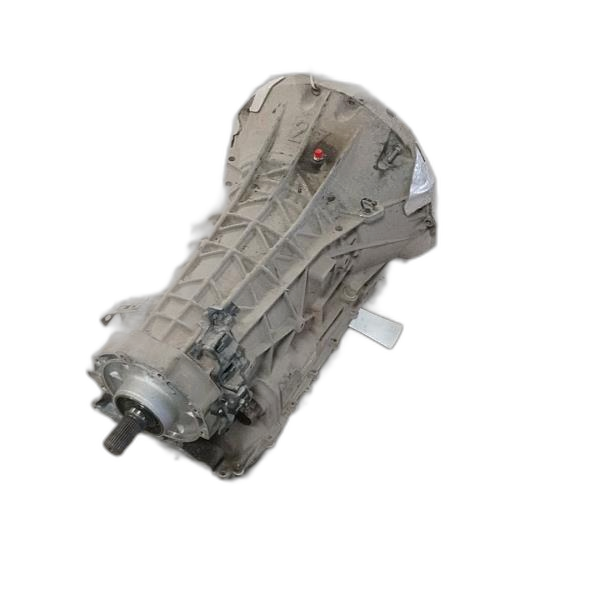
Below are the parts most often responsible for code P0849, ranked by how frequently each one is the actual culprit (per the diagnosis above). Tap any to see what we have for your vehicle.


The information in this article is provided for general reference and educational purposes only. Vehicle specifications, procedures, and part compatibility can vary by production date, trim level, and region. Always consult your vehicle's factory service manual and verify part numbers before purchasing or performing repairs. Safety-critical components such as airbags, seat belts, and braking systems should be installed by a qualified professional.
- 🧭 Diagnostic Flowchart
- 🎬 Helpful Videos
- 🛍️ Shop This Part
- What Does P0849 Mean?
- Can I Drive With P0849?
- Common Causes
- Symptoms
- Common Fixes & Costs
- DIY vs Professional
- Used vs. New Parts: Buying Guide
- What Happens If You Wait — Timeline
- Cost of Not Fixing It
- Diagnosis Steps
- When This Code Triggers (Freeze-Frame Conditions)
- Related Codes
- Climate & Environmental Factors
- How to Talk to a Mechanic About This Code
- Where to Take It: Dealer vs Independent vs Chain
- When to Walk Away From the Repair
- What Scan Tool You Need for This Code
- How to Clear the Code After You Fix It
- Will This Fail Emissions / State Inspection?
- Most Commonly Affected Vehicles
- Manufacturer-Specific Notes
- Real Owner Stories
- 2011 Honda Odyssey at 140K miles
- 2013 Nissan Altima at 115K miles
- 2004 Honda Civic at 165K miles
- How to Prevent This Code From Triggering
- Frequently Asked Questions
- What are the most common mistakes when diagnosing P0849?
- I replaced the pressure sensor, but the P0849 code came back. What now?
- Can a bad ground cause P0849?
- Is it expensive to fix a P0849 code?
- Where is the transmission fluid pressure sensor 'B' located?
- What's the difference between a pressure 'sensor' and a pressure 'switch'?
- Will clearing the code make the problem go away?
- Key Takeaways
- 🎟️ Get 5% Off