

P0856 on 2013-2015 Cadillac ATS: Traction Control Signal Fault Causes & Fixes
On a 2013-2015 Cadillac ATS, code P0856 is almost always caused by a poor electrical connection at the main transmission wiring harness connector (X1). Inspecting, cleaning, and ensuring all pins are seated in this connector, as outlined in GM TSB PIC4740E, is the most common and cost-effective fix before suspecting any failed modules.
- P0856 on a 2013-2015 ATS is a communication code, not a mechanical failure.
- Before buying any parts, your first and most important step is to inspect the transmission X1 connector for corrosion or loose pins, as per TSB PIC4740E.
- This code will almost always appear with other 'U' codes like U0100 and U0121, which confirms a network problem.
- Do not replace expensive modules like the TCM or EBCM until the wiring harness and connectors have been proven to be in perfect condition.
What's Unique About the 2013-2015 Cadillac ATS
For this generation of Cadillac ATS, the P0856 code is rarely due to a failed control module. Instead, it's a well-documented symptom of a physical connection issue. GM Technical Service Bulletin #PIC4740E (and its later revisions) specifically points to the main transmission wiring harness connector (X1) as the primary culprit. Corrosion or unseated pins in this single, large, 16-pin round connector on the driver's side of the transmission can disrupt the entire communication network, triggering P0856 along with a cascade of other communication codes (U-codes).
Diagnostic Flowchart
Tap your situation to follow the diagnostic path that matches what you're seeing on this vehicle.
Symptoms You May Notice
- Check Engine Light illuminated
- Traction Control/StabiliTrak warning light illuminated
- "Service Traction Control" or "Service StabiliTrak" message on the driver information center
- Vehicle may stall, not start, or be hard to start.
- Erratic, harsh, or lurching transmission shifting.
- Inability to communicate with the ECM or TCM with a scan tool.
- Vehicle may enter a reduced power or "limp mode".
- Door locks may cycle while driving.
- Replacing the Transmission Control Module (TCM) or Electronic Brake Control Module (EBCM) without first thoroughly inspecting the X1 connector and related wiring harness. This is the most common and expensive misdiagnosis for this code on this platform, as explicitly warned against by GM's own service bulletin.
Most Likely Causes
- Poor Connection at Transmission Connector X1 🔴 High Probability → Shop Transmission Assembly As documented in TSB #PIC4740E, the pins in this 16-pin connector can become unseated, loose, or corroded, interrupting critical CAN bus communication signals between the TCM, ECM, and EBCM. Its location on the side of the transmission makes it susceptible to moisture and vibration.
How to confirm: Locate the large, round X1 connector on the driver's side of the transmission case. Disconnect it and visually inspect for corrosion (green/white powder), moisture, or bent pins. Gently tug on each individual wire on both sides of the connector to ensure the pins are fully seated and locked in place. A side load on the wires can give a false sense of security.
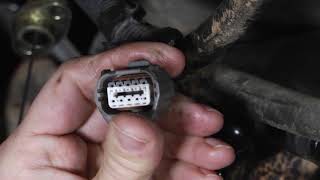
Typical fix: Clean the connector terminals with electrical contact cleaner, apply dielectric grease to seal out moisture, and ensure the connector is fully seated and locked. 🎬 Watch: Common mistakes when seating transmission electrical connectors. If pins are loose or the connector housing is damaged, a pigtail or terminal repair is necessary.
Est. part cost: $10-$60 - Chafed or Damaged Wiring Harness 🟡 Medium Probability TSB #PIC4740E specifically mentions inspecting the harness for chafing at the securing bracket on the passenger side of the transmission bell housing on the ATS. The harness can rub against this bracket, eventually wearing through the insulation and causing a short.
How to confirm: Visually inspect the wiring harness that runs to the transmission, paying close attention to the securing bracket on the passenger side where the transmission bell housing attaches to the engine block. The harness should hang below this bracket.
Typical fix: Repair any damaged wires using solder and heat-shrink tubing for a durable, insulated connection. Secure the harness away from the bracket to prevent future chafing, ensuring it hangs below the bracket as intended.
Est. part cost: $5-$25 - Corroded Chassis Ground ⚪ Low Probability On many GM platforms, critical grounds for control modules (like the EBCM and ECM) are located in areas exposed to road salt and moisture, such as behind front wheel wells or on the engine block, leading to corrosion and high resistance.
How to confirm: Locate the main chassis grounds for the EBCM and ECM (consult a service manual for exact locations, such as G101, G104, or G105) and inspect for rust, looseness, or frayed wires.
Typical fix: Remove the ground bolt/nut, clean the terminal and the frame mounting point to bare metal, and re-secure it tightly. Apply a protective coating or dielectric grease to prevent future corrosion.
Est. part cost: $1-$10
Rare But Worth Checking
- Faulty Electronic Brake Control Module (EBCM): → Shop ABS Control Module This is a rare cause. This module should only be replaced after all wiring, connector, and ground issues have been definitively ruled out. Misdiagnosing this is a costly mistake.
- Faulty Transmission Control Module (TCM): → Shop Transmission Assembly Extremely rare. The TCM is often blamed, but the problem is almost always the wiring or connector leading to it. The TSB lists a host of codes that can appear when the TCM can't communicate. [Bulletin #PIC4740E] On some models, the TCM is located inside the wheel well, requiring removal of the wheel and liner to access.
- Faulty Wheel Speed Sensor: → Shop ABS Wheel Speed Sensor While a bad wheel speed sensor can trigger StabiliTrak warnings, it's less commonly the primary cause for a P0856 code specifically. It will typically be accompanied by other ABS-specific codes. A frayed wire to the sensor is a possible cause.
Diagnosis Steps
- Scan all vehicle modules for fault codes. Note all 'U' (communication) codes present alongside P0856, as they strongly suggest a network-wide issue.
- Reference TSB #PIC4740E or its latest revision for a list of associated codes and diagnostic direction.
- Disconnect the negative battery terminal.
- Locate and disconnect the transmission X1 connector. It's a large, round, 16-pin connector on the driver's side of the transmission case.
- Thoroughly inspect both halves of the connector for any signs of corrosion (green/white powder), moisture, or backed-out/unseated pins.
- Gently pull on each individual wire going into the connector to ensure the terminal is securely crimped and locked in place. Do not just look; physically test each wire.
- Inspect the wiring harness near the passenger side transmission bell housing for any signs of chafing or damage, particularly at the metal securing bracket.
- If no issues are found, locate and check the main chassis ground points for the ECM and EBCM for corrosion or looseness.
- If all wiring and connections are confirmed to be good, a more advanced diagnosis with an oscilloscope or a high-end scan tool is needed to test CAN bus network integrity directly. This step is best left to a professional.
- After any repairs, clean the connector with contact cleaner, apply dielectric grease, clear all codes, reconnect the battery, and perform a test drive to verify the repair.
Parts You'll Likely Need
- Transmission Wiring Harness Connector Pigtail
(OEM #ACDelco PT2712 (GM 13584094))— If the original X1 connector is damaged by corrosion, has broken locking tabs, or pins are too loose to be re-seated, a replacement pigtail is needed to splice in a new, secure connector.
Trusted brands: ACDelco, Dorman
OEM price range: $40-$80
Aftermarket price range: $20-$50 - Electrical Contact Cleaner — Essential for cleaning corrosion from connector pins without causing damage or leaving residue.
Trusted brands: CRC, WD-40 Specialist
OEM price range: $8-$15
Aftermarket price range: $8-$15 - Dielectric Grease — Applied to the connector after cleaning to prevent future moisture intrusion and corrosion, which is the root cause of the problem.
Trusted brands: Permatex, ACDelco
OEM price range: $5-$15
Aftermarket price range: $5-$15
Related Codes That Often Appear With This One
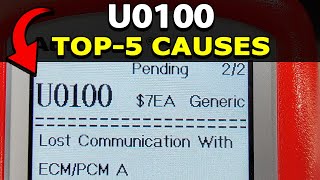
- U0100 — Lost Communication With ECM/PCM. 🎬 See the top 5 causes for the U0100 communication code. This code is listed in TSB #PIC4740E and indicates the network communication failure central to the P0856 fault on this vehicle.
- U0121 — Lost Communication With Anti-Lock Brake System (ABS) Control Module. Since traction control is managed by the ABS module (EBCM), this code is a common partner to P0856 when the X1 connector is faulty.
- P0700 — Transmission Control Module (TCM) Requested MIL Illumination. This is a general code indicating the TCM has stored a fault (like the communication issue causing P0856) and has asked the ECM to turn on the Check Engine Light.
- U0073 — Control Module Communication Bus "A" Off. This is another code cited in TSB #PIC4740E that points directly to a major network communication breakdown, often originating from the X1 connector issue.
- U0101 — Lost Communication with TCM. This code directly points to the loss of signal from the transmission controller, which is the root cause when the X1 connector fails. It is also listed in TSB PIC4740E.
Technical Service Bulletins (TSBs) & Recalls
- PIC4740E: Addresses a no-start, stalling, or multiple communication DTCs (including P0856, U0100, U0121, etc.) and directs technicians to inspect the transmission X1 connector for unseated pins and the harness for chafing. This bulletin has been superseded by newer versions (like PIC4740F) but the core advice remains the same.
Platform-Specific Known Issues
- A safety recall (GM #14179) was issued for 2013-2014 ATS models for a transmission shift cable that may not be fully seated, which could prevent the vehicle from being placed in Park. While not directly causing P0856, it highlights the sensitivity of transmission-related connections on this vehicle.
- Owner experiences shared on Reddit forums for the Cadillac ATS frequently mention "Service Stabilitrak" messages appearing due to various electrical issues, including bad coil packs or frayed wheel speed sensor wires, though the P0856 code specifically points strongly towards the TSB-documented harness/connector issue.
Mechanic-Grade Diagnostic Values
- High-Speed CAN Bus Network Resistance — expected: Approximately 60 Ω. Failure: A reading significantly higher or lower than 60 Ω (e.g., 120 Ω suggests an open circuit or a missing termination resistor; <60 Ω suggests a short between CAN lines or an extra resistor).
- High-Speed CAN Bus Voltage (Recessive State) — expected: Approximately 2.5 V on both CAN-H and CAN-L lines.. Failure: Voltages significantly deviating from 2.5V when no messages are being sent.
- High-Speed CAN Bus Voltage (Dominant State) — expected: CAN-H rises to ~3.5 V and CAN-L drops to ~1.5 V.. Failure: Lines do not switch to these approximate voltages during communication, indicating a bus or module issue. An oscilloscope is required for accurate measurement.
Scan Tool Commands That Help
- GM GDS2 (Global Diagnostic System 2): Live Data Monitoring & Bidirectional Controls — After checking for codes, a technician would use GDS2 to monitor the live data stream from the EBCM and ECM. They would look for parameters related to 'Traction Control State' or 'Torque Request' to see if the signal is present, absent, or invalid. Bidirectional controls can also be used to command other modules on the same network (like door locks, which TSB PIC4740E notes can act erratically) to help determine if the entire network is unstable.
Wiring & Ground Locations
- X1 Connector — Large, round, 16-pin connector on the driver's side of the transmission case.. This is the primary failure point identified in TSB PIC4740E. It carries critical CAN bus signals between the TCM, ECM, and other modules.
- Harness Chafe Point — At the harness securing bracket on the passenger side of the transmission bell housing where it attaches to the engine block.. TSB PIC4740E specifically calls out this location for potential harness chafing, which can short out communication lines.
- G101 — Chassis ground located above the left (driver's side) headlight.. This is a primary ground point for the front of the vehicle, providing a ground path for the ECM and other components. A poor connection here can cause widespread electrical issues.
- G105 — Chassis ground in the engine compartment, often near the left hood hinge area.. Provides a ground path for various engine compartment modules and sensors.
- G104 / G109 — Engine block grounds, typically located on the front of the right cylinder head (V6) or lower rear of the cylinder head (4-cyl).. A bad engine-to-chassis ground can cause voltage potential differences between modules, disrupting sensitive network communications.
- G302 — Interior ground located at the right (passenger side) kick panel.. This is a ground point for several interior modules, including the Body Control Module (BCM), which acts as a gateway for communication networks.
Real Owner Repair Stories
- Reddit user @gregs1027 (2013 Cadillac (similar platform)) — ABS and StabiliTrak warning lights would come on intermittently, then stay on permanently.
❌ Tried (didn't work) Resetting the code with a basic OBD reader.
✅ What actually fixed it A better scan tool identified a fault with the front passenger wheel speed sensor. A visual inspection revealed the sensor's wire was nearly cut in two. Replacing the sensor and its wire ($40 part) resolved all the warning lights.
Model Year Variations Within This Range
- 2015: The 2015 model year received a mid-cycle refresh that included a new front-end design and updated technology, such as OnStar with 4G LTE and an enhanced Cadillac User Experience (CUE) system. While the core components causing P0856 are the same, these additions increase the number of modules on the vehicle's communication networks, which could potentially add complexity to diagnosing network-wide faults.
Helpful Videos
We Have This Part in Stock

The information in this article is provided for general reference and educational purposes only. Vehicle specifications, procedures, and part compatibility can vary by production date, trim level, and region. Always consult your vehicle's factory service manual and verify part numbers before purchasing or performing repairs. Safety-critical components such as airbags, seat belts, and braking systems should be installed by a qualified professional.
- Cadillac ATS:
- 🧭 Diagnostic Flowchart
- 🎬 Helpful Videos
- 🛍️ Shop This Part
- What's Unique About the 2013-2015 Cadillac ATS
- Symptoms You May Notice
- Most Likely Causes
- Rare But Worth Checking
- Diagnosis Steps
- Parts You'll Likely Need
- Related Codes That Often Appear With This One
- Technical Service Bulletins (TSBs) & Recalls
- Platform-Specific Known Issues
- Mechanic-Grade Diagnostic Values
- Scan Tool Commands That Help
- Wiring & Ground Locations
- Real Owner Repair Stories
- Model Year Variations Within This Range
- 🎟️ Get 5% Off