

P0856 on 2006-2011 Cadillac STS: Traction Control Signal Fault Causes and Fixes
On a 2006-2011 Cadillac STS, code P0856 is most often caused by a wiring issue at the main transmission connector (X1), as noted in a GM Technical Service Bulletin. Inspecting and cleaning this connector for corrosion or unseated pins is the most likely fix and should be the first step.
- P0856 on a 2006-2011 Cadillac STS means there's a communication problem between the brake control module and the engine control module regarding traction control.
- Before suspecting expensive modules, ALWAYS inspect the transmission's main X1 electrical connector for corrosion or damage, as this is a known issue documented in GM TSB #PIC4740E.
- Other codes like U0100, U0121, and P0700 are strong indicators that the X1 connector is the root cause.
- A thorough cleaning of the X1 connector with electrical contact cleaner and applying dielectric grease is the most common and cost-effective fix.
- If the connector is clean, check chassis grounds and wiring harnesses for damage before considering module replacement.
What's Unique About the 2006-2011 Cadillac STS
For this specific generation of Cadillac STS, which is built on the GM Sigma platform, there is a well-documented issue outlined in GM Technical Service Bulletin #PIC4740E. It points to the transmission's X1 connector as a common source of communication failures between various modules. This connector's location makes it susceptible to moisture and corrosion, which can lead to P0856 and a host of other seemingly unrelated trouble codes. This makes a simple connector inspection the critical first step in diagnosis, potentially saving significant time and money on unnecessary module replacements.
Diagnostic Flowchart
Tap your situation to follow the diagnostic path that matches what you're seeing on this vehicle.
Symptoms You May Notice
- Service Traction Control message
- Service StabiliTrak message
- Traction Control and/or ABS warning lights illuminated
- Traction control system is disabled and does not function
- Possible harsh or erratic transmission shifting
- In rare cases, the vehicle may not start
- Reduced engine power or 'limp mode'
- Replacing the wheel speed sensors. While faulty wheel speed sensors can cause traction control issues, they typically set their own specific codes (C-codes) and are not the direct cause of P0856, which is a communication error between modules.
- Replacing the traction control ON/OFF switch. A faulty switch is a possible cause on some vehicles, but for the STS, the TSB points strongly toward a wiring/connector issue as the primary cause.
Most Likely Causes
- Corroded or Damaged Transmission X1 Connector 🔴 High Probability → Shop Transmission Assembly As identified in TSB #PIC4740E, this specific connector is a known weak point for corrosion, water intrusion, or unseated pins/terminals, leading to widespread communication faults.
How to confirm: Visually inspect the transmission's main round X1 connector, located on the driver's side of the transmission. Disconnect it and check for any signs of green or white corrosion, bent pins, or water intrusion. Gently tug on each wire to ensure the pins are fully seated.
Typical fix: Clean the connector terminals thoroughly with a specialized electrical contact cleaner and a small brush. Apply a small amount of dielectric grease upon reassembly to prevent future moisture intrusion. If pins are damaged or unseated, the connector or terminal may need to be repinned or replaced.
Est. part cost: $5-$25 for contact cleaner, or $50-$150 for connector pigtail replacement. - Wiring Harness Damage 🟡 Medium Probability Wiring that runs near moving parts or is exposed to the elements can become chafed or corroded over time. On some GM trucks with similar issues, a common failure point is the main ground connection to the frame, located behind the driver's side front wheel, which is susceptible to road salt and corrosion.
How to confirm: Perform a continuity and resistance test on the wires for the traction control request circuit between the EBCM and the ECM. Visually inspect the harness for chafing, especially where it is secured to the engine or chassis.
Typical fix: Repair the broken or shorted section of the wire and protect it from future damage using loom or better routing.
Est. part cost: $10-$30 for wiring repair supplies. - Faulty Electronic Brake Control Module (EBCM) ⚪ Low Probability → Shop ABS Control Module
How to confirm: This is typically diagnosed by exclusion. If the wiring, grounds, and connectors are confirmed to be good, the EBCM is the next likely culprit. Requires advanced scan tools to confirm communication attempts and internal faults.
Typical fix: Replace the EBCM. This often requires programming to the vehicle's VIN.
Est. part cost: $200-$500 for a remanufactured unit, $600+ for a new OEM unit.
Rare But Worth Checking
- Faulty Powertrain Control Module (PCM/ECM): While rare, the PCM can be the source of the fault. This should only be considered after all other possibilities, including wiring, grounds, the X1 connector, and the EBCM, have been thoroughly ruled out.
- Faulty Wheel Speed Sensor: → Shop ABS Wheel Speed Sensor A failing wheel speed sensor can cause StabiliTrak and ABS warnings, but it usually sets its own specific C-code. However, erratic data from a sensor could, in some cases, lead to communication errors like P0856 if the EBCM cannot process the signal correctly.
Diagnosis Steps
- Connect a professional scan tool capable of reading codes from all modules (Engine, Transmission, ABS/Brakes).
- Record all present DTCs. Note if any other codes from TSB #PIC4740E are stored, such as U0073, U0100, U0121, P0700, P2544 or C0561, as this strongly indicates the X1 connector issue.
- Following TSB #PIC4740E, locate and disconnect the large, round transmission X1 connector on the driver's side of the transmission housing.
- Carefully inspect both the male and female sides for corrosion (green/white powder), moisture, or damaged/backed-out pins. Use a flashlight for a clear view.
- If corrosion is found, clean the terminals thoroughly with electrical contact cleaner and a small, soft brush (like a terminal cleaning brush or toothbrush). Ensure all residue is removed.
- Apply a small amount of dielectric grease to the connector seal upon reassembly to prevent future moisture intrusion.
- If the connector is clean, gently tug on each wire leading into the connector to check for loose or unseated terminals.
- If the X1 connector is good, inspect the main chassis ground points, particularly G101 and G110 on the frame rails, as these are known to corrode on GM vehicles.
- If no visible issues are found, use a digital multimeter to check for continuity on the traction control request signal wire between the EBCM and the ECM. Check for shorts to ground or power.
- If wiring and connectors are confirmed to be good, the fault likely lies within the EBCM or, more rarely, the ECM. This requires advanced diagnostics and should be performed by a professional.
- After any repairs, clear all DTCs and perform a test drive, including some turns, to ensure the code does not return and the StabiliTrak system functions correctly.
Parts You'll Likely Need
- Electrical Contact Cleaner — Often, the only 'part' needed is to clean the corrosion from the transmission X1 connector as per TSB #PIC4740E.
Trusted brands: CRC, WD-40 Specialist
Aftermarket price range: $5-$15 - Electronic Brake Control Module (EBCM)
(OEM #25874822 (example for 2005-2008 models, verify with VIN))— If wiring and connectors are good, the EBCM is the most likely module to have failed, as it is responsible for sending the traction control signal.
Trusted brands: ACDelco (OEM), Dorman (Remanufactured)
OEM price range: $600-$800
Aftermarket price range: $200-$500 - Transmission Connector Pigtail — If the X1 connector body or terminals are physically damaged beyond cleaning or repair, a replacement pigtail will be needed to splice into the harness.
Trusted brands: ACDelco, Dorman
OEM price range: $75-$150
Aftermarket price range: $40-$90
Related Codes That Often Appear With This One
- U0073 — Control Module Communication Bus 'A' Off
- U0100 — Lost Communication With ECM/PCM 'A'
- U0121 — Lost Communication With Anti-Lock Brake System (ABS) Control Module
- P0700 — Transmission Control System (MIL Request)
- C0561 — System Disabled Information Stored
- P2544 — Transmission Torque Request Circuit
Technical Service Bulletins (TSBs) & Recalls
- PIC4740E: Addresses multiple communication DTCs (P0856, U0100, U0121, etc.) stemming from issues with the transmission X1 connector on 2006-2011 STS and other GM models. Instructs technicians to inspect and repair this connector first.
Platform-Specific Known Issues
- TSB #PIC4740E documents a known issue where communication codes, including P0856, can be caused by a poor connection at the transmission X1 connector. This should be the first place to inspect.
- Owners on forums report that StabiliTrak/Traction Control warnings on these platforms can also be triggered by seemingly unrelated issues like faulty camshaft actuators, highlighting the sensitive nature of the vehicle's electronic systems.
Mechanic-Grade Diagnostic Values
- Resistance across High-Speed GMLAN Bus — expected: Approximately 60 ohms (+/- 5 ohms). Failure: A reading of ~120 ohms indicates an open circuit or a module is offline. A reading significantly less than 60 ohms indicates the bus wires are shorted together.
- GMLAN Bus Voltage (Key ON, Engine OFF) — expected: Approximately 2.5V on both GMLAN High (+) and GMLAN Low (-) circuits at rest.. Failure: During communication, the High line should be driven ~1V higher and the Low line ~1V lower. A circuit shorted to voltage will read over 4.5V, while a short to ground will read 0V.
Scan Tool Commands That Help
- GM Tech 2: Special Functions > ABS/TC/ESP > Steering Angle Sensor Calibration — Required after replacing the Electronic Brake Control Module (EBCM) to calibrate the steering angle and yaw rate sensors, which are critical inputs for the StabiliTrak system.
- GM Tech 2: Service Programming System (SPS) — Used to program a new or replacement EBCM with the correct software and VIN for the vehicle. This is a necessary step for the module to communicate correctly with other modules on the GMLAN.
- GM Tech 2: Special Functions > Automated Bleed — While not directly for P0856, this function is used after replacing the EBCM/Brake Pressure Modulator Valve to cycle the internal solenoids and purge air from the hydraulic unit.
Wiring & Ground Locations
- EBCM (Electronic Brake Control Module) — Located in the right front corner of the engine compartment, behind the right wheel well area.. The EBCM is the source of the traction control request signal. Its wiring and ground connections are critical for communication with the ECM.
- ECM (Engine Control Module) - 4.6L V8 — On the left front frame rail, below the left headlamp assembly.. The ECM is the destination for the traction control request signal. A poor connection or ground at this module can prevent it from receiving the signal from the EBCM.
- ECM (Engine Control Module) - 3.6L V6 — Front of the engine, on the right valve cover.. The ECM is the destination for the traction control request signal. A poor connection or ground at this module can prevent it from receiving the signal from the EBCM.
- G101 — Near the left front strut tower, at the bottom of the inside fender well.. This is a primary engine bay ground point. Corrosion here can cause a variety of communication and module errors.
- G110 — On the right front frame rail, near the right front strut tower.. This ground is physically close to the EBCM and serves as a ground point for it. Corrosion or a loose connection here can directly impact EBCM function and communication.
- Data Link Connector (DLC) — Under the lower left side of the dash, near the steering column.. This is the primary diagnostic port. Technicians can measure GMLAN bus resistance directly at pins 6 and 14 to quickly assess the health of the entire communication network.
Model Year Variations Within This Range
- 2005-2008 vs 2008-2011: The EBCM (Brake Pressure Modulator Valve Assembly) part numbers differ for the 2008 model year, which coincides with the vehicle's mid-cycle refresh. Pre-refresh models (2005-2008) may use a different EBCM than post-refresh models (2008-2011). It is critical to verify the correct part number by VIN before ordering a replacement.
Used OEM Parts in Stock
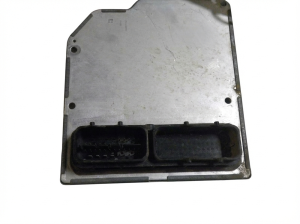
New Aftermarket Parts Available

The information in this article is provided for general reference and educational purposes only. Vehicle specifications, procedures, and part compatibility can vary by production date, trim level, and region. Always consult your vehicle's factory service manual and verify part numbers before purchasing or performing repairs. Safety-critical components such as airbags, seat belts, and braking systems should be installed by a qualified professional.
- Cadillac STS:
- 🧭 Diagnostic Flowchart
- 🛍️ Shop This Part
- What's Unique About the 2006-2011 Cadillac STS
- Symptoms You May Notice
- Most Likely Causes
- Rare But Worth Checking
- Diagnosis Steps
- Parts You'll Likely Need
- Related Codes That Often Appear With This One
- Technical Service Bulletins (TSBs) & Recalls
- Platform-Specific Known Issues
- Mechanic-Grade Diagnostic Values
- Scan Tool Commands That Help
- Wiring & Ground Locations
- Model Year Variations Within This Range
- 🎟️ Get 5% Off