

P0868 on 2007-2014 Nissan Maxima: CVT Low Fluid Pressure Causes and Fixes
On a 2007-2014 Nissan Maxima, P0868 almost always indicates a problem with the Continuously Variable Transmission (CVT), usually low fluid pressure. The most common fix for the 2009-2014 models is replacing the CVT valve body, which can cost $1,000-$2,500. Less severe cases may only require a CVT fluid and filter change. In some rare cases on the 6th generation, the cause can be electrical, such as a faulty alternator.
- P0868 on a 2007-2014 Maxima is a serious code indicating low pressure in the CVT, often leading to 'limp mode'.
- Do not continue driving, as this can cause complete transmission failure.
- While low or dirty fluid can be the cause, the most common major repair is replacing the CVT valve body, especially on 2009-2014 models.
- Any replacement of the valve body or CVT requires reprogramming with a Nissan-specific scan tool.
- Before condemning the transmission, have the vehicle's charging system checked for erratic voltage, as this can sometimes mimic transmission failure symptoms.
What's Unique About the 2007-2014 Nissan Maxima
The 2007-2014 Maxima range spans two generations, both using CVTs that are known for this issue. The 7th generation (2009-2014), equipped with the Jatco RE0F10A (also called JF011E) transmission, is particularly susceptible to failures within the transmission's valve body. The solenoids on the valve body can fail, or the flow control valve can stick due to debris, causing a loss of pressure control. These failures are so common that valve body replacement is a frequent and well-documented repair. Unlike many other vehicles, a simple fluid change often isn't enough to fix a persistent P0868 on these Maximas once symptoms appear.
Generation note: This range covers the end of the 6th generation (2007-2008) and the entire 7th generation (2009-2014). Both use a CVT, but the 7th generation (with the RE0F10A transmission) is more widely known for P0868 issues related to the valve body. The 6th generation uses a similar Jatco CVT (RE0F09A/B) and can also experience this code, but causes may also include unique electrical issues, such as a faulty alternator connection causing voltage spikes that trigger P0868 and an ABS voltage code (C1109).
Symptoms You May Notice
- Check Engine Light is on
- Vehicle enters 'limp mode' (drastically reduced acceleration)
- Shuddering, vibrating, or chattering, especially from a stop.
- Engine RPMs flare or surge without a corresponding increase in speed
- Whining or humming noise from the transmission area.
- Inability to 'shift' or change ratios, feeling stuck in a low gear.
- Complete loss of movement in Drive or Reverse.
- High transmission fluid temperature.
- Replacing only the pressure sensor when the fault is in the valve body or is due to clogged filters.
- Assuming the transmission is completely failed without first checking fluid level/condition and scanning for specific pressure data.
- Ignoring electrical problems like a faulty alternator that can mimic transmission symptoms.
- Replacing the valve body when an ill-fitting aftermarket internal filter is the actual cause of fluid starvation.
Most Likely Causes
- Low or Degraded CVT Fluid 🟡 Medium Probability CVTs are very sensitive to fluid condition and level. High operating temperatures can break down the fluid over time, reducing its ability to create hydraulic pressure. The fluid is the hydraulic medium, and if it's low or worn out, pressure will suffer.
How to confirm: Check the CVT fluid level and condition. The fluid should be at the correct level and be a translucent green (for NS-2) or blue/green (for NS-3), not dark brown or black. Note: These CVTs do not have a traditional dipstick; checking the level is a specific procedure involving a small locking tab on the dipstick tube that must be released.
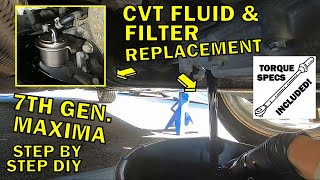
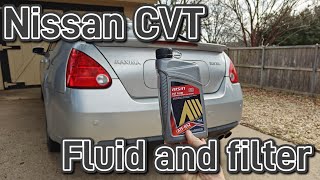
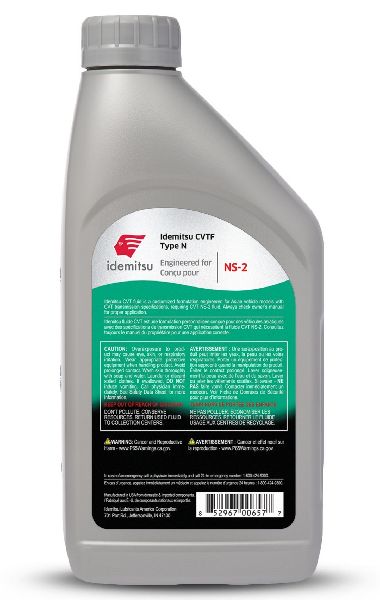
Typical fix: Perform a CVT fluid drain and fill, or a full fluid exchange. It is critical to use only the specified Nissan CVT fluid (NS-2 for earlier models, NS-3 for later ones).
Est. part cost: $100-$200 - Faulty CVT Valve Body 🔴 High Probability → Shop Transmission Valve Body This is the most common major failure for this code on 7th-gen Maximas. The solenoids on the valve body can fail, or the flow control valve can stick due to debris, causing a loss of pressure control. Aftermarket companies like Sonnax produce kits to address these specific wear points.
How to confirm: A professional diagnosis with a scan tool that can read Nissan transmission data is needed. The mechanic will compare commanded secondary pressure ('CMD SEC PRESS') to actual secondary pressure ('SEC PRESS'). A large discrepancy points to the valve body or internal pump.
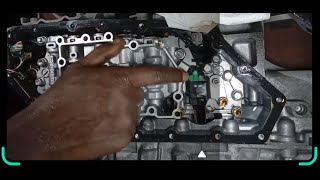
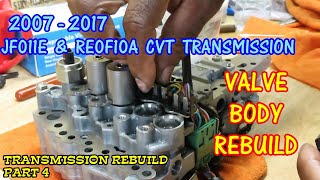
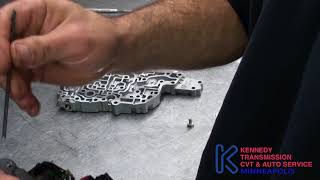
Typical fix: Replace the entire CVT valve body with a new or remanufactured unit. This repair requires a special procedure to write calibration data to the new valve body using a Nissan CONSULT scan tool, as outlined in TSB NTB12-103g. 🎬 See this complete DIY walkthrough for replacing the CVT valve body.
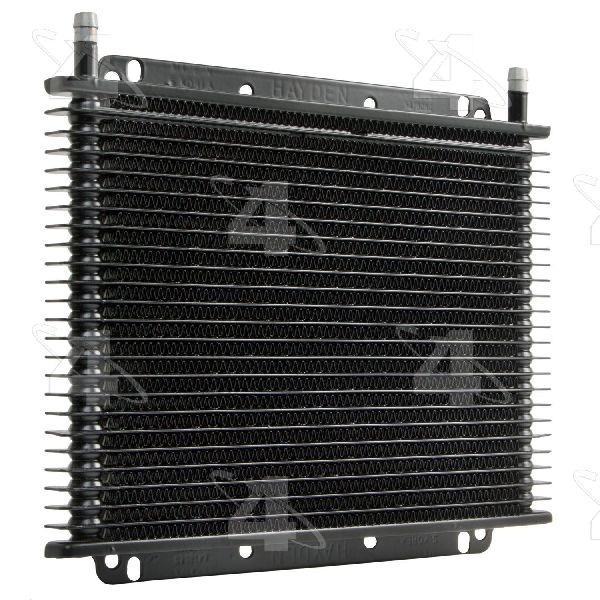
Est. part cost: $800-$1500 - Clogged CVT Filters or Cooler 🟡 Medium Probability These CVTs have an internal suction filter (strainer), a paper cartridge filter, and a filter screen in the fluid cooler housing. Debris from normal wear can clog these filters, restricting flow and causing pressure to drop. Nissan has issued TSB NTB15-013, which details the procedure for cleaning the CVT cooler.
How to confirm: During a fluid service, inspect the pan for excessive metallic debris. The paper cartridge filter can be replaced, and the cooler filter can be inspected and cleaned. In one documented case, an aftermarket internal filter was slightly too long and prevented proper fluid pickup, causing P0868 with a no-move condition.
Typical fix: Replace the pan filter, the external cartridge filter, and clean the cooler filter screen along with a fluid change.
Est. part cost: $50-$100 - Complete CVT Assembly Failure ⚪ Low Probability If driven for too long with low pressure, the CVT's internal components (pulleys, chain/belt) can be damaged, generating excessive metal debris that overwhelms the system. This can also be a primary failure that *causes* the low pressure. NHTSA ODI #10585696 describes a case where P0868 was found alongside P0744 and B2190, resulting in a recommendation for a full CVT assembly replacement.
How to confirm: Dropping the transmission pan and finding large amounts of metallic shavings or chunks is a definitive sign of internal failure. A borescope inspection through the valve body opening may also reveal damage to the CVT belt, as detailed in TSB NTB15-015e.
Typical fix: The entire CVT assembly must be replaced with a new or remanufactured unit.
Est. part cost: $3000-$5000
Rare But Worth Checking
- Faulty Alternator or Electrical Connection: On a documented 2007 Maxima case, a loose two-wire connector on the alternator caused voltage spikes up to 19 volts that put the car in limp mode and triggered P0868 along with an ABS voltage code (C1109). Before condemning the transmission, check the charging system voltage for stability.
Diagnosis Steps
- Scan for all diagnostic trouble codes in the TCM and other modules. Note any other codes, especially P0746, P17F0/P17F1, or electrical codes like C1109.
- Check the CVT fluid level and condition. This is a complex procedure without a traditional dipstick and must be done correctly at the specified temperature.
- If fluid is low, top it off with the correct Nissan CVT fluid (NS-2/NS-3) and check for leaks.
- If fluid is dark, burnt, or contains excessive debris, perform a fluid and filter service. Replace both the internal strainer and external cartridge filter. Ensure the new internal strainer's pickup tube matches the OEM part.
- Using an advanced scan tool (like Nissan CONSULT), monitor the 'SEC PRESS' (Secondary Pressure) and 'CMD SEC PRESS' (Commanded Secondary Pressure) data streams while driving. A significant difference between the two values under load points to a hydraulic issue.
- Inspect the charging system. Ensure the alternator is providing a stable voltage (typically 13.2-14.8V) without erratic spikes or drops, as this can trigger a false P0868.
- If fluid/filter service does not resolve the code and pressure readings are still low, the most likely cause is a faulty valve body.
- If the transmission pan contains significant metal debris (chunks, not just fine fuzz on the magnets), the entire CVT assembly has likely failed and requires replacement. A borescope inspection may be used to confirm belt damage.
Parts You'll Likely Need
- CVT Valve Body
(OEM #31705-1XF0D (superseded by 31705-1XF1B, 31705-28X0B))— This is the most common point of failure for code P0868 on the 7th generation Maxima, containing the solenoids that control fluid pressure.
Trusted brands: Hitachi (OEM), Sonnax (rebuild kits), Transgo (repair kits)
OEM price range: $1200-$1800
Aftermarket price range: $700-$1200 - Nissan CVT Fluid NS-2 / NS-3
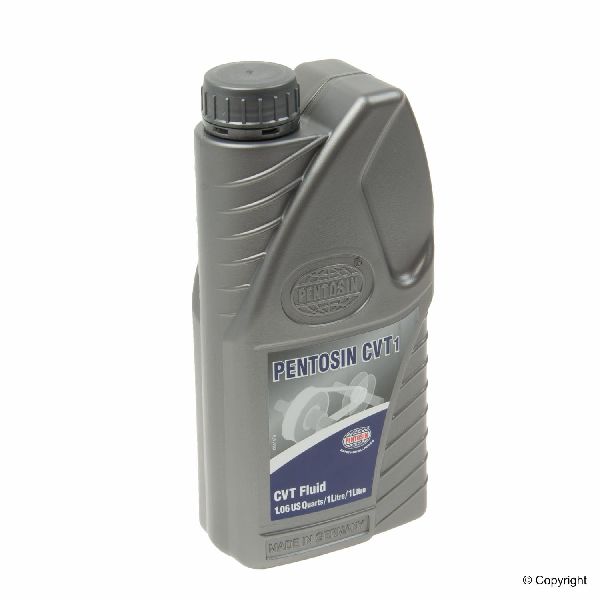
(OEM #NS-2: 999MP-NS200P, NS-3: 999MP-NS300P)— Using the correct OEM fluid is critical for the health and function of the CVT. Incorrect fluid can cause damage and pressure issues.
Trusted brands: Nissan
Related Codes That Often Appear With This One
- P0746 — Stands for 'Pressure Control Solenoid 'A' Performance/Stuck Off'. This code often appears with P0868 because both relate to the hydraulic control system within the valve body.
- P17F0 / P17F1 — These codes indicate 'CVT Judder' and point to either a required valve body inspection (P17F1) or a mandatory CVT replacement (P17F0) due to internal wear, per Nissan TSBs like NTB15-015e and NTB15-084d. They signal a failing transmission that could also exhibit low pressure.
- C1109 — This ABS code for 'Battery Voltage Out-of-Range' can appear alongside P0868 when the root cause is a faulty alternator or charging system creating voltage spikes.
Technical Service Bulletins (TSBs) & Recalls
- NTB12-103g: Details the mandatory procedure for writing calibration data to a new CVT valve body or TCM using the CONSULT scan tool.
- NTB15-013f: Provides the official procedure for flushing and cleaning the external CVT fluid cooler, which is required after a valve body or transmission replacement.
- NTB15-015e / NTB20-035a: Outlines the diagnostic procedure for CVT judder codes (P17F0, P17F1), which involves inspecting the CVT belt with a borescope and may lead to valve body or full CVT replacement.
- NTB17-018 (Campaign PC516): A voluntary service campaign for 2009-2010 Maxima and Altima models to replace the electronic steering column lock (ESCL), a common unrelated failure.
Platform-Specific Known Issues
- Owner Experience: Valve Body Replacement Fixes P0868: → Shop Transmission Valve Body Multiple owners on maxima.org confirm that after experiencing limp mode and code P0868, replacing the CVT valve body and performing the required reprogramming resolved the issue. One owner noted that after flooring the accelerator, the code appeared and the dealer diagnosed a 'toast' CVT, which was replaced under warranty, though the valve body is the typical failure point.
- Owner Experience: Electrical Gremlin Causes P0868: A professional case study on a 2007 Maxima detailed a multi-shop misdiagnosis where P0868 and limp mode were caused by a loose alternator connector. The resulting voltage spikes (up to 19V) were the true cause, not an internal transmission fault. This highlights the need to check the charging system when P0868 is accompanied by electrical codes like C1109.
- DIY Warning: Aftermarket Parts Fitment: A forum user on maxima.org reported a P0868 code and a complete no-move condition immediately after replacing the CVT filters and fluid. The suggested cause was that the pickup tube on the aftermarket internal strainer was too long, preventing the transmission from drawing fluid and building pressure. This serves as a warning to use OEM or dimensionally identical parts.
Documented NHTSA Reports
- NHTSA ODI #10892198 describes an instance where P0868 appeared alongside P0011 (engine timing) and P1217 (heating system). The owner reported that the vehicle was approximately five years old with 67,000 miles, and the total cost of repairs reached nearly $3,000.
- NHTSA ODI #10585696 reports a diagnosis involving codes P0744, P0868, and B2190, which ultimately led to a recommendation for a full CVT assembly replacement.
Mechanic-Grade Diagnostic Values
- TCC Control Solenoid Resistance — expected: 3 to 9 Ohms. Failure: Reading outside of this range indicates a faulty solenoid winding.
- Lockup Select Switch Solenoid Resistance — expected: 15 to 30 Ohms. Failure: Reading outside of this range indicates a faulty solenoid winding.
- Stepper Motor Winding Resistance — expected: Approximately 15 Ohms between each phase (e.g., pins 1-2). Reading between pins 1 and 3 should be double, around 30 Ohms.. Failure: An open or shorted reading indicates a failed stepper motor.
- Scan Tool 'SEC PRESS' at Idle — expected: Approximately 197 psi. Failure: Significantly lower pressure reading at idle can indicate a pump, filter, or valve body issue.
- Scan Tool 'SEC PRESS' at Stall Test — expected: Approximately 410 psi. Failure: Failure to build pressure during a stall test points to a major hydraulic failure (pump, valve body, internal leak).
- CVT Fluid Temperature Sensor Voltage ('ATF TEMP SEN') — expected: 1.0 - 2.0 V (for diagnostic test conditions). Failure: A voltage outside this range may prevent the P0868 DTC confirmation procedure from running correctly on a CONSULT scan tool.
Scan Tool Commands That Help
- Nissan CONSULT-III: DATA MONITOR for TRANSMISSION — Used to monitor live data streams like 'SEC PRESS' (actual secondary pressure) and 'CMD SEC PRESS' (commanded secondary pressure) to confirm a pressure discrepancy.
- Nissan CONSULT-III: ERASE / WRITE CALIBRATION DATA — This is a mandatory procedure after replacing the CVT assembly or the valve body. It uses a specific calibration file from a CD or QR code provided with the new part to program the TCM. Failure to perform this will result in improper transmission function.
- Nissan CONSULT-III: SAVE / WRITE CALIBRATION DATA — This function is used specifically when only the Transmission Control Module (TCM) is being replaced. The calibration data from the old TCM must be saved and then written to the new one.
- Nissan CONSULT-III: SELECT LEARNING (Drive / Reverse Learning) — A relearn procedure required after replacing the CVT, valve body, or TCM. It involves a specific sequence of shifting between Neutral, Drive, and Reverse to adapt clutch engagement points.
Wiring & Ground Locations
- Transmission Case Connector — The main electrical connector on the outside of the CVT case.. This is the primary point for testing solenoid and sensor resistance without removing the transmission pan. Different pinouts exist for Nissan vs. Dodge/Mitsubishi applications of the same transmission, so using a Nissan-specific diagram is critical.
- TCM Ground — Check the vehicle's factory service manual (FSM) for the specific ground point location for the TCM, as poor grounds can cause erratic behavior and false codes.. An unstable ground can affect the TCM's ability to accurately read sensor data and control solenoids, potentially leading to false pressure codes.
Real Owner Repair Stories
- Reddit user, r/MechanicAdvice (2007 Nissan Maxima, 175k miles) — Persistent P0868 code for three years without a Check Engine Light or major drivability symptoms. Scan tool shows line and secondary pressures are 'pretty much normal'.
❌ Tried (didn't work) Religious CVT fluid and filter changes every 30k miles.
✅ What actually fixed it The user was contemplating a valve body swap as the next logical step, acknowledging the high probability of it being the root cause despite the lack of severe symptoms. The final resolution was not posted, but the diagnostic path points strongly toward an internal valve body issue that hasn't yet caused catastrophic failure.
OEM Part Supersession History
31705-1XF0C→31705-1XF0D, 31705-1XF1A, 31705-1XZ0D— Revisions to address common failure points in the valve body solenoids and valves.
Heads up: When replacing, it is critical to ensure the replacement valve body is correct for the specific model year and has the correct number of pressure switches (early JF011E/RE0F10A used two, later versions may differ).
Model Year Variations Within This Range
- 2007-2008: These 6th generation Maximas typically use the Jatco RE0F09A/B CVT. While similar to the later transmission, they are more prone to the unique electrical fault where a failing alternator causes voltage spikes, triggering P0868.
- 2009-2014: These 7th generation Maximas use the Jatco RE0F10A (JF011E) CVT. This specific model is widely known for the high-failure rate of the valve body assembly, making it the primary suspect for a P0868 code.
Diagnostic Flowchart
Other Known Issues on This Vehicle
Issues unrelated to this code that are worth knowing about as an owner of this generation:
- Electronic Steering Column Lock (ESCL) Failure 🔴 High — Very common on 2009-2010 models. Failure prevents the vehicle from starting. (Ref: Nissan Voluntary Service Campaign PC516 (TSB NTB17-018) was issued to replace the faulty ESCL unit free of charge.)
- Rear Subframe Rust/Corrosion 🔴 High — Common in regions with road salt. Can lead to structural failure of the rear suspension mounting points. (Ref: While TSBs existed for older models (NTB07-016b for 2004-2007), the 7th gen (2009-2014) is also known for severe subframe rust, often requiring subframe replacement.)
- Timing Cover Oil Leak (VQ35DE) 🟠 Medium — A known issue on the VQ35DE engine where the paper gasket on the rear timing cover fails, causing an oil leak that is very labor-intensive to repair.
- CVT Transmission Failure (General) 🔴 High → Shop Transmission Assembly — The Jatco CVT is the platform's most widely reported weak point, with issues ranging from overheating and judder to complete failure, often outside of warranty.
Used vs. New Parts: Buying Guide for This Vehicle
When a used part is the smart pick: A used complete CVT assembly from a low-mileage, rear-ended donor vehicle can be a cost-effective alternative to a new or remanufactured unit, but it carries significant risk. It is generally not recommended to buy a used valve body alone.
Donor-vehicle mileage cap: roughly under 70000 miles for the part to have meaningful remaining life.
What to inspect on the donor part:
- Verify the donor vehicle's mileage and accident type (rear or side impact is better than front-end).
- Ask for a vehicle history report to check for prior maintenance records.
- If possible, inspect the CVT fluid from the donor transmission. It should not be dark brown, black, or smell burnt.
- For a complete CVT, ensure all external sensors and connectors are intact and undamaged.
OEM-only on this vehicle (don't cheap out):
- CVT Fluid (Nissan NS-2 or NS-3)
- Transmission Control Module (TCM)
Aftermarket brands forum-validated for this vehicle:
- Sonnax (for valve body repair kits)
- TransGo (for valve body repair kits)
- Street Smart Transmission (for remanufactured valve bodies)
Brands owners have reported issues with on this vehicle:
- Unknown, no-name brands for valve bodies or complete transmissions from online marketplaces, as quality control is a major concern. A poorly remanufactured valve body can fail quickly.
Real Owner Stories
Aggregated from forums and TSBs cited above. Mileages and costs reflect what owners reported in those sources.
2010 Nissan Maxima
Symptoms: P0868 code appeared after flooring the accelerator, causing the vehicle to enter limp mode.
What fixed it: The dealer diagnosed a failed CVT which was replaced under warranty, though the article notes the valve body is the more typical failure point for these symptoms.
Source hint: Owner Experience: Valve Body Replacement Fixes P0868
2007 Nissan Maxima
Symptoms: Vehicle had P0868 and limp mode, accompanied by electrical code C1109.
What fixed it: The root cause was a loose alternator connector causing voltage spikes up to 19V. Securing the connector resolved the issue without any transmission repair.
Source hint: Owner Experience: Electrical Gremlin Causes P0868
2010 Nissan Maxima
Symptoms: After an engine rebuild, the car had code P0868 and a no-move condition.
What fixed it: The suggested cause was an incorrectly sized aftermarket internal transmission filter preventing fluid pickup. The implied fix is to replace it with an OEM or correctly dimensioned part.
Source hint: maxima.org - 'P0868 and Idle Cycling Between 1500-2000 When In Gear'
2010 Nissan Maxima
Symptoms: Owner diagnosed P0868 using a scan tool and noted a significant discrepancy between commanded secondary pressure (target 4.5Mpa) and actual pressure (1.7Mpa).
What fixed it: The diagnostic data pointed directly to a CVT valve body failure, which requires replacement.
Source hint: maxima.org - 'MAJOR CVT issue'
2011 Nissan Maxima
Symptoms: An owner reported a P0868 code for transmission fluid pressure along with P0011 and P1217 codes.
What fixed it: NHTSA ODI #10892198 notes that the total cost of repairs for these issues was $2,984 on a vehicle with approximately 67,000 miles.
2011 Nissan Maxima
Symptoms: A driver received diagnosis codes P0744, P0868, and B2190.
What fixed it: As documented in NHTSA ODI #10585696, the technician recommended a full CVT assembly replacement to resolve the issues.
Related OBD-II Codes
Frequently Asked Questions
My 2011 Maxima has code P0868. Is it safe to just change the CVT fluid and filters?
The dealership says I need a whole new transmission for P0868. Is that always the case?
I'm replacing the CVT valve body myself. Can I just install the new part?
What specific CVT fluid does my 2007-2014 Maxima need for a P0868 fluid change?
Could something other than the transmission itself cause P0868 on my Maxima?
I'm getting a judder or shudder with the P0868 code. Are these problems related?
I just changed my CVT filters and now the car won't move. What happened?
Helpful Videos
We Have This Part in Stock

The information in this article is provided for general reference and educational purposes only. Vehicle specifications, procedures, and part compatibility can vary by production date, trim level, and region. Always consult your vehicle's factory service manual and verify part numbers before purchasing or performing repairs. Safety-critical components such as airbags, seat belts, and braking systems should be installed by a qualified professional.
- Nissan Maxima:
- 🧭 Diagnostic Flowchart
- 🎬 Helpful Videos
- 🛍️ Shop This Part
- What's Unique About the 2007-2014 Nissan Maxima
- Symptoms You May Notice
- Most Likely Causes
- Rare But Worth Checking
- Diagnosis Steps
- Parts You'll Likely Need
- Related Codes That Often Appear With This One
- Technical Service Bulletins (TSBs) & Recalls
- Platform-Specific Known Issues
- Documented NHTSA Reports
- Mechanic-Grade Diagnostic Values
- Scan Tool Commands That Help
- Wiring & Ground Locations
- Real Owner Repair Stories
- OEM Part Supersession History
- Model Year Variations Within This Range
- Other Known Issues on This Vehicle
- Used vs. New Parts: Buying Guide for This Vehicle
- Real Owner Stories
- 2010 Nissan Maxima
- 2007 Nissan Maxima
- 2010 Nissan Maxima
- 2010 Nissan Maxima
- 2011 Nissan Maxima
- 2011 Nissan Maxima
- Related OBD-II Codes
- Frequently Asked Questions
- 🎟️ Get 5% Off