

P0868 on 2007-2019 Nissan Versa: CVT Transmission Fluid Pressure Low Causes and Fixes
On a Nissan Versa, code P0868 almost always points to a problem with the CVT transmission, not just a sensor. The most common and hopeful fix is performing a transmission fluid and filter service, as the internal filters are often clogged. If that doesn't work, the issue is likely more severe, such as a failing oil pump or the entire CVT unit.
- P0868 on a Nissan Versa is a serious code indicating a real hydraulic pressure problem in the CVT, not just a bad sensor.
- The most common, and least expensive, potential fix is a thorough CVT fluid and filter service, replacing both the pan strainer and the cartridge filter.
- When servicing, the type of debris in the transmission pan is critical: fine gray paste is normal, but shiny metal flakes mean the CVT needs to be replaced.
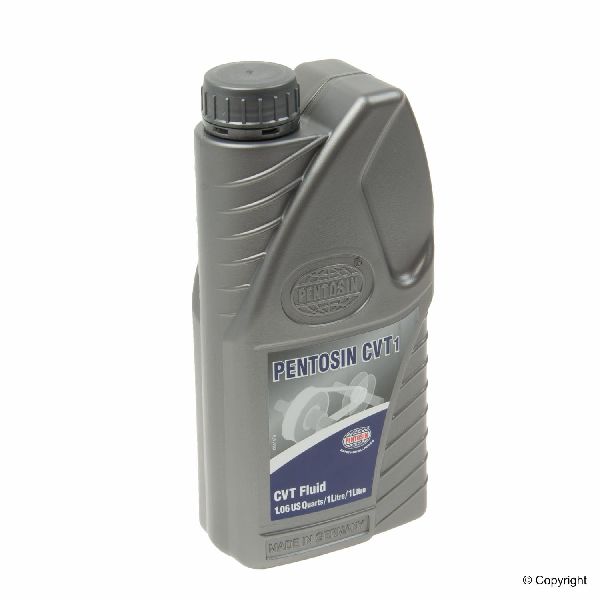
- Always use the specified Nissan CVT fluid (NS-2 or NS-3). Using the wrong fluid can quickly destroy the transmission.
- Check with a Nissan dealer for any open recalls or applicable TSBs, as a TCM software update may be part of the solution for later models.
What's Unique About the 2007-2019 Nissan Versa
The Nissan Versa, like many Nissans from this era, uses a Jatco-supplied CVT that is notoriously prone to issues. First-generation models (2007-2012) typically use the Jatco JF011E (Nissan RE0F10A), while second-generation models (2012-2019) often use the Jatco JF015E (Nissan RE0F11A). Code P0868 is a very common symptom of the underlying weaknesses in these transmissions. Unlike many cars where a pressure code might just be a bad sensor, on the Versa it almost always indicates a real hydraulic problem. This can range from simple maintenance issues like clogged filters to more severe internal wear of the CVT's oil pump or valve body, a well-documented failure pattern for this platform.
Generation note: This issue affects both the first generation (2007-2012, C11) using the Jatco JF011E CVT and the second generation (2012-2019, N17) using the Jatco JF015E. The underlying CVT technology and its failure points are similar. First-gen models typically use NS-2 CVT fluid, while later second-gen models use NS-3. Nissan has issued specific TSBs for later models (e.g., 2018-2019) that may involve a TCM reprogram or full CVT replacement. For instance, manufacturer service bulletin TSB Bulletin #NTB20-037 notes that a new diagnostic logic was introduced to monitor CVT conditions and will specifically turn the MIL ON when DTC P0868 is detected.
Symptoms You May Notice
- Check Engine Light is on
- Hesitation, shuddering, or juddering during acceleration
- Vehicle feels like it has a lack of power
- Engine RPMs flare or rise without a corresponding increase in speed
- Whining or grinding noise from the transmission area
- Vehicle may enter a failsafe or "limp" mode with reduced power
- Car struggles to accelerate, especially from a stop
- Replacing only the external transmission fluid pressure sensor. The code P0868 on a Nissan Versa almost always indicates an actual low-pressure condition, not a faulty sensor reading. Replacing the sensor is unlikely to fix the problem.
Most Likely Causes
- Clogged Transmission Filters and Degraded Fluid 🔴 High Probability → Shop Transmission Assembly The Versa's CVT has two filters (a main strainer in the pan and a paper cartridge filter for the cooler) that trap metallic debris from normal wear. Over time, they become saturated and restrict fluid flow, causing pressure to drop. This is a very common failure reported by owners.
How to confirm: Drop the transmission pan. A heavily clogged pan filter (strainer) is a clear sign. The fluid will often be dark, may have a burnt smell, and the pan magnets will be covered in a thick, dark paste.
Typical fix: Perform a transmission service by dropping the pan, cleaning the pan and magnets, replacing both the pan strainer and the cartridge filter, and refilling with the correct Nissan CVT fluid (NS-2 or NS-3).
Est. part cost: $50-$150 - Failing Internal CVT Oil Pump 🟡 Medium Probability → Shop Engine Oil Pump The flow control valve inside the oil pump is a steel plunger that moves within a softer aluminum bore. Over time, the valve wears the bore, causing it to stick. When it sticks, it starves the pulleys of hydraulic pressure, directly causing the P0868 code. TSB Bulletin #NTB19-068 confirms that when the MIL is on with DTC P0868 (Fluid Press Low) stored, the vehicle may exhibit hesitation and/or a lack of power.
How to confirm: This is difficult to confirm without a transmission teardown. A specialist can perform a line pressure test, but often this is diagnosed after a fluid/filter change fails to resolve the code. The presence of code P0746 alongside P0868 strongly points to this issue.
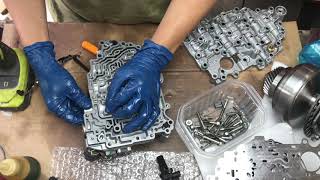
Typical fix: The valve body must be removed to access the pump. A specialized shop can sometimes ream the worn bore and install an oversized valve from a kit (e.g., Sonnax). Often, this leads to a full valve body or transmission replacement. 🎬 Watch: Detailed walkthrough of a CVT valve body reassembly.
Est. part cost: $200-$800 for a valve body; much higher for a full transmission. - Low Transmission Fluid Level ⚪ Low Probability → Shop Transmission Assembly While not a design flaw, these vehicles lack a traditional dipstick, making fluid level checks difficult for owners. Leaks can develop over time, leading to a low fluid state that starves the pump.
How to confirm: The fluid level must be checked via the overflow plug on the transmission pan while the vehicle is running and at a specific temperature (typically 95-113°F or 35-45°C). This requires a scan tool to monitor fluid temperature.
Typical fix: Properly top-off the fluid to the correct level using the specified procedure and Nissan CVT fluid. Identify and repair any leaks.
Est. part cost: $25-$75 for fluid.
Rare But Worth Checking
- Complete CVT Assembly Failure: If a fluid/filter change doesn't work, this is the next most likely scenario. When inspecting the fluid pan, if you find shiny, chunky metal debris (not just fine, dark paste on the magnets), the CVT belt and pulleys are destroyed. The only fix is a complete transmission replacement.
- Faulty Transmission Control Module (TCM): → Shop Transmission Assembly While rare, the TCM itself can fail. Nissan has issued TSBs that involve reprogramming the TCM to update its diagnostic logic, which should be investigated by a dealer before condemning the hardware.
- Faulty Stepper Motor: The stepper motor helps control the pulley ratio. If it fails or sticks, it can cause pressure-related codes. This is sometimes seen with code P1778.
Diagnosis Steps
- Scan for all stored trouble codes to see if any other codes are present with P0868, such as P0746 or P1778.
- Check the CVT fluid level and condition. This must be done at a specific operating temperature (95-113°F / 35-45°C) using the overflow plug procedure and a scan tool to monitor temperature.
- If service history is unknown, perform a CVT service. Drop the transmission pan and inspect the magnets for debris.
- Differentiate the debris: fine, dark gray paste is normal wear; shiny silver flakes or chunks indicate catastrophic internal failure requiring transmission replacement.
- If only normal paste is found, replace both the internal pan filter/strainer and the external cartridge filter. Clean the pan and magnets thoroughly.
- Refill the transmission with the correct OEM fluid (Nissan NS-2 or NS-3, depending on the model year). Do not use universal fluids.
- Clear the codes and perform a test drive to see if the code returns.
- If the code returns, consult a Nissan dealer or transmission specialist to check for applicable TSBs (like NTB17-039 for judder issues, which can be related) which may require a TCM reprogram. TSB Bulletin #NTB19-068a specifically addresses MIL ON with DTC P0868 and symptoms of hesitation or lack of power for the Versa Sedan and Versa Note.
- If TSBs do not apply or the issue persists, the next step is advanced diagnosis of the valve body and oil pump, likely leading to a recommendation to replace the valve body or the entire CVT assembly.
Parts You'll Likely Need
- CVT Fluid and Filter Kit
(OEM #Pan Gasket: 31397-3JX0A (2nd Gen) or 31397-31X0A (1st Gen); Cartridge Filter: 31726-3JX0A (or similar); Strainer: 31728-3XX0A (or similar))— This is the most common and first-line fix. Clogged filters are a primary cause of the low pressure that triggers P0868.
Trusted brands: Nissan (OEM), Idemitsu, ENEOS, Beck/Arnley, Duralast
OEM price range: $100-$150
Aftermarket price range: $50-$100 - Continuously Variable Transmission (CVT) Assembly — If metal debris is found in the pan or a fluid service does not resolve the issue, the transmission has likely suffered internal damage requiring complete replacement.
Trusted brands: Nissan (OEM Remanufactured)
OEM price range: $3500-$5000
Aftermarket price range: $2000-$3500 (Used or Remanufactured)
Related Codes That Often Appear With This One
- P0746 — This code relates to the 'Pressure Control Solenoid A Performance/Stuck Off'. It often appears with P0868 because the root cause (clogged filters, failing pump) affects the entire hydraulic circuit, including the solenoids. A former Nissan technician on Reddit refers to this as a 'CVT death code'.
- P1778 — This code points to a problem with the stepper motor, which controls the ratio change of the pulleys. A malfunctioning stepper motor can disrupt normal pressure regulation, leading to the P0868 code.
Technical Service Bulletins (TSBs) & Recalls
- NTB20-036
- TSB Bulletin #NTB19-068 / #NTB19-068a - Specifically addresses MIL ON with DTC P0868 and associated hesitation or lack of power.
- TSB Bulletin #NTB20-037 - Discusses new diagnostic logic for monitoring CVT conditions and the triggering of P0868.
- NTB17-039 - While for judder codes P17F0/P17F1, the internal inspection and repair procedures are relevant to severe hydraulic issues.
- NTB15-078a - Recall for front coil springs, unrelated to P0868 but a major platform issue.
Platform-Specific Known Issues
- Nissan extended the warranty on many CVT transmissions from this era due to high failure rates, though many of these extensions have now expired. It is worth checking with a dealer to see if any coverage still applies.
- The design of the Jatco CVT in the Versa makes it highly sensitive to fluid condition and level. Regular fluid and filter changes (every 30,000-35,000 miles) are critical to its longevity.
Mechanic-Grade Diagnostic Values
- CVT Line Pressure at Idle — expected: Approx. 650 kPa (94.3 psi). Failure: Significantly lower pressure indicates a potential issue with the pump, filters, or a major leak.
- CVT Line Pressure at Stall Speed — expected: Approx. 4,250 kPa (616.3 psi). Failure: Pressure that is significantly lower than the specification points to a worn pump, clogged filters, or internal leaks. If pressure is low at both idle and stall, the pump is a primary suspect.
- CVT Fluid Temperature Sensor Voltage — expected: 1.0 - 2.0 V. Failure: A voltage outside this range can prevent the TCM from running the necessary self-diagnostics to confirm the P0868 fault. The fluid must be at the correct operating temperature for proper testing.
- Scan Tool Live Data PID for Secondary Pressure — expected: The value of "SEC PRESS" should be monitored during a test drive. It should rise and fall smoothly with acceleration and deceleration, corresponding to the commanded pressure.. Failure: If the actual pressure ("SEC PRESS") is consistently lower than the commanded pressure, it confirms the low-pressure condition that sets P0868.
Scan Tool Commands That Help
- Nissan CONSULT-III: DATA MONITOR for TRANSMISSION — Used to monitor live data PIDs like 'SEC PRESS' (Secondary Pressure) and 'ATF TEMP SEN' (Fluid Temperature Sensor Voltage) to confirm the conditions of the fault and check sensor readings.
- Nissan CONSULT-III or equivalent advanced scan tool: Clutch Point Learning — This procedure is critical after replacing the valve body or the entire transmission. It forces the TCM to relearn the engagement points for the auxiliary gearbox's clutches. Failure to perform this can cause harsh shifting or a flare between 20-45 mph.
- Nissan CONSULT-III or equivalent advanced scan tool: Line Pressure Sensor Learning — According to TSB NTB15-037a, this procedure should be performed after a valve body replacement. It involves a specific sequence of starting and stopping the engine to allow the TCM to calibrate to the new pressure sensor.
Real Owner Repair Stories
- YouTube video by 'Asian Mechanic Guy' (2008 Nissan Versa) — Codes P0746 and P0868 present, vehicle has no power.
❌ Tried (didn't work) The video implies that a simple fluid change is often not enough for these combined codes.
✅ What actually fixed it The video documents the process of removing the transmission for a complete overhaul/replacement, indicating the problem was severe internal failure, not just a minor service issue. - Reddit user comment (2012 Nissan Altima (uses a similar Jatco CVT)) — No symptoms reported, but concern about fluid type after a service.
✅ What actually fixed it A Nissan dealer used NS-3 fluid in a vehicle originally specified for NS-2. The user reported no issues after the service, and another commenter claiming to be a tech stated that NS-3 can be used in NS-2 systems. This suggests some level of backward compatibility, though official sources should be prioritized.
OEM Part Supersession History
31726-3XX0A→31726-3JX0A— Part has been updated by the manufacturer.
Heads up: The new part number (31726-3JX0A) is the correct replacement for the original. Using the old number may result in receiving an older stock part.
Model Year Variations Within This Range
- 2007-2012 (First Gen, C11): These models typically use the Jatco JF011E CVT and require Nissan NS-2 CVT fluid. The service procedures and common failure points are similar to later models, but part numbers for filters and internal components will differ.
- 2012-2019 (Second Gen, N17): These models typically use the Jatco JF015E CVT. The 2012 model year specifically requires NS-2 fluid, while 2013 and newer models require Nissan NS-3 fluid. NS-3 is a lower viscosity fluid and is generally not considered backward-compatible with NS-2 systems, despite some anecdotal reports of successful use.
Diagnostic Flowchart
Other Known Issues on This Vehicle
Issues unrelated to this code that are worth knowing about as an owner of this generation:
- Broken Front Coil Springs 🔴 High — Very common on 2007-2012 models, especially in regions that use road salt. Can occur under 100,000 miles. (Ref: Recall numbers PM565 and PM701 (NHTSA ID: 15V573000) were issued to replace the springs in affected states.)
- Prematurely Rusted Exhaust System 🟠 Medium — Common across all model years. The flange between the mid-pipe and muffler is a frequent failure point, causing loud exhaust noise.
- Failed Airbag Inflators (Takata Recall) 🔴 High — Affects 2007-2011 Versa Sedans and 2007-2012 Versa Hatchbacks. This is a critical safety recall. (Ref: Part of the massive Takata airbag recall. Multiple recall numbers apply.)
- Rattling or Detached Exhaust Heat Shields 🟡 Low — Common problem where the mounting points for the aluminum heat shields corrode or fatigue, causing them to come loose and rattle against the exhaust pipe.
- Failed Fuel Pump / Pressure Regulator 🟠 Medium — Reported on first-generation models (2007-2011), causing long crank times or a no-start condition.
Used vs. New Parts: Buying Guide for This Vehicle
When a used part is the smart pick: For this specific repair, sourcing a used valve body can be a cost-effective option if it comes from a low-mileage donor vehicle with a known history. However, given the high failure rate of the entire CVT assembly, a used transmission is a significant gamble.
Donor-vehicle mileage cap: roughly under 60000 miles for the part to have meaningful remaining life.
What to inspect on the donor part:
- Verify the donor vehicle's mileage; lower is always better.
- If possible, check the donor's service history for regular CVT fluid changes.
- Inspect the fluid from the donor transmission. If it's dark, burnt, or contains metal particles, reject the part immediately.
- Ask for a warranty from the salvage yard, even if it's only for 30-90 days, to protect against an immediate failure.
OEM-only on this vehicle (don't cheap out):
- CVT Fluid (Nissan NS-2 or NS-3). Using non-OEM or 'universal' fluids is a major risk and a common cause of transmission failure.
- Complete CVT Assembly. While aftermarket remanufactured units exist, a Nissan OEM remanufactured unit is the safest, albeit most expensive, option due to programming and compatibility requirements.
Aftermarket brands forum-validated for this vehicle:
- Idemitsu / ENEOS / Aisin (for CVT fluid, as they are often the original manufacturers for Nissan).
- Sonnax (for internal valve body/pump repair kits, such as oversized flow control valves).
- Beck/Arnley / WIX / Duralast (for transmission filters and gaskets).
Brands owners have reported issues with on this vehicle:
- Generic 'Universal' CVT fluids. The chemical properties of NS-2 and NS-3 are specific, and universal fluids that claim compatibility with both (and others) are a common source of problems.
Related OBD-II Codes
Frequently Asked Questions
My 2012 Versa is shuddering and has a P0868 code. Is a simple fluid change enough to fix it?
How do I check the transmission fluid level on my Nissan Versa since it doesn't have a dipstick?
I have a P0868 code and also a P0746. What does this combination usually mean for my Versa's CVT?
What is the correct transmission fluid to use when servicing my Versa for a P0868 code?
My mechanic found shiny metal flakes in my Versa's transmission pan. Is the transmission salvageable?
I heard Nissan had a warranty extension for these CVTs. Will it cover my P0868 repair?
Does TSB NTB17-039 for judder issues apply to my P0868 low pressure code?
Helpful Videos
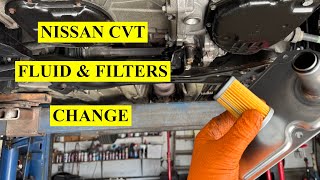
![How To Change CVT Transmission Fluid And Filters [Nissan Sentra/Juke/Versa 1.8L 2013-2019]](https://img.youtube.com/vi/6fUCxKcWkZI/mqdefault.jpg)
We Have This Part in Stock

The information in this article is provided for general reference and educational purposes only. Vehicle specifications, procedures, and part compatibility can vary by production date, trim level, and region. Always consult your vehicle's factory service manual and verify part numbers before purchasing or performing repairs. Safety-critical components such as airbags, seat belts, and braking systems should be installed by a qualified professional.
- Nissan Versa:
- 🧭 Diagnostic Flowchart
- 🎬 Helpful Videos
- 🛍️ Shop This Part
- What's Unique About the 2007-2019 Nissan Versa
- Symptoms You May Notice
- Most Likely Causes
- Rare But Worth Checking
- Diagnosis Steps
- Parts You'll Likely Need
- Related Codes That Often Appear With This One
- Technical Service Bulletins (TSBs) & Recalls
- Platform-Specific Known Issues
- Mechanic-Grade Diagnostic Values
- Scan Tool Commands That Help
- Real Owner Repair Stories
- OEM Part Supersession History
- Model Year Variations Within This Range
- Other Known Issues on This Vehicle
- Used vs. New Parts: Buying Guide for This Vehicle
- Related OBD-II Codes
- Frequently Asked Questions
- 🎟️ Get 5% Off