

P0868 on 2010-2014 Subaru Outback: CVT Fluid Pressure Low Causes and Fixes
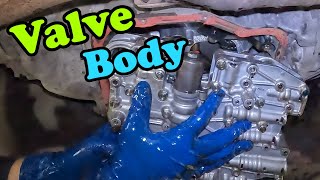
On a 2010-2014 Subaru Outback, P0868 almost always points to a failing CVT valve body. This is a known issue, and Subaru extended the warranty to 10 years/100,000 miles for many of these vehicles. The fix is typically a valve body replacement, costing $1,500-$2,500 at a shop. Driving with this code can quickly lead to catastrophic transmission failure.
- P0868 on a 2010-2014 Outback is a serious code that should be addressed immediately to prevent catastrophic transmission failure.
- The most likely cause is a faulty CVT valve body, a known issue for this vehicle.
- Before paying for any repairs, check if your vehicle is still covered under Subaru's 10-year/100,000-mile CVT warranty extension.
- Do not use aftermarket or rebuilt valve bodies; OEM parts are strongly recommended for a lasting repair.
- This is not a DIY-friendly repair; it requires professional diagnosis and service.
What's Unique About the 2010-2014 Subaru Outback
The 2010-2014 Outback uses a Subaru Lineartronic TR690 CVT, which is known for issues related to its valve body and torque converter lock-up solenoids. Unlike many other vehicles where P0868 might be caused by a simple leak or a bad sensor, on this specific Outback, the root cause is very frequently the valve body assembly itself. This problem was so prevalent that Subaru issued a warranty extension (TSB 16-102-17R) for the CVT on these models, covering them for up to 10 years or 100,000 miles.
Symptoms You May Notice
- Check Engine Light is on
- Flashing 'AT OIL TEMP' warning light
- Vehicle enters 'limp mode' with reduced power
- Hesitation or stumbling upon acceleration
- Jerking or shuddering, especially at low speeds
- Engine RPMs rise without a corresponding increase in vehicle speed (slipping)
- Whining or grinding noises from the transmission
- Transmission overheating
- Harsh or delayed gear shifting
- Replacing only the external transmission fluid pressure sensor. While a possibility, it is rarely the cause on this platform. The issue is almost always an internal hydraulic fault (valve body) rather than a sensor reporting incorrectly. One owner on a Reddit forum reported a mechanic tried this first, and the problem returned the next day.
Most Likely Causes
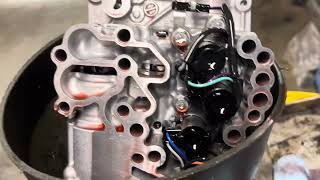
- Failing CVT Valve Body or Solenoids 🔴 High Probability → Shop Transmission Valve Body The solenoids within the valve body that control hydraulic pressure and torque converter lock-up are a known weak point in this generation of Subaru's Lineartronic CVT. Sticking solenoids or internal leaks within the valve body assembly lead to incorrect pressure regulation, triggering the P0868 code.
How to confirm: A professional technician will use a diagnostic scan tool to monitor live data, comparing commanded line pressure to actual line pressure. If the fluid level is correct but actual pressure is consistently low, the valve body is the prime suspect. This often occurs with code P2764 (Torque Converter Clutch Pressure Control Solenoid Circuit).
Typical fix: Replacement of the entire CVT valve body with a new OEM unit is the most reliable repair. Some owners and shops have attempted to replace individual solenoids, but this is often unsuccessful or provides only a temporary fix.
Est. part cost: $800-$1200 - Low or Degraded CVT Fluid 🟡 Medium Probability Subaru issued TSB 16-103-16R for potential fluid seepage from the oil pump chain cover or input shaft seal on these CVTs. A leak can lower the fluid level, causing a loss of pressure. Additionally, old, thermally-degraded fluid loses its hydraulic properties and can't maintain the required pressure.
How to confirm: The fluid level and condition must be checked. This is difficult for DIY as there is no dipstick; it requires raising the vehicle level and using a fill plug at a specific fluid temperature. 🎬 See how to properly check fluid levels on this sealed transmission. The fluid should be the correct color (blue or green for Subaru CVTs) and not smell burnt.
Typical fix: If a leak is found, the leaking seal or gasket must be replaced per TSB 16-103-16R, followed by a CVT fluid drain and fill using the correct Subaru High Torque CVT fluid. If the fluid is simply old/dirty, a drain and fill is required.
Est. part cost: $100-$200 for fluid and seals
Rare But Worth Checking
- Failing Internal Transmission Oil Pump: → Shop Transmission Assembly While less common than a valve body failure, the pump is what generates the initial pressure. If the pump is worn or failing, it cannot supply the valve body with enough pressure to operate correctly.
- Clogged Transmission Filter/Strainer: → Shop Transmission Assembly If the internal filter becomes clogged with debris from excessive wear, it can restrict fluid flow and cause a pressure drop. This usually indicates more severe internal transmission problems are occurring or imminent.
- Damaged Wiring or Connectors: Less commonly, damaged wiring or a corroded connector to the transmission fluid pressure sensor or valve body solenoids can cause incorrect signals to be sent to the TCM, triggering the code.
Diagnosis Steps
- Verify the code with an OBD-II scanner.
- Check for any applicable warranty extensions or recalls. Many 2010-2014 Outbacks are covered by Subaru's 10-year/100,000-mile CVT warranty extension (TSB 16-102-17R). Contact a Subaru dealer with your VIN.
- Check the CVT fluid level and condition. This must be done by a professional or experienced DIYer as it involves a specific procedure with the vehicle level and at a certain temperature.
- Inspect for any external transmission fluid leaks, paying close attention to the areas mentioned in TSB 16-103-16R (oil pump chain cover and input shaft seal).
- Use an advanced scan tool to monitor live data from the TCM, specifically commanded line pressure vs. actual line pressure, and torque converter lock-up duty cycle. 🎬 Watch a professional technician perform a full CVT inspection and relearn.
- If the fluid level is correct but actual pressure is low, the valve body is the most likely culprit.
- A mechanical pressure gauge can be connected to the transmission's test port to physically verify the electronic sensor's readings, ruling out a sensor-only failure.
Parts You'll Likely Need
- CVT Valve Body Assembly
(OEM #31706AA033 (Superseded by 31706AA331). Also seen as 31825AA052. Always verify with VIN.)— This is the most common point of failure for code P0868 on this vehicle. It contains the solenoids that regulate hydraulic pressure.
Trusted brands: Subaru (OEM)
OEM price range: $900-$1300
Aftermarket price range: $500-$800 (Not Recommended) - Subaru High Torque CVT Fluid
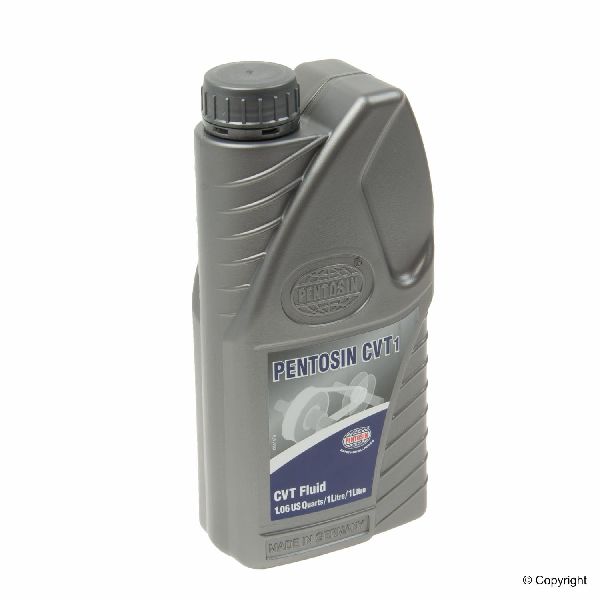
(OEM #SOA427V1660)— The correct fluid is required any time the transmission is serviced. Using the wrong fluid can cause damage. Approximately 6-8 quarts are needed for a valve body replacement.
Trusted brands: Subaru (OEM)
OEM price range: $20-$25 per quart
Aftermarket price range: N/A - Transmission Pan Gasket
(OEM #31338AA020 (Verify with VIN))— Required when dropping the transmission pan to access and replace the valve body.
Trusted brands: Subaru (OEM)
OEM price range: $30-$50
Aftermarket price range: $15-$30
Related Codes That Often Appear With This One
- P0700 — P0700 is a generic 'Transmission Control System Malfunction' code. It acts as a master light, telling you that a more specific code, like P0868, has been stored in the Transmission Control Module (TCM).
- P2764 — This code points to a fault in the Torque Converter Clutch Pressure Control Solenoid circuit. Since this solenoid is part of the valve body, it's very common to see this code alongside P0868 when the valve body is failing.
Technical Service Bulletins (TSBs) & Recalls
- 16-102-17R: Details the CVT Warranty Extension program, extending coverage to 10 years/100,000 miles for various drivability concerns, which would include failures causing P0868.
- 16-103-16R: Addresses potential CVT fluid seepage from the oil pump chain cover and input shaft oil seal on TR690 CVTs.
Platform-Specific Known Issues
- Subaru extended the powertrain warranty on the CVT for many 2010-2015 models to 10 years or 100,000 miles due to a high number of failures, including issues that would trigger a P0868 code. This was announced in TSB 16-102-17R.
- TSB 16-103-16R was issued to address fluid seepage from the CVT's oil pump chain cover and input shaft oil seal, which can lead to low fluid levels and cause this code.
Mechanic-Grade Diagnostic Values
- CVT Solenoid Resistance (Lockup Duty, Primary Up/Down, AWD) — expected: 10 - 13.5 Ohms at 68°F (20°C). Failure: An open circuit (infinite resistance), especially when heated with a heat gun, or a short to ground.
- CVT Fluid Temperature Sensor Resistance — expected: 2.5k Ohms at 68°F (20°C); 330 Ohms at 176°F (80°C). Failure: Readings significantly outside these values indicate a faulty sensor.
- Secondary Line Pressure at Idle (P or N) — expected: 0.5 — 1.5 MPa (72 — 218 psi). Failure: Pressure below this steady range at idle (after confirming fluid level) points towards a pump or valve body issue.
- Secondary Line Pressure at Stall (D or R) — expected: 4.5 — 6.0 MPa (652 — 870 psi). Failure: Inability to reach this pressure under load is a definitive sign of a major hydraulic circuit failure (pump, valve body).
Scan Tool Commands That Help
- Subaru Select Monitor (SSM) or equivalent (Autel, GearWrench): Clear AT Learning Value — This must be performed after replacing the valve body to erase the old adaptive values stored by the TCM.
- Subaru Select Monitor (SSM) or equivalent (Autel, GearWrench): AT Learning Mode — This is the relearn procedure that must be run after clearing the old values. It calibrates the new valve body and solenoids to the transmission. The procedure involves specific steps like warming the fluid to a target temperature and shifting through gears while the vehicle is lifted.
Wiring & Ground Locations
- T4/B11 Connector (Grey) — On top of the transmission bellhousing, easily accessible from the engine bay.. This connector contains the wiring for all seven transmission solenoids, the temperature sensor, and the secondary pressure sensor. Technicians can test solenoid resistance and sensor circuits directly from these pins without opening the transmission pan, making it a critical diagnostic point.
- T3/B12 Connector (Black) — Located next to the T4/B11 grey connector on top of the transmission.. This connector contains wiring for the inhibitor switch (gear range sensor) and primary speed sensor. While not directly related to pressure, issues here can cause erratic transmission behavior and should be checked for corrosion or damage.
- ECM (Engine Control Module) — Under the passenger side dashboard, behind the glove box.. The ECM works with the TCM. While rarely the cause, a wiring fault between the TCM and ECM could theoretically cause issues. Knowing its location is useful for advanced circuit tracing.
- BIU (Body Integrated Unit) — Under the driver's side dash, to the right of the steering column.. The BIU manages various body-related electrical functions and communicates on the CAN bus. A fault here can sometimes cause network-wide issues, though it's an unlikely cause for P0868.
Real Owner Repair Stories
- YouTube user 'i Perform' (2014 Subaru Forester XT with 197,310 miles) — Harsh 'gear shifts' at low speeds, hesitation, codes P2762 and P0700.
❌ Tried (didn't work) Driving the car after a DIY TCC solenoid replacement without performing a relearn. The car drove, but the throttle felt 'off' and it was not smooth.
✅ What actually fixed it After replacing the faulty solenoid, the owner purchased an affordable scan tool and performed the 'Clear AT Learning' and 'AT Learning Mode' functions. This made a 'VERY noticeable difference in driveability' and restored smooth operation. - Reddit user 'WindowDoorMan' (2017 Subaru Forester with 152,000 km) — Flashing AT oil temp light, hesitation/delay, code P0971.
❌ Tried (didn't work) A mechanic quoted $1500+ for a valve body replacement.
✅ What actually fixed it The owner noticed the scan tool showed 'AT learning not complete'. Instead of replacing the valve body, they bought a GearWrench bidirectional scan tool, cleared the AT learn data, and ran the 20-minute relearn procedure with all four wheels off the ground. This completely fixed the hesitation and flashing light, saving them from a costly repair.
OEM Part Supersession History
31706AA030, 31706AA031, 31706AA032, 31706AA033→31706AA331— Subaru iteratively updated the valve body to improve reliability and address the common solenoid failures.
Heads up: While multiple part numbers exist, it is critical to verify the correct, most current part number with the vehicle's VIN. Using an incorrect revision may result in functional issues.
Diagnostic Flowchart
Other Known Issues on This Vehicle
Issues unrelated to this code that are worth knowing about as an owner of this generation:
- Excessive Oil Consumption (FB25 Engine) 🔴 High — Common in 2013-2014 models with the FB25 engine. Can start early in the vehicle's life. A class-action lawsuit was filed over this issue. (Ref: TSB 02-157-14R (related to piston ring wear))
- Premature Wheel Bearing Failure 🟠 Medium — Failures are frequently reported, sometimes repeatedly on the same wheel, suggesting potential issues with the knuckle or hub. Can occur at various mileages.
- Head Gasket Leaks (EJ253 Engine) 🔴 High — While less frequent than in prior generations, the 2010-2012 models with the EJ253 engine can still experience head gasket leaks, typically at higher mileage (over 100,000 miles).
- Sunroof Binding or Failure 🟡 Low — Owners report issues with the sunroof binding, not opening, or not closing completely. (Ref: A TSB recommends a 'Cable Repair Kit' to fix the issue.)
Used vs. New Parts: Buying Guide for This Vehicle
When a used part is the smart pick: For this specific repair, a used OEM valve body from a low-mileage, rear-ended donor vehicle is a potential option but carries significant risk. It is generally not recommended over a new OEM part.
Donor-vehicle mileage cap: roughly under 60000 miles for the part to have meaningful remaining life.
What to inspect on the donor part:
- Verify the donor vehicle's VIN to ensure it did not have the CVT warranty extension applied, which would indicate a prior failure.
- Inspect the fluid from the donor transmission if possible; it should be clean (blue/green) and not smell burnt.
- Ask for a short warranty (e.g., 30-90 days) from the salvage yard.
OEM-only on this vehicle (don't cheap out):
- CVT Valve Body Assembly
- CVT Fluid (Subaru High Torque CVTF)
Brands owners have reported issues with on this vehicle:
- All remanufactured/rebuilt valve bodies
- Individual aftermarket solenoids (including Dorman, though some report short-term success)
- Forum and YouTube consensus is extremely strong: remanufactured units and individual aftermarket solenoids use non-OEM parts from China that are prone to failing within weeks or months, wasting time and money.
Real Owner Stories
Aggregated from forums and TSBs cited above. Mileages and costs reflect what owners reported in those sources.
2011 Subaru Outback
Symptoms: A whining noise, followed by the Check Engine Light coming on and the car becoming non-drivable.
What fixed it: A mechanic first replaced a transmission fluid pressure sensor, which did not fix it. A second mechanic recommended a full new transmission, but the issue was not resolved at the time of the report.
Source hint: Reddit r/MechanicAdvice
2011 Outback
Symptoms: Vehicle threw code P0868.
What fixed it: A mechanic first tried replacing a pressure sensor, which did not work. The mechanic then determined a new transmission was needed.
Source hint: Reddit r/subaru & r/subaruoutback
2012 Outback — 56545 miles
Symptoms: Torque converter failure caused by sticking solenoids, discovered during a transmission teardown.
What fixed it: The teardown concluded that the failure necessitates replacing the entire valve body assembly.
Source hint: YouTube - Speedkar99 'Subaru Outback Transmission Teardown!'
2010-2014 Subaru Outback
Symptoms: Vehicle displayed the common P0868 code.
What fixed it: The issue was resolved by replacing the CVT valve body.
Cost: $2000-$3000
Source hint: subaruoutback.org
Related OBD-II Codes
Frequently Asked Questions
My 2012 Outback has a P0868 code. Is this covered by a warranty?
What is the most common cause of P0868 on this specific Outback?
Can I check the CVT fluid myself to rule out low fluid as the cause?
What does TSB 16-103-16R have to do with the P0868 code?
Instead of replacing the whole valve body, can I just replace the bad solenoid?
What is the expected repair cost for P0868 if my Outback is out of warranty?
Helpful Videos
We Have This Part in Stock

The information in this article is provided for general reference and educational purposes only. Vehicle specifications, procedures, and part compatibility can vary by production date, trim level, and region. Always consult your vehicle's factory service manual and verify part numbers before purchasing or performing repairs. Safety-critical components such as airbags, seat belts, and braking systems should be installed by a qualified professional.
- Subaru Outback:
- 🧭 Diagnostic Flowchart
- 🎬 Helpful Videos
- 🛍️ Shop This Part
- What's Unique About the 2010-2014 Subaru Outback
- Symptoms You May Notice
- Most Likely Causes
- Rare But Worth Checking
- Diagnosis Steps
- Parts You'll Likely Need
- Related Codes That Often Appear With This One
- Technical Service Bulletins (TSBs) & Recalls
- Platform-Specific Known Issues
- Mechanic-Grade Diagnostic Values
- Scan Tool Commands That Help
- Wiring & Ground Locations
- Real Owner Repair Stories
- OEM Part Supersession History
- Other Known Issues on This Vehicle
- Used vs. New Parts: Buying Guide for This Vehicle
- Real Owner Stories
- 2011 Subaru Outback
- 2011 Outback
- 2012 Outback — 56545 miles
- 2010-2014 Subaru Outback
- Related OBD-II Codes
- Frequently Asked Questions
- 🎟️ Get 5% Off