

OBD-II Code P0871: Transmission Fluid Pressure Sensor "C" Circuit Problem
What P0871 means, why it triggers, and how to fix it
- P0871 triggers when the transmission computer detects illogical fluid pressure, such as overdrive pressure applying while the vehicle is in 1st gear.
- Stop driving immediately; continuing to drive with P0871 causes clutch slippage that turns a $1,500 valve body repair into a $6,000+ complete transmission rebuild.
- Over 90% of P0871 cases in Dodge, Ram, and Chrysler vehicles stem from a worn solenoid switch valve bore inside the valve body, not a faulty sensor.
- Do not replace the transmission solenoid pack without first performing a vacuum test on the valve body to confirm or rule out internal hydraulic cross-leaks.
What Does P0871 Mean?

P0871 means your Powertrain or Transmission Control Module detects incorrect transmission fluid pressure. The Transmission Fluid Pressure Sensor 'C' sends a signal that contradicts the expected pressure for the current gear. This 'rationality' code means the reading is illogical (e.g., overdrive pressure detected while in 1st gear), pointing to an internal hydraulic cross-leak rather than a simple sensor failure.
Technical definition: Transmission Fluid Pressure Sensor/Switch 'C' Circuit Range/Performance. The Powertrain Control Module (PCM) or Transmission Control Module (TCM) detects a signal from the 'C' transmission fluid pressure sensor that is outside the expected range or irrational compared to other inputs. The code sets when the TCM sees a pressure reading that makes no logical sense for the commanded gear.
Can I Drive With P0871?
No — Do Not Drive. You should not drive with this code. P0871 is the final warning before catastrophic transmission damage occurs. Continuing to drive causes low hydraulic pressure to burn out internal clutch packs due to slipping. This quickly turns a $1,500 valve body repair into a $6,000+ transmission rebuild. The vehicle also enters 'limp mode' with limited speed, creating a severe safety hazard in traffic.
Common Causes

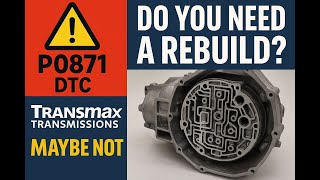
- Worn internal valve body components (Very Common) — Soft aluminum bores inside the valve body (specifically the solenoid switch valve bore) wear out over time. This allows hydraulic fluid to leak between circuits, activating the pressure switch at the wrong time. This accounts for up to 90% of P0871 cases in Dodge, Ram, and Chrysler vehicles. 🎬 Watch: Why your Ram might not need a full rebuild.
- Low or dirty transmission fluid (Very Common) — Low fluid levels directly cause pressure drops, while contaminated fluid clogs passages, jams valves, and fouls pressure sensors.
- Faulty Transmission Fluid Pressure Sensor (TFPS) (Common) — The sensor fails internally and sends incorrect voltage readings to the computer. Always test before replacing, as it often correctly reports a real hydraulic failure rather than being the problem itself.
- Damaged wiring or corroded connectors (Common) — Frayed wires, short circuits, or corroded pins in the main transmission bulkhead connector disrupt the sensor's electrical signal.
- Incorrectly installed internal components (post-rebuild) (Less Common) — A misplaced check ball in the valve body during a rebuild routes mainline pressure to the wrong circuit, triggering the code immediately upon shifting into Drive.
- Failing transmission solenoid pack (Less Common) — The solenoid block housing the pressure switch fails electrically. This is a frequent misdiagnosis; the root cause is usually hydraulic valve body wear, not the solenoid itself.
- Internal transmission mechanical failure (Rare) — Failing transmission pumps or burnt-out clutch packs cause massive pressure loss, usually accompanied by gear ratio error codes.
- Faulty Powertrain/Transmission Control Module (PCM/TCM) (Rare) — The computer fails or requires a software update to properly interpret sensor data. Rule out all mechanical and wiring issues first.
Symptoms

- Check Engine Light illuminates — The Malfunction Indicator Lamp (MIL) activates on your dashboard.
- Harsh, delayed, or erratic shifting — The transmission slams into gear, hesitates before shifting, or shifts unpredictably.
- Vehicle stuck in 'limp mode' — The transmission locks into a single gear (usually 2nd or 3rd) to prevent damage, severely limiting acceleration and top speed.
- Failure to shift into overdrive — The vehicle refuses to shift into 5th or 6th gear, causing high highway RPMs.
- Transmission slipping — The engine revs increase without corresponding acceleration, indicating low hydraulic pressure failing to hold the clutches.
- Burning smell — Overheating fluid from slipping clutches produces a distinct burnt oil smell.
Diagnostic Flowchart
Tap your situation to follow the diagnostic path that matches what you're seeing on this code.
Common Fixes & Costs
- Initial Diagnostic Fee — Parts: $0, Labor: $150-$250, ~1.5 hr book time (Professional)
- Transmission Fluid and Filter Change — Parts: $70-$200, Labor: $150-$350, ~1.5 hr book time (Intermediate)
- Replace or Re-bore Valve Body
— Parts: $500-$1300, Labor: $300-$700, ~4 hr book time
(Professional)
Ram 2500/3500 (68RFE): OEM
Chrysler/Dodge (62TE): OEM - Replace Transmission Solenoid Pack
— Parts: $250-$600, Labor: $250-$500, ~3 hr book time
(Professional)
Chrysler/Dodge (62TE): OEM - Replace Transmission Fluid Pressure Sensor/Switch
— Parts: $50-$150, Labor: $250-$500, ~2.5 hr book time
(Intermediate)
Chevy Spark (CVT7/M4M): OEM - Complete Transmission Rebuild or Replacement — Parts: $3500-$8000+, Labor: Included in total, ~12 hr book time (Professional)
DIY vs Professional
- Transmission Fluid and Filter Change — Beginner: True
- Replace Transmission Fluid Pressure Sensor/Switch — Beginner: False
- Replace Transmission Solenoid Pack — Beginner: False
- Replace or Re-bore Valve Body — Beginner: False
- Complete Transmission Rebuild or Replacement — Beginner: False
Used vs. New Parts: Buying Guide
When a used part is worth it: A used valve body from a low-mileage vehicle is a cost-effective option only if the budget is extremely tight, but it carries significant risk.
Donor-vehicle mileage cap: roughly under 60000 miles for the part to have meaningful remaining life.
Donor quality checklist:
- Verify the donor vehicle was not scrapped due to transmission failure.
- Ask for the VIN to check the vehicle's history and mileage.
- Visually inspect for any signs of sludge, debris, or damage.
- Match part numbers exactly.
Decision logic:
- If The vehicle is a Dodge/Ram/Chrysler with an RFE transmission → Buy a professionally remanufactured valve body. Used units likely have the exact same inherent wear in the solenoid switch valve bores.
- If Budget allows for a remanufactured unit → Buy a remanufactured valve body with oversized valves to correct original design flaws.
- If The vehicle is older (>150k miles) and has low resale value → A low-cost used part might be a justifiable risk, but be prepared for it to fail.
Warranty tradeoff: Salvage yard parts typically have a 30-90 day warranty covering only the part. Remanufactured valve bodies often include a 1-year to limited lifetime warranty.
Worst-case if a used part fails: $500-$1200. If the used part fails, you pay for diagnostic time, removal, and re-installation labor all over again.
What Happens If You Wait — Timeline

- First appearance - 1 month: Code P0871 sets. Check Engine Light illuminates. Intermittent harsh shifts or brief lockouts from overdrive occur when hot. (MPG impact: 0-2%% · Added cost: $0)
- 1-3 months: Vehicle enters 'limp mode' frequently. The hydraulic pressure leak causes intermittent clutch slippage, overheating the transmission fluid. (MPG impact: 3-8%% · Added cost: $50-$150 in wasted fuel)
- 3-6 months: Sustained low pressure causes significant overdrive clutch slippage. Fluid turns dark and smells burnt. Gear ratio error codes (e.g., P0734) appear. A simple valve body fix is no longer sufficient. (MPG impact: 10-15%% · Added cost: $2,500-$5,000 (Requires full rebuild))
- 6+ months: Catastrophic failure. Overdrive clutches burn out completely. Debris circulates through the transmission, destroying the pump and torque converter. Vehicle loses propulsion. (MPG impact: 15-25%+% · Added cost: $5,000-$8,000+ (Requires comprehensive replacement))
Cost of Not Fixing It
- 0-1 month: Continued harsh shifting, vehicle enters 'limp mode' intermittently. Increased stress on transmission components. (Added cost: Negligible, but risk of further damage increases daily.)
- 1-3 months: Low hydraulic pressure causes significant clutch slippage. This rapidly overheats and burns the clutch friction material. Fluid becomes dark and filled with debris. (Added cost: $2,500-$5,000+)
- 3+ months: Catastrophic internal transmission failure. Burnt clutches fuse together. Debris contaminates the entire hydraulic system, requiring a complete transmission replacement. (Added cost: $5,000-$8,000+)
Diagnosis Steps

- Check Transmission Fluid Level and Condition
With the engine running and transmission warm, check the dipstick. Fluid must be at the 'FULL' mark and appear pink/red. Burnt, black fluid with metallic particles confirms internal clutch damage has already occurred.
Tools: Rag or paper towel (Beginner) - Scan for Other Codes & TSBs
Read all stored TCM codes. Gear ratio codes (like P0734) indicate severe internal damage. Check for manufacturer Technical Service Bulletins (TSBs) specific to your year and model.
Tools: OBD-II scanner (Beginner) - PRO TIP: Analyze Live Sensor Data
Monitor live data for the 'C' (Overdrive) pressure switch. On a Ram 68RFE, the switch must read OFF (~5V) in gears 1-3. If it reads ON (0V) in gears 1-3, you have confirmed a rationality fault caused by a hydraulic cross-leak.
Tools: Advanced OBD-II scan tool (Advanced) - PRO TIP: Vacuum Test the Valve Body Bores
For definitive proof of a worn valve body, vacuum test the solenoid switch valve (SSV) bore. A bore that cannot hold a minimum vacuum level (e.g., 16-18 in-Hg) is worn out and is the root cause of the hydraulic cross-leak.
Tools: Valve body vacuum test kit, service manual (Professional) - Inspect Wiring and Connectors
Unplug the main transmission connector. Inspect for bent pins, pushed-out wires, moisture, or corrosion. Clean with electrical contact cleaner.
Tools: Flashlight, electrical contact cleaner (Intermediate) - PRO TIP: Test the Sensor Circuit Voltage
Back-probe the signal wire for the 'C' pressure sensor at the TCM. With key on/engine off, you should see a 5V reference voltage. A reading near 0V when it should be 5V confirms the switch is closed inappropriately or shorted to ground.
Tools: Digital multimeter, wiring diagram, back-probe kit (Advanced) - Test Transmission Line Pressure
Connect a pressure gauge to the transmission test port. Check for pressure in the Overdrive circuit when it should be at 0 PSI. Any pressure indicates an internal hydraulic leak.
Tools: Transmission pressure gauge set, service manual (Advanced) - Inspect the Valve Body
Remove the transmission pan to inspect the valve body. Look for scored surfaces, debris, or missing/damaged check balls.
Tools: Socket set, drain pan, torque wrench (Advanced) - PRO TIP: Test Solenoid and Sensor Resistance
With the solenoid pack unplugged, check the resistance of the pressure switches and solenoids against service manual specs. An open circuit indicates a failed component.
Tools: Digital multimeter, wiring diagram (Advanced)
When This Code Triggers (Freeze-Frame Conditions)
- Engine Coolant Temp: 170-220°F (Engine at normal operating temperature.)
- RPM: 1300-2500 (During steady cruise or light acceleration.)
- Vehicle Speed: 30-60 mph (City or highway driving speeds where shifts into and out of overdrive occur.)
- Engine Load: 25-60% (Moderate engine load, excluding heavy acceleration or deceleration.)
Related Codes
- P0700 — A general transmission fault code indicating the TCM has requested the Check Engine Light. You must read the specific TCM codes (like P0871) to find the actual problem.
- P0870, P0872, P0873, P0874 — Codes for the same 'C' pressure circuit. P0871 is a 'rationality' code (illogical pressure). P0872 (Circuit Low) and P0873 (Circuit High) point specifically to electrical faults like shorts.
- P0846 — Code for the 'B' circuit. Seeing it alongside P0871 suggests a widespread problem, like a failing solenoid pack housing both switches or a major hydraulic leak affecting multiple circuits.
- P0734 / P0735 — Codes for 'Incorrect Gear Ratio'. P0871 is the cause, and these are the effect. Low pressure prevents clutches from engaging fully, causing slippage. Seeing these together means internal damage has occurred and a rebuild is likely required.
- P2714 — Often seen with P0871 on the Chevrolet Spark. GM TSB 19-NA-053 notes both codes are caused by a fluid pressure switch contaminated by valve body debris.
Climate & Environmental Factors
- Cold Weather: Extremely cold temperatures thicken transmission fluid, leading to slower shifting and erratic pressure readings on startup. The issue often resolves once the transmission reaches normal operating temperature (175-225°F).
- Hot Weather / Heavy Towing: High temperatures break down fluid viscosity, leading to reduced line pressure, clutch slippage, and varnish formation on the valve body. This accelerates the wear that triggers P0871.
- High Humidity / Water Submersion: Moisture penetrates worn seals or connectors, leading to short circuits or signal degradation in the pressure sensor circuit.
How to Talk to a Mechanic About This Code
Say this: "I have a P0871 code on my [Vehicle Make/Model]. I'd like to schedule a diagnostic. I suspect it might be a hydraulic issue like a worn valve body bore rather than just a bad sensor. Can you check live data for the pressure switch rationality and inspect for hydraulic leaks before recommending a part replacement?"
This signals you understand P0871 is a complex 'rationality' code. It directs the technician toward proper diagnosis (checking hydraulic function) and away from the common misdiagnosis of just replacing the solenoid pack.
Avoid saying:
- 'My check engine light is on, can you look at it?' (Too vague, invites a wide-ranging and expensive diagnostic process).
- 'I think I need a new transmission solenoid.' (Suggesting a specific repair without diagnosis leads to them performing that repair, even if it's wrong).
- 'Just fix whatever is wrong.' (This gives the shop a blank check and leads to unnecessary repairs).
Questions to ask before authorizing the repair:
- Did you confirm a hydraulic leak in the valve body, or is this an electrical issue with the sensor/wiring? What tests did you perform?
- If it's a worn valve body, are you recommending a remanufactured unit with oversized valves, or a new OEM part?
- If you are recommending a solenoid pack replacement, how did you rule out a hydraulic cross-leak as the root cause?
- What is the warranty on the parts and labor for this specific repair?
Where to Take It: Dealer vs Independent vs Chain
- Dealer:
Good option if the vehicle is under warranty or has a known TSB. For out-of-warranty vehicles, they may propose a very expensive replacement.
Best for: Vehicles still under powertrain warranty., Complex electronic issues or when a TSB applies.
Downsides: Highest labor rates., May prefer to replace an entire transmission assembly rather than repairing a component like a valve body. (Typical cost: +40% vs. baseline) - Chain Shop:
AVOID for P0871 diagnosis and repair. This code requires specialized knowledge beyond the scope of a general chain repair shop.
Best for: Simple, high-volume jobs like oil changes and brake pads.
Downsides: Technician skill with complex internal transmission work is inconsistent., Incentivized to sell parts or full replacements rather than perform nuanced diagnostics. (Typical cost: -10% vs. baseline)
When to Walk Away From the Repair
If the estimated repair cost for the transmission exceeds 50% of the car's private-party value, pause and carefully consider your options.
- Car worth $5000, fix is $2800: Walk away. The repair cost is over 50% of the car's value. It's likely not a sound financial decision.
- Car worth $15000, fix is $3500: Fix it. The repair is significant but well below the 50% threshold, and cheaper than replacing the vehicle.
- Car worth $8000, fix is $4000: Borderline. You are at the 50% mark. Get a second opinion and assess the car's overall health before proceeding.
What Scan Tool You Need for This Code
Minimum: A scanner that reads manufacturer-specific transmission codes and views live data for the Transmission Control Module (TCM), including pressure switch status.
A basic $20 code reader only shows the P0871 code but cannot display the live data needed to confirm the 'rationality' fault (e.g., seeing the overdrive switch ON in 1st gear).
Rent vs buy: For a one-time diagnosis, auto parts stores offer free loaner tools, but they are often basic code readers. For P0871, investing in a budget or midrange scanner is highly recommended to avoid misdiagnosis.
How to Clear the Code After You Fix It
- Use an OBD-II scan tool to clear all diagnostic trouble codes.
- Ensure the transmission fluid is at the correct level.
- Perform a complete drive cycle to allow the vehicle's readiness monitors to reset.
Drive cycle (~30 minutes): A universal drive cycle involves: a cold start (engine off for 8+ hours), 2-3 minutes of idling, 15-20 minutes of mixed city and highway driving (steady 55 mph for 5 minutes), and several decelerations without braking.
Readiness monitors affected: Comprehensive Component Monitor, Catalyst Monitor, Oxygen Sensor Monitor
Before emissions retest: drive at least 100 miles to fully set monitors.
Watch out for:
- Disconnecting the battery clears the code but resets all readiness monitors to 'Not Ready', causing an automatic emissions failure.
- The P0871 code returns immediately if the underlying hydraulic fault has not been repaired.
Will This Fail Emissions / State Inspection?
Yes — this code typically fails an OBD-II emissions inspection.
- California: An illuminated Check Engine Light is an automatic failure. After repairs, the vehicle must complete a drive cycle to set all readiness monitors before re-testing.
- New York: Fails inspection if the Check Engine Light is on. For 2001+ vehicles, only one readiness monitor is allowed to be 'not ready'.
- Texas: An illuminated MIL results in an automatic test failure in emissions counties. Only one monitor can be 'not ready' to pass.
- Illinois: An illuminated check engine light is an automatic failure. Readiness monitors must be set to 'Ready'.
Most Commonly Affected Vehicles
- Dodge/Ram 2500/3500 with 68RFE Transmission (2007-2024) — Extremely common due to wear in the solenoid switch valve (SSV) bores within the valve body, causing a pressure rationality fault.
- Chrysler/Dodge Town & Country, Grand Caravan (62TE) (2008-2016) — Prone to solenoid pack and valve body issues that lead to pressure rationality faults.
- Chevrolet Spark with CVT7/M4M Transmission (2014-2020) — Addressed by GM TSB 19-NA-053. Caused by a debris-contaminated pressure switch. Special coverage warranty N192271110 applies to 2014-2015 models.
- Jeep Wrangler, Liberty, Grand Cherokee (42RLE/545RFE) (2003-2012) — Shares transmissions with Chrysler products, making them prone to identical valve body failures.
- Ford Explorer, Focus, F-150 (6F35/6R80) (2011-2019) — Prone to lead frame, wiring harness, and TCM faults that trigger pressure-related codes.
- Nissan Altima, Maxima, Rogue with CVT (2007-2018) — Pressure sensors are integrated directly into the valve body, requiring full assembly replacement to fix the code.
- Honda Accord, Odyssey, Pilot (2003-2008) — Pressure switches are mounted externally on the transmission case, making them significantly easier and cheaper to replace.
- Subaru Outback, Forester, Impreza with Lineartronic CVT (2012-2018) — Often points to a faulty valve body or solenoid that requires replacement as an assembly.
Manufacturer-Specific Notes
- Dodge / Ram / Chrysler (RFE Transmissions): P0871 is caused by wear in the valve body's solenoid switch valve bore in 90% of cases. Replacing just the solenoid pack is a common misdiagnosis that will not fix the problem.
- Chevrolet (Spark): Addressed in TSB 19-NA-053 and Special Coverage N192271110. The fix is replacing the contaminated transmission fluid pressure switch.
- Honda: On older models (2003-2008), pressure switches are located on the outside of the transmission case, reducing labor costs dramatically.
- Nissan (CVT): Pressure sensors are integrated directly into the valve body and are not sold separately, necessitating a full valve body replacement.
Real Owner Stories
2016 Ram 2500 with 68RFE at ~130k miles - The Classic Misdiagnosis
Truck shifted hard, locked out of 5th/6th gear when warm, and threw code P0871.
What they tried:
- Replaced the entire valve body assembly twice with standard OEM parts.
- Suspected a wiring or PCM issue when the code returned.
Outcome: The final fix was a high-quality remanufactured valve body featuring oversized, wear-resistant solenoid switch valves. The standard OEM replacements failed because they shared the same design flaw as the original.
Lesson: On a high-mileage Ram 68RFE, P0871 is almost always a worn valve body bore. Standard replacements may fail quickly; seek upgraded remanufactured units.
2015 Chevy Spark with CVT - The TSB Fix
Check Engine Light on with codes P0871 and P2714, accompanied by harsh shifting.
What they tried:
- Discovered GM Technical Service Bulletin (TSB) 19-NA-053 addressing these specific codes.
Outcome: The fix was replacing the transmission fluid pressure switch, which had become contaminated with debris. GM Special Coverage N192271110 covered the repair under an extended 10-year/120,000-mile warranty.
Lesson: Always check for TSBs and special warranty coverages. What seems like a major transmission failure can be a well-documented component failure covered by the manufacturer.
2019 Ram with 68RFE - The Post-Rebuild Nightmare
After a full transmission rebuild, P0871 appeared immediately whenever the truck shifted into Drive.
What they tried:
- Verified the new solenoid pack and wiring harness were flawless.
Outcome: The root cause was an incorrectly placed check ball in the valve body during reassembly. Placing a check ball in the wrong channel allowed mainline pressure to flood the overdrive circuit instantly, triggering the rationality fault.
Lesson: If P0871 appears immediately after a rebuild, suspect a reassembly error like a misplaced check ball. Year-specific service manuals are critical.
How to Prevent This Code From Triggering
- Perform regular transmission fluid and filter changes (Every 30,000-60,000 miles) — Clean fluid maintains lubricating properties, preventing the sludge and varnish buildup that jams valve bodies and fouls sensors.
- Use only the manufacturer-specified transmission fluid (Every fluid change) — Modern transmissions require specific fluid with precise frictional properties (e.g., Mopar ATF+4). Generic fluids cause clutch slippage and accelerated wear.
- Install an auxiliary transmission cooler (One-time upgrade for towing vehicles) — Heat is the primary cause of transmission failure. An auxiliary cooler keeps fluid temperatures stable, preventing fluid breakdown and reducing stress on the valve body.
- Come to a complete stop before shifting between Drive and Reverse (Every time you shift direction) — Shifting while moving forces internal components to act as a brake, causing extreme shock and wear on the geartrain and clutches.
Frequently Asked Questions
What does 'rationality failure' mean for a P0871 code?
A rationality failure means the sensor's reading is illogical, not just high or low. For P0871, it means the overdrive pressure switch reports pressure when the computer knows it should be off. This points to a hydraulic or mechanical problem, not just a bad sensor.
Can I just add transmission fluid to fix a P0871 code?
If the code is caused by low fluid, topping it off to the correct level is a temporary fix. You must find and repair the leak that caused the low fluid in the first place. Otherwise, the problem quickly returns and causes permanent damage.
Will replacing the solenoid pack fix P0871 on my Ram truck?
Almost certainly not. While the pressure switch lives inside the solenoid pack, the code triggers from a hydraulic leak in a worn-out valve body bore. Replacing the solenoid without fixing the valve body wear is a costly misdiagnosis.
Do I need a full transmission rebuild if I have a P0871 code?
Not necessarily, as this code is often the final warning before major internal damage occurs. If caught early, replacing the valve body usually fixes the issue. However, if you experience severe slipping or get gear ratio codes, a costly rebuild is required.
My P0871 code appeared right after a transmission rebuild. What could be wrong?
This is a classic symptom of an incorrectly placed check ball in the valve body during reassembly. A misplaced check ball allows hydraulic pressure to bleed into the overdrive circuit immediately upon shifting into Drive. The valve body must be removed to correct the check ball locations.
What's the difference between P0871 and P0872?
P0871 is a 'Rationality' code, meaning the sensor's signal is illogical for the current gear, usually indicating a hydraulic leak. P0872 is a 'Circuit Low' code, pointing specifically to an electrical short to ground.
How much does it cost to fix P0871?
A professional diagnosis costs $150-$250, while a fluid service runs $150-$350. The most common fix on Ram trucks, a valve body replacement, costs $800 to $2,000. Ignoring the code leads to a full transmission rebuild costing $3,500 to $8,000+.
Key Takeaways
- P0871 triggers when the transmission computer detects illogical fluid pressure, such as overdrive pressure applying while the vehicle is in 1st gear.
- Stop driving immediately; continuing to drive with P0871 causes clutch slippage that turns a $1,500 valve body repair into a $6,000+ complete transmission rebuild.
- Over 90% of P0871 cases in Dodge, Ram, and Chrysler vehicles stem from a worn solenoid switch valve bore inside the valve body, not a faulty sensor.
- Do not replace the transmission solenoid pack without first performing a vacuum test on the valve body to confirm or rule out internal hydraulic cross-leaks.
Helpful Videos
Shop the Parts Behind P0871
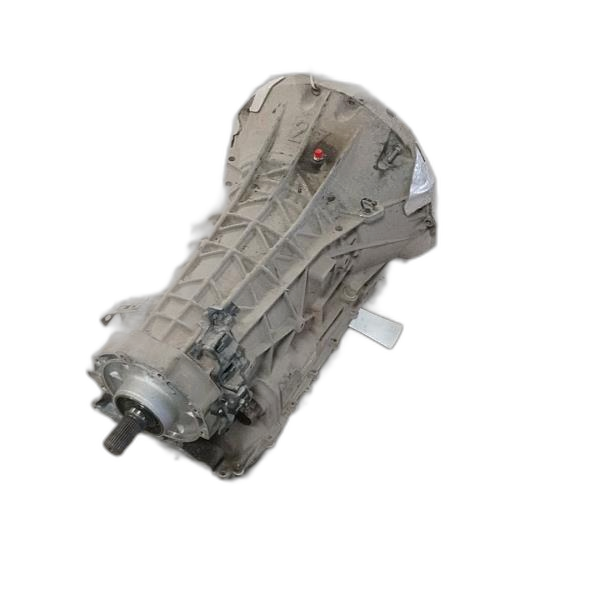
Below are the parts most often responsible for code P0871, ranked by how frequently each one is the actual culprit (per the diagnosis above). Tap any to see what we have for your vehicle.


The information in this article is provided for general reference and educational purposes only. Vehicle specifications, procedures, and part compatibility can vary by production date, trim level, and region. Always consult your vehicle's factory service manual and verify part numbers before purchasing or performing repairs. Safety-critical components such as airbags, seat belts, and braking systems should be installed by a qualified professional.
- 🧭 Diagnostic Flowchart
- 🎬 Helpful Videos
- 🛍️ Shop This Part
- What Does P0871 Mean?
- Can I Drive With P0871?
- Common Causes
- Symptoms
- Common Fixes & Costs
- DIY vs Professional
- Used vs. New Parts: Buying Guide
- What Happens If You Wait — Timeline
- Cost of Not Fixing It
- Diagnosis Steps
- When This Code Triggers (Freeze-Frame Conditions)
- Related Codes
- Climate & Environmental Factors
- How to Talk to a Mechanic About This Code
- Where to Take It: Dealer vs Independent vs Chain
- When to Walk Away From the Repair
- What Scan Tool You Need for This Code
- How to Clear the Code After You Fix It
- Will This Fail Emissions / State Inspection?
- Most Commonly Affected Vehicles
- Manufacturer-Specific Notes
- Real Owner Stories
- 2016 Ram 2500 with 68RFE at ~130k miles - The Classic Misdiagnosis
- 2015 Chevy Spark with CVT - The TSB Fix
- 2019 Ram with 68RFE - The Post-Rebuild Nightmare
- How to Prevent This Code From Triggering
- Frequently Asked Questions
- What does 'rationality failure' mean for a P0871 code?
- Can I just add transmission fluid to fix a P0871 code?
- Will replacing the solenoid pack fix P0871 on my Ram truck?
- Do I need a full transmission rebuild if I have a P0871 code?
- My P0871 code appeared right after a transmission rebuild. What could be wrong?
- What's the difference between P0871 and P0872?
- How much does it cost to fix P0871?
- Key Takeaways
- 🎟️ Get 5% Off