

OBD-II Code P0873: Transmission Pressure Sensor 'C' Circuit High
The Ultimate Guide to Meaning, Diagnosis, and Repair
- Stop driving immediately; continuing with code P0873 causes harsh shifting and limp mode, risking a $3,000+ transmission rebuild.
- The most common cause is a failed transmission fluid pressure sensor, which costs $190 to $850 to replace depending on if it is internal or external.
- Always test the wiring harness for a 5V short-to-power before replacing the sensor to avoid a common $300 misdiagnosis.
- If you own a 2001-2013 GM truck, this code almost always points to a heat-damaged internal Transmission Fluid Pressure (TFP) Manifold Switch.
What Does P0873 Mean?
Your car's Powertrain Control Module (PCM) is receiving a stuck 'high' voltage signal from transmission pressure sensor 'C'. The computer requires accurate pressure readings to shift gears smoothly. This error signal causes serious shifting problems because the detected voltage contradicts the expected pressure for the current gear.
Technical definition: The official SAE/OBD-II definition is "Transmission Fluid Pressure Sensor/Switch 'C' Circuit High". This indicates the PCM detects a voltage from the 'C' circuit that is above the manufacturer's specified range, typically stuck at or near 5.0 volts.
Can I Drive With P0873?
No — Do Not Drive. Driving is not recommended. The transmission will shift harshly, get stuck in one gear ('limp mode'), or fail to shift unpredictably, creating a significant safety hazard. Continuing to drive causes severe stress and destroys internal transmission components, turning a $300 sensor issue into a $3,000 rebuild.
Common Causes
- Failed Transmission Fluid Pressure Sensor/Switch (Very Common) — The sensor itself is the most frequent failure point. On GM trucks, this is part of a pressure manifold switch inside the hot transmission that degrades over time, failing when the fluid heats up.
- Damaged Wiring, Corroded Connectors, or Poor Ground (Common) — Wiring can melt against the exhaust, chafe, or corrode at the connector. A signal wire shorting to a 5V power source causes the exact constant 'high' signal the computer sees, making this a frequent misdiagnosis.
- Low, Dirty, or Contaminated Transmission Fluid (Common) — Low fluid, or fluid contaminated with metal shavings and clutch material, clogs small passages in the valve body. This creates erratic pressure or localized blockages that trigger the sensor.
- Internal Mechanical Transmission Failure (Less Common) — A stuck valve inside the transmission's valve body creates a true high-pressure condition, which the sensor accurately reports. This requires internal transmission repair.
- Faulty Transmission Control Module (TCM) or Outdated Software (Rare) — The TCM may misinterpret the sensor signal due to an internal short or overly sensitive software logic. Manufacturers occasionally release software updates to fix false codes.
Symptoms
- Transmission Stuck in 'Limp Mode' — The transmission defaults to a single gear (usually 2nd or 3rd) to prevent damage. This causes sluggish acceleration and high engine RPM at highway speeds.
- Harsh, Erratic, or Delayed Shifting — The car slams into gear, hesitates before shifting, or shifts at the wrong RPM. You feel a violent jerk or shudder during gear changes.
- Check Engine Light / Transmission Warning Light On — The Malfunction Indicator Lamp (MIL) illuminates. The PRNDL gear indicator display may also flash on the dashboard.
- Increased Fuel Consumption — Because the transmission is stuck in a lower gear or shifting inefficiently, the engine runs at higher RPMs, burning significantly more fuel.
Diagnostic Flowchart
Tap your situation to follow the diagnostic path that matches what you're seeing on this code.
Common Fixes & Costs
- Replace Transmission Fluid Pressure Sensor/Switch
— Parts: $40-$250, Labor: $150-$600, ~3.0 hr book time
(Advanced)
Chevrolet/GMC (4L60E/4L80E): OEM 24215111 (Alt: {'ACDelco': '24215111', 'Dorman': '92436'})
Honda/Acura (Various): OEM 28600-RKE-004 (Alt: {'Standard Motor Products': 'PS464'}) - Repair Wiring or Connector — Parts: $10-$50, Labor: $150-$300, ~2.0 hr book time (Professional)
- Replace Transmission Fluid and Filter — Parts: $60-$150, Labor: $150-$300, ~1.5 hr book time (Intermediate)
- Replace Valve Body or Solenoid Pack
— Parts: $300-$900, Labor: $300-$800, ~4.0 hr book time
(Professional)
Dodge/Chrysler (62TE): OEM 68376703AA (Alt: {'Dorman': '609-040'}) - Replace Transmission Control Module (TCM) — Parts: $200-$1000, Labor: $200-$600, ~2.0 hr book time (Professional)
DIY vs Professional
- Replace Transmission Fluid and Filter 🟢 Beginner
Tools: Socket set, drain pan, funnel, new fluid, new filter/gasket. - Replace External Transmission Pressure Sensor (e.g., Honda) 🟢 Beginner
Tools: Socket set (deep sockets), wrench, rag. - Replace Internal Pressure Manifold Switch (e.g., GM Trucks) 🟢 Beginner
Tools: Extensive socket set, torque wrench, large drain pan, inch-pound torque wrench, picks. - Replace Solenoid Pack (e.g., Chrysler 62TE) 🟢 Beginner
Tools: Socket set, Torx bit set, torque wrench (in-lbs), picks.
Used vs. New Parts: Buying Guide
When a used part is worth it: For a simple external pressure switch (common on Hondas), a used OEM part from a low-mileage vehicle is a reasonable budget option. Never buy used internal parts (like a GM TEHCM or Chrysler solenoid pack) due to the massive labor cost if the part fails.
Donor-vehicle mileage cap: roughly under 60000 miles for the part to have meaningful remaining life.
Donor quality checklist:
- Verify the donor vehicle was not scrapped due to transmission failure.
- Match the part number exactly; electronic revisions are rarely interchangeable.
- Avoid internal parts from transmissions with mechanical failure, as debris contamination is guaranteed.
Decision logic:
- If The part is an easily accessible external sensor. → A used OEM part is a viable low-cost option.
- If The part is internal, requiring pan removal (e.g., pressure manifold, solenoid pack). → Buy a new or professionally remanufactured part. The labor cost to replace a failed used part twice outweighs any initial savings.
- If The vehicle has over 150,000 miles. → Replace wear items like solenoid packs with new units, as used ones are already near the end of their service life.
Warranty tradeoff: Salvage yards offer 30-90 day warranties on the part only. New aftermarket parts (Dorman) offer 1-year to lifetime warranties. New OEM parts carry a 12-month warranty.
Worst-case if a used part fails: $500-$1500 if a used internal part fails, entirely due to repeated labor charges.
What Happens If You Wait — Timeline
- 0-1 month: Code P0873 sets. Check Engine Light illuminates. Intermittent harsh shifts occur when hot. Vehicle occasionally enters limp mode. (MPG impact: 0-5%% · Added cost: $0-$50 in wasted fuel.)
- 1-3 months: Limp mode becomes frequent. Harsh shifting is constant. Inefficient operation overheats the transmission fluid, reducing lubrication. (MPG impact: 5-15%% · Added cost: $50-$200 in wasted fuel and initial clutch pack glazing.)
- 3-6 months: Sustained overheating damages internal seals and burns clutch packs. Fluid turns dark and smells burnt. The valve body becomes contaminated with debris. (MPG impact: 15-25%% · Added cost: $800-$2500 for valve body or solenoid pack replacement.)
- 6+ months: Catastrophic failure. Clutch packs are destroyed. The vehicle stops moving. A complete transmission rebuild is required. (MPG impact: >25% (or vehicle is undrivable)% · Added cost: $3000-$7000+ for a full transmission rebuild.)
Cost of Not Fixing It
- 0-1 month: Harsh shifting and slipping puts excessive wear on clutch packs and bands. Fuel economy decreases immediately due to limp mode. (Added cost: $0-$50 in wasted fuel.)
- 1-6 months: The transmission overheats due to slipping clutches, burning the fluid and destroying internal seals. This contaminates the valve body with metal debris. (Added cost: $800-$2500)
- 6+ months: Catastrophic transmission failure. Widespread damage from overheating and mechanical stress requires a complete transmission rebuild or replacement. (Added cost: $3000-$7000+)
Diagnosis Steps
- Scan Codes & Review Freeze Frame Data
Use an OBD-II scanner to confirm P0873. Check for related codes (like P0872 or P0700). Analyze the freeze frame data to identify the exact speed, RPM, and temperature when the code triggered.
Tools: OBD-II Scanner (Beginner) - Check Transmission Fluid Level and Condition
Check the fluid using the dipstick (engine running, at operating temperature). Fluid must be pink/red and not smell burnt. Dark, burnt, or low fluid indicates an internal mechanical or overheating issue.
Tools: Rag, White Paper Towel (Beginner) - Inspect Wiring and Connectors
Visually trace the wiring harness to the transmission. Look for chafing, melted insulation near the exhaust, or green corrosion at the main transmission harness connector pins.
Tools: Flashlight (Intermediate) - Pro Tip: Test Circuit with Sensor Disconnected
Disconnect the sensor. With the key on, measure the voltage on the signal wire in the harness-side connector. It must drop to 0V. If it remains high (5V or 12V), you have a short-to-power in the wiring harness, not a bad sensor.
Tools: Multimeter (Advanced) - Backprobe the Sensor Connector
With the sensor connected and key on, backprobe the signal wire. A normal sensor varies between 0.5V and 4.5V based on pressure. A reading stuck at or above 4.8V confirms the 'Circuit High' fault condition.
Tools: Multimeter, T-pins (Advanced) - Test Sensor Resistance
With the sensor disconnected, measure resistance across its terminals. Compare the reading to the manufacturer's service manual (e.g., Toyota SL1 is 5.0-5.6 Ω). Infinite (open) or zero (short) resistance means the sensor is dead.
Tools: Multimeter, Service Manual (Advanced) - Analyze Live Data
Use an advanced scan tool to monitor the 'Transmission Fluid Pressure Switch C' PID while driving. If the state is stuck 'High' or 'On' while shifting gears, it confirms the PCM's fault logic.
Tools: Advanced OBD-II Scanner (Professional) - Check Actual Hydraulic Pressure
Tap a mechanical pressure gauge into the transmission's 'C' circuit test port. This proves whether you have a false electrical signal or a true internal hydraulic blockage (like a stuck regulator valve).
Tools: Transmission Pressure Gauge Set (Professional)
When This Code Triggers (Freeze-Frame Conditions)
- Engine Coolant Temp: 180-200°F (82-93°C) (The fault often appears after the vehicle is fully warmed up. Heat expands internal transmission seals and exposes failing electronic components.)
- RPM: 1500-2500 RPM (Frequently sets during steady-state cruising or light acceleration when the transmission expects a stable gear.)
- Engine Load: 30-60% (Occurs under normal driving conditions, rarely during heavy acceleration.)
- Vehicle Speed: 35-55 mph (56-88 km/h) (Commonly triggered at city or highway cruising speeds immediately after the TCM commands a gear shift.)
Related Codes
- P0700 — A generic informational code stating the TCM detected a problem and stored a specific code (like P0873).
- P0872 — Transmission Fluid Pressure Sensor 'C' Circuit Low. The direct opposite of P0873.
- P0840-P0849 & P0870-P0879 — Codes for other transmission fluid pressure sensors ('A', 'B', 'D', etc.).
- P0868 — Transmission Fluid Pressure Low. Indicates a systemic low pressure condition.
Climate & Environmental Factors
- High Ambient Heat: Heat destroys internal electronic components like the GM pressure manifold switch. High ambient temperatures accelerate the degradation of plastic and rubber seals, causing the fault to appear only after the vehicle warms up.
- Road Salt (Corrosion): Saltwater acts as an electrolyte that corrodes external wiring harnesses and connector pins. This creates shorts or high resistance in the sensor circuit, perfectly mimicking a sensor failure.
How to Talk to a Mechanic About This Code
Say this: "I have a P0873 code with harsh shifting. I want to confirm if it's an electrical issue, like the sensor or wiring, before discussing internal parts. Please test the 'C' circuit voltage to verify the fault."
This prevents a shop from immediately quoting an expensive transmission rebuild. It forces them to perform a proper electrical diagnosis first, which often reveals a cheaper fix.
Avoid saying:
- 'My transmission is acting weird, can you fix it?'
- 'Just do whatever it takes to fix the check engine light.'
- 'A guy online said I need a new transmission.'
Questions to ask before authorizing the repair:
- Did you test the sensor's signal voltage and confirm it's stuck high?
- Did you test the wiring harness for a short-to-power by disconnecting the sensor?
- If the sensor is internal, what is the condition of the fluid and the internal wiring harness?
- What is the warranty on both the parts and the labor?
Where to Take It: Dealer vs Independent vs Chain
- Dealer:
Best for: Vehicles under warranty., Complex repairs requiring TCM programming (like a GM TEHCM).
Downsides: Highest labor rates., May prefer replacing a large assembly (valve body) rather than a smaller component. (Typical cost: +50% vs. baseline) - Independent Shop:
Best fit for most out-of-warranty vehicles. Take it to a transmission specialty shop; they have the specific experience to diagnose internal issues without the high dealer cost.
Best for: Out-of-warranty vehicles with common P0873 issues (GM trucks, Hondas)., Owners looking for a balance of expertise and cost.
Downsides: Quality varies; look for ASE certifications., May lack the latest manufacturer software updates. (Typical cost: +0% vs. baseline) - Chain Shop:
Use with caution. Get a second opinion from a specialist before authorizing any major internal repair they recommend for P0873.
Best for: Simple fluid and filter changes.
Downsides: Technician skill for complex electrical diagnosis is inconsistent., Quick to recommend a complete transmission replacement. (Typical cost: -10% vs. baseline)
When to Walk Away From the Repair
If the estimated repair cost exceeds 50% of the car's private-party value, seriously consider selling or trading it in.
- Car worth $8000, fix is $1200: Fix it. The repair cost for an internal pressure manifold switch is well below the 50% threshold.
- Car worth $4000, fix is $2500: Borderline. The repair cost for a valve body replacement is over 50% of the car's value. Get a second opinion.
- Car worth $3000, fix is $3500: Walk away. The cost for a transmission rebuild exceeds the vehicle's value.
What Scan Tool You Need for This Code
Minimum: A scanner that reads and graphs live transmission data, specifically the voltage or state (On/Off) of the transmission fluid pressure switches.
A basic $30 code reader only shows the P0873 code. It cannot show live sensor data, which is essential to confirm if the sensor's signal is actually stuck 'high'. Without live data, you are guessing.
Budget: BlueDriver Pro (~$100) — Connects to your smartphone to read and clear transmission codes. Crucially, it graphs live data for transmission PIDs, allowing you to watch the pressure switch 'C' signal in real-time.
Mid-range: Innova 5610 (~$300) — Offers dedicated transmission diagnostics and live data. Adds bidirectional control, allowing you to command solenoids to test their function.
Professional: Autel MaxiCOM MK808S (~$450) — Provides robust live data graphing, bidirectional controls, and special functions like performing a 'Quicklearn' to reset transmission adaptations after a repair.
Rent vs buy: Rent a basic reader from an auto parts store to confirm the code. To properly diagnose P0873 yourself, buy a budget pick like the BlueDriver to see live data.
How to Clear the Code After You Fix It
- Reconnect the battery if disconnected during repair.
- Use an OBD-II scan tool to clear the diagnostic trouble codes (DTCs).
- Perform a complete drive cycle to reset the vehicle's readiness monitors.
Drive cycle (~30 minutes): A generic drive cycle requires a cold start, 3 minutes of idling, 15 minutes of mixed city driving (25-35 mph) with stops, and 10 minutes of steady highway driving (55-60 mph). This operates the vehicle under all conditions needed for system self-tests.
Readiness monitors affected: Comprehensive Component Monitor (CCM), Catalyst Monitor, Oxygen (O2) Sensor Monitor
Before emissions retest: drive at least 100 miles to fully set monitors.
Watch out for:
- Clearing the code resets readiness monitors to 'Not Ready'. You must complete a drive cycle before passing an emissions test.
- The code returns immediately if the underlying short-circuit or sensor fault is not repaired.
- EVAP monitors require specific fuel levels (15-85%) and ambient temperatures to run, often requiring multiple days to set.
Will This Fail Emissions / State Inspection?
Yes — this code typically fails an OBD-II emissions inspection.
- California: An active P0873 code is an automatic smog check failure. Clearing the code resets monitors to 'Not Ready', which also triggers a failure.
- New York: Fails NYS inspection if the Check Engine Light is on. NY allows a 10-day extension if the initial failure was solely due to unset readiness monitors after a repair.
- Texas: In the 17 emissions-testing counties, an active P0873 code causes an automatic OBD-II failure.
Most Commonly Affected Vehicles
- Chevrolet Silverado (2001-2013) — Extremely common failure of the internal Transmission Fluid Pressure (TFP) Manifold Switch on 4L60E, 6L80, and Allison transmissions. The fault often appears only after the truck warms up.
- GMC Sierra (2001-2013) — Identical to the Silverado. Code P0873 almost always points to a heat-damaged TFP Manifold Switch inside the transmission pan.
- Honda Odyssey, Pilot, Accord (2008-2017) — Prone to 4th gear clutch pressure switch failure, forcing the transmission into a failsafe mode limited to 1st and 4th gears. The switch is external and accessible.
- Dodge Grand Caravan (2008-2016) — The 62TE transmission frequently suffers solenoid pack failures, which house the pressure switches. Replacing the entire pack is the standard repair.
- Chrysler Town & Country (2008-2016) — Shares the 62TE transmission and solenoid pack failure rates with the Dodge Grand Caravan.
- Nissan Altima, Rogue (2007-2015) — On CVT models, pressure codes point to a failure within the transmission valve body. Replacing the entire valve body assembly is required.
- Hyundai Elantra, Sonata (2011-2016) — P0873 triggers due to faulty sensors or brittle internal wiring harnesses within the transmission that short out from heat exposure.
- Ford Focus, F-150 (2009-2018) — Appears on 2012-2018 Focus DSP6 transmissions due to TCM/actuator faults, and 2009-2014 F-150 6R80 transmissions due to internal lead frame failures.
Manufacturer-Specific Notes
- General Motors (Chevrolet, GMC): The code almost always points to a failed internal Transmission Fluid Pressure Manifold Switch. A classic symptom is the code only triggering after 15-20 minutes of driving, indicating heat-related seal failure.
- Honda / Acura: P0873 forces a 'failsafe' mode limiting the vehicle to 1st and 4th gears. The issue is typically the external 4th gear clutch pressure switch, making it a highly accessible DIY repair.
- Chrysler / Dodge: On 62TE transmissions, pressure switches are permanently integrated into the solenoid pack. You cannot replace the switch alone; the entire solenoid block must be swapped.
- Toyota: Toyota links P0873 directly to a specific shift solenoid (e.g., SL1) being stuck ON. Diagnosis requires applying battery voltage to the solenoid to listen for a click and verifying its 5.0-5.6 ohm resistance.
Real Owner Stories
2008 Chevy Silverado 2500HD with Allison Transmission
Truck went into limp mode (stuck in 3rd gear) with a flashing PRNDL display only after driving for 20 minutes.
What they tried:
- Read code P0873.
- Suspected the internal pressure switch manifold due to the heat-related symptom.
Outcome: Replaced the Allison Pressure Switch Manifold (P/N 29546972) on the valve body. The repair resolved the code and limp mode.
Lesson: On GM trucks, if P0873 appears only when the transmission is hot, the internal Pressure Switch Manifold is the culprit due to heat-related seal failure.
2008 Honda Odyssey with 115K miles
Received a 'Check Transmission' message and a flashing 'D' light. Shop pulled code P0873.
What they tried:
- Researched sensor locations for the specific 2008 model year.
Outcome: Replaced the external 4th gear pressure switch (P/N 28600-RKE-004) using a deep socket. Fixed the code and flashing light instantly.
Lesson: Honda pressure switches are often external and DIY-friendly. Always verify the exact location for your specific model year, as it changes frequently.
Misdiagnosis: Wiring Harness Failure
GMC Sierra owner replaced the internal TFP Manifold Switch to fix P0873, but the code returned immediately.
What they tried:
- Replaced the TFP Manifold Switch.
- Re-checked fluid levels.
Outcome: Further testing revealed the internal transmission wiring harness had become brittle and was shorting out. Replacing the harness fixed the problem.
Lesson: If a new sensor doesn't fix the code, the circuit is broken. The internal wiring harness suffers the same heat damage as the sensor. Consider replacing both simultaneously to avoid repeat labor.
How to Prevent This Code From Triggering
- Change transmission fluid and filter at recommended intervals. (Every 30,000-60,000 miles.) — Removes metal shavings that clog sensor passages. Fresh fluid dissipates heat effectively, preventing the overheating that destroys electronic components.
- Install an auxiliary transmission cooler. (One-time installation for towing vehicles.) — Excessive heat kills transmissions. An external cooler keeps fluid temperatures stable, extending the life of internal seals and sensors.
- Inspect external wiring and connectors. (During every oil change.) — Cleaning corrosion on the main transmission connector prevents a 'Circuit High' code and an unnecessary internal repair.
Frequently Asked Questions
Can I fix P0873 myself?
Yes, if the cause is an external sensor or a fluid top-off. However, on many vehicles like GM trucks, the sensor is inside the transmission oil pan. This requires draining fluid and dropping the pan, which is best left to an intermediate or professional mechanic.
Will changing the transmission fluid fix a P0873 code?
It only fixes the code if the problem is caused by severely low or contaminated fluid blocking a passage. Most often, P0873 is an electrical failure of the sensor or wiring. A fluid change alone will not fix a broken circuit.
What are the most common misdiagnosis mistakes?
The biggest mistake is replacing the pressure sensor without testing the wiring harness first. A chafed wire shorting to a 5V power source causes a 'Circuit High' code and mimics a dead sensor perfectly. Always test the harness to avoid wasting money on unneeded parts.
Why did the code come back after I replaced the sensor?
If a new sensor doesn't fix the code, you have a hidden wiring issue, a corroded connector pin, or a faulty Transmission Control Module (TCM). You must trace the circuit for a short-to-power. In rare cases, an internal mechanical blockage causes a true high-pressure state.
What does the 'C' in 'Circuit C' mean?
Manufacturers use letters (A, B, C) to identify specific hydraulic circuits and their corresponding sensors inside the transmission. The 'C' circuit is just one of several monitored by the computer to verify proper gear engagement.
Is a 'Circuit High' code a big deal?
Yes. It indicates a serious electrical fault or a damaging hydraulic condition. The computer sees a constant high voltage instead of a fluctuating signal, which disables its ability to control shifts and forces the car into limp mode.
Can I just clear the code and keep driving?
You can clear it, but it returns immediately once the computer runs its self-test. Ignoring it forces the transmission to slip and overheat. This turns a minor electrical repair into a catastrophic mechanical failure.
What does it feel like when a car goes into limp mode?
You experience a sudden, significant loss of power and acceleration. The engine refuses to rev past 2,500-3,000 RPM, and the transmission locks into a single gear (usually 2nd or 3rd). The check engine light illuminates immediately.
Key Takeaways
- Stop driving immediately; continuing with code P0873 causes harsh shifting and limp mode, risking a $3,000+ transmission rebuild.
- The most common cause is a failed transmission fluid pressure sensor, which costs $190 to $850 to replace depending on if it is internal or external.
- Always test the wiring harness for a 5V short-to-power before replacing the sensor to avoid a common $300 misdiagnosis.
- If you own a 2001-2013 GM truck, this code almost always points to a heat-damaged internal Transmission Fluid Pressure (TFP) Manifold Switch.
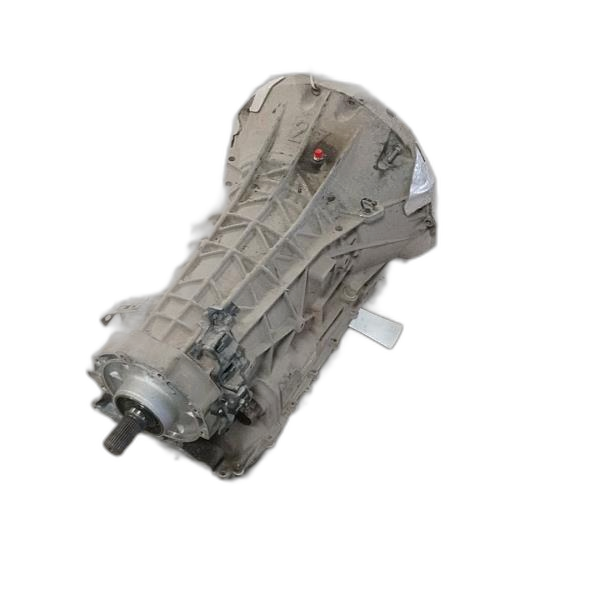
Shop the Parts Behind P0873
Below are the parts most often responsible for code P0873, ranked by how frequently each one is the actual culprit (per the diagnosis above). Tap any to see what we have for your vehicle.



The information in this article is provided for general reference and educational purposes only. Vehicle specifications, procedures, and part compatibility can vary by production date, trim level, and region. Always consult your vehicle's factory service manual and verify part numbers before purchasing or performing repairs. Safety-critical components such as airbags, seat belts, and braking systems should be installed by a qualified professional.
- 🧭 Diagnostic Flowchart
- 🛍️ Shop This Part
- What Does P0873 Mean?
- Can I Drive With P0873?
- Common Causes
- Symptoms
- Common Fixes & Costs
- DIY vs Professional
- Used vs. New Parts: Buying Guide
- What Happens If You Wait — Timeline
- Cost of Not Fixing It
- Diagnosis Steps
- When This Code Triggers (Freeze-Frame Conditions)
- Related Codes
- Climate & Environmental Factors
- How to Talk to a Mechanic About This Code
- Where to Take It: Dealer vs Independent vs Chain
- When to Walk Away From the Repair
- What Scan Tool You Need for This Code
- How to Clear the Code After You Fix It
- Will This Fail Emissions / State Inspection?
- Most Commonly Affected Vehicles
- Manufacturer-Specific Notes
- Real Owner Stories
- 2008 Chevy Silverado 2500HD with Allison Transmission
- 2008 Honda Odyssey with 115K miles
- Misdiagnosis: Wiring Harness Failure
- How to Prevent This Code From Triggering
- Frequently Asked Questions
- Can I fix P0873 myself?
- Will changing the transmission fluid fix a P0873 code?
- What are the most common misdiagnosis mistakes?
- Why did the code come back after I replaced the sensor?
- What does the 'C' in 'Circuit C' mean?
- Is a 'Circuit High' code a big deal?
- Can I just clear the code and keep driving?
- What does it feel like when a car goes into limp mode?
- Key Takeaways
- 🎟️ Get 5% Off