

P0873 on 2001-2005 GMC Sierra: Transmission Pressure Switch 'C'/'D' Circuit High Fixes
On a 2001-2005 GMC Sierra, code P0873 almost always points to a failed Transmission Fluid Pressure (TFP) Manifold Switch inside the transmission oil pan. This is a well-documented, high-failure part on the 4L60E, 4L80E, and Allison transmissions used in this truck. The fix involves dropping the pan and replacing the switch assembly, transmission filter, and fluid, costing around $80-$200 for parts.
- P0873 on a 2001-2005 Sierra is an electrical fault code, almost always caused by a failed Transmission Fluid Pressure (TFP) Manifold Switch inside the oil pan.
- This is a serious code that can cause drivability issues like getting stuck in gear; address it promptly to avoid being stranded.
- The repair requires dropping the transmission pan. It's standard practice to replace the TFP switch, transmission filter, and pan gasket at the same time.
- Do not suspect a major mechanical failure or a bad TCM until the common, inexpensive electronic parts (TFP switch and wiring) have been ruled out.
- Always use the correct type of transmission fluid (typically DEXRON-VI) when refilling.
What's Unique About the 2001-2005 Gmc SIERRA
The GMT800 platform Sierras from this era primarily used the 4L60E or heavy-duty 4L80E 4-speed automatic transmissions, with the Allison 1000 series in 2500HD/3500 models. A high failure rate of the internal Transmission Fluid Pressure (TFP) Manifold Switch is a well-documented issue on these GM transmissions. The plastic switch assembly sits inside the hot transmission pan, becomes brittle over time, and is the most common cause for this code. For the Allison 1000, symptoms often appear only after the transmission warms up (15-20 minutes of driving), which points to heat-related failure of the switch manifold's seals.
Diagnostic Flowchart
Tap your situation to follow the diagnostic path that matches what you're seeing on this vehicle.
Symptoms You May Notice
- Check Engine Light is on
- Transmission may not shift or gets stuck in one gear ('limp mode')
- Harsh or erratic shifting
- Increased fuel consumption
- Transmission may not engage properly from a stop
- Delayed engagement when shifting into Drive or Reverse
- Symptoms are worse or only appear after the transmission has warmed up
- Replacing the Transmission Control Module (TCM) prematurely.
- Assuming it's a major internal mechanical failure before checking the common electronic causes like the TFP switch.
- Replacing shift solenoids, which are different components and cause different codes.
Most Likely Causes
- Failed Transmission Fluid Pressure (TFP) Manifold Switch 🔴 High Probability → Shop Transmission Assembly The plastic switch assembly is located inside the transmission, where constant heat cycles make it brittle and prone to internal failure. This is a very common issue on GM's 4L60E/4L80E and Allison transmissions of this era. On Allison models, heat causes the internal seals to swell and fail, leading to the code.
How to confirm: After dropping the transmission pan, the switch is visible on the valve body. A key diagnostic clue for Allison transmissions is if the code only appears after 15-20 minutes of driving. While it can be tested with a multimeter, the high failure rate and low part cost make replacement the standard procedure once the pan is off.
Typical fix: Replace the TFP manifold switch, transmission filter, and pan gasket. Refill with the correct transmission fluid (DEXRON-VI). Torque switch bolts to 8-10 ft-lbs (96-120 in-lbs).
Est. part cost: $60-$150 - Damaged Internal Wiring Harness 🟡 Medium Probability Like the TFP switch, the internal wiring harness is submerged in hot fluid and can become brittle, leading to cracked insulation or broken wires. The main pass-through connector can also leak fluid, contaminating the pins.
How to confirm: Visually inspect the harness for signs of damage, chafing, or burnt connectors after removing the transmission pan. Check the main connector on the outside of the case for fluid intrusion.
Typical fix: Replace the internal transmission wiring harness. This is often done at the same time as the TFP switch for peace of mind.
Est. part cost: $50-$100 - Low, Burnt, or Contaminated Transmission Fluid ⚪ Low Probability → Shop Transmission Assembly While not a direct cause of a 'circuit high' fault, extremely low or contaminated fluid can cause erratic operation and lead to other codes. It's often a sign of a larger problem or neglected maintenance. Debris in the fluid can also clog passages in the valve body or the pressure switch itself.
How to confirm: Check the transmission fluid level and condition using the dipstick. The fluid should be red and not smell burnt. A 'circuit high' code is an electrical fault, so this is less likely to be the root cause unless debris is causing a switch to malfunction.
Typical fix: Perform a transmission fluid and filter change. If the fluid is heavily contaminated, it may indicate internal mechanical failure requiring further diagnosis.
Est. part cost: $75-$150
Rare But Worth Checking
- Faulty Transmission Control Module (TCM): → Shop Transmission Assembly This is a rare cause. The provided TSB PIP4379K specifically notes that other components are more likely to be the issue. Do not replace the TCM unless all other possibilities have been exhausted.
- Damaged External Wiring or Connector: The main harness connector on the side of the transmission can get corroded or damaged from road debris and moisture. A visual inspection of this connector for pushed-out pins or corrosion is a wise first step before dropping the pan.
- Stuck Valve in Valve Body: → Shop Transmission Valve Body Debris in the transmission fluid can cause control valves within the valve body to stick, which could lead to a genuine pressure issue that the sensor correctly reports. TSB PIP4972C notes this as a cause for a related code (P0877) on this platform.
Diagnosis Steps
- Scan for all stored DTCs to see if P0873 appears with other transmission codes like P0700 or other pressure switch codes.
- Check the transmission fluid level and condition. Ensure it is full and does not smell burnt.
- Inspect the main external wiring harness connector on the transmission for damage, corrosion, or loose pins.
- If external checks are okay, safely raise the vehicle and place a large drain pan under the transmission.
- Remove the transmission oil pan bolts (typically 13mm for Allison models) and lower the pan.
- Visually inspect the TFP manifold switch and the internal wiring harness for cracks, damage, or burnt spots.
- Given the high probability of failure, the most common and effective step is to replace the TFP manifold switch, the transmission filter, and the pan gasket.
- Torque the new switch bolts to specification (e.g., 96-120 in-lbs).
- Clean the pan and magnet, then reinstall the pan with a new gasket, torquing bolts in a crisscross pattern 🎬 Watch: How to properly service the 4L60E pressure switch to prevent leaks.
- Refill the transmission with the manufacturer-specified fluid (e.g., DEXRON-VI). A pan drop requires approximately 9 quarts for an Allison transmission.
- Clear the codes and perform a test drive, allowing the transmission to reach operating temperature to ensure the issue is resolved.
Parts You'll Likely Need
- Transmission Fluid Pressure (TFP) Manifold Switch
(OEM #ACDelco 24229422 (for 4L60E/4L80E), Allison 29546972 (for Allison 1000))— This is the most common component to fail and directly cause the P0873 code on these trucks.
Trusted brands: ACDelco, Allison (Genuine), Dorman, Rostra Precision Controls
OEM price range: $100-$180
Aftermarket price range: $50-$90 - Transmission Filter Kit (with Gasket) — This must be replaced whenever the transmission pan is removed for service.
Trusted brands: ACDelco, ATP, Wix
OEM price range: $30-$60
Aftermarket price range: $20-$40 - Automatic Transmission Fluid — Required to refill the transmission after dropping the pan. Check your owner's manual, but most will specify DEXRON-VI. A pan drop and fill can require 7-9 quarts.
Trusted brands: ACDelco, Valvoline, Castrol
OEM price range: $10-$15 per quart
Aftermarket price range: $8-$12 per quart
Related Codes That Often Appear With This One
- P0700 — P0700 is a general transmission fault code requested by the TCM. It simply means the TCM has stored a specific fault code (like P0873) and has illuminated the Check Engine Light.
- P0701 — As noted in TSB #PIP4379K, this code can appear with a range of other transmission codes. The TSB advises diagnosing P0701 first if it is present.
- P0843, P0848, P0877 — These are also codes for other transmission pressure switches. Seeing them together with P0873 strongly points to a failure of the TFP manifold switch assembly or its related wiring harness, as all these switches are part of the same component.
Technical Service Bulletins (TSBs) & Recalls
- PIP4379K: Mentions P0873 as part of a group of transmission codes that can occur, and advises diagnosing P0701 first if present. The bulletin notes that these codes can be caused by internal hydraulic or mechanical issues.
- PIP4972C: While for code P0877, this TSB is relevant as it points to debris blocking orifices in the valve body separator plate on 2001-2005 Sierras with the 4L60-E, a potential root cause for pressure-related codes.
Platform-Specific Known Issues
- Heat-Related Failure on Allison 1000: On 2500HD/3500 models with the Allison transmission, a very common symptom is for the code and limp mode to appear only after the truck has been driven for 15-20 minutes and is fully warmed up. This strongly indicates a heat-related failure of the pressure switch manifold's internal seals, making it the prime suspect.
- Owner Experience: Sudden Limp Mode: Multiple owners on forums for GMT800 trucks report that the first major symptom is a sudden loss of power and the transmission getting stuck in a single gear (limp mode) while driving, often accompanied by a flashing PRNDL display.
Mechanic-Grade Diagnostic Values
- 4L60E/4L65-E TFP Switch State Voltage — expected: The PCM supplies 12V. An 'ON' switch (pressurized) should read 0V (grounded). An 'OFF' switch (not pressurized) should read 12V.. Failure: P0873 ('Circuit High') means the PCM sees 12V when it expects to see 0V for the 'C' switch, indicating the switch is stuck OFF or the signal wire is open/shorted to power.
- Allison 1000 Shift Solenoid C, D, and E Resistance — expected: 20 - 30 Ohms. Failure: A resistance reading outside this range indicates a faulty solenoid coil, which can be related to pressure switch codes.
- Allison 1000 Pressure Switch Manifold Logic (Scan Tool) — expected: With Key On, Engine Off, a scan tool should show three switches 'Open' and one 'Closed'. After starting the engine, the states should reverse.. Failure: If the switch states do not change as expected when the engine starts, it points to a faulty pressure switch manifold.
Scan Tool Commands That Help
- GM Tech 2 / Professional Scan Tool: Transmission Output Controls / Solenoid Test — This function allows a technician to manually command shift solenoids on and off while monitoring the corresponding pressure switch states (e.g., TFP Switch C). If a solenoid is commanded ON but the switch state doesn't change from OFF to ON (or High to Low voltage), it helps isolate the fault to the switch, wiring, or hydraulics.
Wiring & Ground Locations
- Powertrain Control Module (PCM) — Located on the left front of the engine compartment.. The PCM is the source of the voltage for the TFP switch circuits and interprets the return signal. All wiring for the TFP switch originates here.
- G203 Ground — Located near the left 'A' pillar, inside the cabin.. This is a major interior ground point. A poor ground here can cause a variety of unpredictable electrical issues in modules located inside the cab, potentially including the Body Control Module which communicates with the TCM.
- Transmission Main Connector — A large, round connector on the side of the transmission case (left side for Park/Neutral switch on 4L60-E).. This is the critical pass-through for all electronic signals between the internal transmission components (TFP switch, solenoids) and the external vehicle harness going to the TCM. It is a common point for corrosion, pin damage, and fluid leaks.
OEM Part Supersession History
Allison NSBU Switch (Dual Connector, Black)→Allison 29540479 (Single Connector, Tan)— Updated design to improve sealing and reliability.
Heads up: The early dual-connector switch and the later single-connector switch are not interchangeable without harness modification. Repair pigtails are available (e.g., GM P/N 15305887) to adapt the newer switch to an older harness.
Model Year Variations Within This Range
- 2001-2004 (approx.): Models with the Allison 1000 transmission used an early-style black Neutral Start Back-Up (NSBU) switch with two separate electrical connectors.
- 2004-2005 (approx.): Models with the Allison 1000 transmission transitioned to an updated tan-colored NSBU switch that uses a single, more robust connector.
Helpful Videos
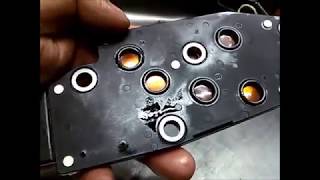
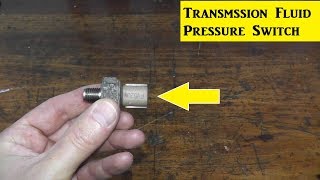
We Have This Part in Stock


The information in this article is provided for general reference and educational purposes only. Vehicle specifications, procedures, and part compatibility can vary by production date, trim level, and region. Always consult your vehicle's factory service manual and verify part numbers before purchasing or performing repairs. Safety-critical components such as airbags, seat belts, and braking systems should be installed by a qualified professional.
- Gmc SIERRA:
- 🧭 Diagnostic Flowchart
- 🎬 Helpful Videos
- 🛍️ Shop This Part
- What's Unique About the 2001-2005 Gmc SIERRA
- Symptoms You May Notice
- Most Likely Causes
- Rare But Worth Checking
- Diagnosis Steps
- Parts You'll Likely Need
- Related Codes That Often Appear With This One
- Technical Service Bulletins (TSBs) & Recalls
- Platform-Specific Known Issues
- Mechanic-Grade Diagnostic Values
- Scan Tool Commands That Help
- Wiring & Ground Locations
- OEM Part Supersession History
- Model Year Variations Within This Range
- 🎟️ Get 5% Off