

P0873 on 2009-2010 GMC Sierra 2500: Transmission Pressure Switch 'D' Circuit High Causes and Fixes
On a 2009-2010 GMC Sierra 2500 with a 6L80 or 6L90 transmission, code P0873 almost always indicates a failed Transmission Fluid Pressure (TFP) switch. These switches are part of a manifold assembly integrated into the Transmission Electro-Hydraulic Control Module (TEHCM) inside the transmission oil pan. The fix involves replacing this switch assembly or the entire TEHCM, a moderately difficult job that requires dropping the pan and is often best left to professionals.
- P0873 on a 2009-2010 Sierra 2500 points to an electrical fault in the 'D' transmission fluid pressure switch circuit.
- The most likely cause is a failed pressure switch manifold located inside the transmission, a known issue with the 6L80/6L90 transmission.
- This is not a DIY-friendly repair for beginners. It requires removing the transmission pan and working with internal components, so professional service is highly recommended.
- Do not continue to drive with this code, as it can lead to unsafe driving conditions and more severe transmission damage.
What's Unique About the 2009-2010 Gmc SIERRA 2500
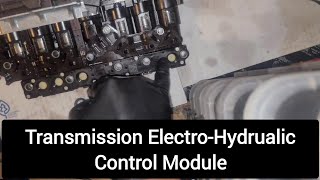
The 2009-2010 GMC Sierra 2500 is typically equipped with the heavy-duty 6L90 6-speed automatic transmission, a larger and stronger version of the 6L80. A well-documented weakness in these transmissions is the Transmission Electro-Hydraulic Control Module (TEHCM), which combines the TCM, solenoids, and fluid pressure switches into one unit inside the transmission. The laminated plastic diaphragms on the pressure switches are known to become brittle, tear, or delaminate from constant heat cycles and fluid exposure, causing an internal electrical fault that triggers codes like P0873.
Diagnostic Flowchart
Tap your situation to follow the diagnostic path that matches what you're seeing on this vehicle.
Symptoms You May Notice
- Check Engine Light or transmission warning light is on
- Harsh, erratic, or delayed shifting
- Transmission is stuck in one gear (limp mode), often 3rd gear
- Inability to shift or delayed engagement from Park to Drive or Reverse
- PRNDL display may flash or be incorrect
- Possible loss of reverse gear
- Replacing the entire transmission when only the internal TFP switch manifold is needed.
- Blaming the issue on old or dirty transmission fluid alone. While fluid should be changed during the repair, it is rarely the root cause of the electrical fault code.
- Replacing the entire TEHCM/TCM when only the pressure switch manifold plate is faulty. The plate can often be replaced separately from the main computer module, saving on cost and avoiding the need for reprogramming.
Most Likely Causes
- Failed Transmission Fluid Pressure (TFP) Switch Manifold 🔴 High Probability → Shop Transmission Assembly The TFP switches are integrated into the TEHCM assembly inside the 6L80/6L90 transmission. The laminated discs on these switches are a known failure point; they degrade, tear, or delaminate from heat and chemical exposure, causing an open circuit or a 'Circuit High' electrical fault.
How to confirm: A professional scan tool can monitor the live data from each TFP switch. 🎬 Watch: How to test the TEHCM circuits and rebuild the unit. A consistently high voltage reading from switch 'D' (stuck near 5V or battery voltage when it should be 0V) confirms the fault. Visual inspection after removing the transmission pan may show visibly torn or damaged laminate discs on the switch assembly.
Typical fix: Replace the TFP switch manifold assembly. This part is located inside the transmission and is attached to the valve body. The transmission pan, filter, and fluid must be replaced as part of the job. Some technicians opt to replace the entire TEHCM assembly to prevent failure of other integrated components.
Est. part cost: $150-$400 - Wiring Harness or Connector Issue ⚪ Low Probability While less common than switch failure, the internal transmission wiring harness exists in the same harsh environment of hot fluid. Wires can become brittle or pins in the 16-pin connector to the TEHCM can become loose or corroded.
How to confirm: Visually inspect the internal transmission wiring harness leading to the TEHCM for any signs of damage, corrosion, or loose pins. This check is performed after the transmission pan is removed. A continuity test can be performed on the specific wire for the 'D' switch.
Typical fix: Repair or replace the damaged section of the wiring harness. In some cases, the entire internal harness may need to be replaced.
Est. part cost: $50-$150 - Faulty Transmission Control Module (TCM) ⚪ Low Probability → Shop Transmission Assembly Since the TCM is integrated into the TEHCM with the pressure switches, it can also be a point of failure, though it's much less common than the switches themselves. TSB PIP4379N explicitly states that replacing the TCM is unlikely to correct this code.
How to confirm: This is typically diagnosed by exclusion. If the TFP switch manifold and wiring are confirmed to be good (or have been replaced) but the code persists, the TCM portion of the TEHCM is the likely culprit. This is a last resort diagnosis.
Typical fix: Replace the entire TEHCM assembly. This requires programming the new module to the vehicle's VIN, which usually requires dealer-level tools.
Est. part cost: $400-$800
Rare But Worth Checking
- Loss of Pump Prime / Low Fluid Level:
Diagnosis Steps
- Verify the code with a professional OBD-II scanner capable of reading transmission control module data.
- Check the transmission fluid level and condition using the manufacturer's specific 'Hot Check' procedure. Burnt fluid indicates a more severe internal problem, but is not the direct cause of P0873.
- Using the scan tool, monitor the live data for the Transmission Fluid Pressure Switches. Observe the voltage for TFP Switch 'D'. A reading that is stuck high (near 5V or battery voltage) when it should be low (0V) points towards an electrical circuit issue.
- Lift the vehicle and inspect the transmission case and external wiring for any obvious damage, though the fault is almost always internal.
- Drain the transmission fluid and remove the transmission oil pan.
- Visually inspect the TFP switch manifold (the plate attached to the TEHCM) and the internal wiring harness for any obvious signs of damage, such as delaminated switch pads, cracked plastic, or broken wires.
- If the switch manifold appears faulty, replace it. It is also recommended to replace the transmission filter and pan gasket at this time.
- Refill the transmission with the manufacturer-specified fluid (DEXRON-VI).
- Clear the trouble codes and perform a test drive, including multiple shift cycles, to ensure the repair was successful.
- If the TEHCM was replaced, it must be programmed to the vehicle's VIN using a compatible scan tool.
Parts You'll Likely Need
- Transmission Fluid Pressure Switch Manifold
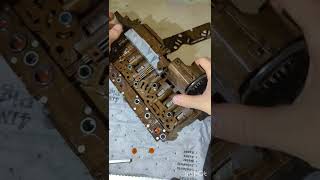
(OEM #24256861 (This is the full TEHCM assembly which includes the switches))— This is the most common failure point for code P0873 on the 6L80/6L90 transmission. The switches are known to fail electrically. The switch plate itself is often serviced separately in the aftermarket. 🎬 See this walkthrough on repairing the pressure switch membranes.
Trusted brands: ACDelco, Dorman
OEM price range: $250-$400
Aftermarket price range: $150-$250 - Transmission Electro-Hydraulic Control Module (TEHCM)
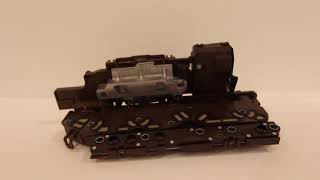
(OEM #24256861)— If the TCM portion of the module has failed or if you prefer to replace the entire unit, the complete TEHCM is required. This contains the TFP switches, solenoids, and the TCM itself.
Trusted brands: ACDelco
OEM price range: $400-$800
Aftermarket price range: $300-$600 - Transmission Filter Kit (with Gasket) — This must be replaced whenever the transmission pan is removed for service.
Trusted brands: ACDelco
OEM price range: $40-$70
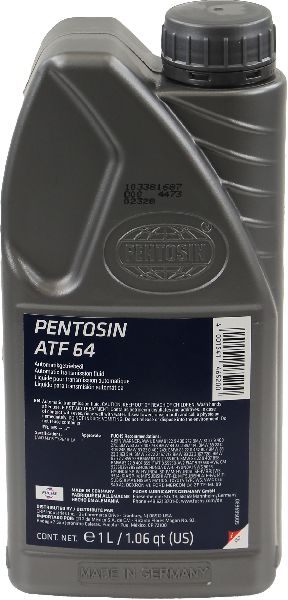
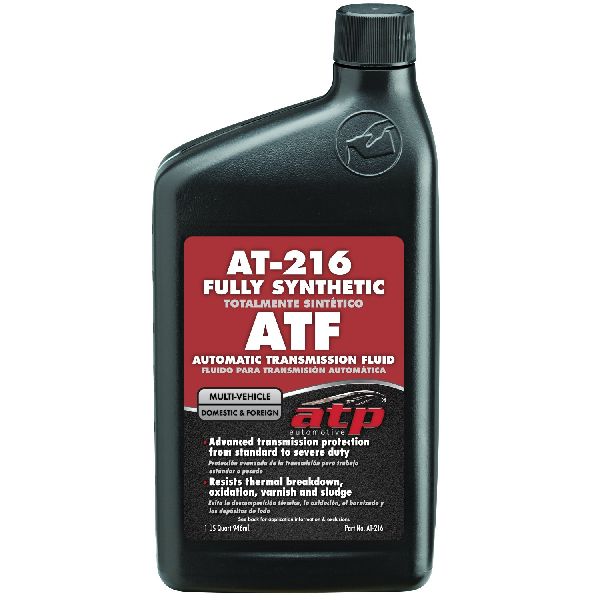
Aftermarket price range: $20-$40 - DEXRON-VI Automatic Transmission Fluid — This is the required fluid for refilling the 6L90 transmission after the repair.
Trusted brands: ACDelco, Valvoline, Castrol
OEM price range: $8-12 per quart
Related Codes That Often Appear With This One
- P0700 — This is a general Transmission Control System Malfunction code that simply means the TCM has stored a fault and requested the Check Engine Light. It will almost always be present with P0873.
- P0842, P0872, P0877, P0989 — These are codes for other transmission fluid pressure switches ('A', 'B', 'E', etc.). It is very common for multiple switches on the same manifold to fail around the same time, triggering several related codes.
- P0701 — This is a general Transmission Control System Malfunction code. The manufacturer TSB #PIP4379N specifically advises diagnosing P0701 first if it is present with other transmission codes like P0873.
Technical Service Bulletins (TSBs) & Recalls
- PIP4379N: This is a broad Preliminary Information bulletin from GM covering a wide range of transmission codes (including P0873) that can cause a delayed engagement or no-shift 'range inhibit' condition. It suggests these codes can be triggered by low fluid level, loss of pump prime after a service, or a cracked internal filter. It advises checking fluid level carefully and diagnosing P0701 first if present. It also notes that replacing the TCM is not a likely fix.
Platform-Specific Known Issues
- A known issue with the 6L80/6L90 transmission is the failure of the pressure switch laminate discs within the TEHCM, as documented in GM Technical Service Bulletin #PIP4379N.
- The TEHCM is VIN-specific and year-specific. A 2010 module is not compatible with a 2009 or 2011 vehicle, which can cause communication errors and limp mode if the incorrect part is installed.
Mechanic-Grade Diagnostic Values
- Transmission Fluid Pressure (TFP) Switch State — expected: On a scan tool, the switch should read 'Off' (approx. 0V) when its corresponding clutch is applied and 'On' (approx. 5V) when the clutch is released. The state changes with each gear shift.. Failure: For P0873, the TFP Switch 'D' will be stuck 'On' (high voltage) when it should be 'Off' (low voltage), indicating an open circuit or failed switch.
- Main Line Pressure (at test port) — expected: At idle with the transmission warm, pressure should be 45-80 PSI. At wide-open throttle in gear, it can rise to 300 PSI.. Failure: While not a direct cause of a 'Circuit High' code, verifying line pressure can rule out hydraulic issues. Low pressure could indicate a pump or valve body problem.
- TEHCM/Valve Body Bolt Torque — expected: TEHCM to Valve Body bolts: 71 in-lbs. Valve Body to Case bolts: 100 in-lbs.. Failure: Incorrect torque can lead to leaks or damage to the TEHCM or valve body.
Scan Tool Commands That Help
- GDS2 / Tech2: Transmission Output Controls / Solenoid Test — Allows a technician to manually command solenoids on and off while monitoring the corresponding TFP switch states on the live data screen. This can confirm if a switch is electrically stuck 'On' or 'Off' regardless of the command.
- J2534 Pass-Thru Device: Service Programming System (SPS) — This is required to program a new TEHCM to the vehicle's VIN. Without this step, a new TEHCM will not function.
- GDS2 / Tech2: Service Fast Learn Adapts — After TEHCM replacement and programming, this procedure must be performed to allow the TCM to learn the hydraulic characteristics and clutch fill volumes of the transmission.
Wiring & Ground Locations
- TEHCM Main Connector — Internal, on the TEHCM itself, inside the transmission oil pan. It is a 16-pin connector that links the TEHCM to the main vehicle harness via a pass-through connector on the case.. This is the primary electrical connection for the TFP switches. A poor connection, corrosion, or damaged pin at this connector can cause a 'Circuit High' fault code like P0873.
- TCM Ground — The TEHCM grounds through its wiring harness and ultimately to chassis ground points. There is no single, direct ground strap on the TEHCM itself. The circuit is grounded through the TCM logic.. A poor ground connection anywhere in the TCM's circuit can cause floating voltages and erratic sensor readings, potentially triggering a false 'Circuit High' code.
Real Owner Repair Stories
- SilveradoSierra.com forum user (2010 Chevrolet Silverado 1500 w/ 6L80) — Check engine light on, transmission stuck in 3rd gear (limp mode).
❌ Tried (didn't work) Initially replaced the entire TEHCM assembly.
✅ What actually fixed it The code returned after a few hundred miles. A transmission specialist diagnosed the brand new replacement TEHCM as faulty (infant mortality failure) and replaced it again, which permanently fixed the issue. - YouTube video by 'GM transmission repair' (2008 GMC Denali with 6L80) — Multiple pressure switch codes and erratic shifting.
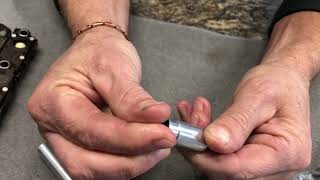
✅ What actually fixed it Instead of replacing the entire TEHCM, the technician demonstrated a repair by removing the TEHCM, and replacing only the torn, delaminated plastic pressure switch membranes and seals. This is a cost-effective repair that directly addresses the common failure point.
OEM Part Supersession History
24256657 (Common Gen1 TEHCM)→24287420, which was later superseded by 24041956— Internal revisions by GM to improve reliability of the pressure switches and solenoids.
Heads up: It is critical to match the TEHCM to the model year and calibration of the vehicle. Installing the wrong year or part number can result in a no-start condition, immediate limp mode, or communication failures. The OEM part number for the 2009-2010 Sierra 2500 is typically 24256861.
Model Year Variations Within This Range
- 2010: Beginning in the 2010 model year, the 6L80/6L90 transmissions received an updated valve body spacer plate, which may affect internal diagnostics and part compatibility compared to 2009 models.
Helpful Videos
We Have This Part in Stock

The information in this article is provided for general reference and educational purposes only. Vehicle specifications, procedures, and part compatibility can vary by production date, trim level, and region. Always consult your vehicle's factory service manual and verify part numbers before purchasing or performing repairs. Safety-critical components such as airbags, seat belts, and braking systems should be installed by a qualified professional.
- Gmc SIERRA 2500:
- 🧭 Diagnostic Flowchart
- 🎬 Helpful Videos
- 🛍️ Shop This Part
- What's Unique About the 2009-2010 Gmc SIERRA 2500
- Symptoms You May Notice
- Most Likely Causes
- Rare But Worth Checking
- Diagnosis Steps
- Parts You'll Likely Need
- Related Codes That Often Appear With This One
- Technical Service Bulletins (TSBs) & Recalls
- Platform-Specific Known Issues
- Mechanic-Grade Diagnostic Values
- Scan Tool Commands That Help
- Wiring & Ground Locations
- Real Owner Repair Stories
- OEM Part Supersession History
- Model Year Variations Within This Range
- 🎟️ Get 5% Off