

P0873 on 2008-2012 GMC Sierra Denali: Transmission Pressure Switch 'D' Circuit High Fixes
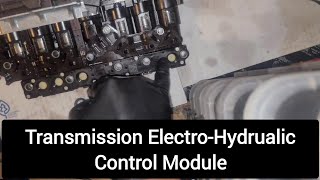
On 2008-2012 GMC Sierra Denalis with the 6L80/6L90 transmission, code P0873 almost always points to a failed transmission fluid pressure (TFP) switch. These switches are integrated into a manifold that is part of the Transmission Electro-Hydraulic Control Module (TEHCM) inside the transmission oil pan. The most common repair is replacing the TFP manifold assembly or the entire TEHCM, which is a moderately difficult DIY job costing $150-$400 for parts.
- P0873 on your Sierra Denali indicates a serious transmission issue that should be addressed promptly to avoid further damage.
- The most probable cause is a failed transmission fluid pressure switch manifold, which is located inside the transmission oil pan.
- This repair is complex and requires working inside the transmission; professional service is highly recommended.
- Always use DEXRON-VI transmission fluid when refilling, as specified by the manufacturer.
What's Unique About the 2008-2012 Gmc SIERRA DENALI
The GMC Sierra Denali from this era is typically equipped with the 6L80 or 6L90 6-speed automatic transmission. A widely documented weakness in these transmissions is the Transmission Electro-Hydraulic Control Module (TEHCM), which integrates the TCM, valve body solenoids, and the fluid pressure switches into a single unit inside the transmission. The plastic and rubber components of the pressure switches, specifically the laminated discs or membranes, are known to degrade, tear, or become dislodged over time due to heat and chemical exposure, causing electrical faults like P0873. This is a more common failure than the wiring or the control module itself.
Diagnostic Flowchart
Tap your situation to follow the diagnostic path that matches what you're seeing on this vehicle.
Symptoms You May Notice
- Check Engine Light is on
- Transmission shifts harshly or erratically
- Vehicle is stuck in one gear (limp mode).
- Inability to shift into certain gears, including reverse.
- Flashing PRNDL (gear indicator)
- Delayed engagement when shifting from Park to Drive or Reverse
- Increased fuel consumption.
- Replacing the entire transmission when only the internal TEHCM or pressure switch manifold is faulty.
- Replacing the entire TEHCM when only the pressure switch membranes have failed and could be repaired.
- Blaming the issue on bad transmission fluid when it is actually a symptom of a failing component causing the contamination.
Most Likely Causes
- Failed Transmission Fluid Pressure (TFP) Switch / Manifold 🔴 High Probability → Shop Transmission Assembly The pressure switch manifold is integrated into the TEHCM on the 6L80/6L90 transmission. The laminated membranes on the switches are a known failure point, becoming brittle and tearing over time, which causes the circuit high code. This is a very common issue for these transmissions as they age.
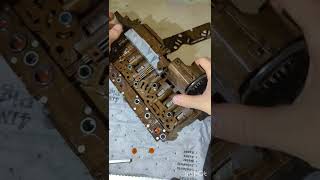
How to confirm: A diagnostic scan tool can monitor live data 🎬 Watch: How to rebuild and test the TEHCM circuits. from the pressure switches. If the 'D' switch shows a constant high voltage regardless of gear, it's almost certainly faulty. Visual inspection after dropping the pan will often reveal torn or dislodged orange-colored switch membranes.
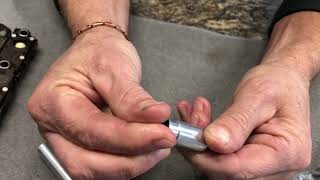
Typical fix: Replace the transmission fluid pressure switch manifold assembly (which is part of the TEHCM). In many cases, technicians repair the TEHCM by replacing just the failed pressure switch membranes 🎬 See how to repair the pressure switch membranes yourself. and seals, which is a more cost-effective repair than replacing the entire unit.
Est. part cost: $100 - $250 - Wiring or Connector Issue 🟡 Medium Probability The internal transmission wiring harness is submerged in hot transmission fluid, which can make connectors brittle. The external harness is exposed to road debris and heat. A short to voltage on the signal wire is a possible cause.
How to confirm: Visually inspect the external transmission wiring harness and connectors for damage. An ohmmeter can be used to check for a short to power on the signal wire. This check must also be performed on the internal harness after removing the pan if the external wiring is okay.
Typical fix: Repair or replace the damaged section of the wiring harness or clean/replace the corroded connector.
Est. part cost: $20 - $200 - Faulty Transmission Control Module (TCM/TEHCM) ⚪ Low Probability → Shop Transmission Assembly Because the TCM is part of the TEHCM assembly located inside the hot transmission, it is susceptible to heat-related failures. However, TSB PIP4379M explicitly states that replacing the TCM is unlikely to correct this code. The pressure switches fail far more often than the logic board.
How to confirm: This is diagnosed by exclusion. If the pressure switch manifold and wiring are confirmed to be good, the TCM is the likely culprit. This requires advanced diagnostics and should be the last component considered.
Typical fix: Replace the entire TEHCM assembly. This part requires programming to the specific vehicle's VIN.
Est. part cost: $400 - $800 - Low or Contaminated Transmission Fluid ⚪ Low Probability → Shop Transmission Assembly While unlikely to cause a 'circuit high' code directly, which is an electrical fault, extremely low or burnt fluid can cause erratic hydraulic pressure and lead to multiple transmission codes and eventual component failure. TSB PIP4379M advises checking the fluid level first.
How to confirm: Check the transmission fluid level and condition. The fluid should be at the correct level on the dipstick when hot (175°F), be bright red, and not have a burnt smell.
Typical fix: Perform a transmission fluid and filter change. If the fluid is heavily contaminated, it indicates a more serious internal problem.
Est. part cost: $75 - $150
Diagnosis Steps
- Check for other stored DTCs. If codes like P0701 are present, address them first as per TSB recommendations.
- Check the transmission fluid level and condition according to the proper 'Hot Check' procedure. Top off or change if necessary.
- Use a high-quality OBD-II scanner to view live data for the transmission fluid pressure switches. Observe the voltage for switch 'D'. A constant high reading confirms the electrical fault.
- Inspect the external transmission wiring harness and connectors for any visible damage, corrosion, or loose connections.
- If the external wiring is okay, drop the transmission oil pan to access the internal components.
- Visually inspect the internal wiring, connectors, and the TEHCM. Look for the small, orange, laminated discs of the pressure switches. If they are torn, dislodged, or damaged, you have found the problem.
- Test the TFP switch circuit for a short to voltage. If a short is found, repair the wiring.
- If the wiring is good, the TFP switch manifold is the cause. You can either replace the entire TEHCM assembly or attempt to repair it by replacing the pressure switch membranes and seals.
- If replacing the entire TEHCM, it must be programmed to your vehicle's VIN.
- After the repair, reinstall the pan with a new gasket, refill with DEXRON-VI fluid to the correct level, and clear the codes.
Parts You'll Likely Need
- Transmission Fluid Pressure Switch Manifold / TEHCM
(OEM #24256657 (This is a common TEHCM part number for GM 6-speeds, but verify for specific application))— This is the most common failure point for code P0873 on the 6L80/6L90 transmission. The entire TEHCM is often replaced, though the pressure switch portion is the actual point of failure.
Trusted brands: ACDelco (OEM), Dorman (OE-Fix, often with upgraded components), Sonnax (Remanufactured)
OEM price range: $400-$600
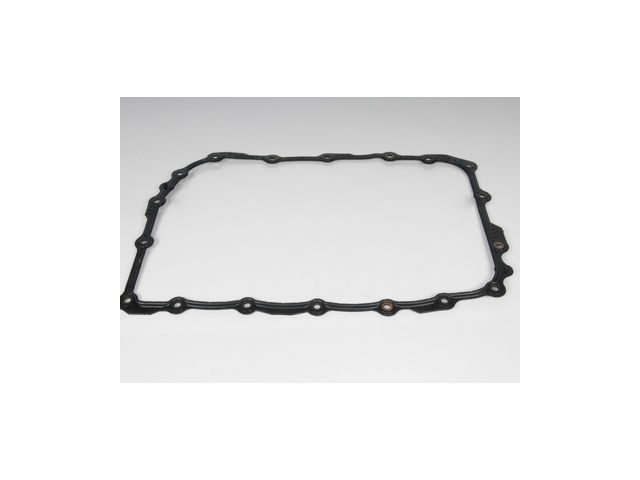
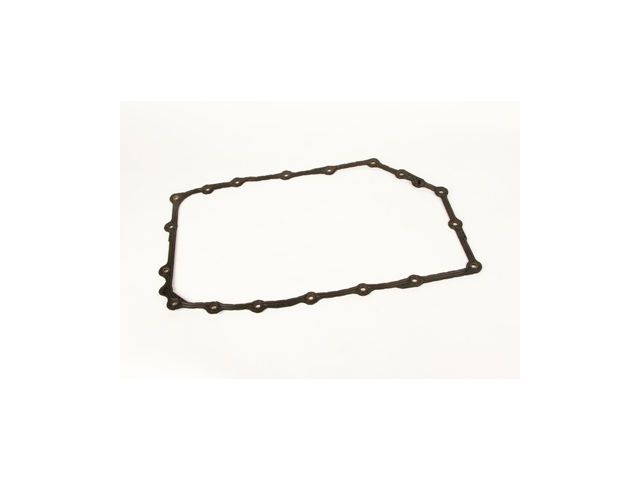
Aftermarket price range: $250-$450 - Transmission Oil Pan Gasket — Must be replaced whenever the transmission pan is removed to prevent leaks.
Trusted brands: ACDelco, Fel-Pro
OEM price range: $30-$50
Aftermarket price range: $15-$30 - Automatic Transmission Fluid (DEXRON-VI) — The fluid must be replaced after dropping the pan (typically 6-8 quarts). Only DEXRON-VI should be used in the 6L80/6L90.
Trusted brands: ACDelco, Valvoline, Mobil 1
OEM price range: $10-$15 per quart
Aftermarket price range: $8-$12 per quart - Transmission Filter Kit — It is best practice to replace the filter anytime the pan is removed.
Trusted brands: ACDelco, Wix
OEM price range: $30-$60
Aftermarket price range: $20-$40
Related Codes That Often Appear With This One
- P0700 — This is a general Transmission Control System Malfunction code that often appears with more specific transmission faults. TSB #PIP4379M specifically advises diagnosing P0701 first, as it can be set by low fluid levels or pump issues that may accompany other codes.
- P0843, P0848, P0872, P0877, P0878 — These are all related codes for other transmission fluid pressure switches ('A', 'B', 'C', 'E'). Seeing multiple pressure switch codes together strongly points to a systemic failure of the pressure switch manifold, the TEHCM, or their shared power/ground circuits.
Technical Service Bulletins (TSBs) & Recalls
- PIP4379M: Mentions P0873 in a list of transmission codes that could indicate a range inhibit or no reverse condition. It suggests low pump pressure from a loss of prime could be a cause and directs technicians to check fluid level and diagnose P0701 first before considering component replacement.
Platform-Specific Known Issues
- A GM Technical Service Bulletin (PIP4379M) lists P0873 among a large group of transmission pressure codes that often point to a common failure of the internal pressure switch manifold.
Mechanic-Grade Diagnostic Values
- TFP Switch Signal Voltage (Key On, Engine Off) — expected: ~0.5V (low pressure state) to ~4.5V (high pressure state). Failure: A constant reading at or near 5.0V indicates a 'Circuit High' fault.
- TFP Switch Resistance (on TEHCM, switch membrane) — expected: Near infinite resistance (OL) with no pressure applied.. Failure: Applying light pressure with a pencil eraser should cause resistance to drop to ~10 ohms; if it does not, the switch is bad.
- Shift Solenoid Resistance (at TEHCM connector) — expected: 20 - 40 Ohms. Failure: A reading outside this range indicates a failed shift solenoid.
- Pressure Control (PWM) Solenoid Resistance (at TEHCM connector) — expected: 3 - 8 Ohms. Failure: A reading outside this range indicates a failed pressure control solenoid.
Scan Tool Commands That Help
- GDS2 / Tech2: Solenoid Output Control / Bench Test — With the TEHCM removed and connected to a test plate (like DT47825), a scan tool can command individual solenoids on and off to verify their mechanical and electrical function independent of the vehicle's hydraulics.
- GDS2 / Tech2: Live Data - TFP Switch State — During diagnosis, a technician can monitor the state of all TFP switches (displayed as HI or LOW). For a P0873, the corresponding switch will likely be stuck in the 'HI' state regardless of gear, confirming the electrical fault.
Wiring & Ground Locations
- Main Transmission Connector (16-pin) — On the side of the transmission case.. This is the primary interface between the internal TEHCM and the rest of the vehicle. Key pins for diagnosis include Pin 4 (Battery +), Pin 5 (Ground-), and Pins 10/11 & 13/14 for CAN bus communication that transmits the fault data.
- TEHCM Pressure Switch Test Points — Inside the transmission pan, on the TEHCM itself, under the solenoid screen plate.. After removing a screen plate, a technician can directly access the circuits for the pressure switches to perform resistance tests. The far right circuit is ground, and the others are signal wires for the individual switches.
OEM Part Supersession History
24256657 (Common Gen1 TEHCM)→24287420 (and others)— Internal revisions and updates by GM to improve reliability.
Heads up: Part number 24287420 was later superseded by 24041956. It is critical to match the TEHCM to the model year of the vehicle, as there are significant compatibility differences.
Model Year Variations Within This Range
- 2008-2009 vs 2010+: The internal TEHCM hardware and software are different. TEHCMs from 2008-2009 are generally interchangeable with each other, but 2010, 2011, and 2012 units are each unique and not backward or forward compatible. Installing a 2011-era TEHCM/transmission into a 2008 vehicle will result in a no-communication state with the diagnostic tool and the transmission will be stuck in a default (limp) mode.
Helpful Videos

We Have This Part in Stock


The information in this article is provided for general reference and educational purposes only. Vehicle specifications, procedures, and part compatibility can vary by production date, trim level, and region. Always consult your vehicle's factory service manual and verify part numbers before purchasing or performing repairs. Safety-critical components such as airbags, seat belts, and braking systems should be installed by a qualified professional.
- Gmc SIERRA DENALI:
- 🧭 Diagnostic Flowchart
- 🎬 Helpful Videos
- 🛍️ Shop This Part
- What's Unique About the 2008-2012 Gmc SIERRA DENALI
- Symptoms You May Notice
- Most Likely Causes
- Diagnosis Steps
- Parts You'll Likely Need
- Related Codes That Often Appear With This One
- Technical Service Bulletins (TSBs) & Recalls
- Platform-Specific Known Issues
- Mechanic-Grade Diagnostic Values
- Scan Tool Commands That Help
- Wiring & Ground Locations
- OEM Part Supersession History
- Model Year Variations Within This Range
- 🎟️ Get 5% Off