

P0873 on 2011-2016 Hyundai Sonata: Transmission Pressure Sensor 'C' Circuit High Causes and Fixes
On a 2011-2016 Sonata, code P0873 is most often caused by a faulty transmission fluid pressure sensor, which is part of the internal transmission wiring harness (OEM Part No. 46307-3B650). This harness is a known failure point. The repair requires dropping the transmission pan and valve body, making it a moderately complex job. Expect to pay $450-$750 for the part and labor.
- P0873 on a 2011-2016 Sonata almost always points to a failed internal transmission wiring harness (Part No. 46307-3B650).
- This is a serious code that makes the vehicle unsafe to drive; it should be repaired promptly to avoid further transmission damage.
- The repair is complex, requiring removal of the transmission pan and valve body, and is best handled by a professional.
- Always use the correct Hyundai SP-IV transmission fluid when refilling.
What's Unique About the 2011-2016 Hyundai Sonata
For the 2011-2016 (YF generation) Sonata, equipped with the A6MF1/A6MF2 6-speed automatic transmission, the transmission fluid pressure sensors are integrated into a single internal wiring harness assembly located inside the transmission. This harness is a well-documented failure point, known to become brittle and fail electronically due to constant exposure to heat and transmission fluid. This failure leads to electrical faults, such as a short to power, that trigger a P0873 code. Unlike vehicles with externally mounted sensors, fixing this issue requires removing the transmission pan and often the valve body to access and replace the entire harness assembly.
Symptoms You May Notice
- Harsh, erratic, or delayed gear shifts.
- Vehicle gets stuck in one gear (limp mode), often 3rd gear.
- Check Engine Light is illuminated.
- Transmission may feel like it's slipping or shuddering.
- A burning smell from the transmission area.
- Inability to shift into reverse.
- Replacing the transmission fluid pressure sensor/harness without first testing the external wiring for a short circuit. A short-to-power in the harness between the TCM and the transmission will mimic the symptoms of a failed sensor.
- Performing a transmission fluid flush to fix the problem. While good for maintenance, old fluid is not the root cause of a 'Circuit High' electrical fault code.
Most Likely Causes
- Faulty Internal Transmission Wiring Harness (with integrated sensor) 🔴 High Probability → Shop Transmission Assembly The internal harness in the A6MF1 transmission is exposed to high temperatures and harsh fluids, causing the wiring insulation to become brittle and fail over time, a known issue on this platform and its mates (Kia Optima, etc.). This degradation often results in a short circuit, causing the high voltage reading.
How to confirm: A technician will test the sensor's circuit at the main transmission connector. If the 'high' voltage signal persists even with the main harness disconnected from the transmission, it points to an external wiring short. If the external wiring is fine, the fault is confirmed to be internal to the transmission, pointing directly to the harness/sensor assembly.
Typical fix: Replace the entire internal transmission wiring harness assembly (Part No. 46307-3B650). This involves draining the fluid, removing the transmission pan, and removing the valve body to access and swap the harness.
Est. part cost: $140-$250 - Damaged External Wiring or Connector 🟡 Medium Probability
How to confirm: Visually inspect the wiring harness leading to the transmission for any signs of melting, chafing, or corrosion. Test for a short-to-power on the signal wire using a multimeter. A wiggle test on the harness while monitoring voltage can help identify intermittent shorts.
Typical fix: Repair the damaged section of the wire or replace the corroded connector. This is much less common than the internal harness failure.
Est. part cost: $20-$100 - Low or Dirty Transmission Fluid ⚪ Low Probability → Shop Transmission Assembly While not a primary cause of a 'circuit high' code, extremely low or degraded fluid can cause overheating and erratic operation that may contribute to electrical issues or other transmission codes.
How to confirm: Check the transmission fluid level and condition. The fluid should be at the correct level, pink/red in color, and not smell burnt. Note that these Sonatas do not have a traditional dipstick; the level must be checked via a fill plug on the side of the transmission case when the fluid is at a specific temperature.
Typical fix: Perform a transmission fluid drain-and-fill using Hyundai-specific fluid (SP-IV). If the fluid is very dirty or burnt, a full fluid exchange may be recommended, but this is unlikely to fix a P0873 code on its own.
Est. part cost: $60-$120
Rare But Worth Checking
- Faulty Transmission Control Module (TCM): → Shop Transmission Assembly This is very rare and should only be considered after all other possibilities, especially the internal and external wiring, have been thoroughly ruled out. A faulty TCM will often present with multiple, often nonsensical, codes.
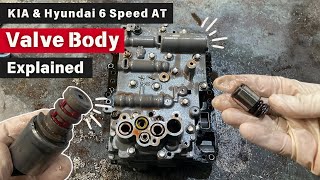
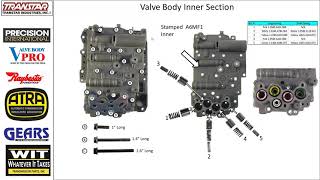
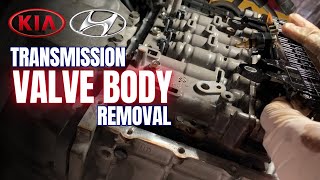
- Internal Mechanical Failure: A stuck valve in the valve body or another internal hydraulic issue could theoretically cause 🎬 See how the 6-speed transmission valve body works internally. a true high-pressure condition. This is uncommon for this specific code, which usually points to an electrical fault, and would typically be accompanied by more severe mechanical symptoms like loud noises or complete failure to engage gears.
Diagnosis Steps
- Scan the vehicle for all stored DTCs to see if other codes are present.
- Check the level and condition of the automatic transmission fluid (ATF). Ensure it is clean, full, and does not smell burnt. This requires the vehicle to be level and the ATF to be at a specified temperature (approx. 122-140°F / 50-60°C).
- Visually inspect the external transmission wiring harness and connectors for any signs of damage, melting, or corrosion.
- Using a multimeter, backprobe the transmission connector to test the reference voltage, ground, and signal wire for the 'C' pressure sensor. A 'Circuit High' code often points to a signal wire that is shorted to a power source.
- If external wiring tests normal, the fault is almost certainly internal. This points towards the internal wiring harness/sensor assembly (Part No. 46307-3B650).
- To replace the internal harness, drain the ATF, remove the transmission pan, and carefully remove the valve body to gain access.
- After the repair, reinstall the valve body, pan (with a new gasket), and refill with the correct specification of fluid (Hyundai SP-IV).
- Clear all DTCs and perform a test drive, monitoring transmission shift patterns to ensure the repair was successful and the code does not return.
Parts You'll Likely Need
- Automatic Transmission Wiring Harness
(OEM #46307-3B650)— This assembly contains the integrated transmission fluid pressure sensors. The harness is the most common failure point due to heat and fluid exposure, making its replacement the definitive fix for this code on this vehicle.
Trusted brands: Hyundai (OEM)
OEM price range: $140-$250
Aftermarket price range: $70-$150 - Hyundai Genuine ATF SP-IV Transmission Fluid
(OEM #00232-19045)— The transmission fluid must be drained to perform the repair and refilled with the correct OEM-spec fluid to ensure proper transmission function and longevity. Approximately 5-6 quarts are needed for a pan drop.
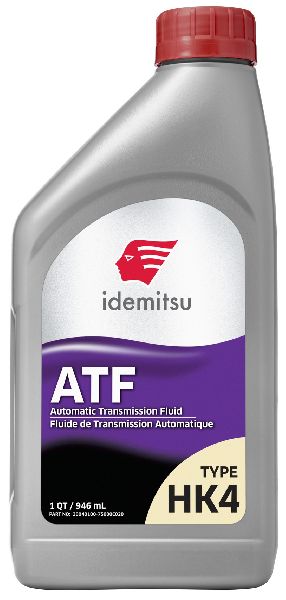
Trusted brands: Hyundai, Idemitsu (SP-IV compatible), Valvoline (SP-IV compatible)
OEM price range: $15-$20 per quart
Aftermarket price range: $8-$15 per quart - Transmission Oil Pan Gasket
(OEM #45285-3B700)— The oil pan must be removed to access the internal harness, and the gasket is a one-time-use item that should always be replaced to prevent leaks.
Trusted brands: Hyundai (OEM), Fel-Pro
OEM price range: $20-$40
Aftermarket price range: $15-$30
Technical Service Bulletins (TSBs) & Recalls
- TSB 17-AT-004: While not directly for P0873, this TSB addresses rough idle issues related to the 6-speed automatic transmission's neutral control function, showing Hyundai's attention to the software and solenoids in this transmission family.
- TSB 16-AT-004: Provides the official procedure for checking the fluid level on the 6-speed automatic transmission, which lacks a dipstick.
Platform-Specific Known Issues
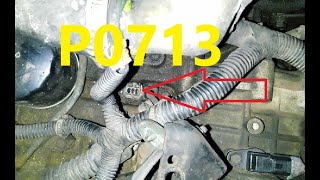
- Owner Experience on Hyundai-Forums: A user on hyundai-forums.com with a 2011 Sonata reported experiencing harsh shifting and getting stuck in gear. After diagnosing code P0713, their mechanic identified the internal transmission harness 🎬 Watch: Fixing temperature sensor and harness issues on Hyundai transmissions. as the culprit. The repair involved replacing the harness (part number 46307-3B650), which resolved all symptoms. This is the same part and procedure required for P0873, confirming the common failure mode.
- DIY Repair Video Context: While not for P0873 specifically, numerous YouTube videos for other transmission codes on the 2011-2016 Sonata (like P0711 or P0713 for the temperature sensor) show the exact same repair procedure: dropping the pan and valve body to replace the entire internal wiring harness. This visually confirms the complexity of the job and the shared failure point of this component.
Mechanic-Grade Diagnostic Values
- Transmission Fluid Pressure Sensor Signal Voltage — expected: Varies between ~0.5V (low pressure) and ~4.5V (high pressure).. Failure: A 'Circuit High' code like P0873 is typically set when the voltage is stuck at or above 4.8V. If the voltage remains high even with the sensor disconnected, the short is in the external wiring.
- Sensor Reference Voltage (at harness connector, Key On Engine Off) — expected: Approximately 5.0V.. Failure: Incorrect or no voltage indicates a problem with the TCM or the wiring providing power to the sensor.
- Resistance of Linear Solenoids (VFS) — expected: 5.1 Ohms.. Failure: A reading significantly different from the specification, or an open/short circuit, indicates a failed solenoid. While not the pressure sensor itself, this is a useful value when diagnosing the valve body.
- Resistance of On/Off Solenoids — expected: 10-11 Ohms.. Failure: A reading outside this range points to a failure in the on/off shift solenoids.
Scan Tool Commands That Help
- Hyundai GDS (Global Diagnostic System): Resetting Auto T/A values — This function must be performed after replacing the transmission, valve body, or internal harness to clear the old adaptive learning values. Failure to reset adaptations can result in continued poor shift quality even after the hardware is fixed. The function is found under 'Option Treatment' or 'Special Functions' in the A/T menu.
- Professional Aftermarket Scan Tool (e.g., Autel): Resetting auto TA values / AT Adaptation — Similar to the OEM tool, this function is used to erase and relearn transmission shift adapts after a major component replacement. The process may require driving the vehicle in a specific manner (e.g., light throttle through gears multiple times) to complete the relearn process.
Wiring & Ground Locations
- E6 TCM Connector — This is the main connector at the Transmission Control Module (TCM).. Pin 25 of this connector is the wire for the pressure switch (TPS1). Technicians can test for continuity and shorts to ground/power at this pin to diagnose the external harness between the TCM and the transmission.
- E50 Transmission Wire Connector — This is the main external connector on the transmission case that links the external harness to the internal harness.. Pin 17 corresponds to the pressure switch (TPS1). Testing here helps isolate whether the fault is in the external harness (between E50 and E6) or the internal harness (inside the transmission). A high voltage reading on this pin with the connector unplugged points to a short in the external harness.
OEM Part Supersession History
46307-3B610, 46307-3B620→46307-3B650— Part revision and consolidation by the manufacturer.
Heads up: While the newer part number is backward compatible, using an older part number (if found) in a newer vehicle is not recommended. Always use the latest revision, 46307-3B650, for this repair.
Model Year Variations Within This Range
- 2011-2016: The 2011-2016 Sonata primarily used the A6MF1 and A6MF2 variants of the 6-speed automatic transmission. The A6MF1 is typically paired with 2.0L/2.4L engines, while the A6MF2 is a slightly more robust version for 2.4L engines with higher torque. However, for the purpose of code P0873, the internal wiring harness (46307-3B650) and the repair procedure are identical across these variants within the specified model years.
Diagnostic Flowchart
Other Known Issues on This Vehicle
Issues unrelated to this code that are worth knowing about as an owner of this generation:
- Theta II Engine Seizure/Failure 🔴 High — Widespread on 2011-2014 models with the 2.0L and 2.4L GDI engines. Can occur at various mileages, often before 100,000 miles. (Ref: NHTSA Recall 15V-568 (Campaign 132); Hyundai also offered extended warranties (10yr/120k miles) and a lifetime warranty under a class-action settlement for vehicles that receive a Knock Sensor Detection System (KSDS) software update.)
- MDPS Steering Coupler Degradation 🟠 Medium — Extremely common across the entire 2011-2014 model range. Typically manifests as a clicking or clunking noise from the steering column at low speeds. (Ref: TSB 17-ST-002-1; Hyundai extended the warranty for this specific part (56315-2K000-FFF) to 10 years/100,000 miles.)
- Excessive Engine Oil Consumption 🟠 Medium — Reported by many owners, particularly on the 2.4L GDI engine. May be related to carbon buildup on piston rings. (Ref: TSB 21-EM-003H (and superseding TSBs) provides guidelines for dealers to perform an oil consumption test and potential combustion chamber cleaning or engine repairs.)
- Front Subframe Corrosion 🔴 High — More common in regions that use road salt ('Salt Belt'). While a major recall (Campaign 089) existed for earlier Sonatas (1999-2004), the YF generation can still be susceptible to severe subframe rust that can compromise structural integrity. (Ref: No specific recall for 2011-2016 models, but it is a known issue to inspect.)
- Transmission Speed Sensor Failure 🟠 Medium → Shop Transmission Assembly — A fairly common issue that can cause erratic shifting and a Check Engine Light. It is a separate issue from the internal harness failure but also affects the transmission.
Used vs. New Parts: Buying Guide for This Vehicle
When a used part is the smart pick: For this specific repair, buying a used internal wiring harness is NOT recommended. The part fails due to heat and age, so a used part from a junkyard likely has limited life remaining and carries a high risk of premature failure. The labor to install it is significant, making it a poor economic choice.
What to inspect on the donor part:
- Not applicable as a used part is not advised.
OEM-only on this vehicle (don't cheap out):
- Automatic Transmission Wiring Harness (46307-3B650): Given the high failure rate and the critical function of this part, using a new OEM harness is the most reliable option to ensure a long-lasting repair.
Aftermarket brands forum-validated for this vehicle:
- While some aftermarket harnesses are available, none have the widespread positive reputation or documented long-term reliability of the genuine Hyundai/Kia OEM part for this specific application.
Brands owners have reported issues with on this vehicle:
- Unbranded, low-cost harnesses from online marketplaces should be avoided. The quality of the wiring insulation and connector pins is critical, and failure of a cheap part will require repeating a very labor-intensive job.
Real Owner Stories
Aggregated from forums and TSBs cited above. Mileages and costs reflect what owners reported in those sources.
2011 Sonata GLS 2.4L
Symptoms: Experiencing harsh shifting and getting stuck in gear.
What fixed it: The mechanic identified the internal transmission harness as the culprit. The repair involved replacing the harness (part number 46307-3B650), which resolved all symptoms.
Source hint: Owner Experience on Hyundai-Forums (hyundai-forums.com thread titled '2011 sonata gls 2.4l transmission harness replacement p0713')
Related OBD-II Codes
Frequently Asked Questions
My 2011 Sonata is shifting harshly and has a P0873 code. What is the most common part that fails?
Is the repair for P0873 on a Sonata something I can do easily at home?
My Sonata doesn't have a transmission dipstick. How is the fluid level checked for a P0873 diagnosis?
I saw a forum post about code P0713 on a Sonata. Is that related to my P0873 code?
Does this P0873 issue affect other vehicles besides the Hyundai Sonata?
What is the estimated cost for the main part needed to fix a P0873 code?
Helpful Videos

Used OEM Parts in Stock
New Aftermarket Parts Available


The information in this article is provided for general reference and educational purposes only. Vehicle specifications, procedures, and part compatibility can vary by production date, trim level, and region. Always consult your vehicle's factory service manual and verify part numbers before purchasing or performing repairs. Safety-critical components such as airbags, seat belts, and braking systems should be installed by a qualified professional.
- Hyundai Sonata:
- 🧭 Diagnostic Flowchart
- 🎬 Helpful Videos
- 🛍️ Shop This Part
- What's Unique About the 2011-2016 Hyundai Sonata
- Symptoms You May Notice
- Most Likely Causes
- Rare But Worth Checking
- Diagnosis Steps
- Parts You'll Likely Need
- Technical Service Bulletins (TSBs) & Recalls
- Platform-Specific Known Issues
- Mechanic-Grade Diagnostic Values
- Scan Tool Commands That Help
- Wiring & Ground Locations
- OEM Part Supersession History
- Model Year Variations Within This Range
- Other Known Issues on This Vehicle
- Used vs. New Parts: Buying Guide for This Vehicle
- Real Owner Stories
- 2011 Sonata GLS 2.4L
- Related OBD-II Codes
- Frequently Asked Questions
- 🎟️ Get 5% Off