

OBD-II Code P0874: Transmission Fluid Pressure Sensor 'C' Circuit Intermittent
The Definitive Guide to P0874: What it means, why it triggers, and how to fix it for good
- P0874 flags an intermittent voltage drop in the 'C' transmission fluid pressure sensor circuit, demanding immediate attention to prevent transmission failure.
- Check the transmission fluid first; dirty or low fluid causes over 30% of these pressure-related codes before a sensor ever fails.
- Driving with an active P0874 code destroys internal clutch packs within 1 to 3 months due to erratic hydraulic pressure and severe overheating.
- Expect repair costs ranging from $150 for a simple wiring repair to over $1,200 if the sensor is integrated into a failed valve body or TEHCM.
What Does P0874 Mean?
P0874 means your vehicle's Transmission Control Module (TCM) detects an unstable, fluctuating, or unreliable signal from the 'C' transmission fluid pressure (TFP) sensor. This sensor provides critical hydraulic pressure data to the TCM, which uses it to control clutch application and ensure smooth gear shifts. An intermittent signal means the pressure reading drops out, spikes, or is noisy, preventing the TCM from making accurate shift decisions.
Technical definition: The official SAE/OBD-II definition is "Transmission Fluid Pressure Sensor/Switch 'C' Circuit Intermittent". This specifies the fault lies within the electrical circuit of the 'C' pressure sensor—including the sensor itself, the wiring, and the TCM—or is caused by genuinely erratic hydraulic pressure that the sensor correctly reports.
Can I Drive With P0874?
No — Do Not Drive. Do not drive with this code active. The transmission shifts erratically, gets stuck in gear, or suddenly enters 'limp mode,' creating a significant safety risk in traffic. Continuing to drive causes rapid, irreversible internal transmission damage, including burnt clutches and valve body failure, turning a $200 repair into a $4,000 complete transmission replacement.
Common Causes
- Low, Dirty, or Burnt Transmission Fluid (Very Common) — Contaminated, degraded, or low fluid is the leading cause. Burnt fluid loses its hydraulic properties, and debris clogs passages, causing real pressure fluctuations that trigger the code.
- Faulty Transmission Fluid Pressure Sensor (TFPS) (Common) — The sensor itself is a frequent failure point. Internal components wear out from age and heat cycles, causing it to send erratic voltage signals back to the TCM.
- Damaged Wiring or Corroded Connectors (Common) — The wiring harness to the sensor is exposed to heat and vibration. Wires chafe, melt, or break, and connector pins corrode from moisture, creating an intermittent open or short circuit.
- Failing Valve Body or Internal Hydraulic Leaks (Less Common) — Wear in the valve body bores, failing solenoids, or cracked clutch housings cause erratic pressure control. In modern transmissions, pressure sensors are integrated into the solenoid body or lead frame, requiring replacement of the entire unit.
- Incorrect Transmission Fluid Type (Less Common) — Using a fluid that fails to meet the OEM's specific viscosity and friction requirements (e.g., a universal ATF instead of a specified CVT or ULV fluid) causes improper hydraulic operation and pressure codes.
- Failing Transmission Pump (Rare) — A worn transmission pump produces inconsistent line pressure, leading to intermittent pressure readings throughout the entire hydraulic system.
- Faulty Transmission Control Module (TCM) (Rare) — The TCM itself occasionally fails. An internal fault on the circuit board prevents it from correctly processing a perfectly good signal from the sensor.
Symptoms
- Check Engine Light or Transmission Warning Light On — The Malfunction Indicator Lamp (MIL) illuminates immediately. On some vehicles, a dedicated transmission warning gear icon also lights up.
- Harsh, Erratic, or Delayed Shifting — Gears engage with a noticeable clunk, shifts delay significantly, or the transmission 'hunts' back and forth for the right gear.
- Transmission Enters 'Limp Mode' — The vehicle locks into a single gear (often 2nd or 3rd) to prevent damage. Acceleration and top speed are severely limited.
- Transmission Slipping — The engine RPM increases, but the vehicle's speed does not, indicating the internal clutches are not fully engaging.
- Transmission Overheating — Incorrect pressure causes clutches to slip, generating excessive heat. A hot, acrid burning smell emanates from the transmission area.
- Inability to Engage Certain Gears — The transmission refuses to shift into or out of a specific gear, or fails to engage Drive or Reverse from Park.
Diagnostic Flowchart
Tap your situation to follow the diagnostic path that matches what you're seeing on this code.
Common Fixes & Costs
- Transmission Fluid and Filter Change — Parts: $50-$120, Labor: $100-$180, ~1.5 hr book time (DIY)
- Replacing the Transmission Fluid Pressure Sensor — Parts: $50-$200, Labor: $150-$350, ~2.5 hr book time (Intermediate)
- Repairing Damaged Wiring or Cleaning Connectors — Parts: $10-$50, Labor: $150-$300, ~1.5 hr book time (Intermediate)
- Replacing the Valve Body or Solenoid Pack — Parts: $400-$1200, Labor: $300-$600, ~3.5 hr book time (Professional)
- Replacing the TEHCM or Lead Frame — Parts: $400-$1000, Labor: $300-$600, ~4.5 hr book time (Professional)
Used vs. New Parts: Buying Guide
When a used part is worth it: For complex electronic parts like a TEHCM or lead frame, 'used' is high risk and strongly discouraged. A 'remanufactured' unit from a reputable brand is the only viable cost-saving alternative to new OEM.
Donor-vehicle mileage cap: roughly under 50000 miles for the part to have meaningful remaining life.
Donor quality checklist:
- For remanufactured parts, verify the seller provides testing data and replaces common failure components (e.g., new pressure switches).
- Ensure the part number matches exactly; TEHCMs and valve bodies are year/model specific and not interchangeable.
- Avoid parts from flood-damaged or high-mileage vehicles; electronics and solenoids are compromised.
Decision logic:
- If The part is a TEHCM, lead frame, or integrated solenoid pack → Buy new OEM or a quality remanufactured unit. The risk of a used part failing after a 4-hour installation is too high.
- If Vehicle is older (>10 years) and budget is the primary concern → A remanufactured part offers the best balance of cost and reliability over a risky junkyard part.
- If The part is a simple external screw-in sensor → Buy a new aftermarket or OEM sensor. They are inexpensive enough ($50-$100) that buying used makes no sense.
Warranty tradeoff: Used parts offer a 30-day warranty that never covers labor. Remanufactured parts include a 1-3 year warranty. New OEM parts carry a 1-year warranty, or longer if installed by a dealer.
Worst-case if a used part fails: $500-$1200 if a used internal part fails, covering repeat labor costs to drop the pan and valve body, plus the cost of another replacement part.
What Happens If You Wait — Timeline
- 0-1 Month: Check Engine Light illuminates. Shifting becomes occasionally harsh or delayed. The transmission intermittently enters 'limp mode' but resets after restarting the vehicle. (MPG impact: 3-5%% · Added cost: $0-$50 in wasted fuel.)
- 1-3 Months: Shifting becomes noticeably erratic. 'Limp mode' activations are frequent. Intermittent pressure causes internal clutches to slip, generating excess heat and degrading the transmission fluid. (MPG impact: 5-10%% · Added cost: $250-$600. The fluid burns. Slipping clutches wear prematurely, and internal seals harden from heat.)
- 3-6 Months: Severe symptoms are constant. The transmission slips badly, overheats, and produces a burning smell. Burnt fluid, full of clutch material, destroys the valve body and torque converter. (MPG impact: 10-20%% · Added cost: $1,500-$3,500. Clutch packs are destroyed. A full transmission rebuild is the minimum required repair.)
- 6+ Months: Catastrophic failure. The transmission stops engaging gears entirely, leaving you stranded. Widespread internal damage destroys hard parts like the pump and planetary gears. (MPG impact: N/A (Vehicle is undrivable)% · Added cost: $4,000-$7,000+. The transmission is beyond rebuilding. A complete remanufactured replacement unit is necessary.)
Cost of Not Fixing It
- 0-1 Month: Erratic shifting and decreased fuel economy (5-15%). The transmission enters limp mode intermittently, creating a severe safety hazard in traffic. (Added cost: Negligible, beyond fuel costs.)
- 1-6 Months: Operation with incorrect fluid pressure causes excessive slipping of internal clutches, generating extreme heat. This burns the fluid and permanently damages clutch packs and seals. (Added cost: $1500-$3500 for a transmission rebuild.)
- 6+ Months: Catastrophic internal failure. Overheated and slipping components destroy the valve body, torque converter, and transmission pump. The transmission stops functioning. (Added cost: $4000-$7000+ for a complete remanufactured transmission replacement.)
Diagnosis Steps
- Check Transmission Fluid Level and Condition
On a level surface, check the transmission fluid according to the manufacturer's procedure. The fluid must be at the correct level, bright red, and not smell burnt. Brown, black, or glittery fluid (metal shavings) guarantees a serious internal problem requiring a rebuild.
Tools: Rag or paper towel (Beginner) - Scan for Codes and Review Freeze Frame/Live Data
Use an OBD-II scanner to confirm P0874 and look for related codes (e.g., P0700, P0872, P0873). Analyze the freeze-frame data to see the exact conditions when the code set. Monitor the live data for the TFPS 'C' voltage.
Tools: OBD-II Scanner with Live Data (Beginner) - Check for Technical Service Bulletins (TSBs)
Check manufacturer TSBs related to P0874 for your specific vehicle year, make, and model. Many known issues (like Ford lead frames or Subaru TCUs) have documented, sometimes free, dealer fixes.
Tools: TSB Database Access (Mechanic's subscription or online search) (Beginner) - Visually Inspect Wiring and Connectors
Locate the 'C' transmission fluid pressure sensor. Thoroughly inspect the wiring harness for melting, chafing, or breaks. Disconnect the connector and check for bent, pushed-out, or corroded pins and water intrusion.
Tools: Flashlight, Inspection Mirror (Intermediate) - Perform a 'Wiggle Test'
With the scanner graphing the TFPS 'C' voltage, gently wiggle the wiring harness at the sensor connector, along its length, and at the TCM connector. If the voltage reading spikes, drops out, or becomes erratic, you found the exact location of the intermittent fault.
Tools: OBD-II Scanner with Live Data Graphing (Intermediate) - Test the Sensor's Circuit at the Connector
Disconnect the sensor and turn the key to the 'On' position (engine off). Use a multimeter to verify a 5-volt reference voltage and a solid ground connection at the harness connector. Missing voltage or ground confirms a wiring or TCM issue.
Tools: Digital Multimeter (DVOM) (Advanced) - PRO TIP: Perform a Voltage Drop Test
A simple voltage check misses high resistance. Perform a voltage drop test on both the power and ground wires. With the circuit loaded, measure the voltage between the TCM connector pin and the sensor connector pin. A reading above 300mV (0.3V) proves excessive resistance that requires repair.
Tools: Digital Multimeter (DVOM) (Advanced) - ADVANCED: Monitor Live Data PIDs
Monitor the specific PIDs for 'TFP Sensor C Voltage'. A healthy sensor's voltage changes smoothly with gear changes. For P0874, look for sudden dropouts to 0V, spikes to 5V, or erratic 'noisy' values that ignore transmission operation.
Tools: Advanced OBD-II Scanner with Live Data Graphing (Advanced) - ADVANCED: Test Sensor Resistance
With the sensor disconnected, measure the resistance between the sensor's terminals. Compare this to OEM specifications. An infinite resistance (OL) or zero resistance reading confirms a internally failed sensor.
Tools: Digital Multimeter (DVOM), Vehicle-specific service manual (Advanced) - PRO TIP: Use an Oscilloscope for Definitive Diagnosis
For intermittent faults, a multimeter is too slow. Backprobe the sensor's signal wire at the TCM with an oscilloscope. Look for hash, noise, dropouts, or glitches during a test drive. A clean signal points to a mechanical pressure issue; a glitchy signal confirms an electrical fault.
Tools: Automotive Oscilloscope (Professional)
When This Code Triggers (Freeze-Frame Conditions)
- Engine Coolant Temp: 180-210°F (The engine is fully warmed up to normal operating temperature.)
- Engine RPM: 1500-2500 RPM (During steady-state cruising or light acceleration, exactly when the transmission is commanded to shift.)
- Vehicle Speed: 35-55 mph (The fault typically appears at city or highway cruising speeds, rarely from a dead stop.)
- Engine Load: 25-60% (Under moderate load, where the TCM expects predictable hydraulic pressure to execute a shift.)
Related Codes
- P0700 — A generic code meaning the TCM stored a fault. It is an informational code telling you to look for specific codes, like P0874, in the TCM's memory.
- P0872 — Indicates 'Transmission Fluid Pressure Sensor C Circuit Low.' The signal voltage is consistently below the expected range, pointing to a short to ground or a failed sensor.
- P0873 — Indicates 'Transmission Fluid Pressure Sensor C Circuit High.' The signal voltage is consistently too high, caused by a short to voltage or an open circuit.
- P0841 — A similar code for the 'A' pressure sensor circuit. On Nissan CVTs, this code strongly indicates a major internal failure (valve body or CVT assembly) rather than a simple sensor fault.
Climate & Environmental Factors
- High Humidity: Moisture penetrates non-sealed connectors and wiring insulation, causing pin corrosion and lowering insulation resistance. This creates micro-shorts that cause the sensor signal to become erratic, directly triggering P0874.
- Extreme Cold: Transmission fluid viscosity increases significantly in sub-zero temperatures. This leads to slower hydraulic response and pressure readings outside the normal range on startup, triggering false pressure codes.
- Extreme Heat: High ambient temperatures combined with heavy loads (towing) push transmission temperatures past 220°F. This accelerates fluid breakdown, reduces hydraulic properties, and causes genuine pressure instability.
How to Talk to a Mechanic About This Code
Say this: "I have a P0874 code and symptoms of harsh shifting. I need a diagnostic to determine the cause. Please start by checking the fluid condition, performing a wiring wiggle test, and checking the sensor circuit before recommending a major component replacement. I require a written estimate before any work begins."
This communicates you are an informed customer. It forces the shop to perform a logical diagnostic process (fluid, wiring, sensor) instead of immediately quoting a $4,000 transmission replacement. Requesting a written estimate is a standard consumer protection step.
Avoid saying:
- 'My transmission is acting weird, just fix it.' (This is a blank check for unnecessary repairs.)
- 'I got a P0874, just replace the pressure sensor.' (The sensor is rarely the root cause, leading to wasted money.)
- 'Can you give me a price over the phone?' (A proper diagnosis for this code is impossible without inspecting the live data.)
Questions to ask before authorizing the repair:
- What specific diagnostic steps did you perform to isolate the cause?
- Did you perform a wiggle test on the wiring harness and check for voltage drops?
- If the sensor needs replacement, is it internal or external? What is the exact labor time?
- If you recommend a valve body or transmission replacement, show me the evidence (metal in the pan, failed pressure test) that justifies it.
- What is the warranty on the parts and labor for this specific repair?
Where to Take It: Dealer vs Independent vs Chain
- Dealer:
Recommended only if the vehicle is under warranty or has a specific manufacturer recall. Otherwise, it is the most expensive option.
Best for: Vehicles under powertrain or extended warranty., Vehicles with known TSBs or recalls for this issue (e.g., Ford lead frame, Subaru TCU)., Complex electronic issues requiring proprietary programming software.
Downsides: Highest labor rates, often 1.5-2x more than independent shops., Defaults to replacing large, expensive assemblies (full valve body) rather than repairing smaller components. (Typical cost: +50% vs. baseline) - Chain Shop:
AVOID for P0874 diagnosis and repair. The risk of misdiagnosis or causing further damage is too high.
Best for: Basic fluid changes (ensure they use the correct OEM-spec fluid).
Downsides: Not equipped for in-depth transmission diagnostics or electrical repair., High pressure to upsell harmful transmission 'flushes' on high-mileage vehicles. (Typical cost: -10% vs. baseline)
When to Walk Away From the Repair
If the estimated repair cost exceeds 50% of the car's private-party value, seriously consider selling or trading in the vehicle.
- Car worth $5000, fix is $2800: Walk away. The repair cost is over half the car's value. Sell as a 'mechanic special' or scrap it.
- Car worth $15000, fix is $2200: Fix it. The repair cost is well below the 50% threshold and restores a significant asset.
- Car worth $3000, fix is $1600: Borderline. If the rest of the car is in excellent condition and you have no car payment, fixing it is cheaper than replacement. Get a second opinion.
What Scan Tool You Need for This Code
Minimum: A scanner that reads manufacturer-specific transmission codes and displays live data PIDs for the transmission sensors.
A basic $20 code reader only shows the P0874 code. It cannot show the live voltage from the pressure sensor, which is mandatory for diagnosing an intermittent electrical fault.
Budget: BlueDriver Pro Scan Tool / BAFX Products Bluetooth (~$100) — Paired with a smartphone app, these devices read transmission codes and display live data, including sensor voltages. This is the minimum required for DIY diagnosis.
Mid-range: Foxwell NT510 Elite / Innova 5610 (~$150) — These handheld scanners access all vehicle modules, graph live data, and include special functions like 'Transmission Adaptation Reset', required after replacing a valve body.
Professional: Autel MaxiCOM MK808 / Launch CRP919E (~$500-800) — Professional-grade, bidirectional scan tools. They offer comprehensive live data, graphing, transmission relearns, and module programming necessary if the TCM is replaced.
Rent vs buy: Auto parts stores scan codes for free, but their tools do not read live transmission data. Buying a $100 budget scanner is a mandatory investment that is cheaper than a single hour of diagnostic labor at a shop.
How to Clear the Code After You Fix It
- Use a professional OBD-II scan tool to clear the diagnostic trouble codes (DTCs).
- Perform a transmission adaptive pressure relearn procedure if specified by the manufacturer (mandatory after valve body or TEHCM replacement).
- Conduct a complete drive cycle to allow the vehicle's readiness monitors to run.
Drive cycle (~20 minutes): Start the engine cold. Idle for 3 minutes. Drive in a mix of city stop-and-go and steady highway speeds (45-60 mph) for 15 minutes, ensuring the transmission shifts through all gears. Allow the vehicle to cool down completely.
Readiness monitors affected: Comprehensive Component Monitor, Catalyst Monitor
Before emissions retest: drive at least 50 miles to fully set monitors.
Watch out for:
- Disconnecting the battery clears the code but erases all adaptive memory and readiness monitors, guaranteeing an emissions test failure.
- The code returns immediately if the underlying mechanical or electrical fault remains unfixed.
- Skipping the adaptive relearn procedure results in continued harsh shifting and rapid clutch wear even after a perfect repair.
Will This Fail Emissions / State Inspection?
Yes — this code typically fails an OBD-II emissions inspection.
- California: An active P0874 code causes an automatic failure of the smog check. All OBD-II readiness monitors must be in a 'Ready' state to pass, which this fault blocks.
- New York: The NYS DMV inspection includes an OBD-II scan. A transmission-related code like P0874 results in an immediate inspection failure.
- Texas: In the 17 Texas counties requiring emissions testing, an illuminated Check Engine Light and a P0874 code cause an automatic OBD inspection failure.
Most Commonly Affected Vehicles
- Chevrolet Silverado, Cruze (2011-2018) — On Silverados with the 6L80/6L90, this code points to a failure of the internal TEHCM. For the Cruze, check for corroded external connectors first.
- Ford Fusion, F-150 (2010-2016) — Caused by a faulty lead frame where the sensor is mounted. Check for extended warranty coverage under Customer Satisfaction Program 19N01.
- Dodge Ram 1500, Grand Caravan (2009-2017) — On 65RFE/66RFE/68RFE transmissions, this code is a precursor to valve body failure due to bore wear at the solenoid switch valve. Replacing only the solenoid pack is a misdiagnosis.
- Honda Accord, Odyssey (2009-2018) — Known for individual external pressure switches failing. Ensure the correct switch ('C') is identified and replaced. Replace all switches simultaneously for best results.
- Nissan Rogue, Altima (2014-2019) — For Nissan CVTs, pressure codes indicate a failing valve body or a failing transmission assembly, rarely just a sensor. TSB NTB19-072 addresses related range switch issues.
- Hyundai Elantra, Sonata (2011-2016) — Failures link to the internal transmission wiring harness degrading from heat and fluid exposure, causing intermittent connections to the pressure sensors.
- Subaru Ascent, Outback (2019-2020) — Subject to recall WRK-21 for a transmission programming error causing incorrect pressure readings and drive chain slip. The fix is a TCU reprogram and potential transmission replacement.
Manufacturer-Specific Notes
- General Motors (Chevy/GMC): On 6L80/6L90 transmissions, pressure sensors are permanently integrated into the TEHCM inside the transmission. A P0874 code requires replacing this entire $800+ unit. Check TSB 18-NA-355 for related shudder issues.
- Ford: In 6F35 and 6R80 transmissions, sensors are part of a 'lead frame' assembly attached to the valve body. Ford issued Customer Satisfaction Program 19N01 extending the warranty on the lead frame to 10 years/150,000 miles.
- Chrysler/Dodge/Jeep: On RFE-series transmissions, do not automatically replace the solenoid pack for pressure codes. The root cause is wear in the solenoid switch valve bores in the valve body itself, requiring an upgraded valve body.
- Subaru: Subaru issued safety recall WRK-21 for 2019-2020 Ascent, Legacy, and Outback models. A TCU programming error causes incorrect hydraulic pressure sensor readings. The fix is a free TCU reprogram or transmission replacement.
Real Owner Stories
2010 Honda Fit Sport with intermittent flashing 'D' light
At 80,000 miles, the 'D' indicator flashed and the Check Engine Light illuminated. The issue resolved itself after letting the car cool down overnight.
What they tried:
- Initially ignored the issue due to its intermittent nature.
Outcome: The owner replaced the external transmission fluid pressure switch. The job took less than 5 minutes on ramps. The fix involved unclipping the harness, unscrewing the old sensor, and screwing in the new one.
Lesson: On many Honda models, individual pressure switches are external, inexpensive, and simple to replace. Do not delay this repair; it prevents severe future transmission issues.
2016 Ford F-150 5.0L suddenly entering 'limp mode'
The truck suddenly downshifted to a low gear on the highway, displaying a wrench icon. A scan revealed a code for a sensor integrated into the molded lead frame assembly.
What they tried:
- Took the truck to a Ford dealership for diagnosis.
Outcome: The dealership quoted $2,200 ($540 parts, $1,250 labor at $210/hr). An independent shop quoted $1,100 for the exact same job. The OEM lead frame was on backorder, forcing the use of an aftermarket Dorman part.
Lesson: Always shop around for lead frame issues. Dealership prices are often double that of a reputable independent transmission shop. Check Ford's Customer Satisfaction Program 19N01 for extended warranty coverage.
2009 Honda Pilot with P0872 (Pressure Switch 'C' Circuit Low)
Vehicle arrived at a transmission shop with a flashing 'D' light and a code specifically for the 3rd clutch pressure switch.
What they tried:
- The shop diagnosed the code pointing to the 3rd gear pressure switch.
Outcome: The shop replaced all pressure switches (2nd, 3rd, and 4th) simultaneously. These switches share a high failure rate; replacing only one guarantees the customer returns months later with a code for a different switch.
Lesson: When one Honda pressure switch fails, the others are near the end of their life. Replace them all at once to avoid repeat labor costs.
How to Prevent This Code From Triggering
- Perform regular transmission fluid and filter changes (Every 30,000-60,000 miles, or per OEM severe schedule.) — Clean fluid maintains hydraulic properties, ensures lubrication, and regulates temperature, preventing sludge buildup that clogs passages and causes pressure fluctuations.
- Use only the OEM-specified transmission fluid type (Every fluid change) — Modern transmissions require specific fluid viscosity and friction coefficients. Generic or 'universal' fluids cause improper hydraulic pressure, leading directly to shifting problems and codes.
- Install an auxiliary transmission cooler (One-time upgrade, mandatory if you tow or live in a hot climate) — Excess heat is the #1 cause of transmission failure. A cooler keeps fluid temperatures stable (around 175°F), preventing fluid breakdown and reducing wear on seals, clutches, and electronics.
- Allow the vehicle to warm up briefly in cold weather (Daily habit in winter) — Warming up for 60 seconds allows fluid to circulate and thin out, ensuring proper lubrication and preventing the computer from seeing erroneous pressure readings from thick fluid.
- Come to a complete stop before shifting between Drive and Reverse (Daily habit) — Shifting while moving puts immense stress on the geartrain and valve body. Stopping completely reduces mechanical shock and premature wear on internal pressure-regulating components.
Frequently Asked Questions
What does the 'C' in P0874 actually mean?
The 'C' designates a specific pressure sensor within the transmission's hydraulic system. Transmissions use multiple sensors (A, B, C) to monitor pressure at different clutch packs to ensure precise shifting control.
Can low transmission fluid cause P0874?
Yes. Low fluid causes the transmission pump to suck in air, leading to erratic hydraulic pressure. Checking the fluid level and condition is the mandatory first diagnostic step.
I changed my pressure sensor but the P0874 code came back. Now what?
The sensor was not the root cause. The problem is high resistance in the wiring connector, or an internal mechanical issue like a worn valve body. The new sensor is simply detecting the same genuine pressure fluctuation.
What is the difference between P0872, P0873, and P0874?
P0872 means the signal is stuck low (short to ground). P0873 means the signal is stuck high (open circuit). P0874 is an intermittent code, meaning the signal fluctuates erratically between high, low, and normal readings.
Is it safe to just clear the code and keep driving?
No. Clearing the code does not fix the underlying problem and the code will return immediately. The intermittent fault causes sudden, dangerous shifting behavior that destroys internal transmission clutches.
How much does it cost to fix P0874?
Costs range from $150 for a fluid change or wiring repair to over $1,200 if the valve body or TEHCM requires replacement. A typical external sensor replacement costs between $200 and $350.
Is replacing the TFPS a DIY job?
If the sensor is external and screws into the case, it is a straightforward DIY job. If it is internal, it requires draining fluid, removing the pan, and removing the valve body, which requires a professional.
Key Takeaways
- P0874 flags an intermittent voltage drop in the 'C' transmission fluid pressure sensor circuit, demanding immediate attention to prevent transmission failure.
- Check the transmission fluid first; dirty or low fluid causes over 30% of these pressure-related codes before a sensor ever fails.
- Driving with an active P0874 code destroys internal clutch packs within 1 to 3 months due to erratic hydraulic pressure and severe overheating.
- Expect repair costs ranging from $150 for a simple wiring repair to over $1,200 if the sensor is integrated into a failed valve body or TEHCM.
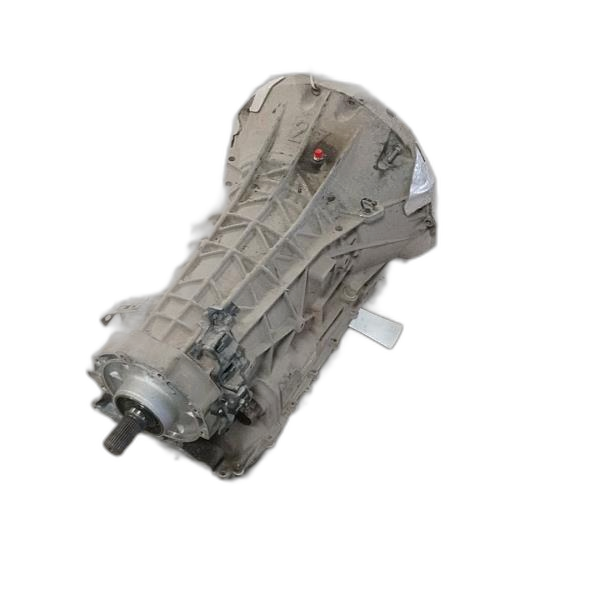
Shop the Parts Behind P0874
Below are the parts most often responsible for code P0874, ranked by how frequently each one is the actual culprit (per the diagnosis above). Tap any to see what we have for your vehicle.


The information in this article is provided for general reference and educational purposes only. Vehicle specifications, procedures, and part compatibility can vary by production date, trim level, and region. Always consult your vehicle's factory service manual and verify part numbers before purchasing or performing repairs. Safety-critical components such as airbags, seat belts, and braking systems should be installed by a qualified professional.
- 🧭 Diagnostic Flowchart
- 🛍️ Shop This Part
- What Does P0874 Mean?
- Can I Drive With P0874?
- Common Causes
- Symptoms
- Common Fixes & Costs
- Used vs. New Parts: Buying Guide
- What Happens If You Wait — Timeline
- Cost of Not Fixing It
- Diagnosis Steps
- When This Code Triggers (Freeze-Frame Conditions)
- Related Codes
- Climate & Environmental Factors
- How to Talk to a Mechanic About This Code
- Where to Take It: Dealer vs Independent vs Chain
- When to Walk Away From the Repair
- What Scan Tool You Need for This Code
- How to Clear the Code After You Fix It
- Will This Fail Emissions / State Inspection?
- Most Commonly Affected Vehicles
- Manufacturer-Specific Notes
- Real Owner Stories
- 2010 Honda Fit Sport with intermittent flashing 'D' light
- 2016 Ford F-150 5.0L suddenly entering 'limp mode'
- 2009 Honda Pilot with P0872 (Pressure Switch 'C' Circuit Low)
- How to Prevent This Code From Triggering
- Frequently Asked Questions
- What does the 'C' in P0874 actually mean?
- Can low transmission fluid cause P0874?
- I changed my pressure sensor but the P0874 code came back. Now what?
- What is the difference between P0872, P0873, and P0874?
- Is it safe to just clear the code and keep driving?
- How much does it cost to fix P0874?
- Is replacing the TFPS a DIY job?
- Key Takeaways
- 🎟️ Get 5% Off