

OBD-II Code P0877: Transmission Fluid Pressure Sensor "D" Circuit Low
The Ultimate Guide to P0877: What It Means, Why It Triggers, and How to Fix It for Good
- P0877 triggers when the transmission's 'D' pressure sensor sends a voltage signal below 0.5V, indicating a short circuit or dead sensor.
- Stop driving immediately; continuing to drive in 'limp mode' causes severe overheating that escalates a $200 sensor fix into a $3,500 transmission rebuild within weeks.
- Always check the transmission fluid level and inspect the external wiring harness for frayed wires before authorizing internal transmission repairs.
- On GM 6-speed transmissions (2003-2016), this code frequently requires replacing the internal TEHCM or its $35 pressure switch diaphragms.
- On Honda and Acura models (2011-2017), the fix is often a simple 1-hour DIY replacement of the external 5th or 6th clutch pressure switch.
What Does P0877 Mean?
P0877 means the Powertrain Control Module (PCM) or Transmission Control Module (TCM) detects the voltage signal from transmission fluid pressure sensor 'D' is too low (typically under 0.5 volts). This sensor converts hydraulic pressure into an electrical signal. A low signal indicates an electrical short to ground or a dead sensor, preventing the computer from verifying correct hydraulic pressure for gear shifts.
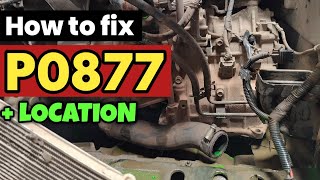
Technical definition: The SAE/OBD-II definition is "Transmission Fluid Pressure Sensor/Switch 'D' Circuit Low". 🎬 Watch: A quick overview of the P0877 code and its meaning. The PCM/TCM registered a voltage from the 'D' circuit below the specified range (usually <0.5V) for a sustained period. This prevents the TCM from confirming the successful application of specific clutches during gear changes.
Can I Drive With P0877?
No, immediate repair needed Do not drive normally. Drive only to a safe location or directly to a repair shop. The transmission enters a 'limp mode,' locking into 2nd or 3rd gear to prevent damage. Continuing to drive causes severe transmission overheating and catastrophic internal damage, escalating a $200 sensor fix into a $3,500+ rebuild.
Common Causes
- Faulty Transmission Fluid Pressure Sensor/Switch 'D' (Very Common) — The sensor fails internally from wear or an electrical fault, sending a constant low or zero voltage signal to the computer.
- Damaged Wiring or Corroded Connectors (Common) — The wiring harness shorts to ground due to fraying or melting. Connectors suffer from corrosion, moisture, or bent pins that disrupt the 5V reference or signal.
- Cracked Pressure Switch Diaphragms (GM TEHCM) (Common) — On GM 6-speed transmissions (6L80/6T75), the small, orange, laminated discs acting as diaphragms for the pressure switches become brittle and crack, causing a total loss of pressure reading.
- Internal Lead Frame Failure (Ford 6R80) (Common) — On Ford trucks and SUVs, the molded lead frame (an internal wiring harness) cracks, causing intermittent connections and triggering pressure sensor codes.
- Low or Contaminated Transmission Fluid (Common) — Insufficient fluid prevents the hydraulic system from building proper pressure. Old, burnt fluid creates sludge that clogs passages and interferes with sensor operation.
- Hydraulic Blockages in Valve Body (Less Common) — Debris from worn clutch material creates blockages in the valve body's small passages, preventing hydraulic pressure from reaching the sensor.
- Faulty Powertrain/Transmission Control Module (PCM/TCM) (Rare) — The computer module reading the sensor's signal has an internal fault. Consider this only after ruling out all wiring and sensor issues.
Symptoms
- Check Engine Light On — The Malfunction Indicator Lamp (MIL) illuminates immediately upon detecting the low voltage.
- Vehicle Enters 'Limp Mode' — The transmission locks into a single gear (usually 2nd or 3rd) to prevent internal damage, severely limiting vehicle speed and acceleration.
- Harsh, Erratic, or Delayed Shifting — The transmission shifts roughly, hunts for gears, slips, or refuses to engage specific gears because the computer lacks accurate hydraulic pressure data.
- Smell of Burnt Transmission Fluid — Improper shifting and slipping clutches cause the transmission to overheat, emitting a distinct burning smell.
- TCM Communication Errors — P0877 is sometimes accompanied by U-series codes (e.g., U0101), indicating a loss of communication with the TCM due to a shared wiring fault.
Common Fixes & Costs
- Replace External Transmission Fluid Pressure Sensor
— Parts: $40-$150, Labor: $150-$350 (parts+labor), ~1 hr book time
(DIY)
: OEM 28600-R97-003 (Alt: Standard Motor Products PS633, Vemo V26-74-0015) - Repair Damaged Wiring or Clean Connector — Parts: $10-$30, Labor: $125-$300 (parts+labor), ~1.5 hr book time (Intermediate)
- Replace Internal Pressure Switch Diaphragms / Manifold
— Parts: $35-$250, Labor: $350-$800 (parts+labor), ~3.5 hr book time
(Professional)
: OEM AL3Z-7G276-D (Alt: Dorman 926-149) - Transmission Fluid and Filter Change — Parts: $50-$100, Labor: $150-$300 (parts+labor), ~1.5 hr book time (Intermediate)
- Replace Transmission Electro-Hydraulic Control Module (TEHCM)
— Parts: $300-$600, Labor: $800-$1500 (parts+labor, includes programming), ~3.8 hr book time
(Professional)
: OEM 24256657 (Alt: Sonnax GM6L-TEHCM-C5)
Used vs. New Parts: Buying Guide
When a used part is worth it: Buying used is extremely risky for complex electronic parts like a TEHCM or lead frame. A used part only makes sense for a simple, external pressure switch from a verified low-mileage vehicle.
Donor-vehicle mileage cap: roughly under 60000 miles for the part to have meaningful remaining life.
Donor quality checklist:
- Verify the donor vehicle's transmission was functional.
- Match the OEM part number exactly; revisions are not interchangeable.
- Avoid parts from vehicles with a history of transmission problems.
Decision logic:
- If The fix requires an internal electronic module (TEHCM, lead frame). → Buy a new OEM or high-quality remanufactured part. Labor costs are too high to risk a used part.
- If The fix is a simple external sensor and the vehicle has high mileage. → A used sensor from a low-mileage donor is a budget option, but new is preferred.
- If The part is a known high-failure item (Ford lead frame, GM TEHCM). → Strongly favor new or remanufactured parts featuring updated components.
Warranty tradeoff: Used parts carry a 30-90 day parts-only warranty, leaving you responsible for repeated labor costs. New aftermarket parts offer 1-year warranties.
Worst-case if a used part fails: $500 - $1500 (Cost of paying for labor a second time plus buying a new part).
Cost of Not Fixing It
- 0-1 month: Erratic shifting and vehicle stuck in 'limp mode'. Drivability is significantly impacted, but permanent damage is avoidable if parked. (Added cost: $0)
- 1-6 months: Continued slipping causes the transmission to overheat, burning the fluid and damaging clutch packs. A sensor fix now requires a valve body or TEHCM replacement. (Added cost: $800 - $1500)
- 6+ months: Catastrophic internal transmission failure. Burnt clutches contaminate the hydraulic system, destroying solenoids and the torque converter. A complete rebuild is necessary. (Added cost: $2500 - $5000+)
Diagnosis Steps
- Read Diagnostic Trouble Codes
Use an OBD-II scanner to confirm P0877 and check for related codes (e.g., P0876, P0989). Note freeze frame data to see vehicle conditions when the code triggered.
Tools: OBD-II Scanner (Beginner) - Check Transmission Fluid Level and Condition
With the vehicle on level ground and at operating temperature, check the fluid. It must be at the correct level, bright red, and not smell burnt. Low or dark fluid requires immediate attention.
Tools: Rag, Gloves (Beginner) - Inspect External Wiring and Connectors
Visually inspect the transmission wiring harness for frayed wires, melting, or corrosion. Disconnect the main transmission connector, clean it with contact cleaner, and ensure pins are straight and tight.
Tools: Flashlight, Electrical Contact Cleaner (Intermediate) - Analyze Live Sensor Data & Wiggle Test
Use an advanced scan tool to view live data for TFPS 'D'. The voltage should change with gear shifts. If it reads under 0.5V, wiggle the wiring harness. If voltage fluctuates, you have a loose connection or damaged wire.
Tools: Advanced OBD-II Scanner (Intermediate) - Test Sensor Voltage and Ground at Connector
Disconnect the sensor. With the key on, engine off, use a multimeter to verify a 5V reference signal from the TCM and a solid ground. Probe the signal wire. If reference and ground are good but live data reads <0.5V, the sensor is faulty or the signal wire is shorted.
Tools: Digital Multimeter, Vehicle-specific wiring diagram (Advanced) - Test Sensor Resistance
With the sensor disconnected, measure resistance (Ohms) between the sensor's signal and ground terminals. Compare to manufacturer specs. An 'OL' (Open Loop) reading confirms a dead sensor.
Tools: Digital Multimeter, Vehicle-specific service manual (Advanced) - Commanded vs. Actual State Analysis
Use a bi-directional scanner to command different gears or line pressures while observing live TFPS 'D' data. If the sensor's reported state does not match the commanded state, the sensor or circuit is faulty.
Tools: Bi-directional OBD-II Scanner (Professional) - Check Transmission Line Pressure
Connect a pressure gauge to the transmission case port. At idle in Drive, pressure should be 55-75 PSI. Significantly low pressure indicates a mechanical hydraulic issue (pump, filter) rather than an electrical one.
Tools: Transmission pressure gauge set (300+ PSI) (Professional) - Inspect Internal Components
If external checks pass, remove the transmission oil pan to inspect the internal sensor, valve body, internal wiring (Ford lead frame), and pressure switch diaphragms (GM TEHCM) for damage.
Tools: Socket set, Drain pan, Gasket scraper, Torque wrench (Professional)
When This Code Triggers (Freeze-Frame Conditions)
- Engine Coolant Temp: 180-210°F (82-99°C) (Vehicle at full operating temperature.)
- RPM: 1500-2500 RPM (During a gear shift or at a steady highway cruise speed.)
- Engine Load: 30-60% (Under normal acceleration or maintaining speed.)
- Vehicle Speed: 35-55 mph (56-88 km/h) (Driving at city or highway speeds when a shift is commanded.)
Related Codes
- P0876 — P0876 indicates 'Circuit Range/Performance' (erratic voltage), whereas P0877 indicates voltage is stuck low. P0877 points directly to a short or dead sensor; P0876 suggests an intermittent connection.
- P0878 — The opposite code ('Circuit High'). P0877 suggests a short to ground, while P0878 suggests an open circuit, like an unplugged sensor or a broken signal wire.
- P0989 — Transmission Fluid Pressure Sensor E Circuit Low. When P0877 and P0989 appear together, it strongly points to a shared failure point, such as the main transmission connector or the internal pressure switch manifold.
- P0751 — Shift Solenoid 'A' Performance/Stuck Off. The TCM uses the pressure switch to verify solenoid action. A failed pressure switch circuit makes the TCM falsely believe the solenoid is malfunctioning.
Climate & Environmental Factors
- Cold Weather: Thick fluid in cold climates causes a temporary loss of prime in the transmission's oil pump during a cold start, leading to a momentary pressure drop that triggers P0877 (noted in GM TSB PIP4379N).
- High Humidity / Road Salt: Regions with heavy road salt use experience higher rates of corrosion on the exposed main transmission harness connector, causing the low voltage condition.
How to Clear the Code After You Fix It
- Reconnect battery if disconnected for repair.
- Use an OBD-II scan tool to formally clear the diagnostic trouble codes.
- Perform a complete OBD-II drive cycle to allow readiness monitors to run.
Drive cycle (~20 minutes): 1) Cold start and idle for 2-3 minutes. 2) Drive at a steady 55 mph for 5-10 minutes. 3) Perform stop-and-go driving with smooth accelerations. 4) Allow the vehicle to cool completely and repeat if necessary.
Readiness monitors affected: Comprehensive Component Monitor, Catalyst Monitor, Oxygen Sensor Monitor, EVAP System Monitor
Before emissions retest: drive at least 100 miles to fully set monitors.
Watch out for:
- Disconnecting the battery does not guarantee the code is cleared from the TCM and resets all readiness monitors to 'Not Ready', causing an automatic emissions failure.
- The code returns immediately if the underlying electrical or mechanical fault is not repaired.
Will This Fail Emissions / State Inspection?
Yes — this code typically fails an OBD-II emissions inspection.
- California: An active Check Engine Light from P0877 is an automatic failure. All readiness monitors must be 'Ready', requiring a drive cycle after repair.
- New York: An illuminated MIL for P0877 results in an automatic inspection failure during the OBD-II scan.
- Texas: In the 17 counties requiring emissions testing, an active P0877 code causes an automatic failure.
Most Commonly Affected Vehicles
- Chevrolet / GMC Silverado, Sierra, Tahoe, Acadia, Impala, Equinox (2003-2016) — Extremely common on 4L60-E, 6L80, and 6T70/75 transmissions. Caused by a failed pressure switch manifold (PSM) or a faulty TEHCM inside the transmission pan. TSB PIP4379M provides specific diagnostic guidance.
- Honda Odyssey, Accord, Pilot, Ridgeline (2011-2017) — Prone to pressure switch failures on 6-speed automatics. P0877 corresponds to the 5th or 6th clutch pressure switch. These are located on the outside of the transmission case, making DIY replacement easy. 🎬 See this walkthrough for fixing the pressure switch on a Honda.
- Ford F-Series, Focus, Escape, Explorer (2011-2019) — On the 6R80 transmission (F-150, Explorer), the primary cause is a cracked internal molded lead frame harness, requiring valve body removal to replace. 🎬 Watch: How to replace the internal lead frame on Ford trucks.
- Dodge / Chrysler / Ram Ram 1500, Grand Caravan, Journey, Town & Country (2008-2018) — Pressure sensor and solenoid pack issues are a known weakness in 6-speed automatic transmissions like the 62TE. The entire solenoid block often requires replacement.
- Nissan Rogue, Altima, Pathfinder, Sentra (2013-2024) — An early symptom of widespread Continuously Variable Transmission (CVT) failure. The cause is an internal failure of the valve body or pressure control solenoid, often leading to full transmission replacement.
Manufacturer-Specific Notes
- General Motors (GM): Pressure switches are integrated into the Transmission Electro-Hydraulic Control Module (TEHCM) inside the oil pan. Failure often requires replacing this entire $800+ assembly, though aftermarket kits exist to replace just the $35 cracked diaphragms.
- Honda / Acura: Honda mounts transmission pressure switches on the exterior of the transmission case. This makes diagnosis and replacement significantly easier and cheaper, as the transmission pan does not need to be removed.
- Ford: On 6R80 transmissions, a common cause for P0877 is the failure of the internal molded lead frame harness. Ford issued Customer Satisfaction Program 19N01, extending warranty coverage for this part to 10 years or 150,000 miles.
- Nissan: On CVT vehicles, P0877 is a serious indicator of a failing valve body. A class-action settlement for models like the 2015-2018 Murano extended the transmission warranty to 84,000 miles/84 months.
Frequently Asked Questions
What does the 'Circuit Low' part of the P0877 code mean?
It means the voltage signal the computer receives from the sensor is near zero (usually under 0.5V). This is caused by a short circuit in the wiring that lets the signal voltage escape to ground, or by a sensor that has failed internally.
Why am I seeing other pressure codes like P0989 along with P0877?
When multiple pressure switch codes appear at once, it points to a single failure in a shared component. This is usually the main electrical connector, the wiring harness, or the entire pressure switch manifold assembly.
Can I just clear the code and keep driving?
No. The code will return quickly because the underlying fault still exists. Ignoring the problem leads to poor drivability and causes expensive, permanent damage to your transmission's internal clutches.
Is the pressure sensor always inside the transmission pan?
No. On many GM, Ford, and Chrysler vehicles, it is inside the pan, requiring significant labor. However, on Honda and Acura vehicles, the pressure switches are screwed into the outside of the transmission case for easy access.
How much does it cost to fix code P0877?
A simple wiring repair costs $150-$300. Replacing an external sensor (Honda) costs $150-$350. Replacing an internal GM TEHCM or Ford lead frame costs $800-$1,500 after parts, labor, and programming.
Key Takeaways
- P0877 triggers when the transmission's 'D' pressure sensor sends a voltage signal below 0.5V, indicating a short circuit or dead sensor.
- Stop driving immediately; continuing to drive in 'limp mode' causes severe overheating that escalates a $200 sensor fix into a $3,500 transmission rebuild within weeks.
- Always check the transmission fluid level and inspect the external wiring harness for frayed wires before authorizing internal transmission repairs.
- On GM 6-speed transmissions (2003-2016), this code frequently requires replacing the internal TEHCM or its $35 pressure switch diaphragms.
- On Honda and Acura models (2011-2017), the fix is often a simple 1-hour DIY replacement of the external 5th or 6th clutch pressure switch.
Helpful Videos

Shop the Parts Behind P0877
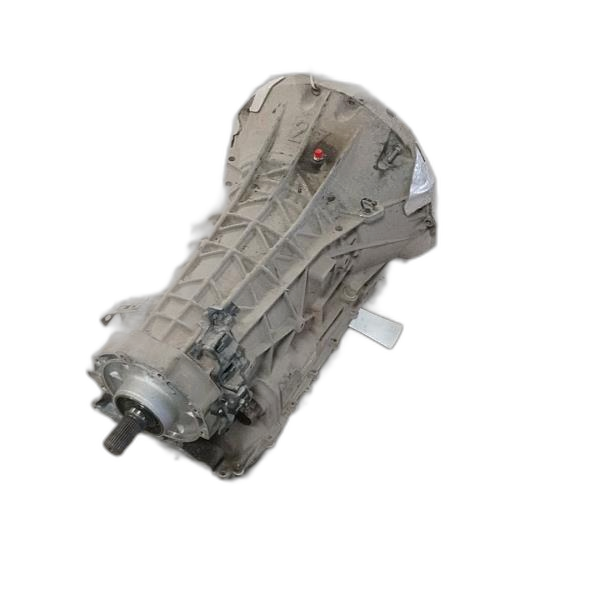
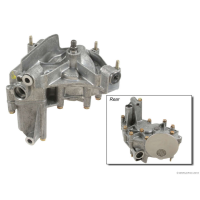
Below are the parts most often responsible for code P0877, ranked by how frequently each one is the actual culprit (per the diagnosis above). Tap any to see what we have for your vehicle.





The information in this article is provided for general reference and educational purposes only. Vehicle specifications, procedures, and part compatibility can vary by production date, trim level, and region. Always consult your vehicle's factory service manual and verify part numbers before purchasing or performing repairs. Safety-critical components such as airbags, seat belts, and braking systems should be installed by a qualified professional.
- 🎬 Helpful Videos
- 🛍️ Shop This Part
- What Does P0877 Mean?
- Can I Drive With P0877?
- Common Causes
- Symptoms
- Common Fixes & Costs
- Used vs. New Parts: Buying Guide
- Cost of Not Fixing It
- Diagnosis Steps
- When This Code Triggers (Freeze-Frame Conditions)
- Related Codes
- Climate & Environmental Factors
- How to Clear the Code After You Fix It
- Will This Fail Emissions / State Inspection?
- Most Commonly Affected Vehicles
- Manufacturer-Specific Notes
- Frequently Asked Questions
- What does the 'Circuit Low' part of the P0877 code mean?
- Why am I seeing other pressure codes like P0989 along with P0877?
- Can I just clear the code and keep driving?
- Is the pressure sensor always inside the transmission pan?
- How much does it cost to fix code P0877?
- Key Takeaways
- 🎟️ Get 5% Off